Dental Flipper vs Partial Denture: Which Is Best?
Dental flipper vs partial denture: compare costs, lifespan, comfort and fit, plus when a flipper is enough and when a partial is worth it.
A dental flipper is a temporary, all-acrylic replacement for one or two missing teeth. A partial denture is a sturdier removable appliance built to replace several teeth for years. In the dental flipper vs partial denture decision, two things matter most: how long you need the replacement to last and how many teeth are missing.
Flippers cost less and arrive faster. Partials cost more and hold up far better. This page covers what each one is, what you will realistically pay, how long each lasts, the gum and tooth risks, and which situations point to which option.
Dental Flipper vs Partial Denture at a Glance
| Feature | Dental flipper | Partial denture |
|---|---|---|
| Main purpose | Temporary stand-in during healing or while waiting for a permanent fix | Longer-term removable replacement |
| Teeth replaced | Usually 1 to 2 | Usually 3 or more, in one space or several |
| Material | All-acrylic teeth and gum-colored base | Acrylic, cast metal framework, or flexible thermoplastic |
| Typical cost | About $300 to $500 for a front tooth, up to $1,000 | About $1,450 to $1,500 on average; varies by material and design |
| Time to make | Often about 2 weeks after the impression | Usually longer, with more fitting visits |
| Typical lifespan | 6 months to 2 years | 5 to 15 years with care |
| Stability | Rests mostly on gum tissue and can shift | Clasps and framework spread chewing force |
| Chewing | Soft foods; fragile under pressure | Better for everyday meals |
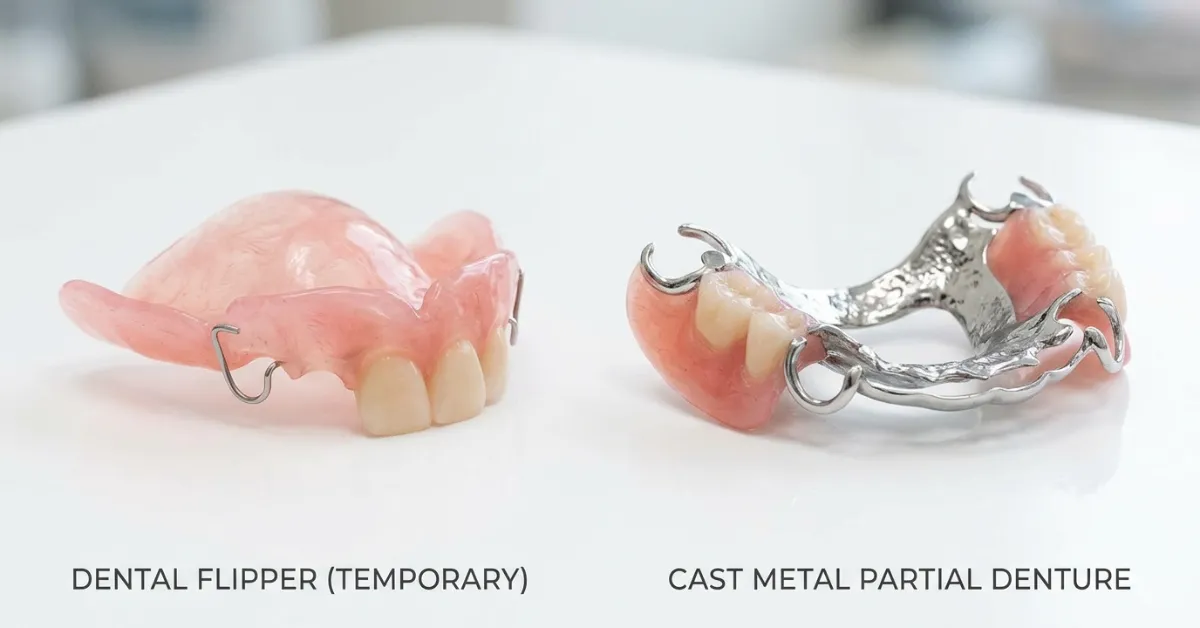
A flipper is technically a type of partial denture, which is why the two terms overlap. In practice, dentists say “flipper” for the small, interim, all-acrylic version and “partial denture” for the version built to last.
What Is a Dental Flipper?
A dental flipper, also called a flipper tooth or flipper denture, is a removable appliance with one or more prosthetic teeth set on a gum-colored acrylic base. Your dentist takes an impression of your mouth, and a dental lab builds it from that mold. Because the process is simple, the wait is short.
Picture a front tooth that has to be extracted after a crack. An implant needs months of healing first. A flipper fills the gap in about two weeks, so you can smile and speak normally during that wait. That is the job it does best.
How a Flipper Stays in Place
An upper flipper sits along the roof of the mouth, and a lower one sits on the lower jaw. Small acrylic or wire clasps grip the neighboring teeth. Because it relies on light grip and gum contact instead of a rigid frame, a flipper can loosen with wear and can shift when you bite something firm.
How Many Teeth a Flipper Can Replace
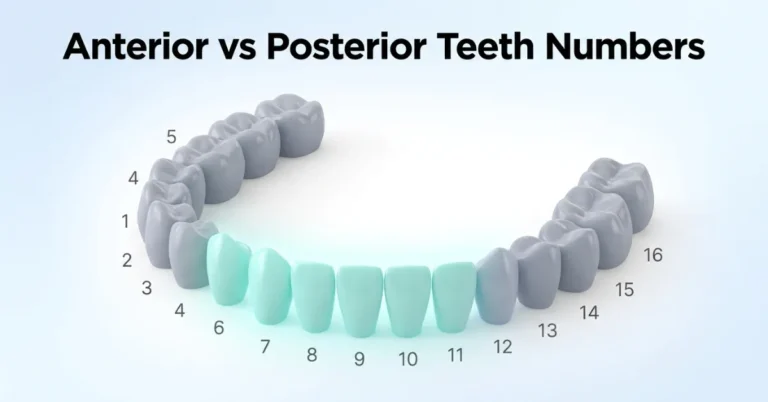
Most flippers replace one or two teeth, and occasionally up to three in a row. Past that, thin acrylic carries too much load and breaks easily. Flippers are most common for front teeth. If you are unsure which teeth those are, this guide to tooth names and positions shows the incisors and canines a flipper usually covers.
What Is a Partial Denture?
A partial denture is a removable appliance with replacement teeth attached to a gum-colored base. It often includes a metal framework and clasps that connect to your natural teeth. Some designs use hidden connectors called precision attachments, and these often require crowns on the supporting teeth. The ADA’s guidance on removable partial dentures explains these designs. A partial rests on your gums and bone like a full denture, and its clasps hook around remaining teeth for extra stability, as the Cleveland Clinic denture overview describes.
Partial Denture Materials
- Acrylic partial: the budget version. It is closest to a flipper but made for longer wear.
- Cast metal framework: a thin, strong metal skeleton with acrylic gum and resin or porcelain teeth. This is the long-term workhorse.
- Flexible thermoplastic: a metal-free option with gum-colored clasps that blend in.
How Many Teeth a Partial Denture Can Replace
A partial can replace anywhere from one tooth to many, in one gap or several. Three or more is the usual range. It needs enough healthy remaining teeth to anchor the clasps. If every tooth in an arch is gone, you need a complete denture instead.
Dental Flipper vs Partial Denture Cost
A front flipper typically costs about $300 to $500, and prices can reach $1,000 depending on materials, the number of teeth and where you live. Partial dentures average about $1,450 to $1,500. Metal frameworks and precision attachments usually push the price higher.
The sticker price hides the real comparison. Say you replace a $400 flipper every two years. That is roughly $1,000 over five years. Replace it every year and you spend about $2,000, which already passes the average partial. A flipper is cheaper to start and not always cheaper to keep.
Insurance coverage varies by plan, and temporary appliances are sometimes handled differently. Ask for a pre-treatment estimate before you commit.
How Long Does a Flipper Last vs a Partial Denture?
A flipper often lasts six months to two years. A partial denture can last 5 to 15 years with good care, according to partial denture lifespan estimates. Four things shift those numbers:
- Material: metal frameworks outlast thin acrylic.
- Hygiene: plaque and stains weaken the appliance and the teeth under it.
- Bite habits: sticky or hard foods crack flippers fastest.
- Mouth changes: bone and gums reshape over time, so a fit that felt snug in week two can feel loose months later.
Cracks, a loose fit and sore spots all mean it is time for a dentist visit, not a home fix.
Comfort, Chewing and Speech
New flippers often feel uncomfortable at first, and talking and eating can feel unnatural for a while. They are light, but they are also fragile. You will probably chew better than you did with a gap, as long as you stay gentle.
Partials feel bulky at first too. The ADA advises starting with soft foods cut into small pieces and chewing on both sides to keep pressure even. If certain words are hard to say, reading aloud helps your tongue adjust. Both appliances should feel normal within weeks. Persistent pain is not normal and needs an adjustment.
What Each Appliance Does to Your Gums and Teeth
Flipper. It covers gum tissue and slows the flow of saliva that normally keeps that area clean. Poor cleaning raises the risk of gum disease, decay and recession, as the flipper tooth costs, drawbacks and care guide explains. Early gum inflammation can hurt before you notice anything else. The upside is that a flipper holds the gap open so neighbors do not drift into it.
Partial denture. Clasps can trap plaque, so the teeth they grip need extra brushing. Understanding how plaque turns into cavities shows why. A framework spreads chewing force across teeth and gums, which is why partials feel steadier.
Neither one replaces a tooth root. Teeth are not bone, but the jawbone beneath a missing tooth gradually shrinks without the stimulation a root provides (see why teeth are not bone). Implants are the option designed to address that.
Allergy. Some people react to residual monomer in acrylic denture bases, as in this acrylic monomer allergy research. If you have had reactions to dental materials, ask about flexible or metal-free options.
Which Should You Choose?
| Your situation | Better fit | Why |
|---|---|---|
| Front tooth just extracted, implant planned | Flipper | Fast, cosmetic, keeps the space open |
| Two missing teeth side by side, short wait | Flipper | Enough support for a small span |
| Three or more teeth missing | Partial denture | Needs a framework for stability |
| Missing teeth on both sides of the mouth | Partial denture | One framework spans the arch |
| Saving for an implant for a year or more | Partial denture, or budget for flipper replacements | Compare cost over time |
| Acrylic allergy | Flexible or metal-free partial | Avoids the reactive material |
Your dentist makes the final call after checking gum health, remaining teeth and your long-term plan.
Can a Flipper Be Permanent?
A flipper is not designed to be permanent, and most dentists treat it as an interim step. Even so, some people keep one long term when health or budget rules out implants and bridges. That only works with regular fit checks and replacement when the acrylic wears out. If you hope to wear it for years, ask about a partial denture instead.
Other Options: Bridges and Implants
Flippers and partials are often stepping stones to something fixed.
- Fixed bridge: replaces teeth using crowns on neighboring teeth. It is not removable at home.
- Dental implant: a titanium post in the jaw that can last a lifetime with good care, which is why it ranks highest for bone health. Implants can run about $1,000 to $5,000 per tooth. For upper jaw replacements, see upper jaw implants.
- Implant-supported dentures: snap onto implants for better stability than traditional dentures.
How to Clean and Care for Both
- Rinse off loose food, then brush gently every day with a soft brush.
- Use mild soap or a denture cleanser. Skip toothpaste, which is too abrasive.
- Keep it moist overnight in water or a soak so it holds its shape. Avoid hot water, which can warp it.
- Handle it over a folded towel or a sink of water in case you drop it.
- Never force it into place by biting down, and never bend clasps.
- Call your dentist if it cracks, loosens or hurts. Do not use store-bought glue.
Food collects around clasps and edges more than people expect, so these tips on food stuck between teeth help too. See your dentist at least twice a year.
Online Kits and Home Fixes
Some companies sell flippers and partials from at-home impression kits. They can be cheaper and convenient, but an impression cannot show decay, gum disease or loose teeth. A dentist exam first avoids fitting an appliance over a problem. Home repair is riskier still. The ADA warns that do-it-yourself kits and over-the-counter glues can ruin a denture.
Questions to Ask Your Dentist
- Is this meant to be temporary, and for how long?
- Will my gums need to heal before a permanent option?
- What material will it use, and is it safe for me?
- How much is the full cost, including adjustments and repairs?
- What are my long-term options, and what do they cost?
- How often should I come in for a fit check?
Dental Flipper vs Partial Denture FAQ
Quick answers to the most common questions
Is a dental flipper the same as a partial denture?
Which is better, a flipper or a partial denture?
How many teeth can a dental flipper replace?
How long does a dental flipper last?
Is a flipper cheaper than a partial denture?
Can you eat with a flipper tooth?
Can you sleep with a flipper or partial denture?
Can a flipper tooth be permanent?
Do partial dentures damage natural teeth?
Does insurance cover a flipper or partial denture?
Conclusion / Key Takeaways
The dental flipper vs partial denture choice comes down to purpose and time. A flipper gives you a fast, affordable smile while you heal or wait. A partial gives you stable, longer-lasting chewing.
- Flippers replace 1 to 2 teeth, cost about $300 to $500 for a front tooth and last roughly 6 months to 2 years.
- Partials replace several teeth, average about $1,450 to $1,500 and can last 5 to 15 years.
- Repeated flipper replacements can erase the upfront savings.
- Neither appliance replaces a tooth root. Implants are built to address bone loss.
- Clean daily, skip toothpaste, avoid glue, and see your dentist if anything cracks or loosens.