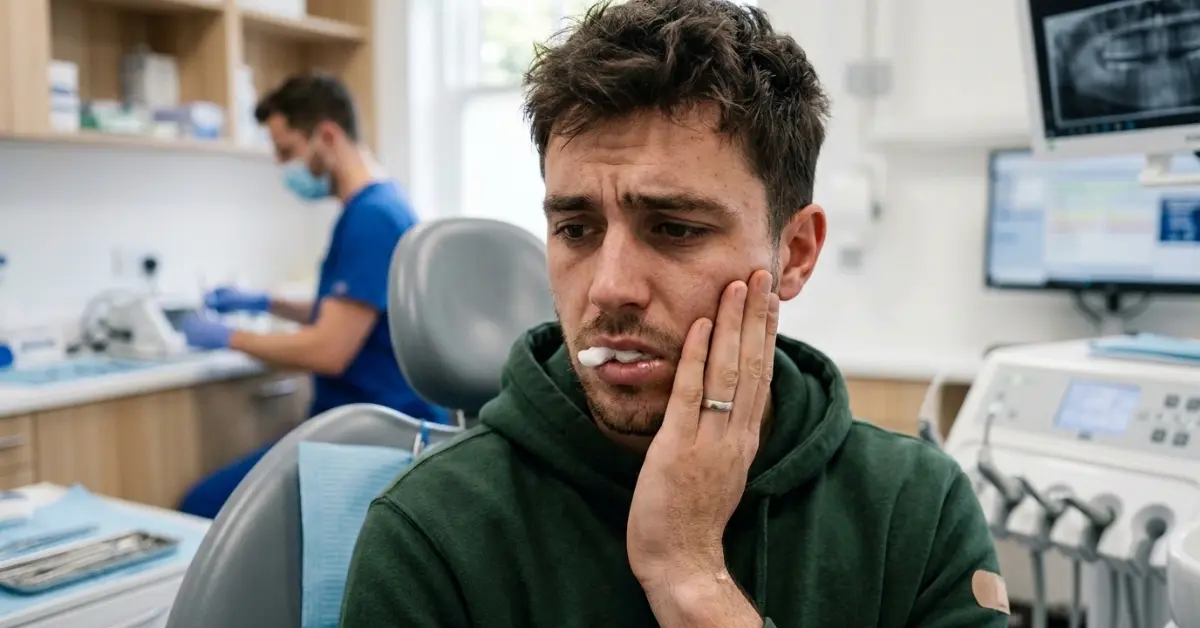
Can You Talk After Tooth Extraction? Complete Recovery Guide
Can you talk after tooth extraction? Learn when it’s safe to speak, avoid dry socket, speed healing, and recover comfortably with expert tips.
Medically reviewed for accuracy. Last updated: August 2026.
Quick Answer
Yes, you can talk after a tooth extraction. Dentists generally recommend keeping conversation short and gentle for the first 24 hours so you don’t disturb the blood clot forming in the socket. Light talking is usually fine right away. Most people are back to full, comfortable conversation within a few days, with complete comfort by about a week.
Why Your Mouth Needs Time Before Talking Normally
Right after a tooth is pulled, your body starts forming a blood clot inside the empty socket. That clot is the foundation of healing. It protects the bone and nerve endings underneath while new tissue begins to grow in.
Talking uses your jaw, tongue, cheeks, and the muscles around your mouth. None of that movement is dangerous by itself, but a lot of it in the first day or two can strain a socket that’s still stabilizing.
What’s Actually Happening in Your Mouth Early On
A few things commonly make speech feel off right after the procedure:
- Lingering numbness from anesthesia
- Gauze sitting over the extraction site
- Swelling that limits how wide you can open your jaw
- An unfamiliar feeling in your tongue or cheek
- General soreness or minor bleeding
None of this means you have to stay silent. It just means short, calm conversations beat long ones for the first day.
Does Talking Cause Dry Socket?
Talking by itself is not a major cause of dry socket, the painful condition that happens when the protective clot comes loose too early. Dry socket is far more often linked to:
- Smoking or vaping
- Drinking through a straw
- Spitting forcefully
- Rinsing too hard, too soon
- A clot that never formed well in the first place
- A particularly difficult extraction
Talking too much can add irritation on top of those risk factors, but it’s rarely the root cause on its own. The safest approach is to avoid suction, spitting, and rough mouth movements for the first 24 to 48 hours, talking included.
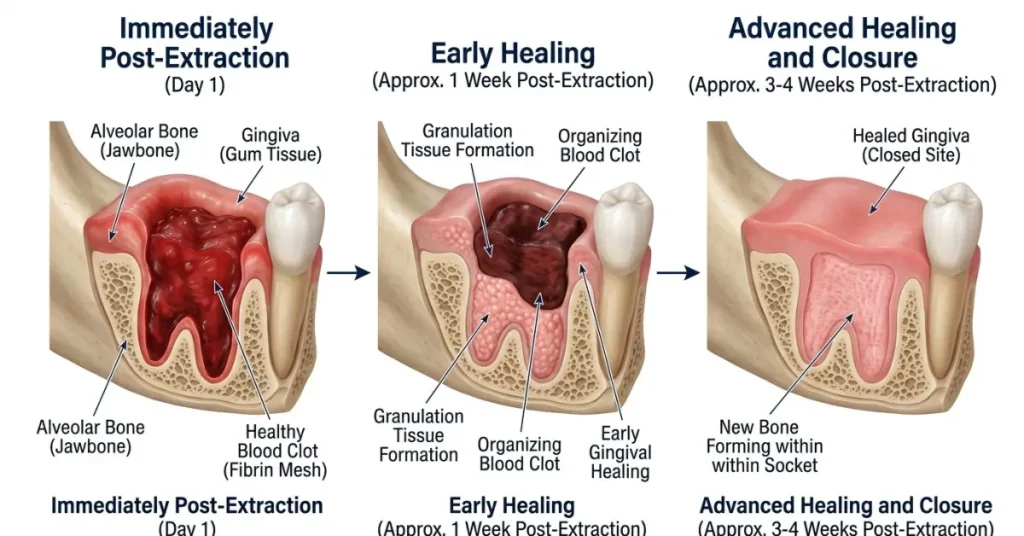
Talking Recovery Timeline After Tooth Extraction
| Recovery Stage | What’s Happening | Talking Guidance |
|---|---|---|
| First 24 hours | Clot forms, swelling and numbness set in | Keep it brief and soft |
| Day 2 to 3 | Healing begins, some soreness remains | Short conversations are usually okay |
| Day 4 to 7 | Swelling drops, tissue repairs | Talking starts feeling normal |
| After 1 week | Soft tissue mostly healed | Normal speech for most people |
| 4 to 6 weeks | Bone and deeper tissue continue settling | Speech is normal; internal healing still finishing |
First 24 Hours: Keep It Minimal
This is the window where the clot is most fragile. Stick to short answers, text instead of calling when you can, and avoid pushing your jaw open wide. If you rely on speaking for work, a written note or a quick text explaining you’re recovering from a dental procedure can buy you the rest you need.
Days 2 to 3: Easier, but Still Cautious
The clot is more stable by now, and a saltwater rinse (once your dentist gives the go-ahead, usually after the first 24 hours) can help keep the area clean without disturbing it. Regular conversation is usually fine, though it’s smart to skip anything that puts real strain on your jaw, like long calls, shouting, or singing.
Days 4 to 7: Back to Normal for Most People
Swelling continues to fade and jaw movement loosens up. By the end of this window, most people with a simple extraction are speaking normally again. Wisdom teeth and surgical extractions often take a bit longer, and public speaking, singing, or anything requiring sustained loud talking is worth holding off on until this stage.
Weeks 2 to 6: Deeper Healing Continues
Even after speech feels normal, the bone and deeper tissue at the extraction site can take four to six weeks to fully settle, and nerve sensitivity can take a few weeks longer to completely resolve if the extraction was deep or involved impacted teeth. This doesn’t affect talking, but it’s worth knowing if you still notice occasional tenderness weeks later.
Why Does My Speech Sound Different After a Tooth Extraction?
It’s common to feel like you’re “talking funny” for the first few days. This usually comes from a combination of swelling, numbness, gauze, and your tongue adjusting to a new gap, not permanent damage. A few specific changes people notice:
- Lisp after tooth extraction. Most common when a front tooth (incisor) is removed, since those teeth help control airflow for “s,” “f,” and “th” sounds. It typically fades as swelling goes down or your tongue learns the new space.
- Voice change or hoarse voice after tooth extraction. Less common, and usually tied to throat dryness, muscle tension, or irritation from the procedure rather than the extraction site itself. It generally resolves within a few days.
- Talking funny after tooth extraction. A catch-all for the temporary awkwardness in pronunciation, especially with molar or wisdom tooth removal, that clears up as numbness and swelling fade.
If any of these persist for more than a few weeks, it’s worth checking in with your dentist, especially if the gap is visible or you’re missing more than one tooth.
Will a Missing Tooth Change How You Talk Long-Term?
Usually not. A single extracted tooth typically causes only a short adjustment period while your tongue and lips get used to the new gap.
| Tooth Type | Role in Speech | Effect of Extraction |
|---|---|---|
| Front teeth (incisors) | Shape sounds like “s,” “f,” and “th” | Temporary lisp is common |
| Canines | Guide tongue position and airflow | Usually a minor, short-term shift |
| Premolars and molars | Mainly used for chewing | Little to no impact on speech |
If several teeth are missing, or a gap goes untreated for a long time, pronunciation can be affected more noticeably and for longer. In those cases, dentists sometimes recommend a temporary appliance (often called a flipper) to hold your speech pattern steady until a permanent implant, bridge, or denture is placed.
How Long Until You Can Talk Normally?
Simple extraction: Light talking right away, normal conversation within 2 to 5 days, full comfort by about a week.
Wisdom tooth extraction: More swelling and a deeper surgical site usually mean talking gets easier around day 3 to 5, with most people back to normal conversation, including singing or louder speech, by day 7.
Multiple extractions: Expect a longer adjustment simply because there’s more than one healing site to protect, and speech may feel unclear until swelling in all areas subsides.
Dental implant or restoration follow-up: If a missing tooth is later replaced with an implant, bridge, or denture, there’s often a brief re-adjustment period for speech as your tongue gets used to the new tooth, separate from the original extraction recovery.
Can You Work and Talk After an Extraction?
It depends on your job. If your role doesn’t require much talking, many people are back at work within a day or two after a simple extraction. Jobs that involve constant speaking, like teaching, customer service, call center work, or public speaking, often call for a bit more recovery time since sustained talking can tire out the jaw and irritate the site. Physically demanding jobs may also need extra time off to keep swelling and bleeding in check.
Tips for More Comfortable Talking During Recovery
- Speak slowly and keep your jaw movements small
- Take breaks between longer conversations
- Sip water regularly to avoid a dry mouth, but skip the straw
- Rinse gently with saltwater after the first 24 hours to keep the area clean
- Hold off on shouting, singing, or long phone calls until things feel normal
- Try light oral muscle movements, like slow, gentle jaw stretches, once soreness eases, to help speech feel natural again sooner

Habits That Can Slow Down Healing
- Smoking or vaping: raises the risk of complications, including dry socket
- Using a straw: the suction can dislodge the clot
- Rinsing too aggressively: can wash the clot away early on
- Poking at the socket: with your tongue or fingers slows healing
- Ignoring worsening pain: pain that gets worse instead of better is worth a call to your dentist
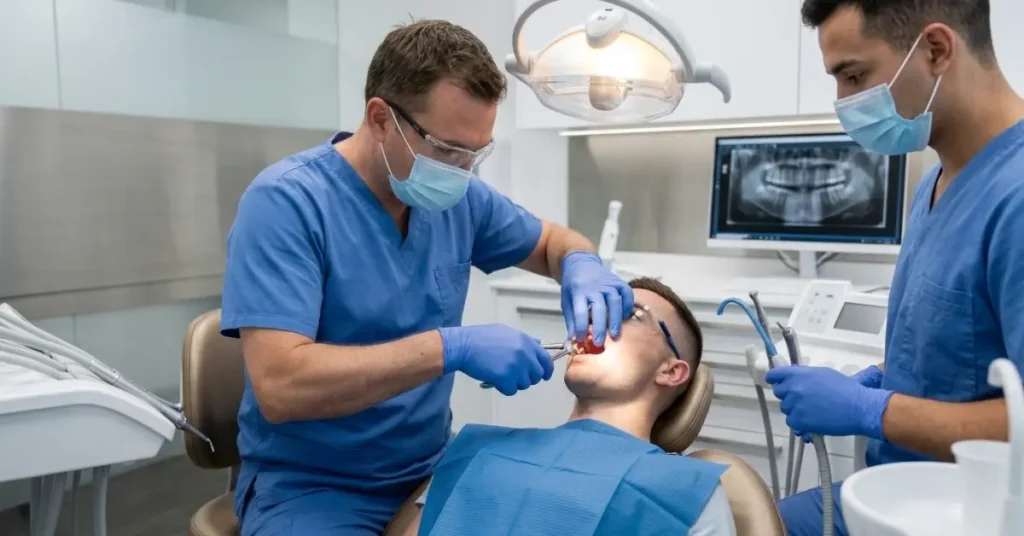
When to Stop Talking and Call Your Dentist
Reach out to your dentist if you notice:
- Pain that increases rather than fades after a few days
- Pain radiating toward your ear, jaw, or temple
- Bleeding that won’t stop
- Swelling that keeps getting worse
- Fever
- Pus near the extraction site
- A bad taste or smell that doesn’t go away
- A lisp, hoarseness, or speech change that hasn’t improved after a few weeks
These can be signs of infection, dry socket, or a speech pattern that needs professional attention.
Frequently Asked Question:
Can you talk after a tooth extraction?
Yes, you can talk after a tooth extraction, but it is best to limit talking during the first 24 hours to protect the blood clot and support proper healing.
How long after tooth extraction can I talk normally?
Most people can talk more comfortably within 1–3 days after tooth extraction as swelling, numbness, and soreness gradually improve.
Can talking too much after tooth extraction cause problems?
Talking too much may increase jaw movement and discomfort, especially during the first day when the extraction site is beginning to heal.
When can I speak after wisdom teeth removal?
You can speak after wisdom teeth removal, but keeping conversations short for the first 24–48 hours may help reduce discomfort and swelling.
Can I talk while my tooth extraction is still bleeding?
It is better to minimize talking while bleeding continues because too much mouth movement may interfere with forming a stable blood clot.
Why is it difficult to talk after tooth extraction?
Talking may feel difficult because of swelling, numbness from anesthesia, jaw stiffness, or soreness around the extraction area.
How long should I rest after a tooth extraction?
Many people need at least 24 hours of rest after extraction, but recovery time depends on the type of extraction and individual healing.
What should I avoid after tooth extraction?
Avoid smoking, using straws, vigorous rinsing, and activities that can disturb the extraction site during early healing.
Can I go to school or work after tooth extraction?
Some people return the next day, but you may need more rest if you had a complicated extraction or experience significant swelling and discomfort.
How long does a tooth extraction take to heal?
The gum usually heals within a few weeks, while deeper tissues continue repairing over a longer period depending on the extraction.
Bottom Line
You can talk after a tooth extraction, just keep it light for the first 24 hours. Avoid straws, smoking, and aggressive rinsing, ease back into normal conversation over the following days, and call your dentist if pain, swelling, or a speech change isn’t improving. Most people are talking comfortably again within a week, with full healing continuing quietly in the background for a few weeks after.