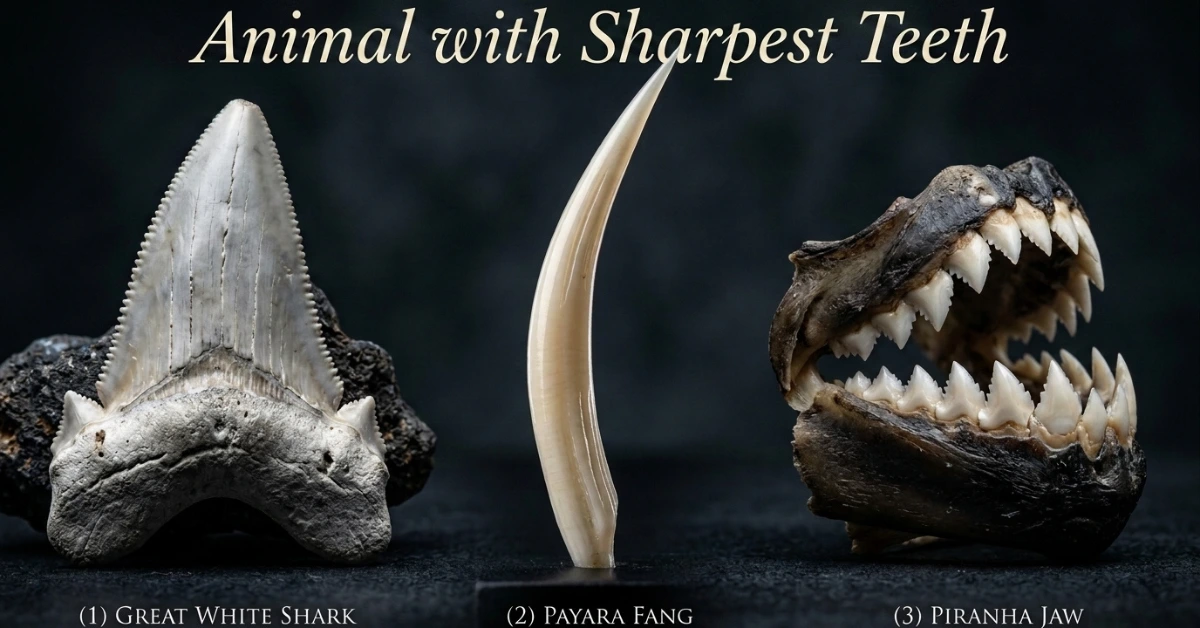
Which Animals Have the Sharpest Teeth? Top 10 Ranked
Which animals have the sharpest teeth? Discover the top 10 ranked by science, from piranhas to sharks, plus the strongest bites and deadliest fangs.
Ask most people which animal has the sharpest teeth, and the answer will usually be “shark.” Science offers a more layered answer. “Sharpest” isn’t a single, measurable title. It depends on whether you’re asking about the fineness of a tooth’s tip, how efficiently it slices tissue, how hard an animal can bite down, or how a tooth is shaped to pierce rather than cut. Different animals win different contests.
This guide separates those contests clearly. It starts with the sharpest tooth structure ever measured in the fossil record, then ranks the ten living animals whose teeth stand out most for cutting-edge design, serration, piercing ability, and specialization, not simply for size, danger, or bite force.
Key Takeaways
- Sharpest tooth structure ever measured: The extinct conodont, an eel-like marine vertebrate, had tooth tips around 2 micrometers across, roughly one-twentieth the width of a human hair, based on particle-accelerator fossil imaging.
- Sharpest cutting teeth among living animals: Piranhas and great white sharks are widely regarded as having among the sharpest cutting edges of any living species, thanks to razor-thin, serrated, or interlocking tooth designs.
- Strongest directly measured bite force: The saltwater crocodile holds the highest recorded bite force of any living animal, at approximately 3,700 psi.
- Longest fangs relative to body size: The payara can grow fangs up to roughly 15 cm (6 in), while the fangtooth fish has the largest teeth relative to body size of any marine species.
- Why tooth design varies so much: Evolution shapes teeth around function, not just danger. Slicing predators evolve thin serrated blades, piercing predators evolve long narrow fangs, and gripping predators rely on cone-shaped teeth paired with raw bite force.
What Makes Teeth Sharp?
Researchers who study tooth biomechanics generally break “sharpness” into several distinct, sometimes competing factors:
- Edge geometry – A thinner edge concentrates force into a smaller area, so a fine point or blade can cut with less applied pressure than a blunt one requires.
- Serrations – Small saw-like notches that let a tooth grip and tear rather than slide across tissue, similar to why a serrated knife often cuts meat more easily than a smooth one.
- Pointed tips – A narrow tip concentrates bite force into a tiny area, which favors puncturing over slicing.
- Enamel strength and reinforcement – A hard outer layer, and in some species mineral reinforcement, helps a fine edge resist wear during repeated use.
- Tooth shape adaptation – Flat, triangular shapes suit slicing; conical shapes suit gripping; needle-like shapes suit piercing.
- Cutting efficiency – How little force a tooth needs to do its job. Sharpness is essentially a trade of surface area for pressure: a genuinely sharp tooth cuts with comparatively little muscular effort behind it.
These traits don’t always move together. A tooth can be extremely fine-pointed but structurally fragile, or extremely strong but not especially sharp-edged, which is a major reason there’s no single scientifically agreed “sharpest teeth” title among living animals.
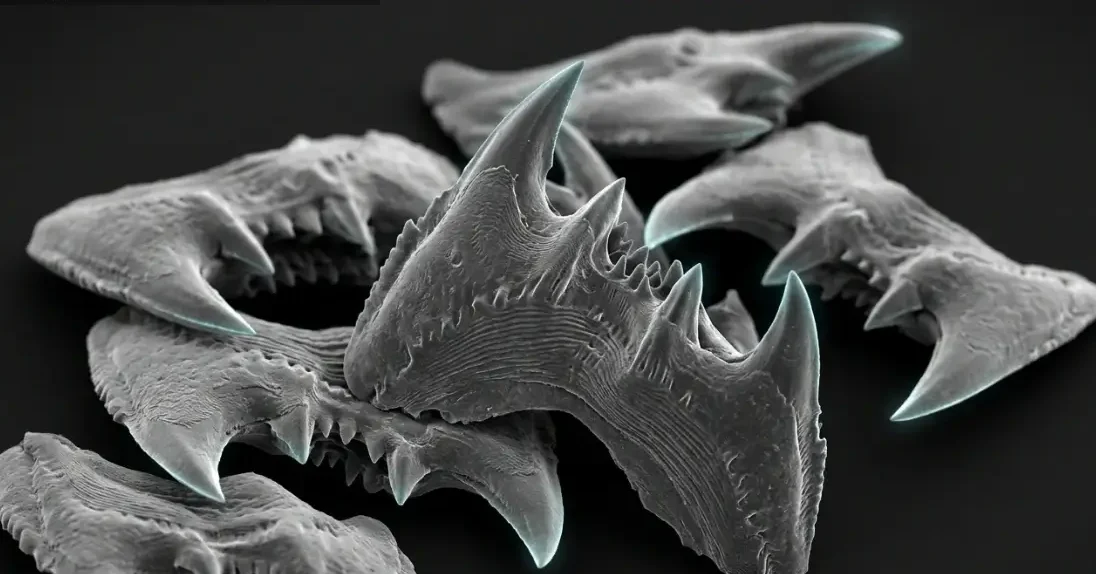
The Sharpest Teeth Ever Recorded: Conodont
Before ranking living animals, it’s worth addressing the record holder directly, since it isn’t a shark or a big cat at all.
Conodonts were eel-like marine vertebrates that appeared roughly 500 million years ago and went extinct around 200 million years ago. They’re considered the earliest known vertebrates to have evolved teeth. Because conodont tooth structures are microscopic and too fragile to study by hand, researchers at the University of Bristol and Monash University used particle-accelerator X-ray imaging to reconstruct detailed 3D models of the fossilized tissue.
That analysis found tooth tips measuring only about 2 micrometers across, roughly one-twentieth the width of a human hair, making them the sharpest tooth structures ever documented in any animal, living or extinct. The imaging also suggested conodonts sliced food with a side-to-side, scissor-like motion rather than crushing it vertically, the way most modern jaws do.
Because pressure equals force divided by area, an extremely fine tooth tip lets an animal cut effectively with very little muscular force behind it, which may have helped conodonts compensate for lacking the powerful jaw muscles seen in later vertebrates. Some researchers suspect conodonts may even have been able to resharpen worn edges over time, a trait not documented in any later lineage.
Why conodonts aren’t ranked against living animals: Their sharpness can only be assessed through fossil imaging, not direct physical testing, bite trials, or observed feeding behavior. That makes conodonts an essential reference point for “sharpest teeth” discussions, but not a fair comparison against species that can be measured and observed today.
Top 10 Living Animals With the Sharpest and Most Specialized Teeth
This ranking is based on tooth edge sharpness, cutting efficiency, serration design, piercing ability, and evolutionary specialization, not on which animal is most dangerous, largest, or bites hardest. A saltwater crocodile bites far harder than a piranha, for example, but its cone-shaped teeth aren’t built for fine cutting the way a piranha’s are, which is why cutting-edge design outranks raw power on this list.
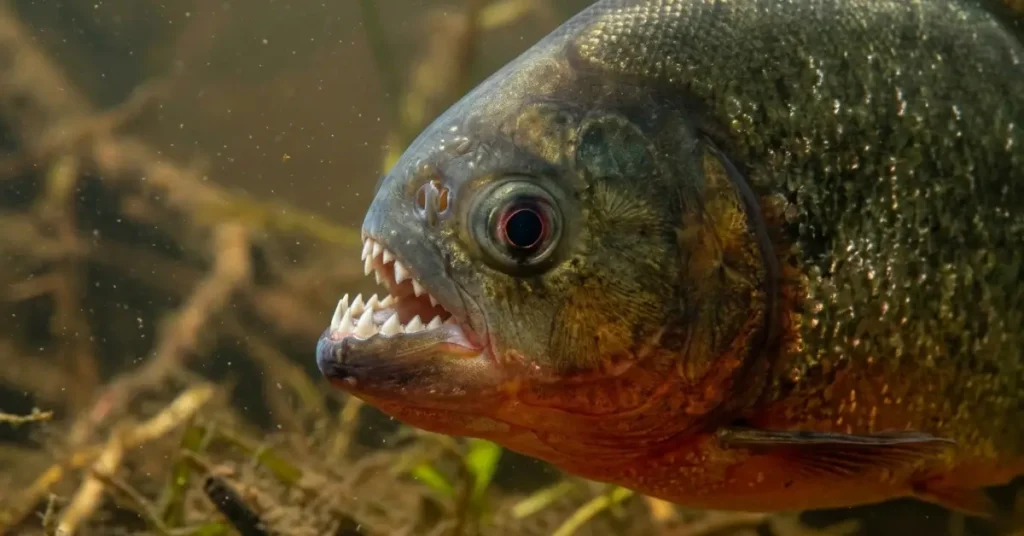
1. Piranha
Tooth Design: A single row of roughly 20 tightly interlocking teeth runs around the jaw. Each tooth is triangular, blade-thin, and tricuspid, with a large central point flanked by two smaller points that lock into neighboring teeth.
Why Their Teeth Are Sharp: Piranha teeth are often compared to a straight razor: wide front to back but extremely narrow side to side, tapering to a fine cutting edge. Because the upper and lower rows interlock precisely, the whole mouth functions as one continuous cutting tool.
What Their Teeth Are Used For: Shearing flesh from prey in fast, repeated bites, often during coordinated group feeding.
Key Measurements: Individual teeth measure only about 4 mm long, but their thinness and interlocking arrangement make them disproportionately effective cutters for their size.
Interesting Fact: Piranhas typically keep the same number of teeth throughout life, replacing them one quadrant at a time rather than continuously the way sharks do.
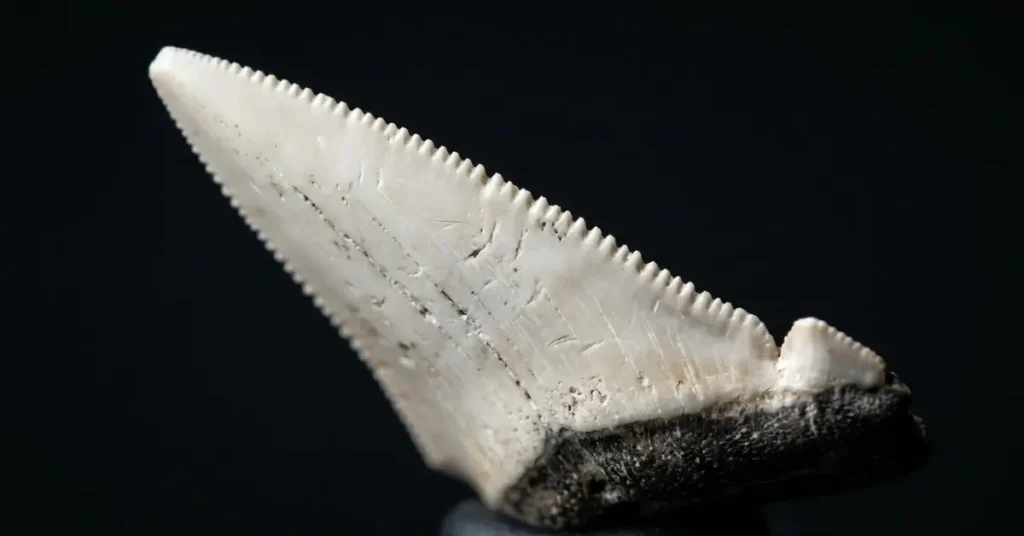
2. Great White Shark
Tooth Design: Roughly 300 teeth arranged in multiple rows at any given time, with new rows continuously moving forward to replace lost or damaged ones.
Why Their Teeth Are Sharp: Each tooth is large, triangular, and serrated along both edges, a design built for slicing rather than gripping. Under magnification, the serrations function much like a steak knife, letting the tooth saw through tough tissue with relatively little applied force.
What Their Teeth Are Used For: Removing large sections of flesh from prey such as seals and other marine mammals in a single bite.
Key Measurements: Lifetime tooth-replacement estimates vary by source but commonly range from about 20,000 to more than 30,000 teeth. Research examining tooth shape across nearly 100 great white sharks has also found that teeth grow wider, thicker, and more heavily serrated as sharks mature and their diet shifts toward marine mammals.
Interesting Fact: Shark teeth aren’t anchored in bone the way human teeth are, so they detach easily. That’s part of why sharks can lose so many over a lifetime without it threatening survival.
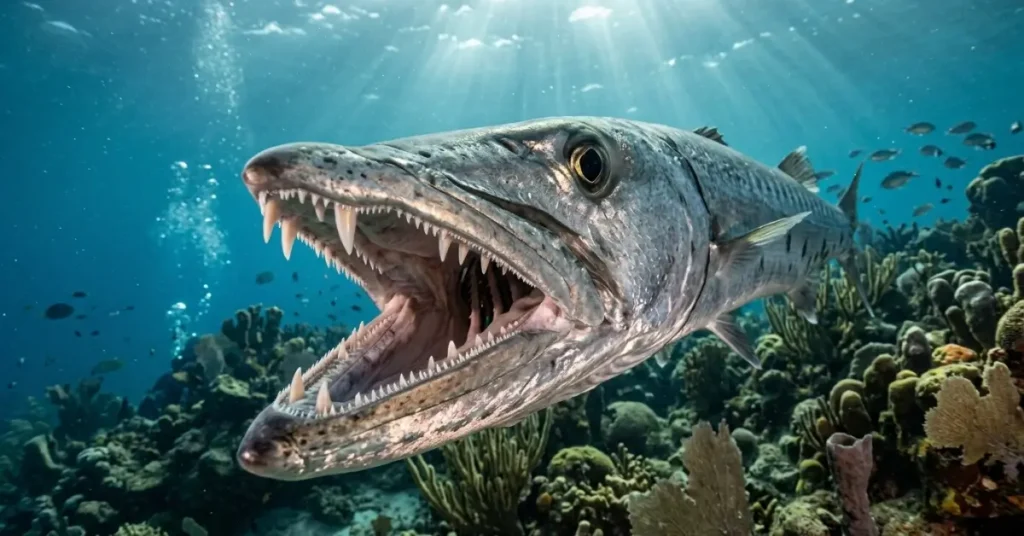
3. Barracuda
Tooth Design: Two distinct sets of teeth share the same mouth: an outer row of small, closely packed triangular teeth, and an inner row of much larger, fang-like teeth.
Why Their Teeth Are Sharp: The outer teeth function as a shearing edge, similar in shape to a piranha’s, while the inner fangs are elongated and needle-like for piercing. Combining both tooth types lets a barracuda impale fast-moving prey and slice it apart in the same strike.
What Their Teeth Are Used For: The long fangs grip and immobilize prey while the outer teeth shear it into pieces small enough to swallow.
Key Measurements: The inner fangs are long enough that the upper jaw has matching sockets to accommodate them when the mouth closes.
Interesting Fact: As ambush predators built for speed, barracudas evolved teeth optimized to do damage in a single fast strike rather than through prolonged chewing.
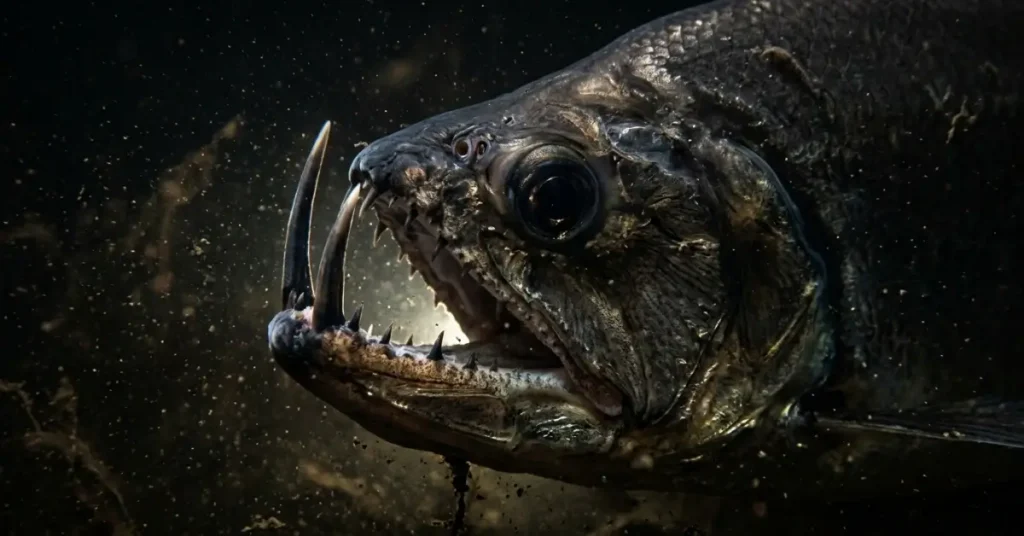
4. Payara (“Vampire Fish”)
Tooth Design: Two long, curved fangs project from the lower jaw, alongside smaller conical teeth used for gripping.
Why Their Teeth Are Sharp: The fangs taper to fine piercing points rather than a cutting blade edge, a different category of sharpness than a shark’s or piranha’s tooth.
What Their Teeth Are Used For: Impaling fast, slippery prey, including piranhas, which make up a significant part of the payara’s diet.
Key Measurements: The fangs commonly reach around 10-15 cm (roughly 4-6 in), among the longest teeth relative to body size of any fish. Upper-jaw sockets house the fangs when the mouth is closed.
Interesting Fact: Without those sockets, the payara’s own fangs would physically prevent it from closing its mouth.
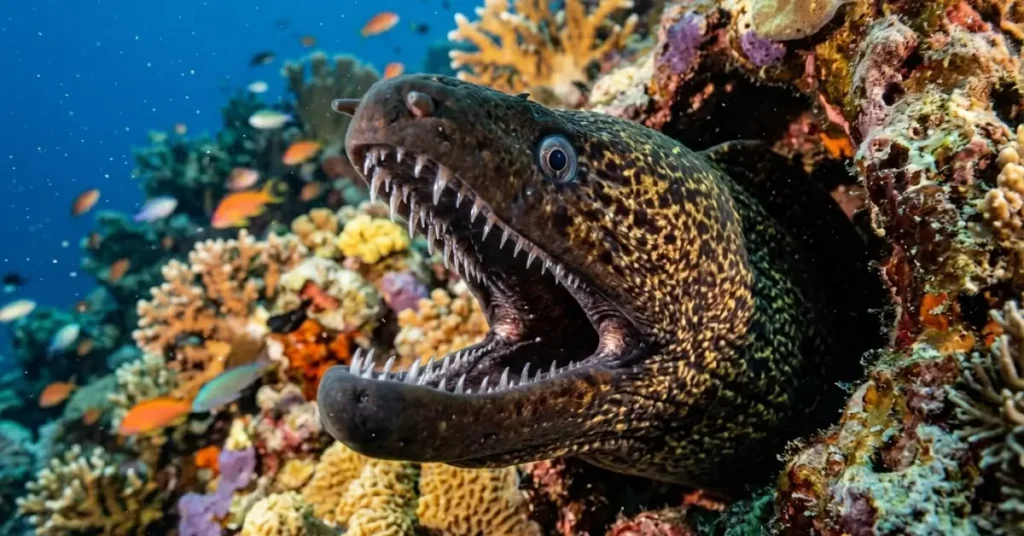
5. Moray Eel
Tooth Design: Long, backward-curving, needle-like teeth line the jaw, and morays are one of the only vertebrates known to have a second, independently mobile set of jaws inside their throat.
Why Their Teeth Are Sharp: Research led by biologist Rita Mehta, published in Nature in 2007, documented that these pharyngeal jaws shoot forward into the mouth, grab hold of prey with their own teeth, and pull it back into the throat to be swallowed. The backward curve of the teeth prevents gripped prey from slipping free.
What Their Teeth Are Used For: Because moray eels can’t generate strong suction to swallow prey whole underwater the way many fish do, the second jaw substitutes raw grip and piercing ability for suction feeding.
Key Measurements: Tooth count and length vary by species, but the functional pharyngeal-jaw mechanism is unique among bony fishes studied to date.
Interesting Fact: This “alien-style” second jaw remained undocumented in scientific literature until the 2007 study, despite morays being widely studied for decades beforehand.
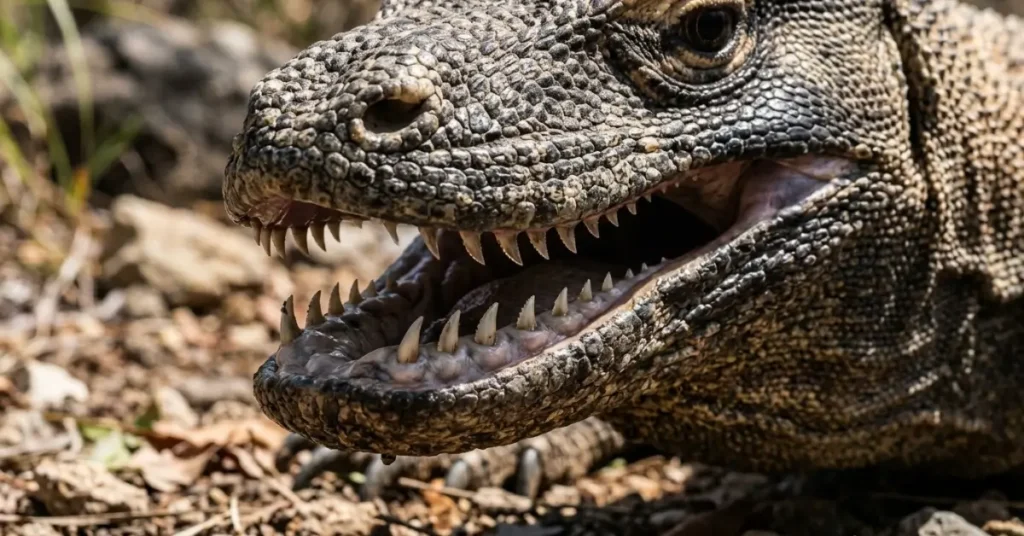
6. Komodo Dragon
Tooth Design: Curved, blade-shaped, serrated teeth in a form scientists call “ziphodont,” also seen in many carnivorous dinosaurs.
Why Their Teeth Are Sharp: A 2024 imaging study found that Komodo dragon teeth carry a thin iron-enriched coating concentrated along their serrations and tips. Researchers concluded the coating likely helps reinforce the cutting edges, letting fine serrated points resist wear despite the teeth having only a thin overall enamel layer.
What Their Teeth Are Used For: Ripping and tearing flesh from prey ranging from smaller reptiles to large mammals such as deer and water buffalo.
Key Measurements: The iron coating measured only about 1-2 micrometers thick, concentrated almost entirely along the serrated edges.
Interesting Fact: This was the first documented case of iron reinforcement in a carnivorous reptile’s teeth, and researchers suggest it may offer clues about how serrated-toothed dinosaurs, including relatives of Tyrannosaurus rex, kept their cutting edges functional.
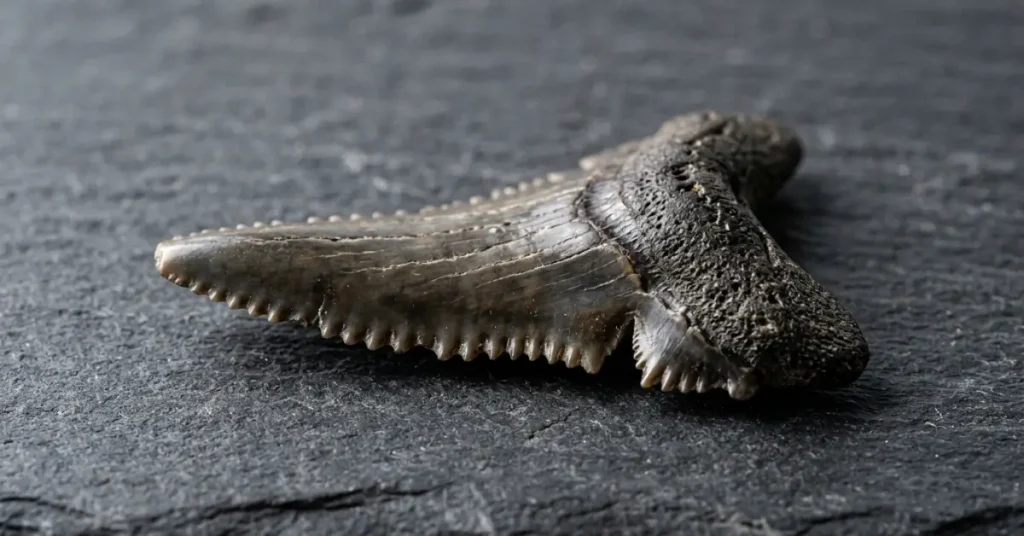
7. Tiger Shark
Tooth Design: Broad, curved, heavily serrated teeth with a distinctive notch separating a triangular main blade from a smaller secondary blade.
Why Their Teeth Are Sharp: Comparative shark research has found that tiger sharks carry two tiers of serration: larger primary serrations with much smaller secondary serrations layered on top, effectively serrations within serrations. Scientists suggest this structure lets the teeth cut effectively across both soft prey and much tougher material, such as turtle shell.
What Their Teeth Are Used For: Tiger sharks are unusually opportunistic feeders, and their teeth reflect that: capable of shearing soft flesh, sawing through sea turtle shells, and processing an unusually broad range of prey.
Key Measurements: Adult tiger sharks typically measure 11-14 feet (3.3-4.3 m), with some individuals exceeding 18 feet, and their teeth scale up accordingly.
Interesting Fact: Tiger sharks are known for one of the most varied diets of any shark species, a trait researchers link directly to their unusually dual-purpose tooth design.
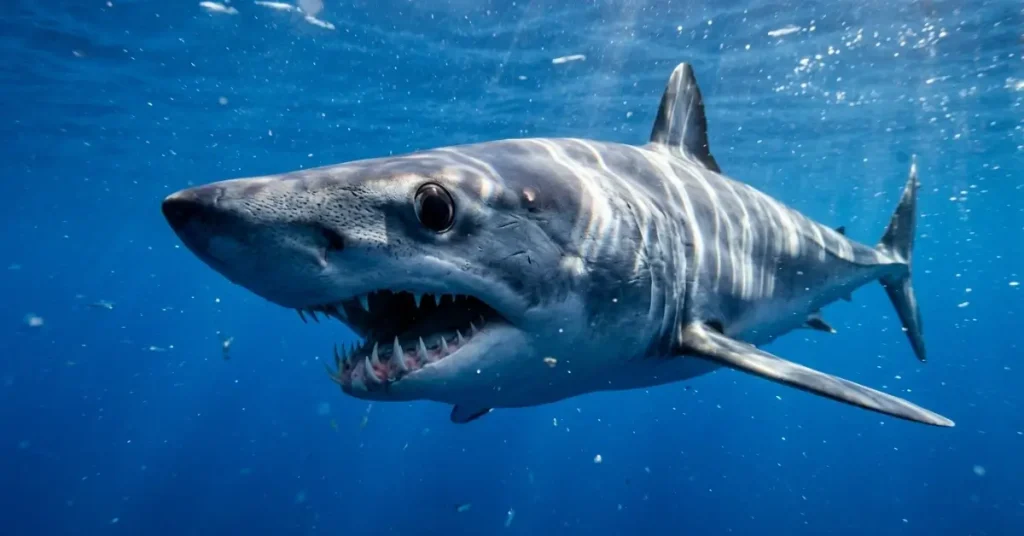
8. Shortfin Mako Shark
Tooth Design: Long, narrow, needle-like teeth that protrude visibly even when the mouth is closed, unlike the great white’s flatter, heavily serrated blades.
Why Their Teeth Are Sharp: Mako teeth lack the coarse serrations seen in great whites and tiger sharks, relying instead on a fine, smooth-edged point built for gripping rather than sawing. This design favors piercing and holding fast-moving, slippery prey.
What Their Teeth Are Used For: Capturing agile prey such as squid, mackerel, and tuna, species the mako, the fastest shark in the ocean, is built to chase down rather than ambush.
Key Measurements: Mako teeth are typically longer and narrower relative to jaw size than those of most other large sharks, reflecting their grip-and-hold rather than slice-and-tear feeding style.
Interesting Fact: The mako’s smooth-edged tooth design is considered evolutionarily older than the serrated blade teeth of great whites, which are thought to have evolved from a mako-like ancestor as diets shifted toward larger marine mammals.
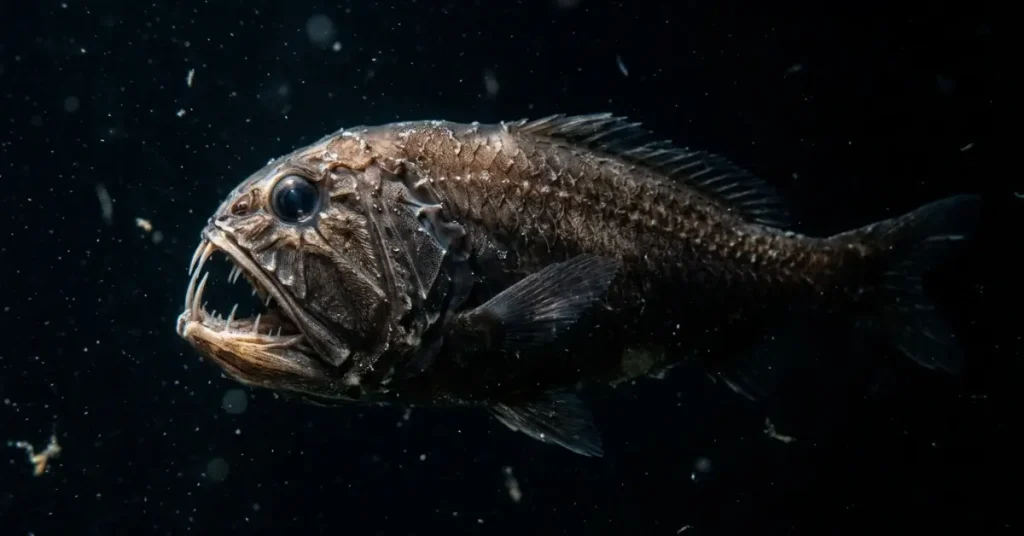
9. Fangtooth Fish
Tooth Design: A small deep-sea fish with two long, needle-like fangs in the lower jaw and additional sharp teeth lining the upper jaw.
Why Their Teeth Are Sharp: According to research from institutions including the Smithsonian and NOAA, the fangtooth has the largest teeth relative to body size of any fish in the ocean. The fangs are so disproportionately long that they slide into sockets near the fish’s brain when the mouth closes, preventing the fish from injuring itself.
What Their Teeth Are Used For: Gripping slippery prey such as squid and other fish in the food-scarce environment of the deep sea, where a missed meal may not come again for a long time.
Key Measurements: Adult fangtooth fish reach only about 15-18 cm (6-7 in) in length, yet their fangs are proportionally the largest of any marine species studied.
Interesting Fact: Despite its fearsome appearance in photographs, the fangtooth is a small, largely defenseless fish that relies on sensory organs rather than eyesight to detect prey in near-total darkness.
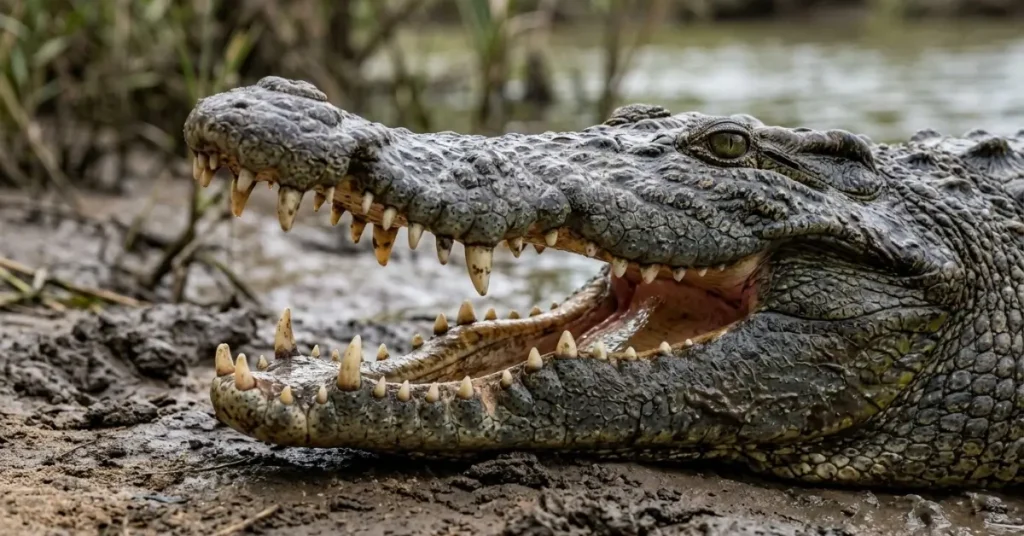
10. Saltwater Crocodile
Tooth Design: Around 66 cone-shaped teeth built for gripping rather than cutting.
Why It Makes the List: Saltwater crocodile teeth are pointed enough to pierce hide and flesh, but their main role isn’t fine cutting. It’s holding prey in an inescapable grip while immense bite force does the damage. This species earns its place through gripping specialization rather than blade-like sharpness.
What Their Teeth Are Used For: Gripping prey during a strike, then holding on through a rapid spinning maneuver known as the death roll, which tears off manageable pieces.
Key Measurements: In a study covering all 23 living crocodilian species, researcher Gregory Erickson and colleagues recorded the saltwater crocodile’s bite force at approximately 3,700 psi, the highest directly measured bite force of any living animal. For comparison, an adult human bites with roughly 150-200 psi.
Interesting Fact: Bite force in crocodilians correlates most strongly with overall body size rather than snout or tooth shape, which helps explain why larger individuals of the same species can bite dramatically harder.
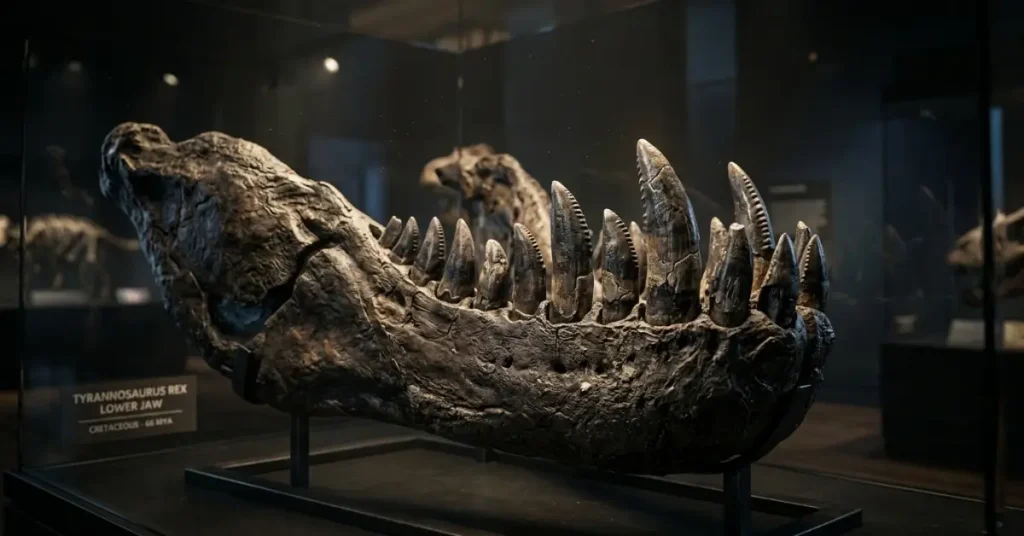
Extinct Comparison: Tyrannosaurus Rex
T. rex isn’t ranked against living animals for the same reason the conodont isn’t: its bite and tooth performance can only be estimated from fossil biomechanics, not observed directly.
Tooth Design: 50-60 thick, serrated, banana-shaped teeth built to grip and crush rather than slice cleanly.
Why It’s Notable: Unlike many large theropods with thin, blade-like slicing teeth, T. rex teeth were serrated but unusually robust. Biomechanical research estimates T. rex bite force at roughly 35,000-57,000 newtons (about 8,000-12,000 lbf), among the highest estimates for any land animal, living or extinct.
What Its Teeth Were Used For: Paleontologists believe the combination of serration and reinforcement let T. rex crush through bone to access marrow that most other predators couldn’t reach.
Key Measurements: Individual T. rex teeth could reach several inches in length, among the largest teeth of any known theropod dinosaur.
Interesting Fact: T. rex tooth design sits closer to the saltwater crocodile end of the spectrum than the piranha end, built more for crushing power than for a fine cutting edge.
Sharpest Teeth vs. Strongest Bite Force
| Category | Winner | Why |
|---|---|---|
| Sharpest tooth structure ever measured | Conodont (extinct) | Microscopic ~2-micrometer tooth tips, confirmed via particle-accelerator fossil imaging |
| Sharpest living cutting teeth | Piranha / Great White Shark | Razor-thin, serrated, or interlocking blade-shaped teeth built for shearing |
| Strongest directly measured bite force | Saltwater Crocodile | ~3,700 psi, the highest recorded among living animals |
| Longest fangs relative to body size | Payara / Fangtooth Fish | Piercing-length fangs rather than a fine cutting edge |
| Best tooth replacement system | Great White Shark | Continuous replacement across an estimated 20,000+ teeth in a lifetime |
| Most specialized dual-purpose teeth | Tiger Shark / Barracuda / Moray Eel | Layered serrations, dual tooth types, or a second set of jaws built for different feeding challenges |
Tooth Size vs. Cutting Ability
Bigger teeth aren’t automatically sharper teeth. A large, blunt tooth can deliver serious force without cutting cleanly, while a small, thin tooth can slice with comparatively little force behind it. A saltwater crocodile’s cone-shaped teeth are larger and more damaging in raw terms than a piranha’s, but they aren’t built for fine cutting, they’re built for gripping under extreme pressure. The payara’s and fangtooth’s fangs are long, but they function through piercing, not slicing. Sharpness is mostly a matter of edge geometry and function rather than overall size, a principle also worth understanding in the context of human tooth structure and enamel.
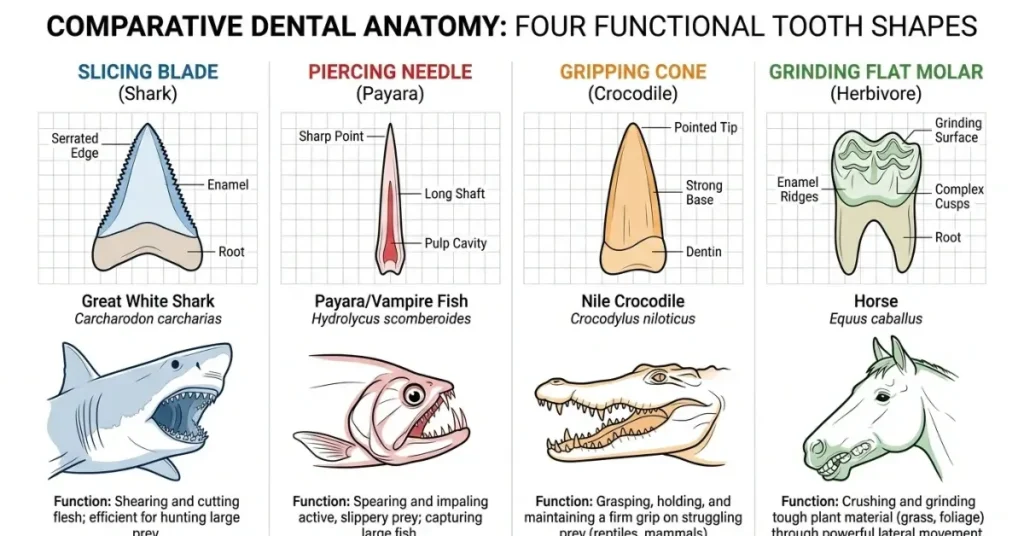
Animal Teeth vs. Human Teeth
Human teeth are generalists: incisors for cutting, canines for tearing, molars for grinding, all adapted to a varied diet. For readers curious about the full set, see our guide to human teeth names and numbers. Most wild predators specialize far more heavily in one direction, favoring slicing, piercing, or gripping depending on what they hunt.
| Animal Type | Tooth Adaptation | Main Purpose |
|---|---|---|
| Slicing predators (sharks, piranhas) | Thin, serrated, or interlocking blades | Shearing flesh with minimal force |
| Piercing predators (payara, fangtooth, barracuda) | Long, narrow, pointed fangs | Impaling fast or slippery prey |
| Gripping predators (crocodilians) | Cone-shaped, evenly spaced teeth | Holding prey during a powerful bite |
| Herbivores | Flat, broad grinding teeth | Breaking down plant fiber |
Another key difference is replacement. Humans get only one permanent set of adult teeth, so a damaged or worn tooth stays that way (more on enamel and why it doesn’t regrow). Sharks, piranhas, and crocodilians continuously or periodically replace teeth throughout life, keeping cutting or gripping edges consistently effective. Research on shark tooth replacement has found that newer teeth generally require less force to penetrate tissue than older, more worn ones, supporting the idea that regular replacement is itself an adaptation for maintaining sharpness. For a broader comparison, see our guide on animal vs. human teeth anatomy.
Frequently Asked Questions:
Which animal has the sharpest teeth?
The sharpest teeth ever measured belonged to the extinct conodont. Among living animals, piranhas and great white sharks have some of the sharpest cutting teeth.
What living animal has the sharpest teeth?
Piranhas and great white sharks are widely considered to have the sharpest living teeth because of their razor-sharp, serrated cutting edges.
Which animal has the strongest bite force?
The saltwater crocodile has the strongest directly measured bite force of any living animal, reaching around 3,700 psi.
Do sharks replace their teeth?
Yes. Sharks continuously replace lost or damaged teeth throughout their lives and can grow more than 20,000 teeth over a lifetime.
Which fish has the longest fangs?
The payara, also known as the vampire fish, has fangs up to 6 inches (15 cm) long, making them among the longest relative to body size.
Why are piranha teeth so sharp?
Piranha teeth are thin, triangular, and tightly interlock to form a razor-like cutting edge, allowing them to slice through flesh with remarkable efficiency.
There isn’t one animal that owns the title of “sharpest teeth,” because sharpness itself isn’t one measurement. The finest cutting structure ever recorded belonged to the conodont, a creature that vanished roughly 200 million years ago and can only be studied through fossil imaging. Among living species, piranhas and great white sharks lead on cutting-edge design, the saltwater crocodile dominates on raw bite force, the payara and fangtooth fish specialize in extreme piercing length, and animals like the tiger shark, moray eel, and Komodo dragon have each evolved distinct engineering solutions (layered serrations, a second set of jaws, or iron-reinforced edges) to keep their teeth functional under heavy use.
Each of these adaptations solves the same evolutionary problem in a different way: getting food into the mouth efficiently, whether through slicing, piercing, gripping, or crushing. Teeth remain one of evolution’s clearest records of how differently species can solve an identical challenge.
This article is based on published zoological and paleontological research, including studies on tooth biomechanics, animal feeding adaptations, fossil tooth structures, and bite-force measurements.
Scientific Sources
- Conodont tooth morphology and particle-accelerator fossil X-ray imaging research, University of Bristol and Monash University
- Crocodilian bite-force studies led by researcher Gregory Erickson and colleagues, covering all 23 living crocodilian species
- Shark tooth replacement and penetration-force research, including comparative studies of tiger shark and sandbar shark dentition
- Komodo dragon tooth enamel and iron-coating research (2024 imaging study)
- Moray eel pharyngeal-jaw research led by Rita Mehta and Peter Wainwright, published in Nature (2007)
- Smithsonian Institution and NOAA Ocean Exploration research on fangtooth fish dentition