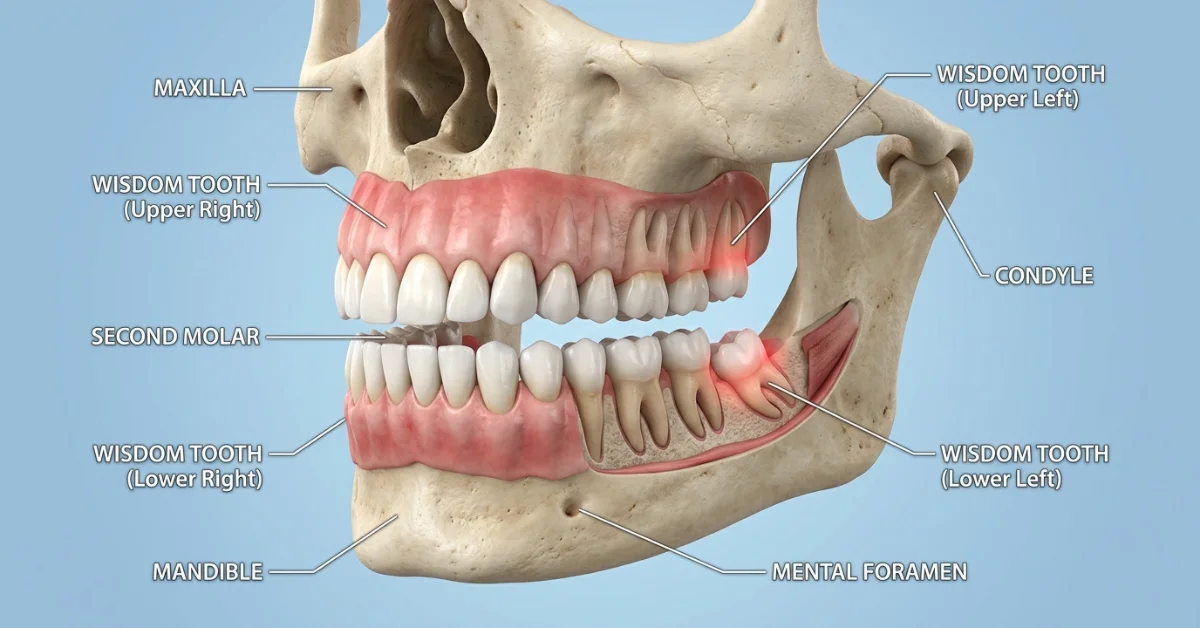
Wisdom Teeth Removal Procedure Name: The Complete Guide to Types, Steps & Recovery (2026)
Learn the wisdom teeth removal procedure name, including third molar extraction, types, steps, recovery, and what to expect before and after surgery.
Quick answer: The medical name for wisdom teeth removal is third molar extraction. Depending on the tooth position, dentists may also call it wisdom tooth extraction, third molar surgery, surgical extraction, or impacted wisdom tooth removal.
This guide explains the different names, types of procedures, removal steps, and recovery timeline.
What Is the Wisdom Teeth Removal Procedure Name?
The official dental term for removing wisdom teeth is third molar extraction.
Dentists use different names depending on how the tooth has developed:
- Simple extraction: Removal of a fully erupted wisdom tooth that can be easily accessed.
- Surgical extraction: Removal of a wisdom tooth that requires an incision in the gum or additional surgical steps.
- Impacted wisdom tooth removal: Removal of a tooth that is trapped under gum tissue or jawbone.
A dentist or oral and maxillofacial surgeon decides the correct procedure after examining the teeth and reviewing dental X-rays.
Common Names for Wisdom Teeth Removal
| Procedure Name | Meaning |
|---|---|
| Third molar extraction | Official medical name for wisdom tooth removal |
| Wisdom tooth extraction | Most common patient term |
| Third molar surgery | Used for complex removal cases |
| Impacted wisdom tooth removal | Removal of trapped wisdom teeth |
| Surgical extraction | Removal requiring additional surgical steps |
Why Are Wisdom Teeth Removed?
Wisdom teeth usually appear between the ages of 17 and 25. Many people do not have enough space in their jaw for these teeth to grow properly.
A dentist may recommend removal if wisdom teeth cause:
- Pain or pressure
- Swollen gums
- Repeated infections
- Tooth decay
- Damage to nearby teeth
- Difficulty maintaining oral hygiene
A panoramic dental X-ray helps determine the tooth position and the safest removal method.
Types of Wisdom Teeth Removal Procedures
| Type | Used For |
|---|---|
| Simple Extraction | Fully erupted wisdom teeth |
| Surgical Extraction | Difficult or partially erupted teeth |
| Impacted Third Molar Removal | Teeth trapped under gum or bone |
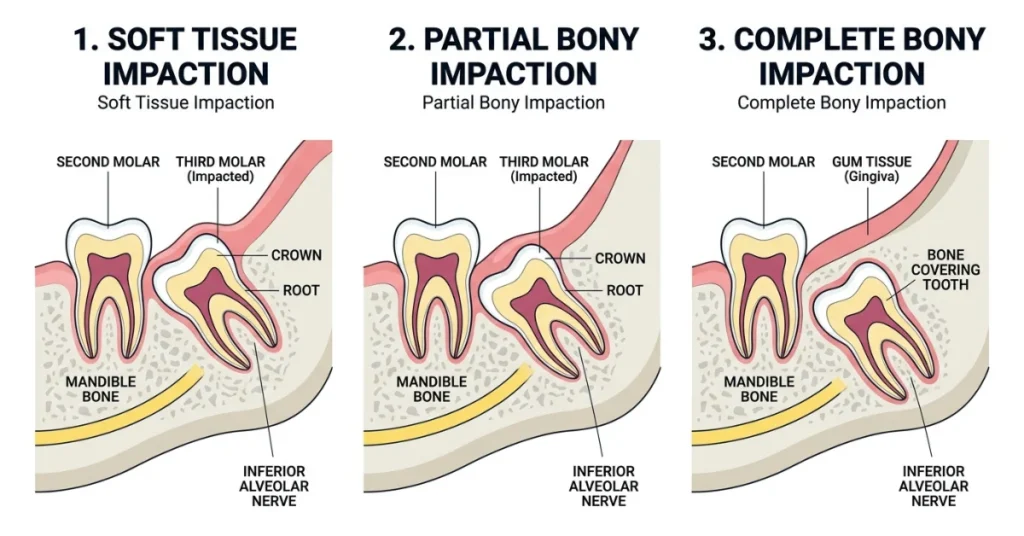
Impacted wisdom teeth are commonly classified as:
- Soft tissue impaction
- Partial bony impaction
- Complete bony impaction
How Is Wisdom Teeth Removal Done?
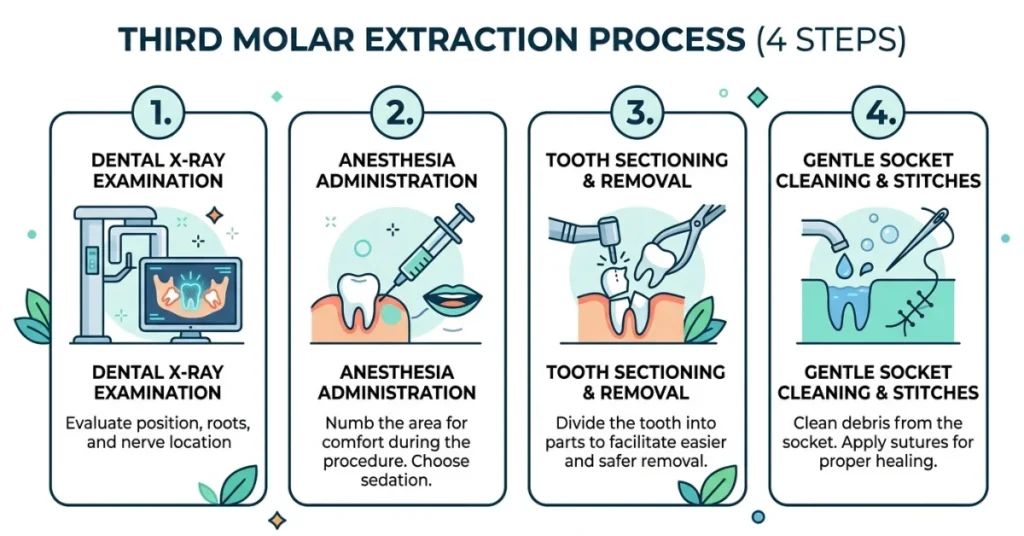
The wisdom tooth extraction procedure usually involves these steps:
- The dentist examines X-rays and checks the tooth position.
- Local anesthesia or sedation is given to keep the patient comfortable.
- A small gum opening may be made for impacted teeth.
- Bone removal or tooth sectioning may be needed in difficult cases.
- The tooth is removed and the area is cleaned.
- Stitches may be placed to support healing.
Most wisdom teeth removal procedures take around 20 to 60 minutes, depending on the number of teeth and complexity.
Wisdom Teeth Removal Recovery Time
Most people start feeling better within a few days after the procedure. Recovery depends on the difficulty of the extraction and the number of teeth removed.
During recovery:
- Eat soft foods
- Avoid smoking and using straws
- Keep the extraction area clean
- Follow dentist instructions
- Take prescribed medication as directed
Many patients return to normal activities within two to three days, while complete healing may take several weeks.
Wisdom Teeth Removal Aftercare Tips
Proper aftercare supports faster healing and lowers the risk of complications.
Helpful tips include:
- Eat soft foods such as yogurt, soup, eggs, and mashed potatoes.
- Avoid hard, crunchy, spicy, or very hot foods.
- Avoid disturbing the extraction site.
- Brush carefully around the area.
- Avoid heavy physical activity during early recovery.
Following aftercare instructions can reduce the chance of problems like dry socket.

Possible Risks After Wisdom Teeth Removal
Wisdom tooth removal is a common dental procedure, but some risks may occur.
Possible complications include:
- Dry socket
- Infection
- Bleeding
- Temporary numbness
- Jaw discomfort
- Swelling
Contact your dentist if you experience severe pain, fever, or signs of infection.
Frequently Asked Questions:
What is the wisdom teeth removal procedure called?
The official dental name for wisdom teeth removal is third molar extraction. More complex cases may be called third molar surgery or impacted wisdom tooth removal.
Is wisdom teeth removal considered surgery?
Yes, impacted wisdom teeth removal is considered oral surgery. Simple removal of fully erupted wisdom teeth is usually less complicated.
How painful is wisdom teeth removal?
The procedure itself should not be painful because dentists use anesthesia or sedation. Mild swelling and soreness are normal during recovery.
How long does wisdom teeth removal take?
Most wisdom teeth removal procedures take between 20 and 60 minutes. The time depends on whether the teeth are erupted, impacted, or difficult to remove.
How long does it take to recover from wisdom teeth removal?
Most people recover significantly within one week, although complete healing of the extraction area can take several weeks.
What happens if you do not remove impacted wisdom teeth?
Impacted wisdom teeth may lead to pain, infections, gum problems, or damage to nearby teeth. A dentist can determine whether removal is necessary.
What is the difference between wisdom tooth extraction and surgery?
Wisdom tooth extraction refers to removing a tooth, while wisdom teeth surgery usually involves more complex cases that require additional steps.
Conclusion
The wisdom teeth removal procedure name depends on the condition and position of the tooth. The most common dental terms are third molar extraction, wisdom tooth extraction, third molar surgery, and impacted wisdom tooth removal.
Understanding these terms helps patients know what to expect before treatment. With professional dental care and proper aftercare, most people recover safely after wisdom teeth removal.
Medical accuracy note: This article is written for educational purposes and is based on general dental principles and scientific facts. It does not replace professional diagnosis or treatment advice.