
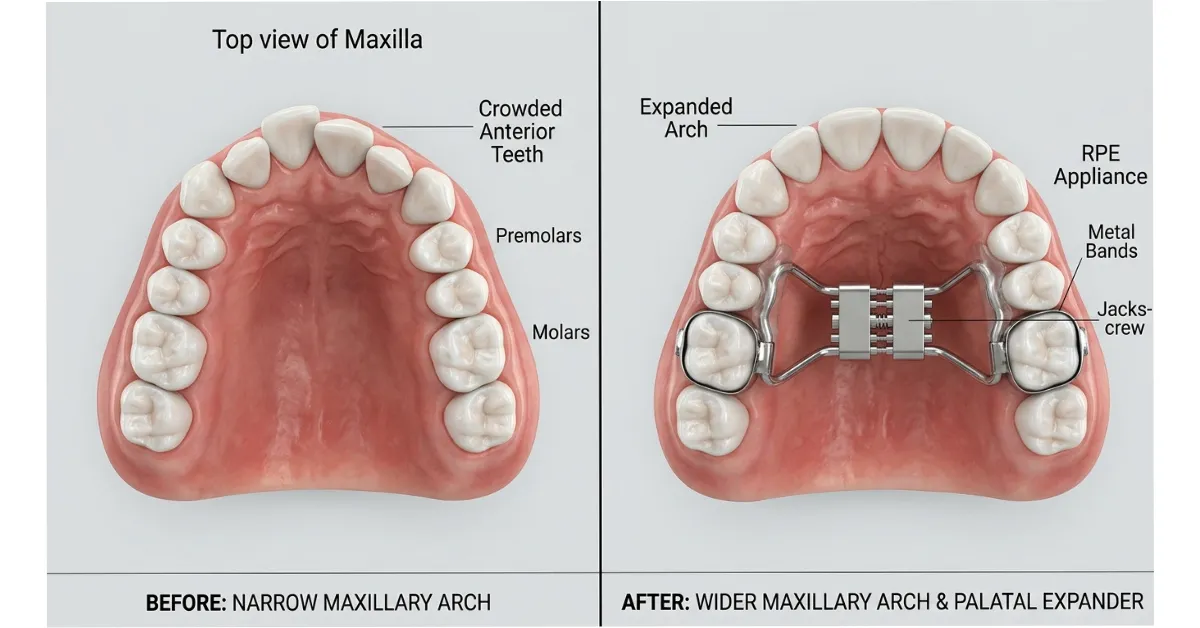
Palate Expander Before and After: Full Results Guide
This article is purely based upon the dental and scientific fundamentals and it doesnt replace the advice of a proffesionalist
See real palate expander before and after changes: arch width, the front-tooth gap, adult options, timelines, and cost, explained plainly.
A palate expander before and after typically shows a wider upper dental arch, a corrected crossbite, and more room for crowded teeth, changes that unfold over weeks of active widening and months of stabilization, not overnight. The device does not usually create a dramatic new smile by itself. It rebuilds the foundation underneath the smile, and that foundation is what makes everything else, from erupting teeth to a later phase of braces, work better.
This guide covers what actually changes for both children and adults, what the process looks like week by week, what a real before and after photo shows (and does not show), and the practical questions people search for once they are already considering treatment: pain, cost, and how long it lasts.
What Is a Palate Expander?
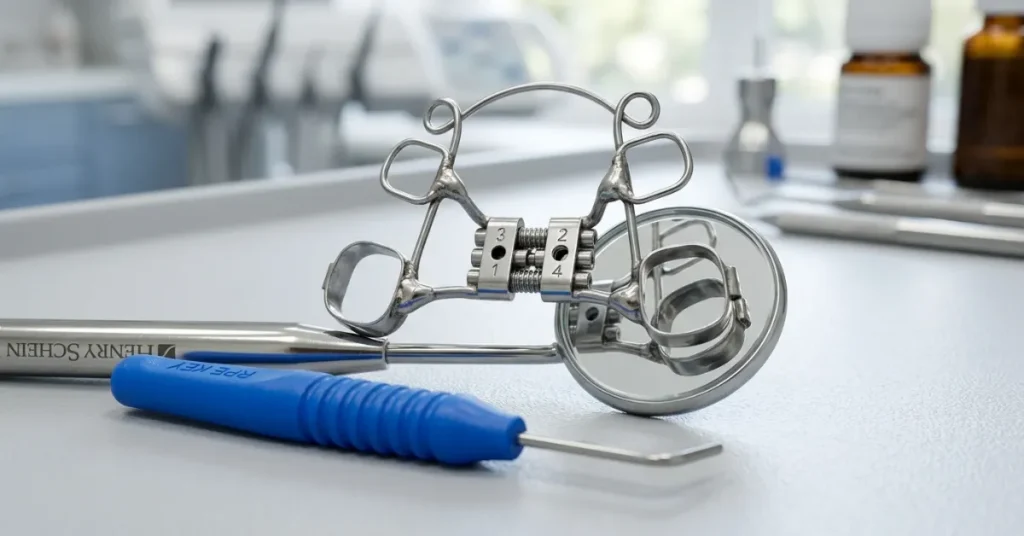
A palate expander, also called a palatal expander or orthodontic palatal expander, is a custom-fitted device that widens the upper jaw (the maxilla) by applying steady, gentle pressure across the roof of the mouth. Most versions attach to the upper back molars. A small screw in the center, turned with a key, gradually pushes the two halves of the palate apart at the mid-palatal suture, the seam where the left and right sides of the upper jaw meet. As the suture separates, new bone fills in the gap, which is what makes the wider arch permanent rather than temporary.
Orthodontists most often prescribe expanders to correct a posterior crossbite (upper back teeth biting inside the lower teeth), relieve crowding, create room for erupting permanent teeth, and in some cases improve nasal airflow. Expansion can also help avoid tooth extraction, tooth impaction, or excessive tooth flaring later in treatment.
What Does a Palate Expander Before and After Actually Show?
The honest, unglamorous answer: a wider arch, a corrected bite, and (temporarily) a gap between the front teeth. That is the core of it. Specifically, a typical before and after includes:
- A broader upper arch, often several millimeters wider from molar to molar than before treatment
- A corrected crossbite, where upper teeth that tucked inside the lower teeth now sit outside them, as they should
- More space for crowded or incoming teeth, reducing the odds of extractions
- A temporary gap between the two front teeth that opens during active widening and usually closes on its own
- A subtly broader smile arc, since a wider palate gives the front teeth more room to sit forward instead of tipped inward
- In some patients, easier nasal breathing, since widening the palate also widens the floor of the nasal cavity
What it does not typically show: a dramatically different face shape, a finished smile (braces or aligners usually follow), or results visible within days. Expansion changes the skeletal foundation. The cosmetic payoff comes later, once that foundation is used to align the teeth.
What You’ll Actually See in Photos: Before and After, Step by Step
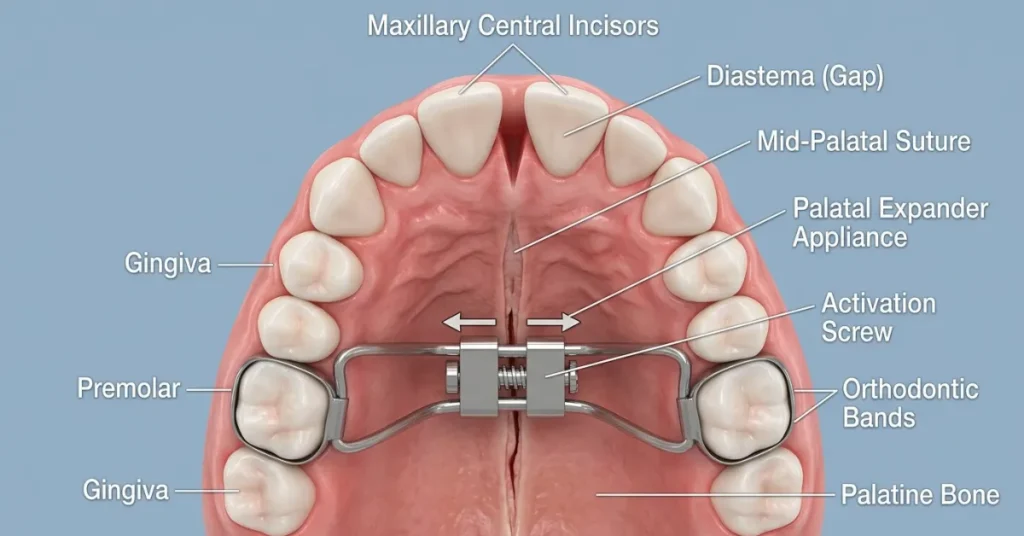
Most articles describe this in the abstract. Here is what changes look like at each stage, in terms you could match to an actual photo.
Day 1, right after placement. No visible change yet. The appliance sits across the roof of the mouth, usually a metal bar with a central screw, bonded or banded to the upper molars. The front teeth still look the same.
Weeks 1 to 3, active turning. This is when the visible change happens. As the screw is turned (often once a day, a fraction of a millimeter at a time), a gap starts to open between the two upper front teeth. This surprises almost everyone who has not been warned about it. It looks like a small triangular space, sometimes 2 to 6 millimeters wide by the end of active expansion, and it is the clearest visual sign that the suture is separating as intended, not a sign of a problem.
End of active expansion, week 3 to 6. The upper arch has reached its target width. Photographed from below (the classic orthodontic “occlusal” photo), the palate looks noticeably broader and often flatter, since a narrow, high-vaulted palate tends to flatten out as it widens. From the front, the smile may look a bit broader at the back, though the front-tooth gap is often the most visible change at this stage.
Months 2 to 6, stabilization. The expander stays in place (not being turned) while new bone fills the widened suture. The front-tooth gap typically starts closing on its own during this phase, as the front teeth drift back together, pulled by the fibers connecting them across the midline. By the end of stabilization, most patients see the gap mostly or fully closed without any additional treatment.
After the expander comes off. The arch width is now load-bearing structure, not just a temporary stretch. If braces or aligners follow, that is the phase where the visible “after” most people picture, straight, evenly spaced teeth, actually takes shape. The expander’s job was to make that phase possible.
How Palate Expansion Works in Children vs. Adults
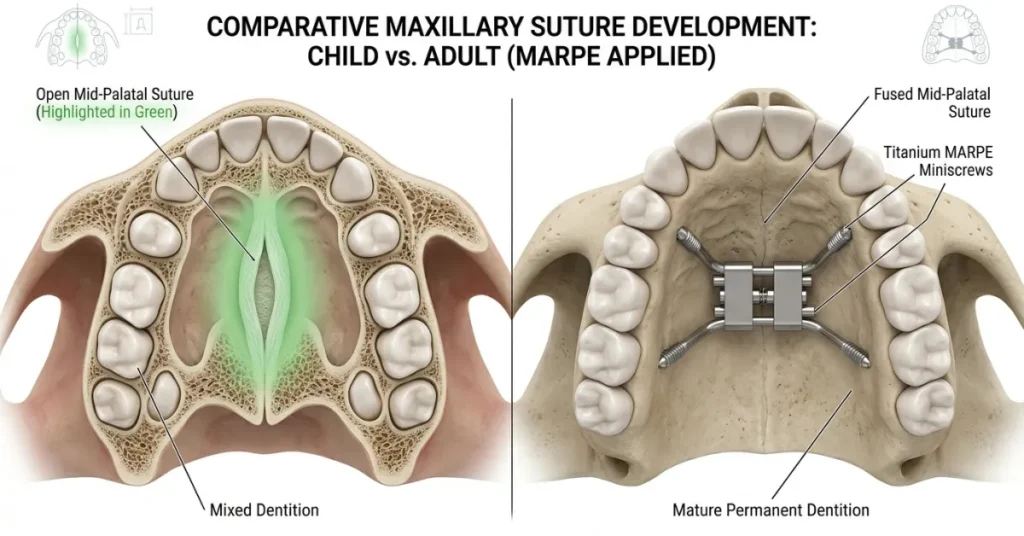
This is the single biggest factor in what a before and after actually looks like, and it is where most guides split into two separate, incomplete articles.
| Factor | Children & Teens | Adults |
|---|---|---|
| Suture status | Still open or lightly fused; separates readily under gentle pressure | Fully fused in most adults, generally by the late teens to early twenties |
| Typical device | Fixed rapid palatal expander (Haas or Hyrax design), sometimes a removable plate for mild cases | MARPE (miniscrew-assisted) or SARPE (surgically assisted), depending on how fused the suture is |
| How expansion happens | Bone separates and remodels naturally, guided by the device | Bone is either helped apart with miniscrew anchors (MARPE) or surgically released by an oral surgeon (SARPE) before expansion |
| Active expansion time | Roughly 2 to 6 weeks | Similar active-turning window, but planning and imaging beforehand takes longer |
| Total appliance time | Roughly 6 months to as long as 18 months including a Phase 1 plan | Roughly 6 to 12 months, since mature bone stabilizes more slowly |
| What usually follows | Braces or aligners once permanent teeth are in | Braces or aligners to finish tooth alignment after the arch is widened |
In children, the mid-palatal suture has not fully fused, so a standard rapid palatal expander can separate it with tooth-borne pressure alone. This is why the American Association of Orthodontists and most orthodontists consider expansion most predictable and effective before the suture matures, generally in the late childhood to early teenage years, though the right age depends on each patient’s skeletal development, not a fixed birthday.
In adults, the suture has typically finished fusing, so tooth-borne pressure alone often is not enough to separate it predictably. Depending on how fused the bone is, an orthodontist may recommend MARPE, which uses small titanium miniscrews anchored into the palate itself to direct force more precisely into the bone rather than the teeth, or SARPE, where an oral surgeon first weakens the suture surgically so it can be expanded afterward. Surgically assisted expanders are typically reserved for moderate to severe cases in adults whose facial bones are fully developed. Adult expansion is still possible and can still produce a genuine before and after, but it requires more diagnostic planning than expansion in a growing child.
The Timeline: When You Actually See Each Change
Expansion happens in two distinct phases, and confusing them is where most “how long does it take” confusion comes from.
Active expansion (2 to 6 weeks). The screw is turned on a schedule, often daily, opening the arch a fraction of a millimeter at a time. This is when nearly all the visible width change and the front-tooth gap happen.
Stabilization or retention (roughly 3 to 6 months, sometimes longer). The expander stays in place without further turning while new bone fills in behind the widened suture. This phase does not look dramatic day to day, but it is what makes the width permanent. Removing the expander too early, before the bone has filled in, risks the arch relapsing partway back toward its original width.
Add it up, and a typical Phase 1 expander treatment in a child runs about 9 to 18 months from placement to the point the expander comes off, according to orthodontic timelines commonly cited by practicing orthodontists, with several more months of braces or aligners if those follow. In adults, appliance wear commonly runs 6 to 12 months, reflecting the slower response of mature bone, per palatal-expander treatment overviews from orthodontic providers, and MARPE or SARPE cases add planning and, for SARPE, a short recovery period after the surgical step.
The Front-Tooth Gap: Why It Happens and What It Means
If there is one thing that alarms people mid-treatment, it is this. A visible triangular gap opens between the two upper front teeth partway through active expansion. It is normal, expected, and actually a good sign: it means the two halves of the upper jaw are separating along the mid-palatal suture as designed, and the front teeth, which sit on either side of that suture, are simply following the bone apart.
In most cases the gap closes on its own during the stabilization phase, as the front teeth drift back toward each other, pulled together by the connective tissue fibers that cross the midline. If a gap persists after stabilization, an orthodontist can close it with a short phase of braces or aligners; it is a common, easily managed finish, not a sign that anything went wrong.
Is a Palate Expander Painful?
Most patients describe pressure and tightness rather than sharp pain, both when the expander is first placed and after each activation. Mild discomfort in the first few days is typical and can be managed with over-the-counter pain relievers such as acetaminophen or ibuprofen; severe or persistent pain is not expected and is worth a call to the orthodontist’s office. Other common, temporary adjustments during the first week or two include:
- A “full” feeling across the roof of the mouth
- Temporary changes to speech, since the tongue has to relearn where it touches the palate
- Increased saliva production
- Mild soreness in the back teeth, especially right after an adjustment
- Food occasionally getting caught around the appliance, which makes careful cleaning more important during treatment
These effects fade as the mouth adapts, typically within one to two weeks.
What a Palate Expander Costs
Cost is one of the most-searched follow-up questions and one of the least answered by before-and-after guides. Based on published U.S. orthodontic fee data and pricing information from multiple orthodontic providers, typical ranges are:
| Treatment type | Typical U.S. cost range |
|---|---|
| Standard fixed expander (appliance only) | $1,000 to $2,500 |
| Expander as part of a full Phase 1 plan (appliance, monitoring, retention) | $2,000 to $3,800 |
| Invisalign Palatal Expander System (removable, child) | $1,900 to $2,500 |
| Adult MARPE | Generally higher than a standard child expander, due to miniscrews and added imaging; varies significantly by provider |
| Adult SARPE (surgical) | $5,000 to $10,000 or more, combining oral surgeon, anesthesia, and orthodontic fees |
Actual cost depends heavily on location, the provider, and whether the expander is billed as a standalone appliance or bundled into a broader orthodontic plan. Many dental insurance plans cover a portion of expander treatment under orthodontic benefits; check your specific plan and ask the orthodontic office for a written estimate before starting.
Common Misconceptions About Palate Expander Results
“The gap means something went wrong.” It does not. It is one of the most predictable, expected parts of the process, and it is described in the same way by orthodontists across the country precisely because it happens to nearly everyone.
“Expansion alone will straighten my teeth.” Usually not. An expander widens the arch and corrects bite width; it does not rotate, tip, or fully reposition individual teeth. Most patients, children and adults alike, need a follow-up phase of braces or clear aligners to finish alignment once the arch has been widened.
“Adults can’t get palate expansion.” They can, but the approach and appliance differ from a child’s treatment because the mid-palatal suture is usually fully fused by adulthood. MARPE or SARPE, not a standard fixed expander, is typically the path for adult skeletal expansion.
“A wider palate means a dramatically different face.” Expansion can subtly broaden the smile and, in some patients with a narrow palate, modestly improve nasal breathing, but it is not a facial-restructuring procedure. Dramatic facial change is not a realistic goal or a typical result.
Palate Expander vs. Braces: What’s the Difference?
They solve different problems and are often used together, not as alternatives. A palate expander widens the jaw itself by moving bone at the mid-palatal suture, creating physical space in the arch. Braces (and clear aligners) move and rotate individual teeth within whatever space already exists in the jaw; they do not widen the bone itself. In a staged treatment plan, the expander typically comes first to build the space, and braces or aligners follow to use that space to align the teeth.
Who Is a Good Candidate?
A good candidate, child or adult, generally has a diagnosed narrow upper jaw, a posterior crossbite, or crowding that cannot be resolved by moving teeth alone. For children, timing matters: expansion is most predictable while the mid-palatal suture is still open, which is one reason orthodontists recommend a first evaluation by age 7, even if treatment does not start right away. For adults, candidacy depends more on how fused the suture is, overall gum and bone health, and whether MARPE or SARPE is the safer, more predictable route. An orthodontic evaluation, including imaging, is the only reliable way to know which category a given patient falls into.
Frequently Asked Questions
How long before you see results from a palate expander?
Visible changes, including increased arch width and sometimes a gap between the front teeth, can appear within the first 2 to 6 weeks of active expansion. The final stable result takes longer because the expander is usually kept in place for several months afterward while the supporting bone stabilizes.
Does the gap between the front teeth close on its own?
Usually, yes. The gap that develops during active expansion often becomes smaller during the stabilization phase as the front teeth naturally move closer together. If it does not fully close, braces or aligners can usually correct it.
Do palate expander results last?
They can be stable when the expansion and retention phases are completed properly. The retention period allows the supporting tissues and newly formed bone to stabilize the expanded arch, reducing the chance of significant relapse.
Can adults get a palate expander?
Yes, but treatment is different because the mid-palatal suture becomes more resistant to conventional expansion with skeletal maturity. Adults may be candidates for MARPE or, in some cases, surgically assisted expansion such as SARPE, depending on their anatomy and treatment needs.
Does a palate expander hurt?
Most people experience pressure, tightness, or mild soreness rather than significant pain, particularly after adjustments. Severe, persistent, or worsening pain is not expected and should be reported to the orthodontist.
Will I need braces after a palate expander?
Often, yes. A palate expander primarily changes the width of the upper dental arch, while braces or clear aligners can then straighten and position individual teeth. Whether both are needed depends on the person’s specific orthodontic problem.
How much does a palate expander cost?
The cost varies considerably by location, appliance type, orthodontist, and whether other treatment is included. A child’s conventional expander may cost around $1,000 to $2,500 for the appliance, while comprehensive treatment can cost more. Adult MARPE or surgically assisted expansion can be substantially more expensive.
What’s the difference between a palate expander and braces?
A palate expander is designed primarily to widen the upper jaw or dental arch, while braces move and align individual teeth. They solve different problems and may be used together when both arch expansion and tooth alignment are needed.
Key Takeaways
A palate expander before and after is a two-part story: a few weeks of visible widening and a temporary front-tooth gap, followed by several months of quiet stabilization that makes the change permanent. In children, a standard fixed expander usually does the job because the mid-palatal suture is still open. In adults, the same result generally requires MARPE or SARPE because the suture has fused. Either way, the expander itself rarely produces the finished smile; it builds the foundation, wider arch, corrected crossbite, more room for teeth, that a later phase of braces or aligners typically finishes. If you are trying to judge whether treatment is working, focus on the two real markers: the arch getting measurably wider during active turning, and that width holding steady through stabilization. An orthodontic evaluation is the only way to know which type of expansion, timeline, and cost applies to your specific case.

One Comment