Crooked Teeth: Lucky or Not? What the Evidence Says
Crooked teeth lucky or not? They’re neither: the belief comes from culture and superstition, not evidence. Here’s what dentistry says.
Crooked teeth are not a sign of good or bad luck. No dental, genetic, or scientific evidence links the alignment of your teeth to fortune, personality, or life outcomes. The idea that crooked teeth are “lucky” comes almost entirely from culture, folklore, and a handful of internet trends, most famously Japan’s yaeba beauty movement. What crooked teeth do reliably affect is oral health and, in some cases, how people perceive your appearance, which is a very different thing from luck.
This article covers where the “lucky” idea actually comes from, why some cultures see crooked teeth as charming while others see them as a flaw to fix, what causes crooked teeth in the first place, whether they carry any real health risk, and the one place where “luck” and teeth alignment genuinely do intersect: how straight teeth can quietly influence first impressions.
Is Having Crooked Teeth Actually Lucky?
No. There is no dental research, psychological study, or scientific body of evidence showing that crooked teeth cause good or bad luck in a person’s life. Luck, in the sense of random favorable or unfavorable events, is not connected to tooth alignment.
What is real is that different cultures assign different meanings to crooked teeth, the same way different cultures assign different meanings to freckles, moles, or the shape of someone’s eyebrows. Those meanings are cultural beliefs, not evidence of cause and effect. A person with straight teeth doesn’t win the lottery more often, and a person with crooked teeth doesn’t get into fewer car accidents. The honest answer is that “lucky or not” is the wrong frame entirely: crooked teeth are neither.
Where the “Crooked Teeth Are Lucky” Idea Comes From
The belief shows up in a few distinct places, and they’re worth separating out because they don’t all mean the same thing.
Yaeba: Japan’s Crooked-Teeth Beauty Trend
The most well-documented example is yaeba (八重歯), a Japanese term for a snaggletooth look, usually an upper canine that overlaps or juts out slightly higher than the surrounding teeth. In Japanese pop culture, yaeba is associated with youthfulness and a childlike, approachable cuteness rather than luck specifically. The trend gained major visibility around 2011 after singer Tomomi Itano popularized the look, and some dental clinics in Japan began offering tsuke yaeba, a cosmetic procedure that adds removable caps to create the look artificially, typically costing a few hundred dollars.
It’s worth being precise here: yaeba is a beauty and youthfulness association, not a superstition about fortune. It’s also a minority preference within Japan, not a universal national standard, and it applies mainly to one specific tooth position rather than crooked teeth in general.
Gap Teeth and Other Tooth Folklore Around the World
Separately from yaeba, some West African cultural traditions associate a gap between the front teeth, called a diastema, with good fortune, fertility, or attractiveness. This is a different physical trait than general crookedness, but the two get conflated online because both involve teeth that don’t fit the conventional “straight and even” ideal. Various smaller folk traditions from Scandinavia to Russia to Mexico also attach superstition to baby teeth, milk-tooth rituals, and how a lost tooth is disposed of, but these are about tooth loss and the tooth fairy tradition, not adult tooth alignment.
Why “Spiritual Meaning of Crooked Teeth” Sites Say What They Say
If you search this topic, you’ll run into a cluster of sites claiming crooked teeth represent things like unresolved karma, inner strength, or a connection to the “astral realm.” These are New Age or spiritual-wellness interpretations, not researched claims, and they frequently contradict each other from one site to the next, one calling the same trait a sign of resilience, another calling it a symbol of emotional imbalance. That inconsistency is itself a useful clue: when different sources assign opposite meanings to the same physical trait, it’s a sign you’re looking at personal interpretation rather than an established belief system, let alone evidence.
Why the West Usually Sees Crooked Teeth as a Flaw
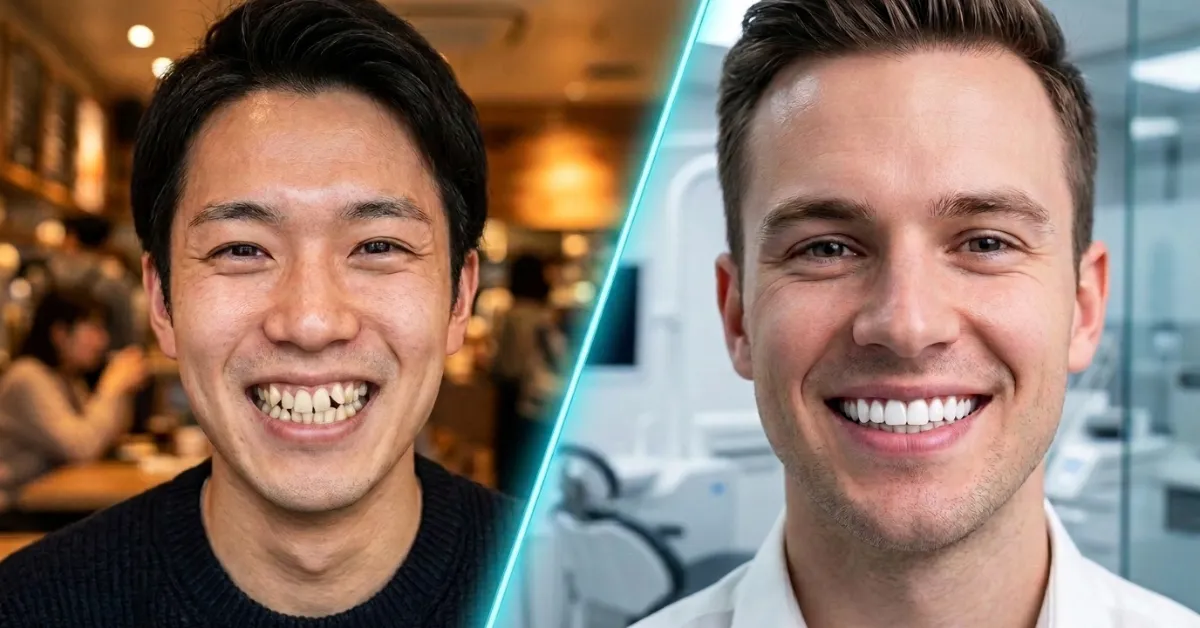
In most Western countries, including the United States, straight teeth are treated as the aesthetic default, and orthodontic correction is common and normalized. A survey by the American Academy of Cosmetic Dentistry found that people tend to perceive individuals with straight teeth as more attractive, friendly, and approachable than those with visibly misaligned teeth, a bias that shows up in dating, hiring, and social contexts even though it has nothing to do with a person’s actual character. This is the opposite cultural default from yaeba: instead of a slight imperfection reading as charming, it reads as something to correct.
Neither cultural stance is more “true” than the other. Both are learned preferences. What’s useful to understand is that they exist for social and aesthetic reasons, not because crooked teeth carry any measurable effect on fortune or destiny.
What Actually Causes Crooked Teeth
Crooked teeth, clinically called malocclusion, almost always come down to a mismatch between the size of your jaw and the size or number of your teeth, or to pressure patterns during childhood development.
- Genetics. Jaw size, tooth size, and bite pattern are strongly hereditary. If a parent had a narrow jaw or crowded teeth, a child is more likely to as well.
- Childhood habits. Prolonged thumb sucking, pacifier use past around age three, and tongue thrusting (pressing the tongue against the front teeth when swallowing instead of against the roof of the mouth) apply steady pressure that can push teeth out of alignment over time.
- Mouth breathing. Long-term breathing through the mouth instead of the nose, often linked to allergies or airway issues, is associated with malocclusion, though the exact mechanism isn’t fully settled.
- Early tooth loss. Losing a baby tooth too early can let neighboring teeth drift into the open space, leaving no room for the permanent tooth to come in straight.
- Injury or trauma. A sports injury or accident that shifts the jaw can cause remaining teeth to grow in or move out of alignment.
Most people have some degree of crooked or crowded teeth. A textbook-perfect bite is genuinely uncommon, which is part of why “crooked teeth” covers a huge range, from a single slightly rotated tooth to significant crowding.
Do Crooked Teeth Cause Real Health Problems?
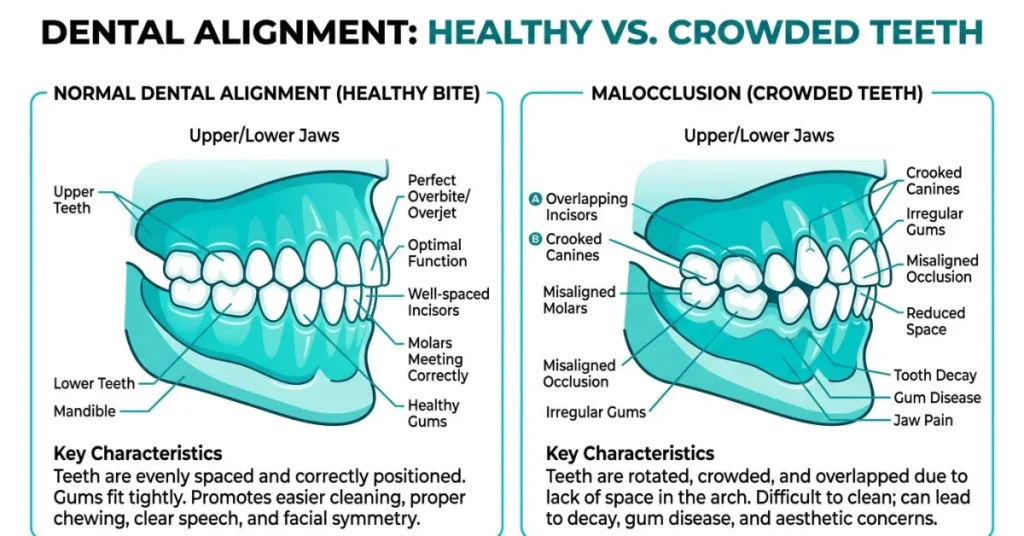
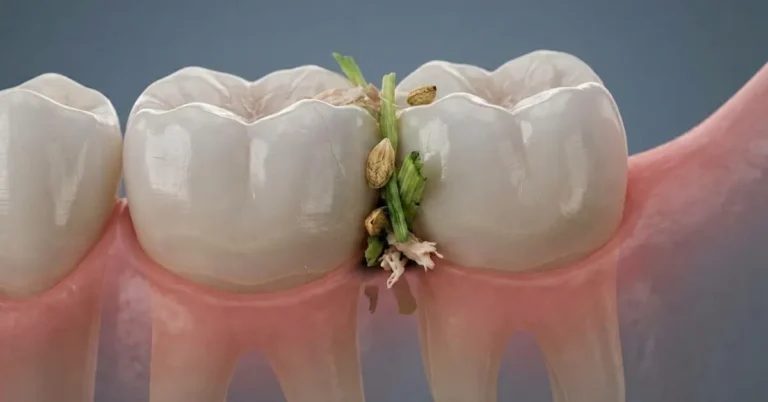
Sometimes, yes, and this is the part that actually matters more than any luck association. According to the National Library of Medicine, misaligned teeth and jaws (malocclusion) can make teeth harder to clean effectively, which raises the risk of plaque buildup, cavities, and gum disease. In more severe cases, misalignment can affect chewing, speech, and jaw function, and may contribute to jaw strain or headaches from uneven bite pressure over time.
Malocclusion is also categorized clinically:
| Type | What it looks like |
|---|---|
| Class 1 | Normal bite, but teeth are crowded or slightly overlapping |
| Class 2 (overbite/retrognathism) | Upper teeth and jaw sit noticeably forward of the lower |
| Class 3 (underbite/prognathism) | Lower jaw and teeth sit forward of the upper |
Most crooked teeth are cosmetic and don’t require treatment for health reasons. But moderate to severe cases are worth having evaluated by a dentist or orthodontist, since the health risk (decay, gum disease, jaw strain) is real even when the aesthetic concern isn’t a priority for you. The American Association of Orthodontists recommends a first orthodontic evaluation around age seven, not because every child needs treatment that early, but because it’s the point where an orthodontist can catch developing bite problems while the jaw is still growing.
Does Having Straight Teeth Make You Luckier in Life?
This is the closest thing to a real connection between teeth and “luck,” and it’s worth explaining precisely because most competing articles skip it entirely.
Straight teeth don’t change your luck. What they can change is other people’s snap judgments of you, through something psychologists call the halo effect: the tendency to assume that a person who looks conventionally attractive in one respect (in this case, a straight, even smile) is also more competent, trustworthy, or likeable in unrelated respects. In the American Academy of Cosmetic Dentistry survey referenced earlier, people with straight teeth were rated as more attractive, friendly, and approachable purely based on appearance, before anyone said a word.
That’s a real social effect, and it can plausibly influence first impressions in interviews, dating, or sales situations. But it’s a bias in the eye of the observer, not a property of the teeth themselves, and it isn’t luck in any meaningful sense: it’s a predictable, well-documented pattern in how people judge appearance. Someone with crooked teeth who is genuinely skilled, kind, or capable is not disadvantaged by fate. They may occasionally have to work slightly harder against an unfair first impression, which is a very different (and more solvable) problem than “bad luck.”
Should You Straighten Crooked Teeth?
This isn’t a luck decision, it’s a health and personal-preference one. A few honest factors to weigh:
- Health risk. If your dentist flags a bite issue affecting chewing, speech, jaw comfort, or cleaning, that’s a medical reason to consider treatment, independent of appearance.
- Confidence and social comfort. If your smile genuinely affects how comfortable you feel in daily interactions, that’s a legitimate personal reason, not a vanity one.
- Cost and time. Traditional braces, clear aligners like Invisalign, and cosmetic options like veneers vary widely in cost, treatment time, and permanence, and are worth discussing directly with an orthodontist rather than assuming one option fits your case.
- No obligation. If your teeth are mildly crooked, cause no health issues, and you’re simply not bothered by them, there’s no medical or “lucky” reason you need to change anything. Plenty of people, including public figures in cultures that romanticize a slight imperfection, keep their natural smile by choice.
Frequently Asked Questions
Is having crooked teeth good luck?
No. There’s no evidence connecting tooth alignment to luck. The idea is cultural folklore, not fact.
Why do some cultures think crooked teeth are lucky or attractive?
Mainly through specific traditions like Japan’s yaeba trend, which associates a slightly overlapping canine with youthfulness and cuteness, not fortune, and some West African traditions that associate a gap between the front teeth with good fortune or fertility. These are distinct beliefs, not a single global superstition.
What is yaeba, and is it still popular in Japan?
Yaeba is a Japanese term for a snaggletooth look, usually a protruding upper canine, associated with a youthful, cute appearance. It became a notable pop-culture trend in the early 2010s, driven by celebrities and cosmetic dental procedures that create the look artificially. It remains a recognized aesthetic niche in Japan rather than a universal standard.
Is a gap between the front teeth (diastema) lucky?
In some cultural traditions, yes, a diastema is associated with good fortune. Medically, a diastema is simply a spacing variation and carries no inherent health benefit or risk on its own.
Do crooked teeth say anything about your personality or health?
No verified link exists between tooth alignment and personality traits. Health-wise, moderate to severe crooked teeth can raise the risk of cavities and gum disease because they’re harder to clean thoroughly, which is a hygiene issue, not a personality one.
Can crooked teeth straighten out on their own without braces?
It’s very uncommon for genuinely crooked adult teeth to self-correct. Teeth generally don’t straighten without intervention, though mild cases sometimes stay stable without getting noticeably worse.
Key Takeaways
Crooked teeth are not lucky and not unlucky. That framing comes from folklore, most visibly Japan’s yaeba trend and various regional tooth superstitions, not from any medical or scientific basis. What’s actually true is more useful than any luck story: crooked teeth usually come from genetics, childhood habits, or jaw development, they can raise your risk of cavities and gum disease when cleaning is harder, and straight teeth carry a documented social bias (the halo effect) that shapes first impressions, not fate. Whether to straighten your teeth is a personal and health decision, not a luck-based one, and there’s no downside to leaving mildly crooked teeth alone if a dentist confirms there’s no underlying health concern.