Can You Drink Alcohol After a Filling? Safe Wait Time
Can you drink alcohol after a filling? Learn when it’s safe, how numbness and sensitivity affect timing, and what to know about medications.
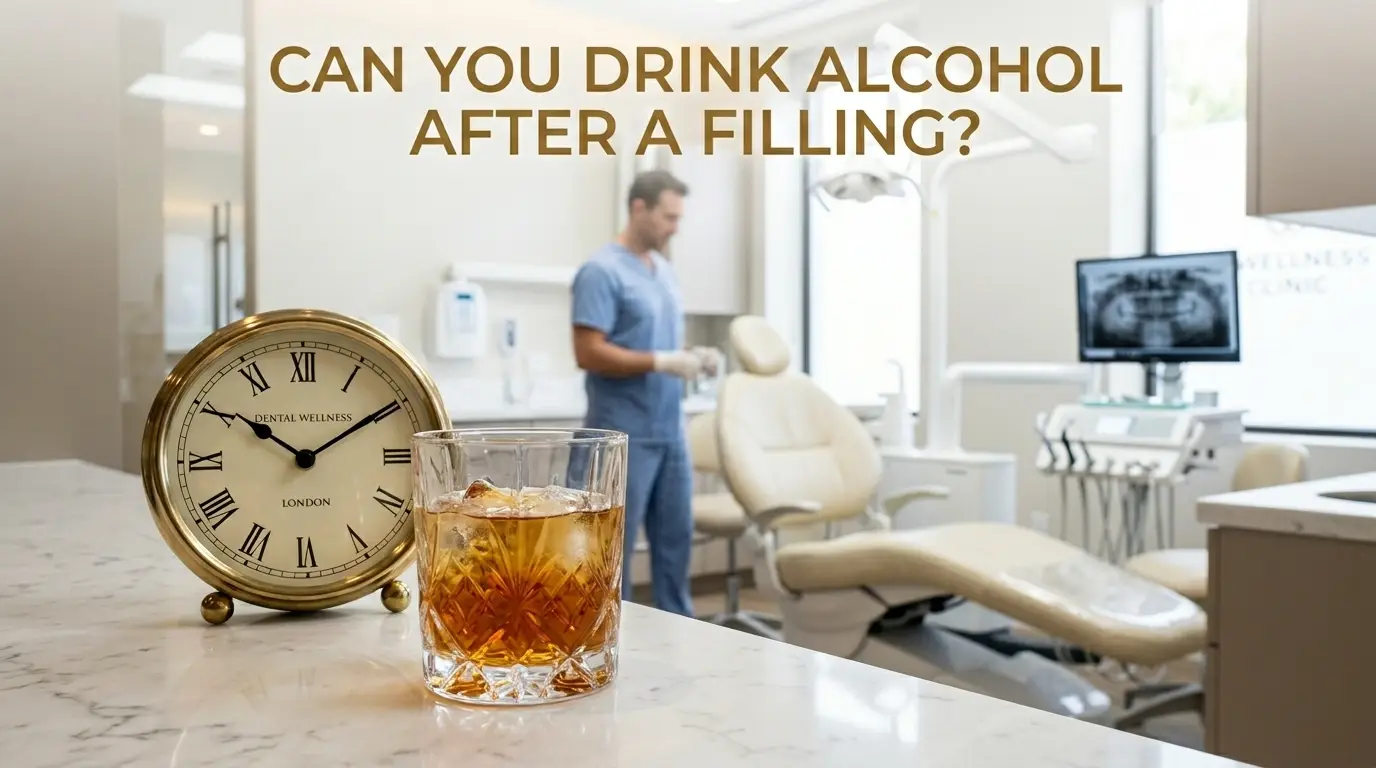
Yes, you can generally drink alcohol after a filling once your mouth feels normal again. There is no single official waiting period that applies to every patient. The right timing depends on three main factors: whether local anesthesia has fully worn off, whether the tooth or surrounding gums still feel irritated or sensitive, and whether you’re taking any medication that shouldn’t be combined with alcohol.
This guide walks through each of those factors so you can judge what’s reasonable for your own situation.
Can You Drink Alcohol After a Filling?
In most cases, alcohol doesn’t damage a properly placed filling or stop it from working. Composite (tooth-colored) fillings are light-cured and set during the appointment itself, so the restoration is set by the time the appointment is completed. What matters more is whether your mouth has fully recovered from the procedure, meaning the numbness has worn off and any gum irritation has settled.
How Long Should You Wait?
There isn’t one number that fits everyone. A reasonable approach is to wait until:
- Numbness from local anesthesia has worn off
- Any tooth or gum irritation has noticeably improved
- You’ve confirmed alcohol won’t interact with any medication you were prescribed
For many people, this means waiting until the local anesthetic has completely worn off. If you were given antibiotics or pain medication, follow the instructions on the label or from your dentist or pharmacist, since interaction risks vary by drug rather than following a fixed number of hours.
Can You Drink Alcohol After a Composite Filling?
Composite fillings are light-cured and set during the appointment itself, so the restoration is set by the time the appointment is completed. Alcohol doesn’t interfere with this process afterward. The main reasons to wait with a composite filling are the same general ones that apply to any filling: numbness, sensitivity, and medication timing, not the material itself.
Does Alcohol Damage a Dental Filling?
Alcohol does not normally interfere with the setting or function of a properly placed filling. The concern with alcohol after a filling has more to do with irritated or sensitive oral tissue and any medications you’re taking, not with the restoration material itself breaking down.
Does the Type of Filling Matter?
- Composite fillings are light-cured and set during the appointment, so drinking alcohol afterward doesn’t affect how well they’ve set.
- Amalgam fillings are placed as a soft alloy and continue to set and strengthen after placement. Any early precautions during this time are mainly related to chewing and pressure on the filling, not alcohol.
- Temporary fillings are weaker by design and meant to hold until a permanent restoration is placed. Appropriate care depends on the specific restoration, so it’s worth following your dentist’s instructions for that filling.
- Glass ionomer fillings may come with specific early-care instructions depending on the material and procedure used, so it’s worth following your dentist’s guidance for that particular restoration.
Can You Drink Alcohol After a Filling Without Anesthesia?
If you didn’t receive local anesthesia, the numbness-related risks don’t apply to you. The main things to still watch for are any gum or tissue irritation near the filling site and whether alcohol interacts with any medication you were prescribed.
Does Local Anesthesia Change the Answer?
Yes, and this is often more relevant than the alcohol itself. While your mouth is numb, sensation in your lips, cheek, and tongue is reduced, which raises the risk of accidentally biting yourself or not noticing that a drink is too hot. It’s best to wait until feeling has fully returned before drinking anything, alcoholic or otherwise.
What Happens If You Drink Alcohol Too Soon?
Drinking before numbness wears off mainly raises the risk of accidentally biting your cheek, lip, or tongue, or not noticing that a beverage is too hot. Drinking alcohol while the tissue near the filling is still irritated or sensitive may also cause mild stinging or discomfort. If you’re on medication, alcohol may increase side effects like drowsiness, dizziness, nausea, or stomach irritation, but the risk depends on the specific medication involved.
What Drinks Are Better or Worse Right After a Filling?
| Beverage | General Guidance After a Filling | Main Reason for Caution |
|---|---|---|
| Water | Fine once you can swallow normally | Minimal risk; a good default choice |
| Coffee & Tea | Wait until numbness is gone; go lukewarm if sensitive | Heat can be hard to feel while numb; may trigger sensitivity |
| Soda & Soft Drinks | May be tolerated once sensitivity improves, but its acidity and sugar can contribute to discomfort and dental problems | Acidity and sugar can aggravate a sensitive tooth |
| Energy Drinks | Best limited if the tooth feels sensitive | High acidity may aggravate sensitivity |
| Fruit Juice | Fine once sensitivity has settled; citrus juices may need more caution | Acidity may trigger temporary sensitivity |
| Alcohol | Wait until numbness and irritation resolve; check medication interactions | Risk of injury while numb, gum irritation, medication interactions |
| Milk & Smoothies | Generally gentle on a sensitive tooth | Avoid extremely cold if sensitivity is present |
Can Alcohol Interact With Dental Medications?
This is one of the more important reasons to be cautious. Some antibiotics, pain medicines, and other medications prescribed after dental work may interact with alcohol, and the specific medication determines whether alcohol should be avoided and for how long. Not all antibiotics or pain relievers carry the same restriction, so the safest approach is to check the instructions on your prescription label or ask your dentist or pharmacist directly, rather than assuming a set waiting period applies.
What Should You Do While the Tooth Is Sensitive?
Temporary sensitivity after a filling is common and separate from whether the filling itself has set. While it lasts, it can help to:
- Avoid very hot or very cold drinks, since these may trigger temporary sensitivity
- Choose softer foods or chew on the opposite side if biting feels uncomfortable
- Limit sugary or highly acidic drinks until sensitivity eases
- Keep in mind that mild sensitivity often improves gradually, while symptoms that worsen, feel severe, or persist should be evaluated by a dentist
When Should You Contact a Dentist?
Reach out to your dentist if you notice:
- Pain that is worsening rather than improving
- Significant pain when biting down
- Swelling around the treated tooth or gum
- A filling that feels loose, cracked, or has fallen out
- Sensitivity that persists or gets worse rather than gradually improving
Frequently Asked Questions
Can you drink alcohol after a filling?
Generally, yes, once the numbness has completely worn off and you feel comfortable. Check for any medication interactions before drinking.
How long after a filling can you drink alcohol?
There is no universal waiting time. Wait until local anesthesia has worn off and any significant sensitivity or irritation has improved.
Can you drink alcohol after a filling the same day?
Often, yes, if the numbness has completely disappeared, you feel comfortable, and you are not taking medication that should not be combined with alcohol.
Can you drink alcohol after a composite filling?
Yes. Composite fillings are light-cured and set during the dental appointment, so alcohol does not normally interfere with their setting.
Can you drink beer after getting a filling?
Generally, the filling itself is not affected by beer. The main considerations are numbness, tooth sensitivity, oral irritation, and possible medication interactions.
Can alcohol make a filling hurt?
Alcohol may cause temporary discomfort if the tooth or surrounding tissues are sensitive or irritated, but it does not normally damage a properly placed filling.
Key Takeaways
- There’s no universal alcohol waiting period after a filling. What matters is whether numbness and irritation have resolved, and whether medication interactions apply to you.
- Composite fillings are light-cured and set during the appointment, so alcohol doesn’t interfere with that process.
- Amalgam fillings continue to set and strengthen after placement, but the caution during that time is mostly about chewing pressure, not alcohol.
- Medication interactions are one of the more important reasons to check before drinking. Always follow your prescription instructions or ask a pharmacist.
- Contact your dentist if you notice worsening pain, swelling, a loose or cracked filling, or sensitivity that persists rather than improving.
This article is intended for general information and does not replace advice from your dentist or pharmacist about your specific situation. For related aftercare guidance, see our articles on what to expect after a filling and how to manage tooth sensitivity after dental work.