Gum Hyperpigmentation: Causes, Risks and Best Treatments
Gum hyperpigmentation is usually harmless extra melanin. Learn the causes, when dark gums need a dentist, and which treatments lighten them.
Gum hyperpigmentation is the darkening of gum tissue, and in most people it is a harmless natural variation caused by extra melanin. It deserves a dentist’s attention when the color changes quickly, appears as a single new spot, or comes with pain, bleeding or fatigue.
Gum color varies between people the way skin color does. This guide explains why gums darken, how to separate normal pigment from a warning sign, and what your options are if you want lighter gums, including how likely the color is to return.
What Is Gum Hyperpigmentation?
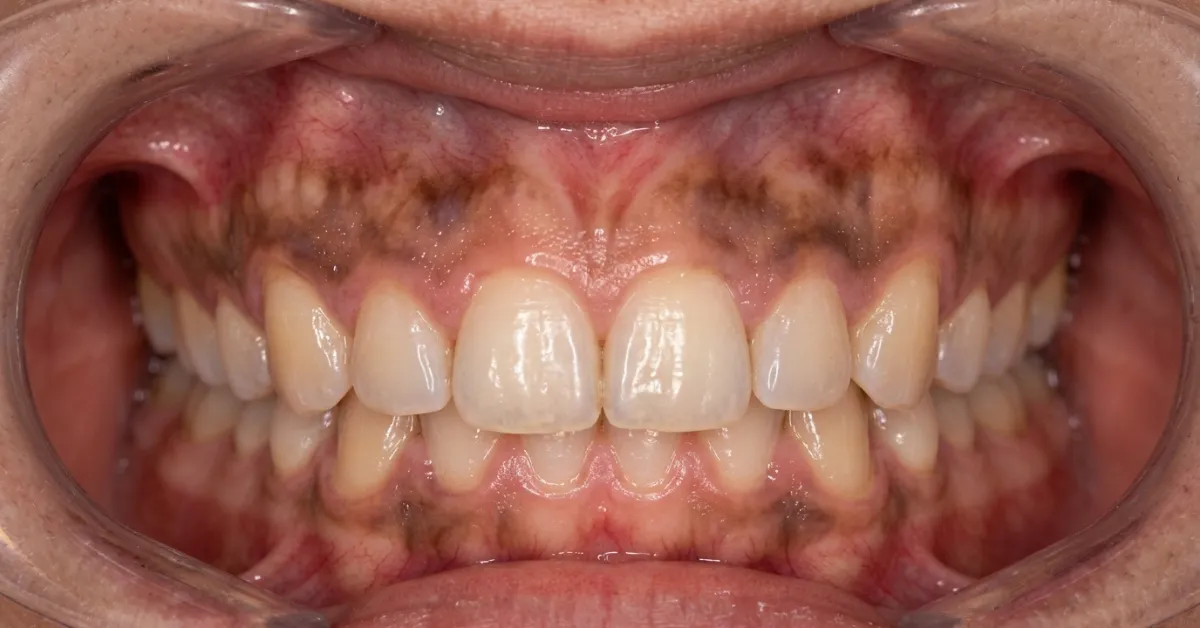
Gum hyperpigmentation, also called gingival hyperpigmentation or gingival melanin pigmentation, means the gums hold more pigment than the typical pale pink. The pigment is melanin. A review in Oncotarget describes it as a benign condition caused by excess melanin in the deeper layers of the gum’s surface tissue, produced by cells called melanocytes.
The color ranges from light brown to dark brown, bluish-black or black. It can affect one area or the entire gum line, and it can be even or patchy.
Consider two people. The first has had brown gums above the front teeth since childhood, on both sides of the mouth, with no symptoms. That pattern points to natural pigment. The second had pink gums last year and now has a gray-black patch in one spot. That pattern needs a different explanation, covered below.
What Color Are Healthy Gums Supposed to Be?
Healthy gums can be pink, light brown, dark brown or even purplish-black. Colgate notes, citing the Future Dental Journal, that melanin pigmentation is common among people of African, Asian and Mediterranean ancestry.
Condition matters more than shade. Healthy gums of any color are firm, fit snugly around the teeth, and are free of swelling, bleeding and pain. Reddish or purplish, swollen, bleeding gums point to gum disease, not pigmentation.
Causes of Gum Hyperpigmentation
| Cause | Typical appearance | Usually reversible? |
|---|---|---|
| Natural melanin and genetics | Brown to black, present for years, even or patchy | No, and no treatment is needed |
| Smoker’s melanosis | Brown or black patches, sometimes inner cheeks and lower lip too | Often fades after quitting |
| Medication | Darkening that begins after a new drug | Sometimes, after a doctor adjusts treatment |
| Amalgam tattoo | Flat black, gray or blue patch beside a filling | No, but it is harmless |
| Trench mouth | Black or gray dead tissue with pain, bleeding, bad breath | Yes, with dental treatment |
| Addison’s disease | Darker gums and lips, plus fatigue and weight loss | Requires medical treatment of the condition |
| Peutz-Jeghers syndrome | Dark freckles in the mouth and on the skin, from childhood | Freckles often fade with age |
| Implant show-through | Gray shadow over an implant | Sometimes, with dental correction |
Natural Melanin and Genetics
This is the most common cause. Your melanocytes simply make more pigment in the gums, just as they do in skin, hair and eyes. If your gums have always been dark, there is no cause for concern. A color change over a short period, or black patches that appear suddenly, is probably not caused by melanin and may signal a medical issue.
Smoker’s Melanosis
Nicotine pushes melanocytes to produce more melanin than usual. Smoker’s melanosis can appear as patches or spread across the inside of the mouth. Research has linked quitting to reduced gum discoloration, and an older study reported that most people lost the pigment by about three months after stopping.
Medications That Darken Gums
Minocycline, an antibiotic used for acne and some infections, can occasionally pigment the mouth. Colgate also lists some antimalarials, antipsychotics and cancer drugs as possible causes. Do not stop a prescribed medication on your own. Ask the prescriber whether an alternative exists.
Amalgam Tattoo
An amalgam tattoo forms when particles from a metal filling embed in the gum, usually beside the filled tooth. It looks like a flat black, gray or blue patch. It usually needs no treatment because it carries no health risk, but a dentist should confirm the diagnosis if you are unsure. Your history of dental fillings helps with that.
Medical Conditions: Addison’s Disease and Peutz-Jeghers Syndrome
Addison’s disease affects the adrenal glands. Early symptoms include tiredness, unusual thirst, unintended weight loss, lost appetite and weak muscles. As it progresses, gums and lips may darken. Severe dehydration, fast shallow breathing, drowsiness and pale, clammy skin can signal an adrenal crisis, which is a medical emergency.
Peutz-Jeghers syndrome is a rare genetic condition. Its early sign is dark blue or brown freckles in the mouth and on the fingers and toes, usually appearing in childhood. A genetic test can confirm it.
Trench Mouth (Acute Necrotizing Ulcerative Gingivitis)
Trench mouth is a gum infection in which a layer of dead tissue can turn the gums black or gray. It brings fever, painful gums and foul-smelling breath. If dark gums arrive with gum ache, bleeding or a bad taste, treat that as an infection question and see a dentist promptly. A gum ache that lasts is a reason to book a visit regardless of color.
Dental Implants and Gray Gum Shadows
Most dental implants are titanium, which is gray. Where the gum over an implant or its abutment is thin and translucent, the metal can show through as a gray shadow. Dentists call this show-through. A dental journal article describes it as most noticeable where the overlying gum is thin, and discusses zirconia abutments as one way to reduce it.
This looks like gum darkening, but the pigment is not melanin, so depigmentation will not fix it. Ask your dentist to evaluate the implant, abutment and gum thickness. Metal margins on older dental crowns can also create dark lines at the gum edge, so mention any crown work too.
Normal or Warning Sign? How to Tell
Pattern is the best clue. Use this table to decide what to do next, not to self-diagnose.
| What you notice | More likely explanation | What to do |
|---|---|---|
| Dark since childhood, on both sides, no symptoms | Natural pigment | Mention it at your next routine visit |
| Darkening after starting tobacco or a new medication | Smoker’s melanosis or a drug effect | Tell your dentist or prescriber |
| Flat gray, blue or black spot beside a filling, unchanged for years | Amalgam tattoo | Have a dentist confirm it |
| Black or gray gums with pain, bleeding, bad breath or fever | Trench mouth | See a dentist soon |
| Dark gums and lips with fatigue, thirst or weight loss | A possible endocrine cause such as Addison’s disease | See a doctor |
| A single new dark spot that grows, changes shape or bleeds | Needs examination | Get a prompt dental or medical evaluation |
Oral malignant melanoma is a rare cause of a dark gum spot, and it is diagnosed with a tissue biopsy. Because a photo cannot tell a harmless spot from a dangerous one, any new, changing or unexplained dark lesion deserves an exam.
Gum Hyperpigmentation Treatment Options
Gum hyperpigmentation needs no treatment for health reasons. Treatment is cosmetic and aimed at people bothered by the look of their gums, for example when the upper gums show during a smile. Rule out a medical cause first, then choose a method. This procedure is called gum depigmentation, and “gum bleaching” is another name for it.
| Method | How it works | Key trade-offs |
|---|---|---|
| Scalpel (surgical) | A periodontist removes the pigmented surface layer, exposing lighter tissue | Effective, but longer recovery than laser, and pigment may return as melanocytes migrate back |
| Laser | Targets and ablates pigment cells; gums heal naturally afterward | One study found no repigmentation at six months, but follow-up was short |
| Cryosurgery | Freezes the pigmented tissue with liquid nitrogen | A study cited by Colgate reports a low recurrence rate |
| Free gingival graft | Unpigmented tissue from the roof of the mouth is placed over the gums | Conceals the pigment rather than removing it |
| Chemical peel | Acids break down pigment | Used less often today because of side effects and better alternatives |
| Vitamin C injections | Injected into the gum | A small randomized trial of 30 adults found results comparable to scalpel |
Most of this evidence comes from small studies and case reports. A systematic review has compared the modalities, but long-term data are limited, so ask your provider what they have seen in their own patients.
Does Gum Pigmentation Come Back After Treatment?
It can. A cryosurgery case report states that recurrence is the most important concern with every technique. Treating an ongoing cause first, such as tobacco use, makes sense before paying for a procedure. Ask any provider how often pigment has returned for their patients and over what timeframe.
Do Whitening Products or Home Remedies Lighten Dark Gums?
No. Teeth whitening products act on tooth surfaces, while gum pigment sits inside the tissue. Despite the name, “gum bleaching” is a professional procedure, and bleaching of any kind can damage the gums if it is not done by a qualified professional. No source reviewed for this guide supports a home remedy for lightening gums, and acidic or abrasive do-it-yourself methods risk irritating the tissue.
Cost, Insurance and Recovery
Cost varies with the technique, how much gum is treated and your provider, so ask for a written quote. Dental plans commonly treat depigmentation as cosmetic and may not cover it, so check your plan before booking. Recovery also varies: laser-treated gums heal on their own, while scalpel treatment generally takes longer to heal than laser.
How to Choose a Provider
A periodontist or an experienced cosmetic dentist is the usual choice. Before you commit, ask:
- Which technique do you recommend for my gums, and why?
- How often has pigment returned in your patients, and after how long?
- Will you check for a medical cause first, and would you biopsy anything unusual?
- Do you have before-and-after photos of patients with a similar gum shade?
Can You Prevent or Reverse Gum Hyperpigmentation?
Natural pigmentation cannot be prevented, and it is not a disease. Acquired causes are a different story. Quitting tobacco can reduce smoker’s melanosis, a medication change may help when a drug is responsible, and good oral hygiene lowers your risk of gum infections that can darken tissue. Brushing teeth regularly, flossing daily, cutting down on sugar and seeing your dentist regularly are the standard advice.
FAQ
Gum hyperpigmentation FAQ
Is gum hyperpigmentation normal?
Yes, in most cases. Gums that have always been dark usually reflect natural melanin and need no treatment. A recent or sudden change is the reason to get checked.
Is gum hyperpigmentation dangerous?
Usually no. Rarely, dark gums reflect a medical condition such as Addison’s disease or, very rarely, oral melanoma. A single new, growing or irregular dark spot, or dark gums with illness symptoms, needs professional evaluation.
Can gum hyperpigmentation go away on its own?
Natural pigment does not. Smoker’s melanosis often fades after quitting tobacco, and drug-related darkening may improve if a doctor changes the medication.
Does gum depigmentation last?
Results vary by method, and recurrence is the main concern. Ask your provider about their recurrence experience and what follow-up they offer.
Does dark gum color mean unhealthy gums?
No. Healthy gums can be dark brown or black. Health is judged by firmness, snug fit and absence of swelling, bleeding and pain.
Can I lighten dark gums at home?
Nothing reviewed for this guide supports a home method. Only professional procedures have clinical study support.
Conclusion / Key Takeaways
- Gum hyperpigmentation is most often natural melanin and does not need treatment.
- Healthy gums can be pink, brown or black; firmness and absence of pain, swelling and bleeding matter more than shade.
- Other causes include smoking, certain medications, amalgam tattoos, trench mouth, Addison’s disease, Peutz-Jeghers syndrome and gray show-through over dental implants.
- A sudden change, a single new or growing dark spot, or dark gums with pain or fatigue deserves a dentist or doctor visit.
- Lightening options include scalpel, laser, cryosurgery, grafts, chemical peels and vitamin C injections; pigment can return, so ask about recurrence.
- Whitening products and home remedies do not lighten gum pigment.