How Many K9 Teeth Do Humans Have? Facts, Functions & More (2026)
Medically reviewed for accuracy and based on current evidence-based dental research. This content is for educational purposes and does not replace professional dental advice.
Learn how many K9 teeth humans have, where they’re located, their function, and how canine teeth differ in children and adults.
Wondering how many K9 teeth humans have? Humans have 4 K9 teeth, also called canine teeth, with 2 in the upper jaw and 2 in the lower jaw. These sharp, pointed teeth help tear food, guide your bite, and keep your teeth properly aligned. In this guide, you’ll learn where K9 teeth are located, what they do, how they differ in children and adults, and answers to the most common questions.
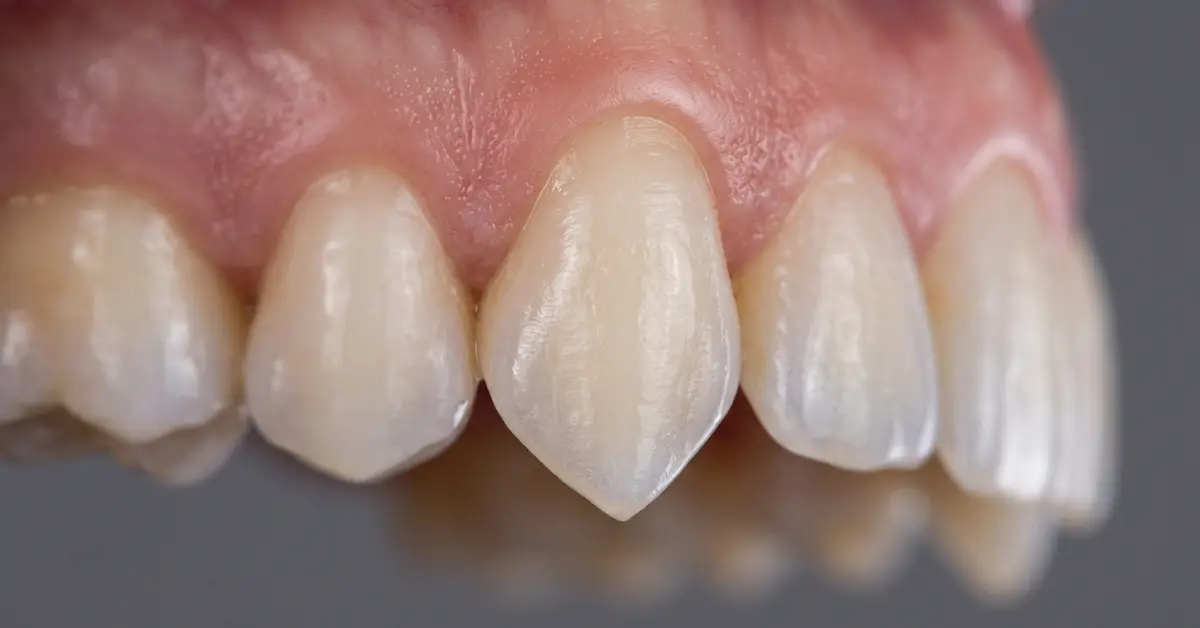
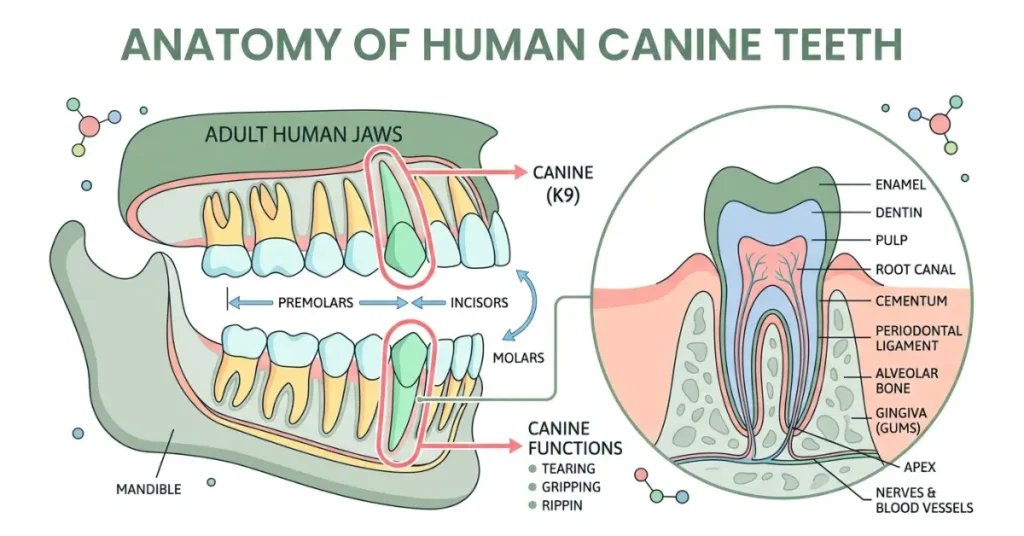
Humans have 4 K9 teeth (canine teeth) in total: 2 in the upper jaw and 2 in the lower jaw, one on each side of the mouth. Canine teeth sit between the incisors and premolars and are the pointed, sharp teeth used for tearing and gripping food. Children have the same number of canine teeth (4) in their primary (baby) teeth.
“K9 teeth” is simply a common, informal spelling of “canine teeth.” The two terms mean exactly the same thing. Dentists call them canines or cuspids; most people search for them as “K9 teeth” because it looks like the word “canine” sounds.
Quick Answer Table: K9 (Canine) Teeth by Age
| Age Group | Total Teeth | K9/Canine Teeth | Upper | Lower |
|---|---|---|---|---|
| Children (baby teeth) | 20 | 4 | 2 | 2 |
| Adults (permanent teeth) | 32 | 4 | 2 | 2 |
The number of canine teeth never changes between the primary and permanent sets. Only the incisors, premolars, and molars change in count as premolars are added and wisdom teeth erupt.
Where Are K9 Teeth Located?
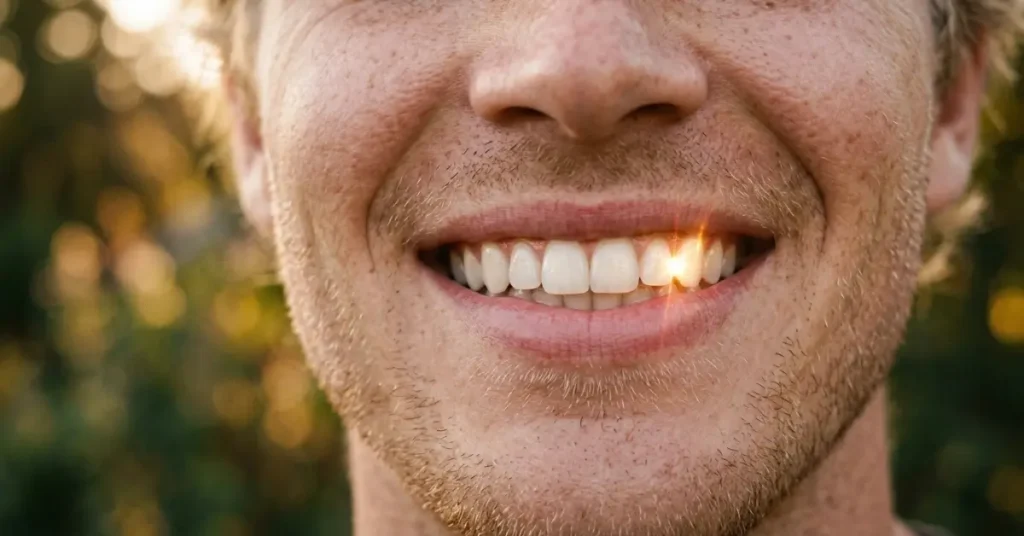
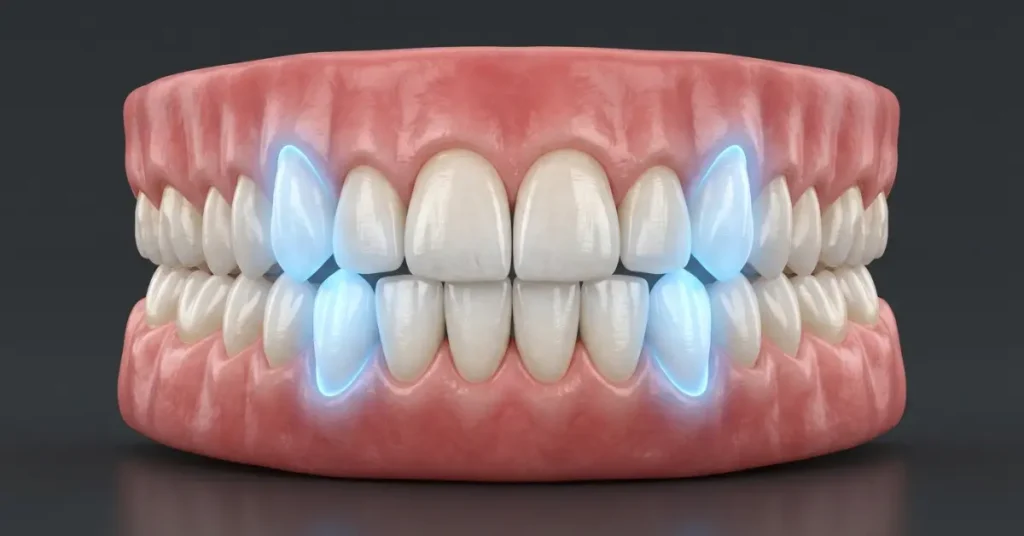
Each of the four canine teeth sits at a corner of the mouth, directly beside the incisors:
- Upper right canine: Next to the upper right lateral incisor
- Upper left canine: Next to the upper left lateral incisor
- Lower right canine: Next to the lower right lateral incisor
- Lower left canine: Next to the lower left lateral incisor
Because the upper canines sit almost directly below the eyes, they’re sometimes nicknamed “eye teeth.”
What Do K9 Teeth Do?
Canine teeth have three main jobs in the mouth:
- Tearing food. Their pointed, cone-like shape lets them grip and tear food (like meat or tough fruit skins) before the molars grind it.
- Guiding jaw movement. When the jaw shifts side to side, the canines help guide the bite so the other teeth meet correctly. Dentists call this “canine guidance.”
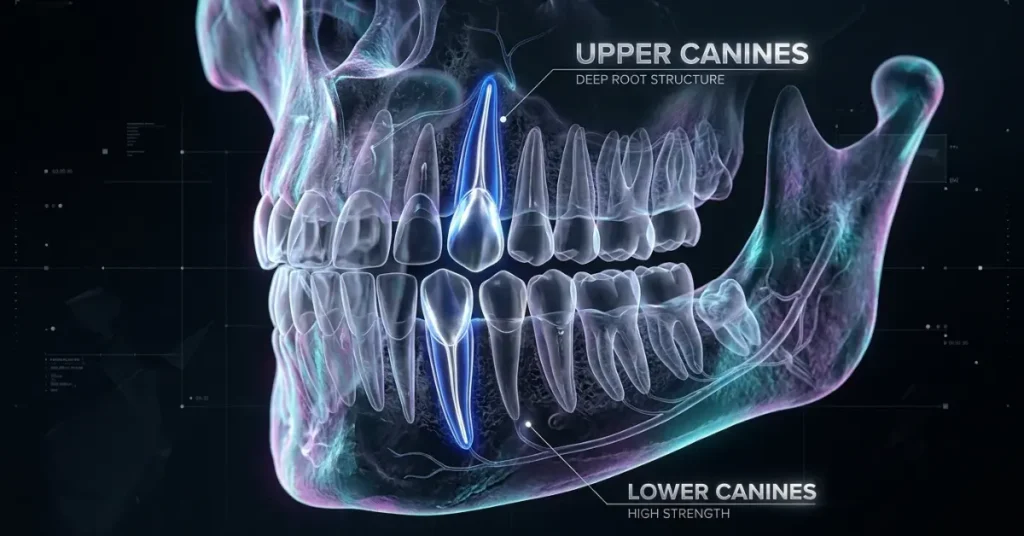
- Maintaining alignment. Canines have the longest roots of any tooth, which anchors them firmly and helps keep neighboring teeth in position.
All 32 Adult Teeth: Numbers and Functions
| Tooth Type | Count | Function |
|---|---|---|
| Incisors | 8 | Cutting and biting food |
| Canines (K9 teeth) | 4 | Tearing and gripping food |
| Premolars (bicuspids) | 8 | Crushing food |
| Molars (including wisdom teeth) | 12 | Grinding food |
| Total | 32 |
Incisors
The 8 flat, thin-edged front teeth used to bite and slice food. They don’t tear the way canines do; their flat shape is built for cutting.
Canines (K9 Teeth)
The 4 pointed corner teeth covered above. They’re the sharpest teeth in the mouth and have the deepest roots.
Premolars
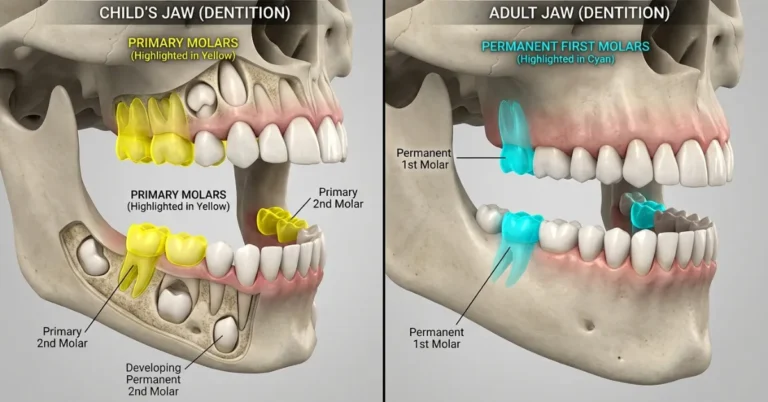
The 8 teeth between the canines and molars. They have a flatter chewing surface than canines and are used to crush food into smaller pieces. Premolars only appear in the permanent set. Children’s baby teeth skip straight from canines to molars.
Molars
The 12 largest teeth at the back of the mouth (including up to 4 wisdom teeth). Their broad, multi-cusped surface grinds food down for swallowing.
Baby Teeth vs. Permanent Teeth: How Canines Compare
| Feature | Baby (Primary) Teeth | Adult (Permanent) Teeth |
|---|---|---|
| Total teeth | 20 | 32 |
| Canine (K9) teeth | 4 | 4 |
| Premolars | 0 | 8 |
| First appear | Around 6 months | Around 6 to 7 years, replacing baby teeth |
Baby canines usually erupt around 16 to 23 months and are typically replaced by permanent canines between ages 9 and 12.
K9 Teeth in the Universal Dental Numbering System
Dentists in the U.S. commonly use the Universal Numbering System, which labels each adult tooth 1 to 32, starting from the upper right wisdom tooth. The four canines are:
- Tooth #6: Upper right canine
- Tooth #11: Upper left canine
- Tooth #22: Lower left canine
- Tooth #27: Lower right canine
FAQ: How Many K9 Teeth Do Humans Have?
How many K9 teeth do humans have?
Humans have 4 K9 (canine) teeth: 2 upper and 2 lower, one at each corner of the mouth.
Do children have K9 teeth too?
Yes. Children have 4 primary canine teeth as part of their 20 baby teeth. These are later replaced by 4 permanent canines.
Are K9 teeth and canine teeth the same thing?
Yes. “K9 teeth” is just an informal way of writing “canine teeth” (K9 sounds like “canine”). Dentists also call them cuspids.
Why are canine teeth called eye teeth?
The upper canines are positioned almost directly beneath the eyes, which is where the nickname “eye teeth” comes from.
What happens if a K9 tooth is missing or damaged?
Because canines guide jaw movement and anchor nearby teeth, a missing or damaged canine can affect your bite alignment and increase strain on other teeth. A dentist can recommend a bridge, implant, or orthodontic option to restore function.
How many teeth do adults have in total?
Adults have 32 permanent teeth: 8 incisors, 4 canines, 8 premolars, and 12 molars (including up to 4 wisdom teeth).
Which teeth are the sharpest?
Canine (K9) teeth are the sharpest and most pointed teeth in the human mouth, designed for tearing rather than cutting or grinding.
Key Takeaway: How Many K9 Teeth Do Humans Have?
Humans have 4 K9 teeth, also known as canine teeth, throughout life. That’s 2 upper and 2 lower canines in the baby set, and the same 4 in the permanent set. These pointed corner teeth do more than most people realize: they tear food, guide the bite when the jaw moves side to side, and help anchor the alignment of the teeth around them.
Understanding where your canines sit and what they do makes it easier to spot problems early, whether that’s a chipped tooth, a misaligned bite, or unusual wear. If you notice pain, looseness, or changes around a canine tooth, it’s worth bringing up at your next dental checkup rather than waiting for it to become a bigger issue.