Discolored Tooth: Causes, Types, and Fixes That Work
Wondering why you have a discolored tooth? Learn the real causes, the different types of staining, and which treatments actually work.
Seeing one tooth turn a different shade than the rest of your smile is unsettling, and the first instinct is usually to wonder if something is seriously wrong. Sometimes it’s nothing more than a stubborn coffee stain. Other times, it’s a signal from inside the tooth that needs a dentist’s attention sooner rather than later.
This guide breaks down exactly why teeth discolor, how to tell the difference between a cosmetic issue and a dental emergency, and what actually works to bring the color back.
Quick Answer: What Causes a Discolored Tooth?
A discolored tooth is usually caused by one of three things: surface staining from food, drinks, or tobacco (extrinsic); internal changes from trauma, aging, or medication (intrinsic); or nerve damage inside the tooth that cuts off its blood supply. Treatment ranges from whitening to root canal therapy, depending on the cause.
Why Is My Tooth Discolored? The Three Main Categories
Dentists generally sort tooth discoloration into three buckets. Knowing which one applies to you is the first step toward fixing it.
1. Extrinsic Discoloration (Surface Stains)
This type sits on the outer enamel and is the most common and easiest to treat. It builds up gradually from daily habits.
- Coffee, tea, and red wine
- Dark sodas and berries
- Tobacco and smoking
- Poor brushing habits that let plaque harden into tartar
2. Intrinsic Discoloration (Internal Staining)
This type happens inside the tooth structure, in the dentin layer beneath the enamel, and won’t respond to regular whitening toothpaste.
- Tetracycline antibiotics taken during childhood or by a pregnant mother
- Excess fluoride exposure in early childhood (fluorosis)
- Genetics and naturally thinner enamel
- Trauma to a developing tooth in a child
3. Age-Related Discoloration
As you get older, enamel naturally thins and the yellowish dentin underneath becomes more visible. Decades of minor stains and enamel wear combine, which is why discoloration tends to accumulate with age even in people with good habits.
Single Discolored Tooth: A Different Story
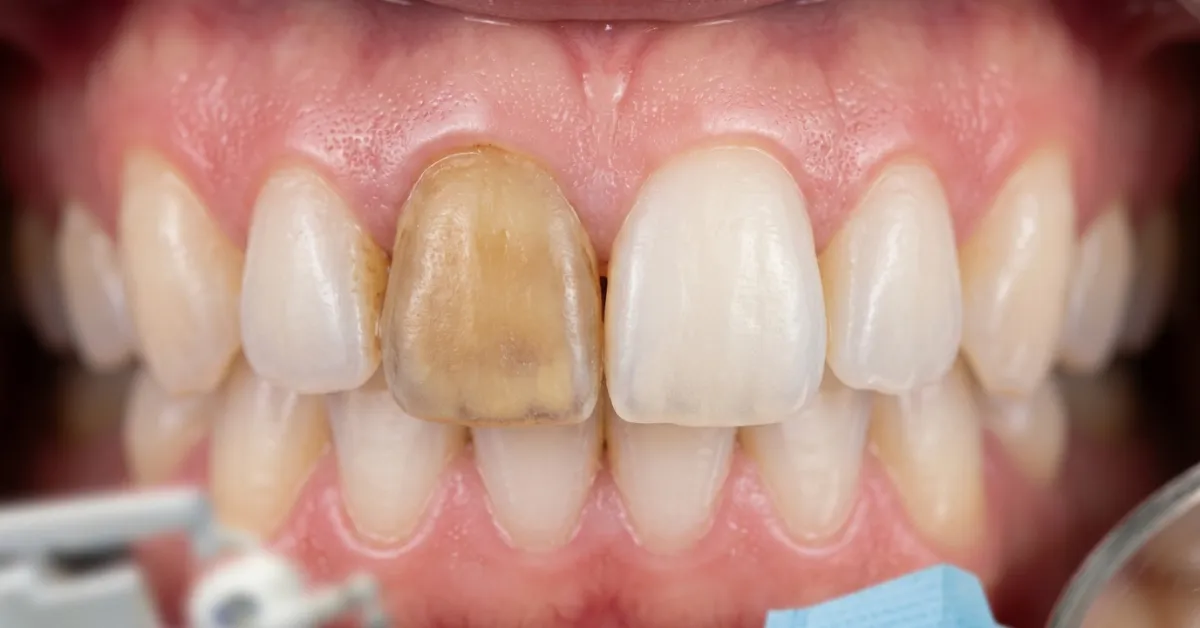
If only one tooth has changed color while the rest of your teeth look normal, the cause is often more specific and sometimes more urgent than general staining.
| Color Change | Likely Cause | Urgency |
|---|---|---|
| Gray or black | Nerve death (pulp necrosis), often after trauma | See a dentist soon |
| Yellow-brown | Old filling or crown showing through | Low, cosmetic |
| Pink or reddish | Internal resorption or recent injury | See a dentist soon |
| Dark line at the gum | Old amalgam (silver) filling metal leaching | Low, cosmetic |
| White spot | Early enamel demineralization or fluorosis | Monitor, treatable early |
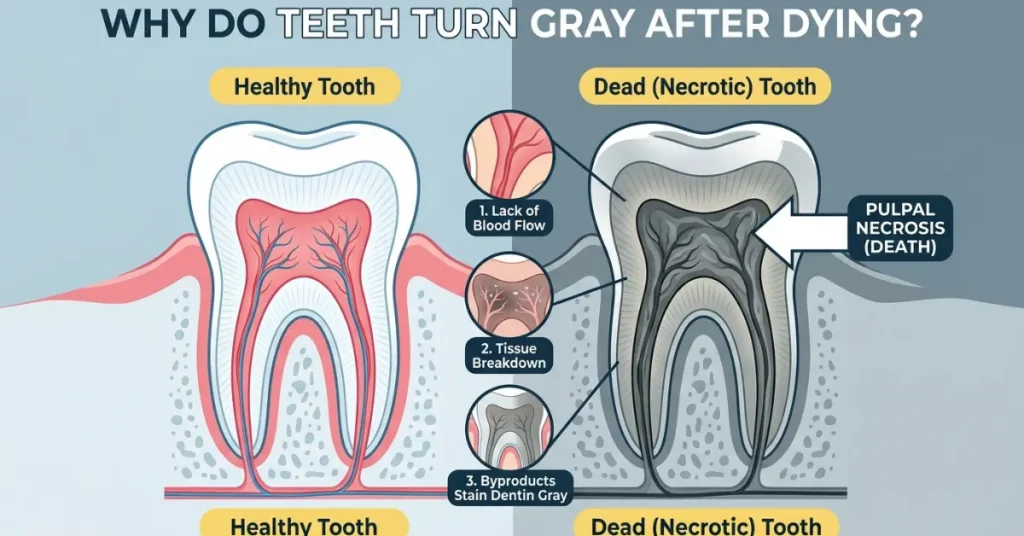
Why a Dead or Dying Tooth Turns Gray
When a tooth suffers trauma, such as a hard knock during sports or a fall, the internal blood vessels can rupture. Blood products can seep into the dentin tubules and darken the tooth from the inside out, sometimes weeks or months after the original injury.
This is a warning sign, not just a cosmetic issue. A tooth that has lost its nerve supply is more prone to infection and abscess if left untreated.
Common Causes of Tooth Discoloration, Ranked by Likelihood
- Dietary staining (coffee, tea, wine, dark sauces)
- Tobacco use (smoking or chewing)
- Poor oral hygiene allowing plaque and tartar buildup
- Aging and natural enamel thinning
- Trauma or injury to a specific tooth
- Medications, particularly tetracycline antibiotics in childhood
- Excess fluoride during tooth development
- Dental materials, such as amalgam fillings or metal-based crowns
- Tooth decay, which can cause brown or black discoloration at the site of a cavity
- Genetic conditions affecting enamel formation
How to Fix a Discolored Tooth: Treatment Options
The right fix depends entirely on whether the stain is on the surface or coming from inside the tooth.
For Surface (Extrinsic) Stains
- Professional teeth cleaning to remove plaque and tartar buildup
- In-office whitening treatments using higher-concentration bleaching gel
- At-home whitening trays or strips for gradual, lower-cost results
- Whitening toothpaste for maintenance, though it won’t remove deep stains alone
For Internal (Intrinsic) Discoloration
- Internal bleaching, where a dentist places whitening agent inside a treated tooth
- Dental veneers, thin porcelain shells that cover the front of the tooth
- Dental bonding, a same-day option using tooth-colored resin
- Crowns, for teeth that are also structurally weakened
For a Dead or Traumatized Tooth
- Root canal treatment to remove the damaged nerve tissue and stop further darkening
- Internal whitening after the root canal to restore color
- Crown placement if the tooth needs additional strength and a natural appearance
Comparison Table: Treatment Options at a Glance
| Treatment | Best For | Typical Timeline | Cosmetic or Restorative |
|---|---|---|---|
| Professional cleaning | Surface tartar and plaque | 1 visit | Cosmetic |
| In-office whitening | General yellowing, surface stains | 1 to 2 visits | Cosmetic |
| At-home whitening kits | Mild to moderate surface stains | 1 to 3 weeks | Cosmetic |
| Internal bleaching | Single discolored tooth (non-vital) | 1 to 3 visits | Cosmetic |
| Veneers | Deep intrinsic stains, uneven color | 2 to 3 visits | Cosmetic and restorative |
| Bonding | Minor spots, chipped or stained areas | 1 visit | Cosmetic and restorative |
| Root canal + crown | Dead or dying tooth, trauma | 2 to 3 visits | Restorative |
Can You Prevent Tooth Discoloration?
You cannot control every factor, especially genetics or childhood medication history, but daily habits make a measurable difference.
- Brush twice a day with fluoride toothpaste
- Floss daily to remove plaque before it hardens into tartar
- Rinse your mouth with water after drinking coffee, tea, or wine
- Use a straw for dark, staining beverages
- Avoid or quit tobacco products
- Schedule professional cleanings every six months
- Wear a mouthguard during contact sports to prevent trauma-related discoloration
When Should You See a Dentist?
Most surface staining is purely cosmetic and can wait for your next routine visit. Certain signs, however, call for a sooner appointment.
- A single tooth turning gray, black, or dark pink
- Discoloration appearing suddenly after an injury
- Pain, swelling, or sensitivity along with the color change
- A dark spot that seems to be growing or has a rough texture (possible decay)
- Discoloration paired with a bad taste or odor near the tooth
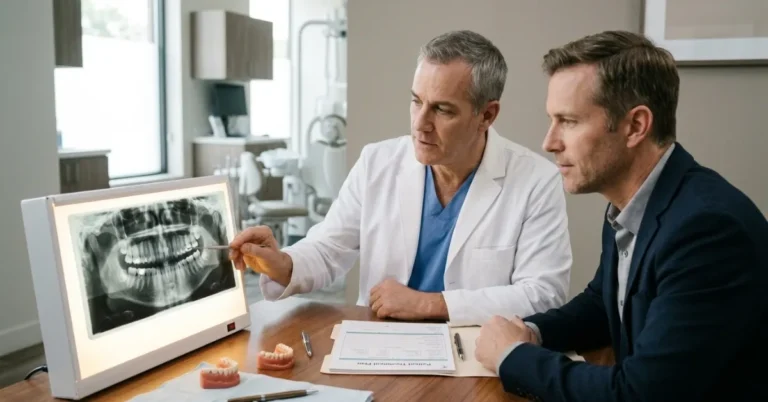
A dentist can use an X-ray to check whether the nerve inside the tooth is still alive, which is something no amount of at-home whitening can diagnose.
Frequently Asked Questions
Can a discolored tooth go back to normal on its own?
Surface stains can improve somewhat with better oral hygiene, but internal discoloration from a dead nerve or old trauma will not fix itself and typically gets darker over time without treatment.
Is a discolored tooth always a sign of decay?
No. Discoloration can come from stains, aging, trauma, medication, or old dental materials. Decay is only one possible cause, though a dentist should rule it out if the spot looks brown, black, or has a rough texture.
Does whitening toothpaste work on a single dark tooth?
Whitening toothpaste only affects surface stains on enamel. A tooth that has darkened from the inside needs internal whitening, veneers, or bonding instead.
How long does a gray tooth take to turn back to normal color?
It won’t turn back on its own. Internal bleaching after root canal treatment can visibly lighten the tooth, often within one to two sessions, but the tooth needs professional treatment first.
Is it normal for one tooth to be slightly more yellow than the others?
Minor natural variation in shade is common and usually not a concern. A sudden or dramatic difference in color, especially in a single tooth, is worth mentioning to your dentist.
The Bottom Line
A discolored tooth can mean anything from a harmless coffee habit to a tooth that has lost its nerve supply after an old injury. Surface stains respond well to cleaning and whitening, while internal discoloration usually needs a dentist’s help to properly diagnose and treat. When in doubt, especially with a single tooth that has darkened on its own, a dental checkup is the safest next step to protect both your smile and the health of the tooth underneath it.
Further Reading: