
Do Teeth Need to Be Shaved for Veneers? Explained
This article has been medically reviewed for accuracy and follows evidence-based dental information from trusted healthcare organizations. It is intended for educational purposes and does not replace professional dental advice, diagnosis, or treatment.
Do teeth need to be shaved for veneers? Learn when enamel removal is necessary, how much is removed, no-prep veneer options, risks, pain, and long-term results.
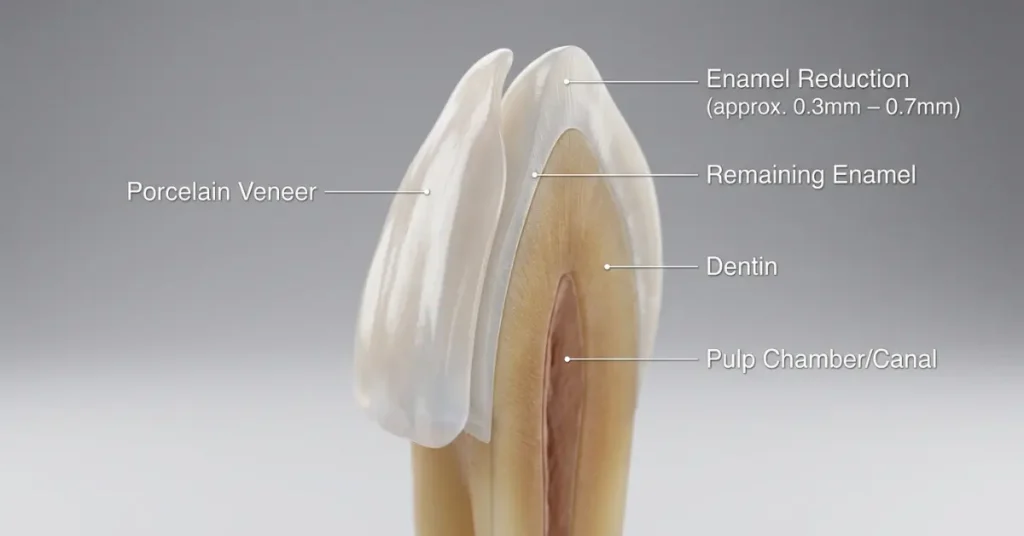
Short answer:not always. Do teeth need to be shaved for veneers? Traditional porcelain veneers usually require a thin layer of enamel to be removed, generally between 0.3 mm and 0.7 mm, so the veneer sits flush against the tooth and looks natural instead of bulky. However, teeth do not always need to be shaved for veneers. Many patients today qualify for minimal-prep or no-prep veneers, which require little to no enamel removal. Whether your teeth need to be shaved for veneers depends on factors such as your tooth shape, enamel thickness, bite, and cosmetic goals. Only an in-person examination can determine if shaving teeth for veneers is necessary in your specific case.
If you’ve been putting off a smile makeover because you pictured your teeth being filed down into little pegs, this guide walks through what actually happens, why it happens, and how to find out which path applies to you. (Dentists call this step tooth preparation, or enameloplasty when enamel specifically is being reshaped, and it’s worth knowing that term since you’ll likely hear it at your consultation.)
Do All Veneers Require Shaving Your Teeth?
No. Whether you need any enamel removed comes down to your individual case, not to veneers as a category of treatment.
Traditional porcelain veneers typically require some reduction so the finished piece blends into your gumline and bite instead of looking like it’s sitting on top of your tooth. But adhesive dentistry has moved a long way in recent years, and minimal-prep and no-prep veneers are now a realistic option for a meaningful share of patients, especially those with smaller or slightly recessed teeth to begin with. Research on no-preparation veneers backs this up: success rates reach as high as 97.4% in well-selected cases where the restoration bonds directly to existing enamel.
Your cosmetic dentist will weigh several things before recommending a path:
- Where your teeth currently sit
- Tooth size and shape
- Any existing dental work or restorations
- How thick your enamel already is
- Your occlusion, or how your bite comes together
- The smile design you’re hoping for
This is a call that gets made chairside, with your actual mouth in front of a dentist and often a digital mock-up of the proposed result, not from a stock photo or a blog post. Consider everything here a starting point for the conversation you’ll have at your consultation.
Myth vs. Fact: What Veneer Prep Actually Involves
A lot of the anxiety around veneers traces back to outdated photos and word-of-mouth horror stories rather than how the procedure is actually done today.
| Myth | Fact |
|---|---|
| Teeth get filed into tiny pegs | Only a thin sliver of enamel is typically removed for traditional veneers |
| Every veneer requires shaving | No-prep and minimal-prep veneers can involve little to no enamel removal |
| Shaving permanently damages teeth | Done correctly, tooth preparation preserves the health of the tooth underneath |
| The procedure hurts | Most patients report little to no discomfort, and local anesthesia is standard |
| Veneers weaken your teeth | A well-fitted veneer bonded with resin cement can reinforce the front surface |
| Veneers rarely last | A systematic review of over 6,500 porcelain laminate veneers found a 95.5% survival rate at 10 years |
What Dental Veneers Are and How They Work
Veneers, also called laminate veneers, are thin shells bonded to the front of a tooth to change its color, shape, or alignment as part of adhesive dentistry. People typically get them to fix:
- Stained or discolored teeth
- Chips
- Small gaps
- Uneven edges
- Mild crookedness
- Worn enamel
- Irregularly shaped teeth
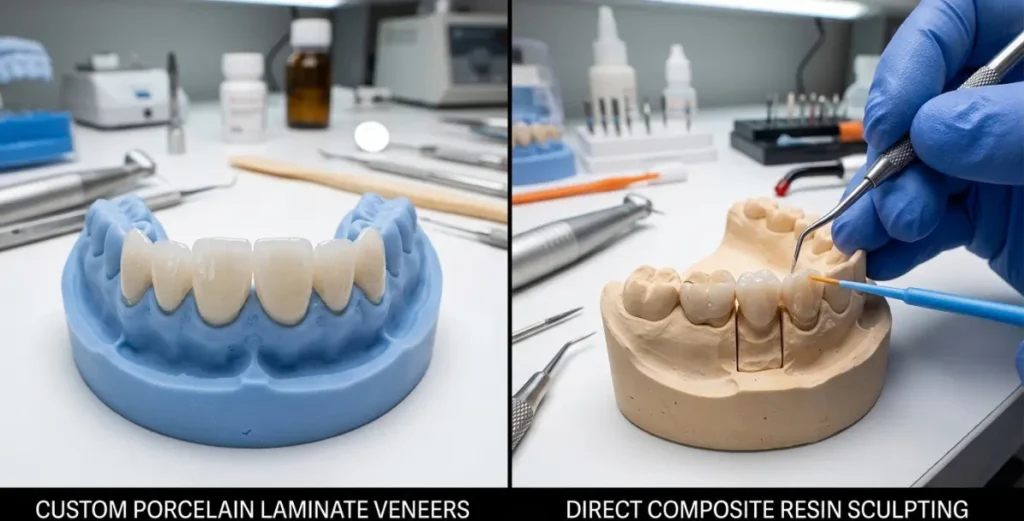
Porcelain veneers are custom-fabricated in a dental lab, often now with CAD/CAM veneer technology for faster turnaround and tighter fit. They resist staining well, and a large-scale systematic review covering 6,500 porcelain laminate veneers found a cumulative survival rate of 95.5% at 10 years, with fracture and debonding as the most common (though still uncommon) reasons for failure.
Composite veneers are sculpted directly onto the tooth chairside, in one visit, using tooth-colored resin. They generally need less prep and cost less upfront, but tend to need replacing every 5 to 7 years.
Porcelain vs. Composite Veneers at a Glance
| Factor | Porcelain | Composite |
|---|---|---|
| Typical lifespan | 10 to 15+ years | 5 to 7 years |
| Stain resistance | High | Moderate, more prone to staining over time |
| Chairside vs. lab-made | Fabricated in a dental lab, 2 to 3 visits | Sculpted chairside, often 1 visit |
| Enamel removed | Usually more (0.3 to 0.7mm) | Usually less |
| Repairability | Typically needs full replacement if damaged | Can often be spot-repaired |
| Upfront cost | Higher | Lower |
How Much Enamel Actually Gets Removed?
Most cases involve removing well under a millimeter, and some involve none at all.
- Minimal-prep or no-prep veneers: 0 to 0.3mm
- Traditional porcelain veneers: 0.3 to 0.7mm
- Extensive cosmetic corrections: sometimes slightly more, depending on alignment and existing damage
These are widely used reference ranges in restorative and prosthodontic literature. A meta-analysis of feldspathic porcelain veneers found an estimated cumulative survival of 95.7% at 5 years, with 10-year estimates approaching 95% to 96% when properly bonded to enamel. Your own plan should still be confirmed against your dentist’s direct exam, since individual cases vary and published averages describe populations, not any one patient’s mouth.
Digital smile design software and same-visit digital mock-ups now let dentists map out preparation in advance, which has made it easier to remove only as much enamel as a case genuinely requires.
Why Dentists Remove Enamel for Veneers in the First Place
Tooth preparation exists to serve fit, bonding strength, and occlusal function, not to strip away healthy structure for no reason.
- Better fit. Without creating room, a veneer sits proud of the surrounding teeth and looks noticeably bulky.
- Stronger bond. Veneers adhere more reliably and durably to enamel, using resin cement, than to other tooth surfaces.
- Natural look. Preparation lets the veneer’s edges blend into your gumline and neighboring teeth rather than standing apart.
- Comfortable bite. Getting the thickness right preserves your natural occlusion, so your upper and lower teeth meet the way they did before treatment.
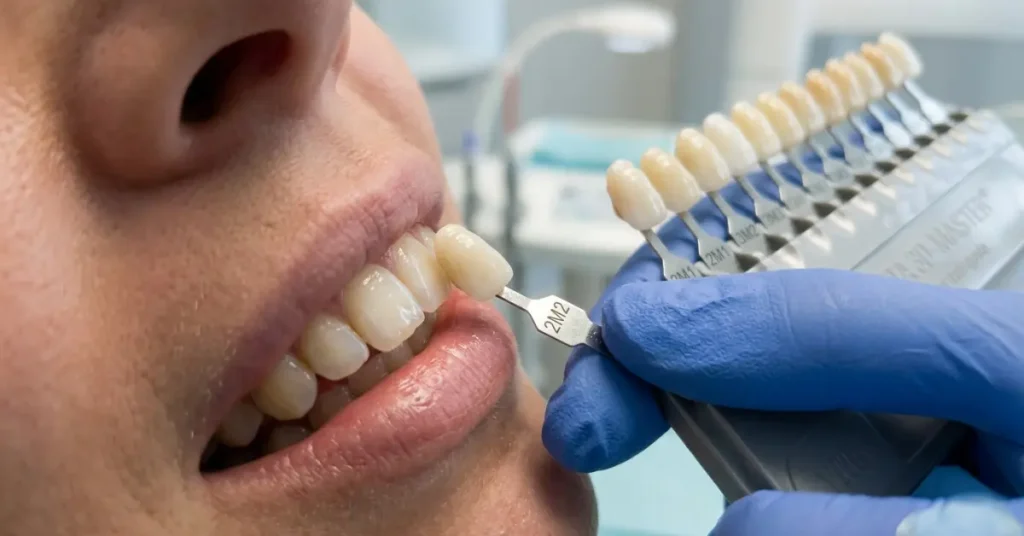
How a Dentist Decides Whether You Need Prep
This decision comes from a hands-on exam, not a blanket rule that applies to every patient the same way.
At your consultation, expect your dentist to evaluate:
- Tooth position
- Existing enamel thickness
- Occlusion and bite relationship
- Gum health
- Tooth color
- Smile symmetry
- Facial proportions
Digital photographs, X-rays, and in many practices a 3D scan and digital mock-up all feed into a treatment plan built specifically around your mouth. Patients with naturally small or slightly recessed teeth tend to qualify for reduced or no preparation more often than patients with crowded or protruding teeth.
Traditional vs. Minimal-Prep vs. No-Prep Veneers
There’s no single “best” option. Each fits a different starting point.
| Feature | Traditional | Minimal-Prep | No-Prep |
|---|---|---|---|
| Enamel removed | Moderate | Very little | None or almost none |
| Appearance | Excellent | Excellent | Best for selected cases |
| Durability | High | High | Good |
| Suitable for major corrections | Yes | Sometimes | Limited |
| Tooth preservation | Good | Better | Best |
No-prep veneers work well when a smile just needs a slight boost in volume or shade. They’re not the right fit for anyone who needs significant reshaping or major color correction, and a provider recommending them for those cases without qualification is worth a second opinion.
Alternatives That Skip Enamel Removal Entirely
If keeping every bit of your natural enamel matters more to you than veneer-level results, these are worth discussing with your dentist first.
- Dental bonding. Composite resin fixes chips, closes small gaps, and reshapes teeth with little to no enamel removed, usually in one visit. (Full guide: dental bonding vs. veneers.)
- Teeth whitening. The right call when color, not shape, is the actual issue. (See our teeth whitening guide.)
- Orthodontic treatment. Clear aligners can correct mild crowding or spacing without permanently altering tooth structure.
- Dental crowns. A better fit than veneers when a tooth is already significantly damaged or structurally compromised. (Compare the two in our veneers vs. crowns breakdown.)
The Long-Term Picture
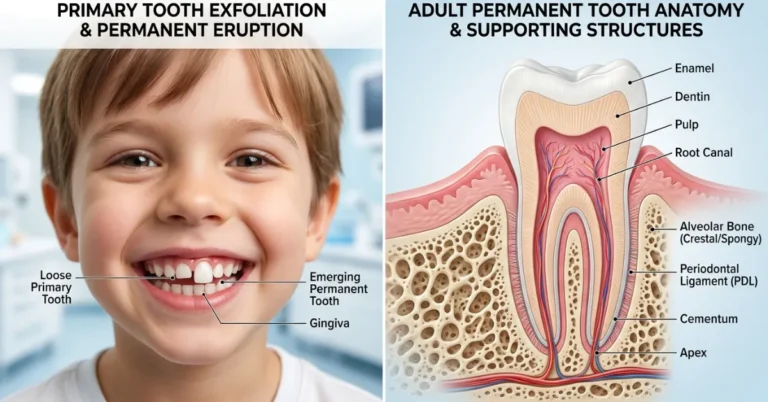
Enamel removed for veneers doesn’t grow back, but when tooth preparation is done correctly, it’s considered a stable, long-term-safe procedure backed by decades of clinical data.
A few things worth keeping in mind:
- Enamel doesn’t regenerate once it’s gone
- Veneers have their own service life and will eventually need replacing; longer-term data puts well-placed porcelain veneers at roughly 85% to 91% still functioning at the 15 to 20 year mark
- Daily brushing and flossing still matter under and around the veneer
- A damaged veneer may mean the prepared tooth needs to be restored again
With regular checkups and decent home care, most patients keep their remaining natural tooth structure healthy for decades.
Does It Hurt?
Most patients feel little to no pain during the actual preparation. Because only a thin layer of enamel is removed, and local anesthesia is standard, discomfort during the procedure itself is typically minimal. Some mild sensitivity to hot or cold for a few days afterward is common and usually resolves on its own.
How Long Does the Whole Process Take?
Most people finish traditional veneers in two to three visits spread across a few weeks.
- Visit one: Consultation, smile assessment, digital photographs and mock-up, treatment planning.
- Visit two: Tooth preparation, impressions or digital scans, temporary veneers if needed.
- Visit three: Permanent veneer placement, bonding with resin cement, final occlusal adjustments.
Some practices now offer same-day veneers using in-office CAD/CAM veneer milling, though this depends on your case and the equipment available at that practice.
Caring for Your Teeth After Veneers
How long your veneers last has a lot more to do with your habits afterward than with the material itself.
- Brush twice a day with a soft-bristled toothbrush
- Floss daily
- See your dentist every six months
- Avoid biting hard objects like ice or pens
- Wear a night guard if you grind your teeth
- Cut back on foods and drinks that can stain composite veneers
- Keep your gums healthy with regular professional cleanings
Porcelain resists staining better than composite, but either way, the natural tooth underneath still depends on the same basic oral hygiene habits you’d follow regardless.
Frequently Asked Questions
Do all veneers require shaving teeth?
No. Some patients qualify for minimal-prep or no-prep veneers, while others need a small amount of enamel removed for the best fit and appearance.
Can shaved teeth grow back?
No. Enamel doesn’t regenerate, which is exactly why dentists aim to remove only the minimum a case requires.
Are no-prep veneers better?
Not universally. Clinical data shows strong success rates for no-prep veneers in well-selected cases, but they’re not appropriate when significant reshaping or color correction is needed.
Are veneers permanent?
Traditional veneers are generally considered irreversible once enamel has been removed, and they’ll need replacement at some point down the line, with published survival data averaging around 95% at 10 years.
Which veneers look the most natural?
High-quality porcelain veneers, custom designed around your facial features with a digital mock-up beforehand, typically deliver the most natural, longest-lasting appearance.
How long do veneers actually last, based on research?
A systematic review of 6,500 porcelain laminate veneers found a 95.5% survival rate at 10 years. Composite veneers generally last 5 to 7 years before needing replacement.
Get a Personalized Treatment Plan, Not a Guess
Every statistic in this article describes an average across thousands of cases, not your case specifically. The only way to know whether your teeth need shaving for veneers, and which of these options actually fits your bite, enamel thickness, and smile goals, is a hands-on consultation with a cosmetic dentist, one that builds a personalized treatment plan around your enamel, occlusion, and smile design, using digital photography and mock-ups so you can see the proposed result before any preparation begins. Schedule a consultation to get a straight, individualized answer instead of a general one.