What Is Tooth Pulp? Location, Function & Signs of Damage
What is tooth pulp? It’s the living center of your tooth with nerves and blood vessels. Learn what it does, signs of damage, and treatment options.
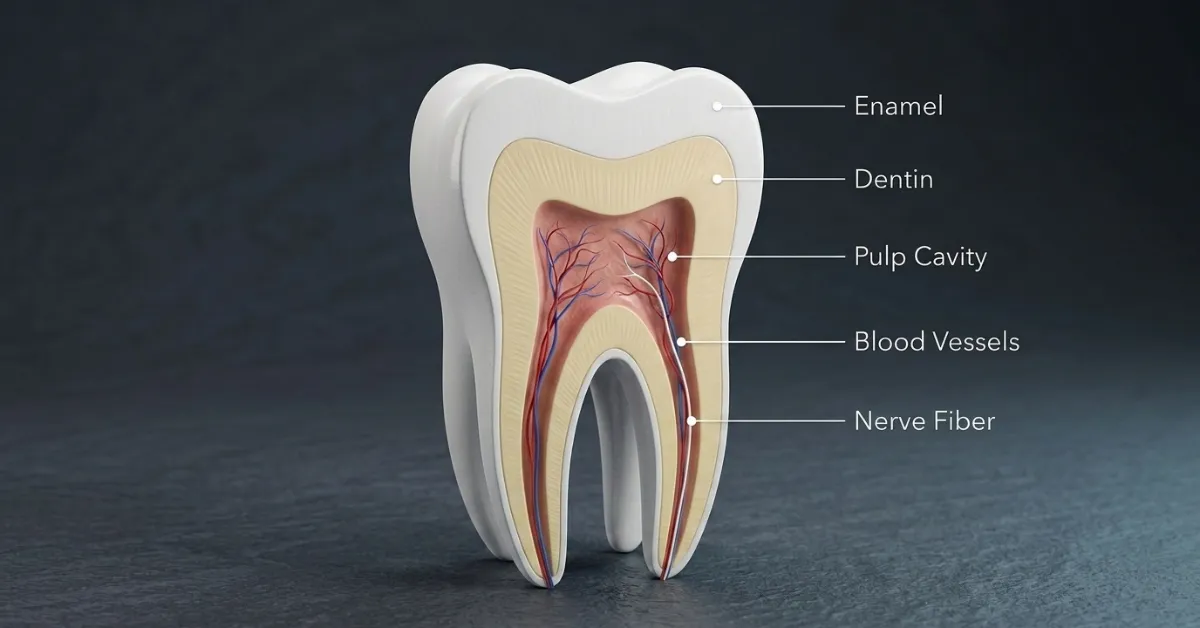
Tooth pulp is the living core of your tooth. It sits under the enamel and dentin, and it’s packed with nerves, blood vessels, and connective tissue that keep the tooth alive and able to feel hot, cold, and pressure. Without it, a tooth has no way to sense trouble or repair itself from the inside.
Most people never think about their tooth pulp until it starts to hurt. By then, a cavity or crack has usually reached deep enough to expose it. Understanding what’s actually going on in there makes it a lot easier to catch problems early, instead of finding out the hard way at 2 a.m. with a throbbing molar.
What Is Tooth Pulp?
Tooth pulp is the soft, jelly-like tissue found in the hollow center of a tooth, protected by the hard outer layers of enamel and dentin. It’s the only part of a tooth that’s actually alive in the way skin or muscle is alive, made of living cells rather than mineral.
Every tooth has pulp, whether it’s a baby tooth, a molar, or a front incisor. The amount and shape of it varies by tooth, but the basic job stays the same: keep the tooth nourished, sensitive, and defended.
Where Is Tooth Pulp Located?
Tooth pulp lives inside a hollow space called the pulp chamber, which sits in the crown (the visible part of the tooth above the gumline). From there, it extends downward through narrow channels called root canals, all the way to the tip of the root.
At the very bottom of the root is a tiny opening called the apical foramen. This is the only real connection between the pulp and the rest of your body. Nerves and blood vessels enter and exit through this opening, which is also why an infection deep in the pulp can eventually spread beyond the tooth itself.
The shape of the pulp chamber isn’t identical from tooth to tooth. Molars, which do the heavy work of chewing, tend to have larger pulp chambers and multiple root canals. Front teeth usually have a single, simpler canal. That’s part of why a root canal on a molar often takes longer than one on an incisor.
What Is Tooth Pulp Made Of?
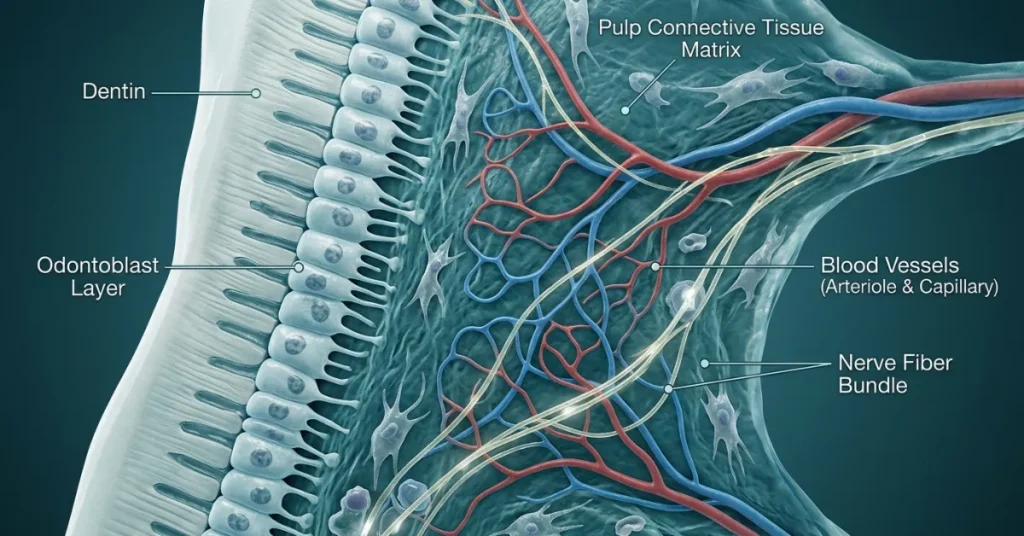
Tooth pulp is connective tissue built from a few key components working together:
- Nerve fibers that detect temperature, pressure, and pain
- Blood vessels that deliver oxygen and nutrients
- Odontoblasts, specialized cells that sit along the edge of the pulp and produce new dentin
- Fibroblasts and immune cells that maintain the tissue and respond to bacteria
That last point matters more than people expect. Pulp isn’t just a passive bundle of nerves. It has its own limited immune response, sending white blood cells to fight bacteria before an infection gets out of control. It just can’t win that fight forever if decay keeps advancing.
What Does Tooth Pulp Do?
Tooth pulp handles four main jobs, and each one has a real, noticeable effect on how your tooth behaves day to day.
Sensory function. The nerves in the pulp are why you feel a jolt of pain from ice water or a sugary drink on a sensitive tooth. That sensation is a warning system, not a flaw.
Nutrient supply. Blood vessels inside the pulp keep dentin fed and hydrated. A tooth that’s lost its blood supply becomes noticeably more brittle over time, which is one reason root-canal-treated teeth are more prone to cracking than teeth with healthy, living pulp.
Dentin formation. Odontoblasts in the pulp continue producing dentin throughout a tooth’s life, not just while it’s developing. If a cavity starts eating through enamel, the pulp can respond by laying down extra “reparative” dentin to wall off the threat, buying the tooth some time.
Defense against bacteria. Immune cells in the pulp detect and respond to invading bacteria from decay, which is what causes the inflammation and swelling behind a toothache.
Baby Teeth vs. Adult Teeth: Does Pulp Differ?
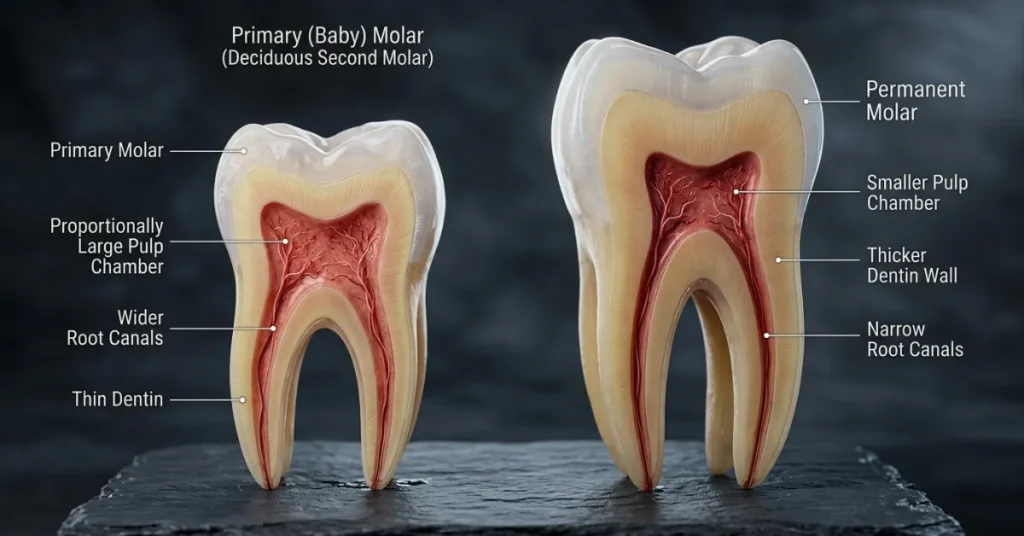
Yes, and it’s a difference most patients never hear about. In baby teeth, the pulp chamber takes up a proportionally larger share of the tooth compared to adult teeth, and the layer of enamel and dentin protecting it is thinner.
That combination means a cavity in a baby tooth can reach the pulp much faster than the same size cavity would in a permanent tooth. It’s part of why pediatric dentists tend to move quickly on cavities in kids rather than taking a wait-and-see approach that might be reasonable in an adult molar.
What Happens When Tooth Pulp Gets Damaged or Infected?
Pulp damage almost always starts with something breaching the enamel and dentin that normally protect it. Common causes include:
- Deep cavities that eat through to the pulp chamber
- Cracked or fractured teeth from trauma or grinding
- Repeated dental procedures on the same tooth
- Chronic teeth grinding, or bruxism, which wears down protective layers over time
Once bacteria reach the pulp, the tissue becomes inflamed, a condition called pulpitis. Early pulpitis, known as reversible pulpitis, causes brief sensitivity that fades quickly once the trigger (like cold air) is removed. If decay keeps advancing, it progresses to irreversible pulpitis, where pain lingers well after the trigger is gone, sometimes throbbing on its own, especially at night.
Left untreated, irreversible pulpitis leads to pulp necrosis, meaning the tissue dies. At that point, infection can spread past the root tip and form a dental abscess, a painful pocket of pus that requires urgent treatment.
Signs Your Tooth Pulp May Be Damaged
A few symptoms tend to show up together when pulp is under stress. Watch for:
- Sharp pain when eating something hot, cold, or sweet, especially if it lingers more than a few seconds
- Throbbing pain that comes on its own, without an obvious trigger
- Pain that gets worse when lying down
- Swelling in the gum near a specific tooth
- A tooth that feels loose or looks visibly darker than its neighbors
- Bad breath or a foul taste that doesn’t go away with brushing
One or two of these on their own aren’t automatically an emergency. But a lingering ache combined with swelling or a darkened tooth is a strong signal to get seen quickly rather than waiting it out.
Can Tooth Pulp Heal Itself?
Sometimes, if the damage is caught early. Mild inflammation from a small cavity or a minor crack can settle down once the irritant is removed and the tooth is properly treated, a category dentists call vital pulp therapy. This works because the pulp does have some capacity to calm down and even lay protective dentin over an area that was almost exposed.
Once the pulp has died or been surgically removed, though, it does not regenerate. A tooth that’s had a root canal keeps functioning for chewing and appearance, but the living tissue inside is gone for good.
Does a Tooth Still Work Without Its Pulp?
Yes, mostly. After a root canal removes the pulp and the canal is sealed, the tooth stays anchored in the jaw and can still be used for biting and chewing, usually topped with a crown for extra protection. What it loses is sensation and self-repair. A pulp-free tooth won’t feel hot or cold the way it used to, won’t fight off new decay from the inside, and tends to become more brittle over the years since it no longer gets nutrients from an internal blood supply. That’s why a crown or filling that seals out new decay matters even more once the pulp is gone.
How Dentists Treat Damaged Tooth Pulp
Treatment depends on how far the damage has progressed.
Vital pulp therapy is used when inflammation is caught early enough that the pulp can likely recover, often involving a protective medicated dressing placed close to the exposed area.
Pulpotomy removes only the inflamed portion of the pulp in the crown while leaving the healthy tissue in the roots intact, common in baby teeth and in some emergency adult cases.
Pulpectomy removes the entire pulp from both the crown and the roots, typically the first step in a full root canal.
Root canal therapy cleans out the infected or dead pulp, disinfects the canals, and seals them, usually finished with a crown to protect what’s left of the natural tooth structure.
In severe cases where damage or infection is too extensive, extraction may be the only option, followed by a replacement like a bridge or an implant.
How to Protect Your Tooth Pulp
Most pulp damage is preventable with the basics done consistently:
- Brush twice a day with fluoride toothpaste and floss once daily to keep decay from reaching the dentin
- Treat small cavities promptly rather than waiting, since early fillings almost never touch the pulp
- Wear a night guard if you grind your teeth, since chronic bruxism wears down enamel faster than most people realize
- See a dentist for checkups every six months so hairline cracks and early decay get caught on X-rays before they reach the pulp
- Avoid chewing on ice, pens, or other hard objects that can crack a tooth
FAQ
What is tooth pulp made of?
Tooth pulp is connective tissue containing nerve fibers, blood vessels, odontoblasts that produce dentin, and immune cells that defend against bacteria.
Can tooth pulp grow back after a root canal?
No. Once pulp is removed during a root canal, it does not regenerate. The tooth remains functional but loses its internal blood supply and nerve sensation.
What does it mean if a tooth turns dark after an injury?
A darkening tooth after trauma often signals pulp damage or pulp death, since internal bleeding or breakdown of pulp tissue can discolor the dentin from the inside out. It’s worth having checked even if there’s no pain.
Is pulpitis the same as an infection?
Not exactly. Pulpitis is inflammation of the pulp, which can happen without active infection in its earliest stages. Left untreated, it typically progresses to infection and eventually an abscess.
Does a baby tooth’s pulp matter if the tooth will fall out anyway?
Yes. Infected pulp in a baby tooth can still cause significant pain and can affect the developing permanent tooth underneath, so it’s not something to ignore just because the tooth is temporary.
Key Takeaways
Tooth pulp is the living tissue at the center of every tooth, made up of nerves, blood vessels, and connective tissue that keep it sensitive, nourished, and able to defend itself against bacteria. It sits inside the pulp chamber and root canals, protected by dentin and enamel, and it plays a direct role in how a tooth feels, heals, and ages. Damage almost always traces back to decay, cracks, or grinding, and catching the early signs, brief sensitivity, occasional twinges, before they turn into constant throbbing gives dentists far more options, including saving the pulp itself rather than removing it. Regular checkups and prompt treatment of small cavities remain the most reliable way to keep pulp healthy for as long as possible.

One Comment