
Are Eggs Good for Teeth? What the Nutrients Actually Do
Are eggs good for teeth? Yes: phosphorus, vitamin D and protein support enamel and gums, though preparation matters more than the egg itself.
Eggs show up on nearly every “foods for healthy teeth” list, usually next to a vague line about calcium. That framing undersells what eggs actually do and overstates the one thing (calcium) they’re not particularly rich in. This article breaks down exactly which nutrients in an egg matter for your teeth, how much of each nutrient one egg provides, what the research does and doesn’t show about eggs and cavities, when eggs can work against you, and how eggs stack up against other foods your dentist recommends.
How Eggs Support Tooth Enamel and Gum Health
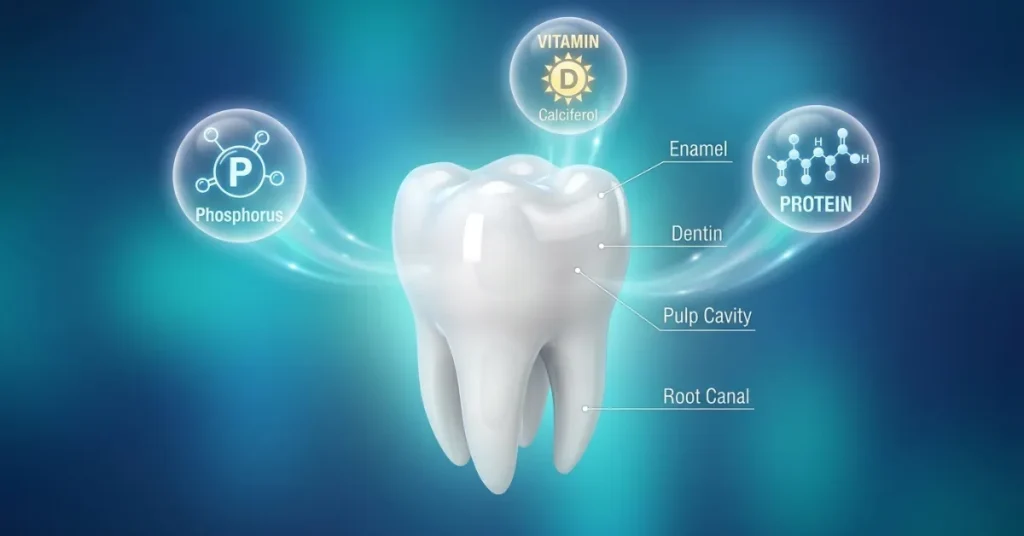
Tooth enamel is built mostly from a mineral called hydroxyapatite, a compound made of calcium and phosphorus. Beneath that enamel sit the dentin layer and the tooth’s living pulp, which is why deep decay eventually causes real pain, not just a cosmetic problem. Keeping enamel strong (and helping it repair small amounts of daily acid damage) depends on getting enough of a handful of nutrients consistently, not on any single “miracle food.” Eggs contribute several of those nutrients at once.
Phosphorus: The Enamel-Building Mineral
Phosphorus is the nutrient eggs are genuinely strong in. One large egg contains roughly 95 mg of phosphorus, about 8 percent of the daily value for adults. Phosphorus combines with calcium to form the mineral structure of enamel and dentin, and the ADA’s nutrition guidance for a healthy mouth lists protein-rich foods like eggs, meat and fish as good phosphorus sources for exactly this reason.
Vitamin D: Getting Calcium and Phosphorus Where They’re Needed
Vitamin D doesn’t build enamel directly. Its job is absorption: without enough vitamin D, the body struggles to pull calcium and phosphorus out of food and put them to use in bones and teeth, no matter how much of those minerals you eat. Egg yolks are one of the few natural food sources of vitamin D, providing roughly 1 microgram (about 40 IU) per large egg, though the amount varies by hen diet; pasture-raised and vitamin D-enriched eggs can run noticeably higher. That’s a modest contribution on its own (about 5 percent of the daily value), but it adds up alongside fatty fish, fortified milk, and sun exposure, and it matters most for people who get limited sunlight.
Protein: Supporting Gum Tissue Repair
An egg’s roughly 6 grams of protein is a complete protein, meaning it contains all nine essential amino acids. Amino acids are the raw material your body uses to maintain and repair gum tissue, the connective tissue that holds teeth in place, and the mucosal lining of the mouth. Adequate protein intake isn’t a cavity treatment, but chronic protein deficiency is associated with slower tissue repair and weaker resistance to gum infection, including the early gum and bone changes seen in mild periodontitis.
Calcium: A Smaller Contribution Than You Might Think
Here’s a correction worth making: several dental blogs describe eggs as “rich in calcium.” They’re not, by comparison. One large egg has about 27 mg of calcium, roughly 2 percent of the daily value. A cup of milk has about 300 mg, more than ten times as much. Eggs are a genuinely useful phosphorus and vitamin D source; they are a weak calcium source. If calcium is your goal, dairy, fortified plant milks, canned salmon with bones, and leafy greens do far more work.
Selenium, B Vitamins and Other Supporting Nutrients
One large egg also provides about 16 micrograms of selenium (close to 30 percent of the daily value) and roughly 0.6 micrograms of vitamin B12 (about 25 percent of the daily value), along with smaller amounts of riboflavin, folate and vitamin B6. These nutrients support normal immune function and tissue maintenance in the mouth, though their role is supportive rather than central to enamel strength specifically.
One Large Egg: The Nutrition Facts That Matter for Your Teeth

| Nutrient | Amount per 1 large egg (50 g) | % Daily Value |
|---|---|---|
| Calories | about 72 | n/a |
| Protein | 6.3 g | 13% |
| Calcium | 27 mg | 2% |
| Phosphorus | 96 mg | 8% |
| Vitamin D | about 1 mcg (40 IU), varies by egg | 5% |
| Selenium | 15.9 mcg | 29% |
| Vitamin B12 | 0.6 mcg | 25% |
| Vitamin A | 80 mcg RAE | 9% |
| Cholesterol | 186 mg | n/a |
| Total sugar | under 0.5 g | n/a |
Values approximate USDA FoodData Central’s nutrient breakdown for a whole raw egg; percentages use current adult daily values and will shift slightly with cooking method and egg size.
The last row matters as much as any nutrient: an egg has essentially no sugar and almost no carbohydrate. Cavities form when bacteria in dental plaque ferment sugar and starch into acid that dissolves enamel, and this is exactly how decay typically gets started on a molar’s chewing surface. Because eggs give that bacteria almost nothing to ferment, eating eggs doesn’t feed the process that causes decay, unlike a pastry or a bowl of sweetened cereal eaten at the same meal.
Do Eggs Actually Prevent Cavities? What the Evidence Shows
It’s fair to say eggs support the nutritional conditions your teeth need. It’s an overreach to say eggs “prevent cavities,” and a well-researched article should say so plainly.
The strongest, most specific evidence connects vitamin D, not eggs themselves, to enamel remineralization. A small 2022 study on vitamin D and enamel remineralization gave healthy adults a vitamin D supplement for six weeks, then exposed extracted teeth to an acid solution followed by the participants’ saliva. Teeth exposed to saliva from participants taking vitamin D regained more calcium and phosphorus than teeth exposed to control saliva, suggesting vitamin D can help saliva redeposit minerals into weakened enamel. Separate laboratory research on vitamin D3 and enamel microhardness has found similar remineralization effects, and a systematic review of vitamin D levels and dental caries in children and adolescents has linked lower blood vitamin D to higher rates of decay in permanent teeth.
None of that is a claim that eating eggs, specifically, prevents cavities. It’s evidence that adequate vitamin D status, of which eggs are one modest dietary source among several, supports a mineral-repair process that happens constantly in every mouth. Brushing with fluoride toothpaste, flossing, and limiting sugary and acidic foods still do far more to prevent cavities than any single food choice.
Are Eggs Ever Bad for Teeth?
Eggs themselves don’t damage enamel. A few related factors can still work against you.
Preparation Matters More Than the Egg Itself
The nutrient profile above describes a plain, minimally cooked egg. Deep-fried eggs, eggs drowned in cheese sauce, or eggs served with syrup-soaked pancakes and sugary ketchup add exactly the sugar and saturated fat that undercut the benefit. The egg isn’t the problem in that scenario; what’s on the plate with it is.
What About Dietary Cholesterol?
This isn’t a tooth-specific concern, but it’s the most common objection people raise about eating eggs regularly, so it’s worth a direct answer. One large egg yolk contains about 186 mg of cholesterol. Older guidance capped dietary cholesterol at 300 mg per day; the 2020-2025 Dietary Guidelines for Americans removed that specific numeric limit after a review of dietary cholesterol and cardiovascular disease evidence found a smaller effect on blood cholesterol for most people than previously assumed. The American Heart Association currently considers up to one egg a day reasonable for healthy adults, with more caution advised for people managing diabetes or existing high cholesterol. None of this changes an egg’s effect on your teeth either way; it’s a separate, whole-body consideration worth discussing with your own doctor if you have cardiovascular risk factors.
Egg Allergy and Other Considerations
Egg is one of the more common food allergens, particularly in young children, and an allergic reaction is a real safety issue that has nothing to do with dental benefit. If eggs aren’t an option for you, the phosphorus, protein and vitamin D described above are also available from fish, poultry, dairy and fortified foods. There’s no dental reason to force eggs into a diet that can’t tolerate them.
Best Ways to Eat Eggs for Dental Health

| Better choices | Choices to limit |
|---|---|
| Boiled or poached eggs | Eggs deep-fried in heavy oil or butter |
| Scrambled with spinach, peppers or mushrooms | Eggs smothered in cheese sauce or gravy |
| Omelets with vegetables and a light sprinkle of cheese | Eggs paired with sugary sauces (syrup, ketchup, BBQ sauce) |
| Hard-boiled eggs as a low-fuss snack | Egg dishes served with sugary pastries or sweetened cereal on the same plate |
| Egg-in-a-bowl with whole grains and vegetables | Egg sandwiches on white bread with processed breakfast meats |
A useful, simple habit: eat eggs as part of a meal rather than alone, since chewing other foods at the same time (vegetables, whole grains) increases saliva flow, and saliva is what neutralizes the acid produced by any sugar you do eat.
How Eggs Compare to Other Tooth-Friendly Foods
| Food | Standout nutrient for teeth | Where it beats eggs | Where eggs beat it |
|---|---|---|---|
| Milk / dairy | Calcium (about 300 mg per cup) | Far higher calcium | Eggs have more phosphorus per calorie and portable protein without lactose |
| Leafy greens | Calcium, folate, low calories | More calcium, added fiber | Eggs supply complete protein and vitamin D, which greens lack |
| Fatty fish (salmon) | Vitamin D, omega-3s | Comparable or higher vitamin D | Eggs are cheaper, shelf-stable, and don’t carry mercury concerns |
| Nuts and seeds | Magnesium, phosphorus | More fiber, no cholesterol | Eggs deliver complete, highly digestible protein in a smaller portion |
| Crunchy fruit/vegetables (apples, celery) | Mechanical cleaning via chewing and saliva flow | Physically helps clear plaque while chewing | Eggs contribute nutrients, not scrubbing action; the two work best together |
The pattern that matters, echoed in Harvard’s overview of nutrition and oral health: no single food, including eggs, covers every nutrient your teeth need. Eggs are one useful piece of a varied diet, strongest on phosphorus, protein and vitamin D, weaker on calcium and fiber.
Eggs for Kids, Pregnancy and Older Adults
Children: The 2020-2025 Dietary Guidelines for Americans specifically recommend eggs as an early first food for infants and toddlers, in part for their protein and choline content, both useful for growth, including the growth of developing teeth.
Pregnancy: Vitamin D status during pregnancy has a documented connection to a child’s future teeth. Research has linked maternal vitamin D deficiency to a higher risk of enamel-formation defects in the child, including conditions called amelogenesis imperfecta and dentinogenesis imperfecta. Eggs are one accessible dietary vitamin D source pregnant women can add to a broader plan that usually includes prenatal supplementation, discussed with an obstetrician.
Older adults: Eggs are a soft, easy-to-chew source of high-quality protein, which makes them a practical choice during the healing window after a tooth extraction or wisdom teeth removal, or for anyone easing back into normal chewing after a dental implant. They require minimal chewing while still delivering meaningful nutrition.
Frequently Asked Questions About Eggs and Teeth
Are eggs good for teeth?
Yes, eggs can be a tooth-friendly food. They provide nutrients such as protein and phosphorus that support normal tooth and bone health. Eggs are also relatively low in fermentable carbohydrates, so they are less likely than sugary foods to contribute directly to acid production by oral bacteria.
Do eggs make your teeth stronger?
Eggs can support overall dental health as part of a balanced diet, mainly because they provide protein and minerals such as phosphorus. However, eating eggs alone will not make teeth stronger or repair damaged enamel. Good oral hygiene, fluoride exposure, and a balanced diet are also important.
Are eggs good for tooth enamel?
Eggs can be part of a diet that supports healthy enamel because they contain phosphorus and other nutrients involved in maintaining teeth. However, eggs do not rebuild enamel that has already been lost. Protecting enamel also requires limiting frequent sugary or acidic foods and maintaining good oral hygiene.
Do eggs help prevent cavities?
Eggs may be a tooth-friendly choice because they contain little sugar and are not highly acidic. However, eating eggs does not directly prevent cavities. Regular brushing with fluoride toothpaste, cleaning between the teeth, and limiting frequent sugar intake are more important for cavity prevention.
Are boiled eggs good for teeth?
Yes. Plain boiled eggs are generally a tooth-friendly food because they contain protein and phosphorus while having very little sugar. They can be a nutritious option, particularly when compared with sugary snacks that can contribute to tooth decay.
Can eggs help with calcium absorption for teeth?
Eggs provide several nutrients that contribute to normal bone and dental health, but they are not a major source of calcium. A balanced diet containing adequate calcium and vitamin D is important for maintaining healthy teeth and bones.
Are eggs good for children’s teeth?
Eggs can be a nutritious food for children and provide protein and several vitamins and minerals. They can fit well into a balanced diet that supports normal growth and dental health. Children should still brush regularly with fluoride toothpaste and limit frequent sugary foods and drinks.
Can eating eggs whiten teeth?
No. Eating eggs does not naturally whiten teeth. Tooth color is influenced by factors such as genetics, enamel characteristics, and staining from foods and drinks. Eggs should not be used as a substitute for evidence-based teeth-whitening methods.
Key Takeaways
Eggs support tooth health mainly through phosphorus, vitamin D and protein, not through calcium, which is where several competing articles overstate their case. One large egg provides about 96 mg of phosphorus, roughly 1 microgram of vitamin D, and 6.3 grams of complete protein, alongside meaningful selenium and B12, while containing essentially no sugar for cavity-causing bacteria to feed on. The clearest research connects vitamin D specifically, not eggs as a category, to enamel remineralization, so eggs are a genuine contributor rather than a cavity cure. What you cook eggs in and eat alongside them (sugar, saturated fat, sticky sauces) affects your teeth more than the egg itself. Eaten plainly, as part of a varied diet, and combined with regular brushing, flossing and dental checkups, eggs are a solid, evidence-backed choice for a tooth-friendly diet.