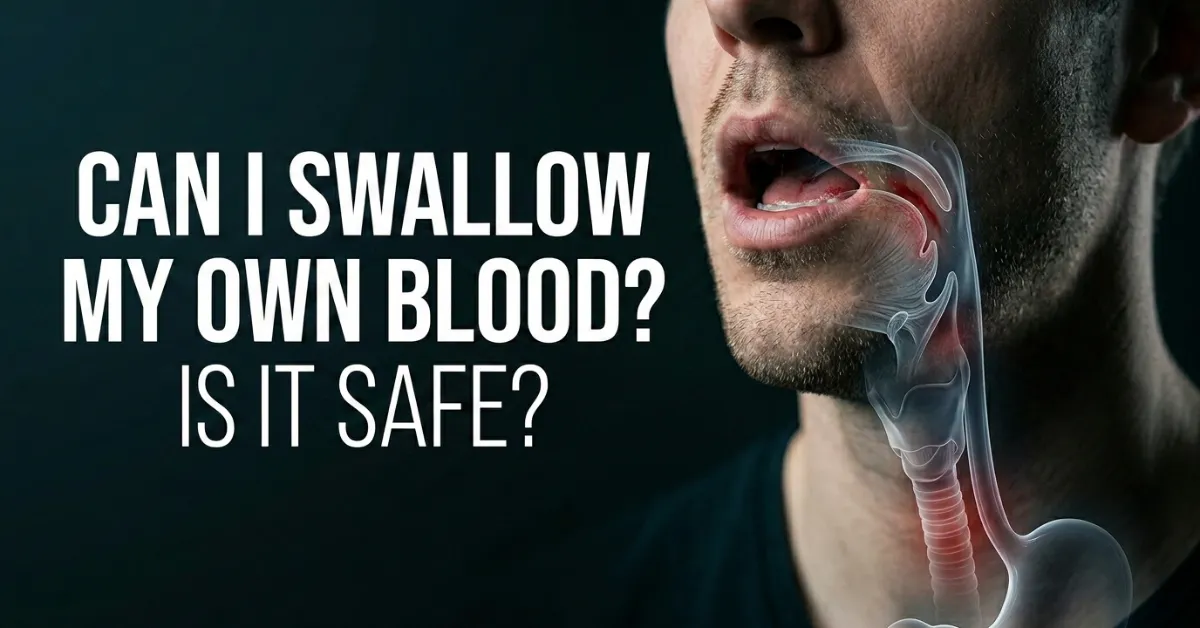
Can I Swallow My Own Blood? Is It Safe?
Can I swallow my own blood? Learn whether swallowing blood is safe, what happens in your stomach, and when you should seek medical care
Yes, swallowing a small amount of your own blood from a nosebleed, bleeding gums, or a small cut is generally harmless. Your stomach acid breaks it down just like food, and it won’t make you sick unless you swallow a large volume or the blood is coming from an infected area.
I remember the first time a dentist told me to just swallow instead of spitting after a filling. It felt wrong. Spitting out blood seems like the responsible thing to do, almost instinctive. But there’s a real answer here, backed by how your digestive system actually works, and it’s simpler than most people expect.
What Happens When You Swallow Blood
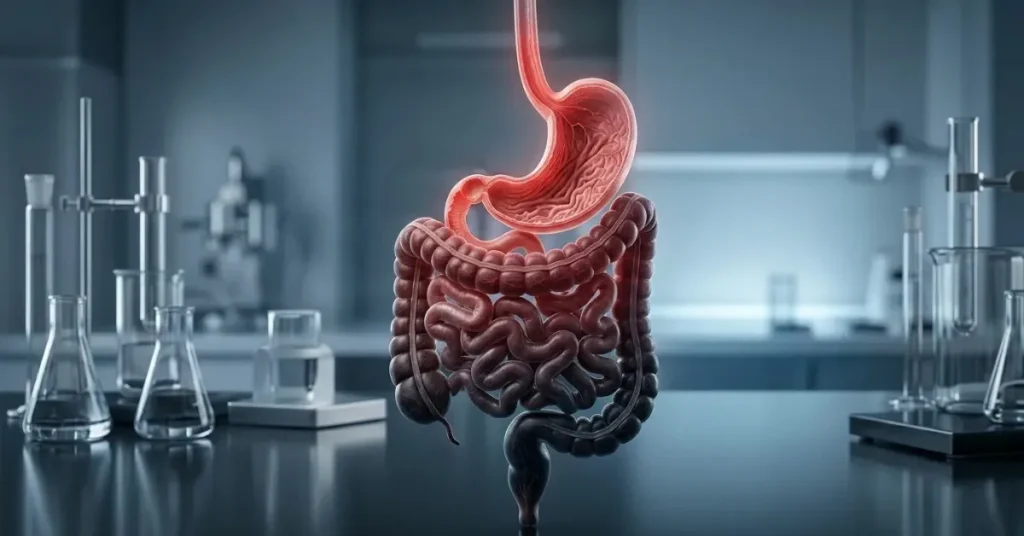
Blood that goes down your throat doesn’t enter your bloodstream again. It follows the same path as anything else you eat or drink: down the esophagus, into the stomach, then through the small intestine.
Your stomach acid is strong enough to break down the proteins in blood almost the same way it processes a piece of meat. The iron and other components get digested, and whatever isn’t absorbed moves on through your intestines. Nothing about swallowing your own blood confuses your immune system or triggers some kind of internal reaction, since it never actually reaches your circulatory system again. It’s treated as digested material, not as blood.
Is It Safe to Swallow Blood From a Nosebleed
A typical nosebleed drips a small amount of blood into the back of your throat, and swallowing that is not dangerous. Most people do it without even thinking about it during a mild nosebleed, especially at night.
The concern only comes up with heavier nosebleeds. If blood is flowing steadily rather than just trickling, swallowing large amounts can upset your stomach and cause nausea or vomiting. In that case, it’s better to lean forward, pinch your nose, and let the blood drip out rather than continuously swallowing it. That’s less about the blood being harmful and more about avoiding an upset stomach from the sheer volume.
Swallowing Blood From Bleeding Gums or Dental Work
Bleeding gums, a tooth extraction, or a filling can all send a bit of blood into your mouth, and swallowing it is fine in small amounts. Dentists routinely tell patients not to spit excessively after a procedure, especially a tooth extraction, because forceful spitting can dislodge the blood clot forming in the socket.
A dislodged clot is what leads to a dry socket, which is a painful complication. Swallowing normally, the way you’d swallow saliva, doesn’t create enough suction or pressure to disturb that clot. What you do want to avoid is using a straw or spitting forcefully in the first day or two after an extraction, since that pressure can pull the clot loose. Swallowing itself isn’t the risk factor here.
How Much Blood Is Too Much to Swallow
A small amount, think a teaspoon or less from a minor injury, isn’t going to cause any real problem. Your body handles it the same way it handles any other small amount of digested protein.
Larger volumes are a different story. Swallowing a significant amount of blood, whether from a heavy nosebleed, a mouth injury, or bleeding elsewhere, can irritate your stomach lining and trigger nausea or vomiting. If you’re vomiting blood, or if you notice repeated vomiting after swallowing a large amount, that’s a signal to stop swallowing it and seek medical attention rather than something to just wait out.
Why Swallowed Blood Turns Your Stool Black
If you swallow a noticeable amount of blood, don’t be alarmed if your next bowel movement looks unusually dark or black. As blood travels through your digestive system, it breaks down and the iron in it reacts with digestive enzymes, which darkens its color.
This is a normal digestive response and typically clears up within a day or two on its own. What’s worth paying attention to is stool that stays black for several days, has a distinct tar-like texture, or shows up without any clear cause like a nosebleed or dental bleeding you can point to. That pattern can indicate bleeding somewhere inside your digestive tract rather than blood you swallowed from your mouth or nose, and it’s worth mentioning to a doctor.
Swallowing Blood in Children
Kids deal with nosebleeds, loose teeth, and small mouth injuries constantly, and swallowing a bit of blood from these is not something to panic over. Their digestive systems process it the same way an adult’s does.
What’s worth keeping an eye on is the amount and how your child reacts. Heavy or frequent nosebleeds, visible distress, or repeated vomiting after swallowing blood are reasons to check in with a pediatrician. A single loose tooth or a typical childhood nosebleed usually isn’t cause for concern beyond basic first aid.
When to See a Doctor or Dentist
Swallowing a small amount of your own blood on its own rarely needs medical attention. A few situations do warrant a call to a doctor or dentist:
- Bleeding that doesn’t slow down after 15 to 20 minutes of direct pressure
- Vomiting blood, especially if it looks like coffee grounds or is bright red and repeated
- Black, tarry stool that isn’t explained by a recent nosebleed or dental bleeding
- Frequent nosebleeds with no clear cause
- Signs of infection around a wound, such as swelling, warmth, or pus, since blood from an infected area carries more risk than blood from a clean cut
If your bleeding is tied to a known cause like a minor cut, a nosebleed, or dental work, and it stops within a reasonable time, swallowing the small amount that made it into your mouth isn’t something to lose sleep over.
Frequently Asked Questions:
Is it bad to swallow blood after tooth extraction?
No. Swallowing normally after an extraction is fine and is actually preferred over spitting, since forceful spitting is more likely to dislodge the healing blood clot than swallowing is.
Does swallowing blood make you sick?
A small amount usually doesn’t. A larger amount can irritate your stomach and cause nausea or vomiting, mainly because of the volume rather than the blood itself being toxic.
Can swallowing blood cause a dry socket?
Swallowing on its own doesn’t. Dry socket is more commonly linked to using a straw, smoking, or spitting forcefully in the first day or two after extraction.
Why is my poop black after a nosebleed?
Digested blood darkens stool because of how iron reacts as it moves through your digestive tract. It’s normal after swallowing a noticeable amount of blood and usually resolves within a day or two.
Is it different if I swallow someone else’s blood?
Yes. Swallowing someone else’s blood carries a higher risk of exposure to bloodborne infections and should be avoided, unlike swallowing your own, where the main risks are limited to bleeding source and volume.
Conclusion
Swallowing a small amount of your own blood, whether from a nosebleed, bleeding gums, or a minor cut, isn’t something to worry about. Your stomach handles it the same way it handles anything else you swallow, breaking it down with acid before it moves through your digestive tract. The situations that actually call for attention are heavier bleeding that won’t stop, vomiting blood, black stool with no clear cause, or blood coming from a wound that looks infected. Outside of those cases, swallowing instead of spitting is often the better move, especially after dental work, since it avoids the kind of pressure that can slow down healing.
This article is for general informational purposes and isn’t a substitute for advice from your own doctor or dentist, especially if bleeding is heavy, recurring, or unexplained.