Do Veneers Change Your Face Shape? The Surprising Truth
Reviewed by Dental and Scientific Facts.
Do veneers change your face shape? Learn how veneers can affect lip support, smile symmetry, facial appearance, and overall look.
Veneers do not reshape your facial bones, but they can change how your face appears. Because your front teeth support your lips and frame your smile, restoring worn, short, or uneven teeth with veneers can noticeably affect the lower third of your face, even though your jawbone, cheekbones, and chin remain unchanged.
This guide explains what veneers can and cannot do to your appearance, who tends to see the biggest difference, and how to tell whether veneers are the right treatment for your concerns.
Quick Answer: Do Veneers Change Your Face?
No, veneers do not change your face shape or facial bone structure. They cannot reshape your jawline, move your cheekbones, or alter your chin.
They can, however, change how your face looks by:
- Restoring worn or shortened teeth
- Improving lip support in some cases
- Creating better smile symmetry
- Enhancing the visual balance of the lower third of the face
The people who notice the biggest change are usually those with significant tooth wear, damaged front teeth, or teeth that no longer provide much support behind the lips. Think of veneers as improving the foundation of your smile, not the structure of your face. Results vary by individual anatomy, and a qualified dentist should evaluate whether veneers are appropriate before any treatment is planned.
Key Takeaways
- Veneers do not change your jawbone, chin, or natural face shape.
- They can improve how the face appears by changing tooth proportions and smile symmetry.
- Restored tooth length may improve lip support for some patients, though results vary.
- People with worn or damaged teeth tend to notice the most visible difference.
- Good veneer design accounts for face shape, lip position, and smile line.
- Poorly planned veneers can look unnatural or bulky.
- Veneers affect dental aesthetics, not facial anatomy.
Do Veneers Change Your Face Shape?
Veneers cannot physically reshape your face because they only cover the front surface of your existing teeth. Facial shape is influenced by your jawbone, chin position, cheekbone structure, genetics, and the soft tissue around your face, none of which veneers affect.
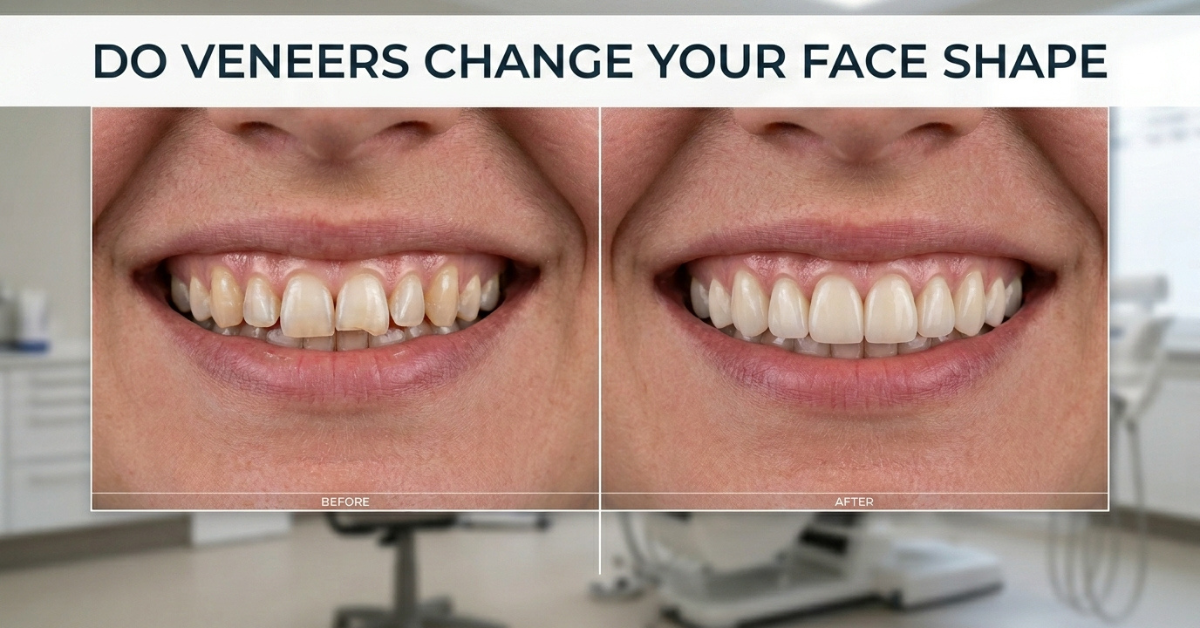
What veneers can influence is the relationship between your teeth and the soft tissue around your mouth. Front teeth provide structural support for the upper lip, so changes in tooth length or position can change how the smile and lower face look, even though the bones underneath are unchanged. Someone with heavily worn teeth may have shorter visible teeth, reduced lip support, and an older-looking appearance around the mouth. Restoring appropriate tooth length and shape can improve that relationship, which is why some people feel their face looks different after veneers even though nothing about their bone structure has changed.
How Veneers Can Change the Way Your Face Looks
Several smaller changes work together to create a more balanced appearance. None of them alter bone, but combined they can make a visible difference.
Lip Support and Fullness
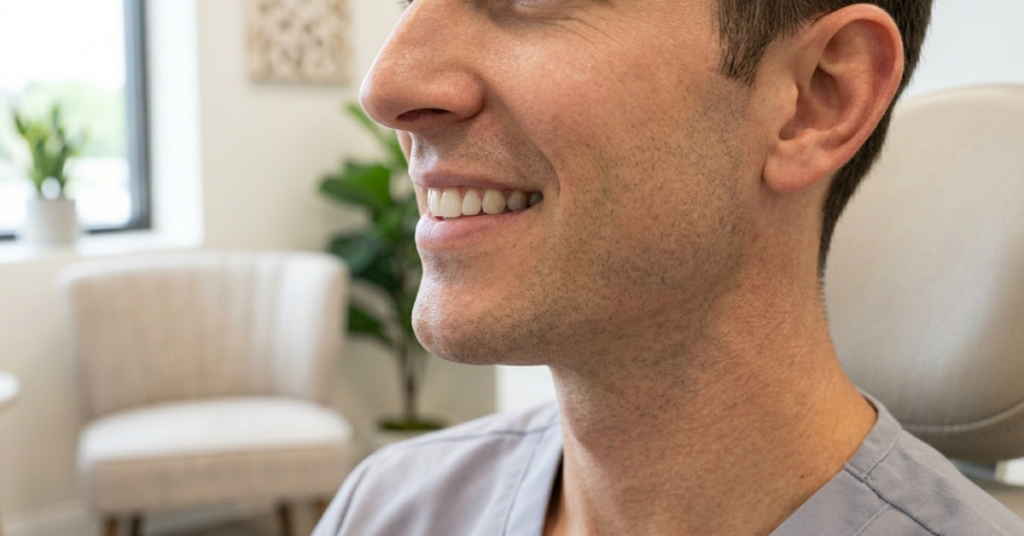
The upper lip rests against the front teeth, so when teeth wear down, the lips can look less supported simply because there is less structure holding them forward. Veneers can restore tooth length, volume, and shape, which may make the lips look slightly fuller or better positioned in some patients. This is not the same mechanism as dermal fillers, and the effect depends heavily on individual lip anatomy and the veneer design chosen. Veneers are meant to enhance existing features rather than manufacture a new lip shape.
Tooth Length and a More Youthful Look
Teeth commonly shorten over time due to grinding (bruxism), acid erosion, natural wear, or dental damage. Shortened teeth can make the smile appear reduced and can subtly change how the lower face looks when smiling. Rebuilding that lost length with veneers can restore a more youthful smile appearance. This does not mean veneers reverse skin aging or tighten facial tissue; the change comes entirely from restoring dental proportions that had been lost.
Smile Symmetry and Facial Balance
Uneven, chipped, or discolored front teeth can disrupt how the smile interacts with the lips and surrounding features. Veneers can correct uneven tooth shapes, minor spacing, and discoloration, producing a more symmetrical smile. Because the teeth, lips, and facial muscles work together visually, a more balanced smile often makes the entire lower face look more harmonious, even though no facial bones have moved.
Can Veneers Change Your Jawline or Facial Structure?
No. Veneers cannot change jawbone shape, increase chin projection, add cheekbone definition, or correct skeletal jaw problems. These are structural, bone-level concerns, and the appropriate treatment depends on whether the underlying issue is dental, orthodontic, or skeletal, which may involve options such as orthodontics, jaw surgery, or another facial procedure rather than cosmetic dentistry.
A person may appear to have a more balanced lower face after getting veneers, but that impression comes from improved smile proportions and lip support, not from any change to the jaw itself. If your main concern is jawline definition or a skeletal issue, veneers are not the appropriate treatment, and an evaluation by an orthodontist or oral and maxillofacial surgeon is more suitable.
Do Veneers Make Your Lips Look Bigger?
Veneers can make the lips appear slightly fuller in some patients, but the effect is usually modest and not guaranteed. Because front teeth provide natural support behind the lips, restoring tooth length, thickness, and projection can create a smoother, more supported look around the mouth for people whose teeth had worn down or lost volume.
This is different from how dermal fillers work. Fillers add volume directly to the lip tissue, while veneers only change the structure sitting behind the lips. The final result depends on natural lip shape, existing tooth position, veneer thickness, and overall smile design, so outcomes vary from person to person. A well-planned treatment aims for a natural improvement rather than an exaggerated change.
Can Veneers Make You Look Younger?
For some patients, veneers can create a more refreshed-looking smile. As teeth age, they often shorten from wear, darken or stain, chip, or lose their original shape, and these changes can affect how the lower third of the face looks. Restoring tooth shape, length, and brightness may improve overall smile aesthetics and give a more youthful impression.
It’s worth being clear that veneers do not reverse aging in any biological sense. They do not tighten skin, remove wrinkles, or change how skin ages. Any “younger” appearance comes specifically from correcting dental changes that had made the smile look older, not from an anti-aging effect.
Can Veneers Change Your Side Profile, Face Width, or Cheeks?
Veneers may have a limited effect on side profile in certain cases, mainly through changes in lip support. If worn teeth had left the lips looking less supported, restoring tooth volume may create a fuller lip profile when viewed from the side. However, veneers cannot move the jaw forward, change chin projection, or correct facial bone structure. If a side-profile concern is related to jaw position, an orthodontic or surgical evaluation is more appropriate than cosmetic dentistry.
The same limits apply to face width and cheeks. Veneers do not add width to the face or volume to the cheeks. A narrow-looking smile can appear more balanced after treatment because of improved tooth visibility and symmetry, but this is a change in smile appearance, not in the width of the jaw or cheekbones.
Who Notices the Biggest Facial Changes After Veneers?
Not everyone experiences the same degree of visible change. People who tend to notice the most improvement usually have an existing dental issue that was already affecting their appearance:
- Worn teeth: Restoring lost tooth height often produces the most noticeable change.
- Reduced lip support: Rebuilding tooth volume may improve how the lips sit.
- Uneven front teeth: Correcting asymmetry can improve overall facial harmony.
- Damaged or discolored teeth: Repairing visible front teeth can meaningfully change smile confidence and appearance.
Someone who already has well-proportioned, healthy teeth is likely to see only a small cosmetic difference, since there is less to restore.
Can Veneers Make Your Face Look Worse?
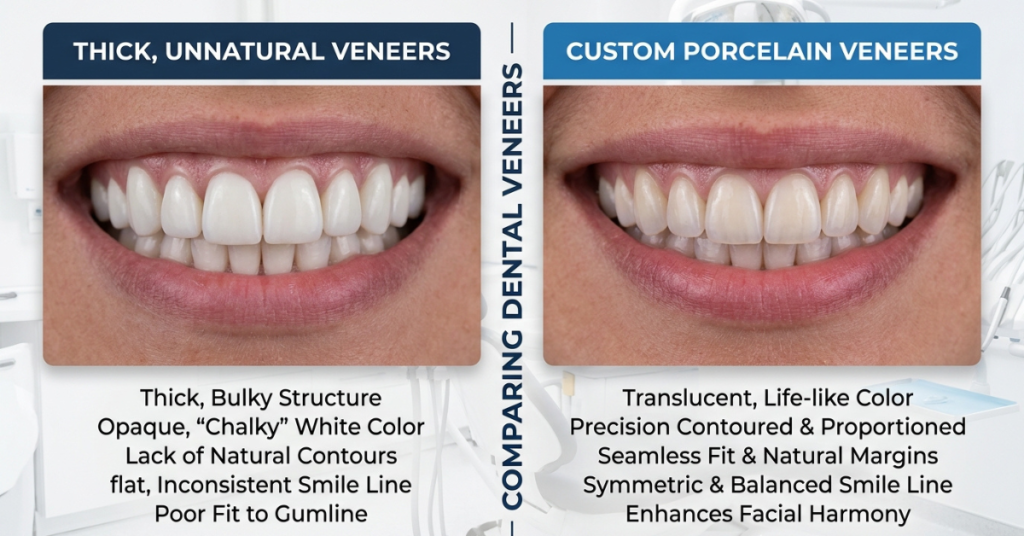
Yes, poorly planned veneers can negatively affect facial appearance. Veneers are meant to create harmony between the teeth, lips, and surrounding features, and an incorrect design can throw that balance off rather than improve it. Common problems include:
- Veneers that are too thick, which can push the lips forward and create a bulky look
- Veneers that are too long, which can make the smile look unnatural or out of proportion with the face
- Poor tooth shape selection, when the veneer shape does not match the patient’s face shape, lip shape, or smile line
- Overly bright or unnatural shades, which can draw attention to the dental work instead of blending with the face
Good planning takes tooth proportions, facial proportions, lip position, smile line, bite, and the condition of the existing teeth into account before any veneers are placed. The goal of a well-executed case is a result that looks natural rather than an obviously “done” smile.
Types of Veneers and Their Effect on Appearance
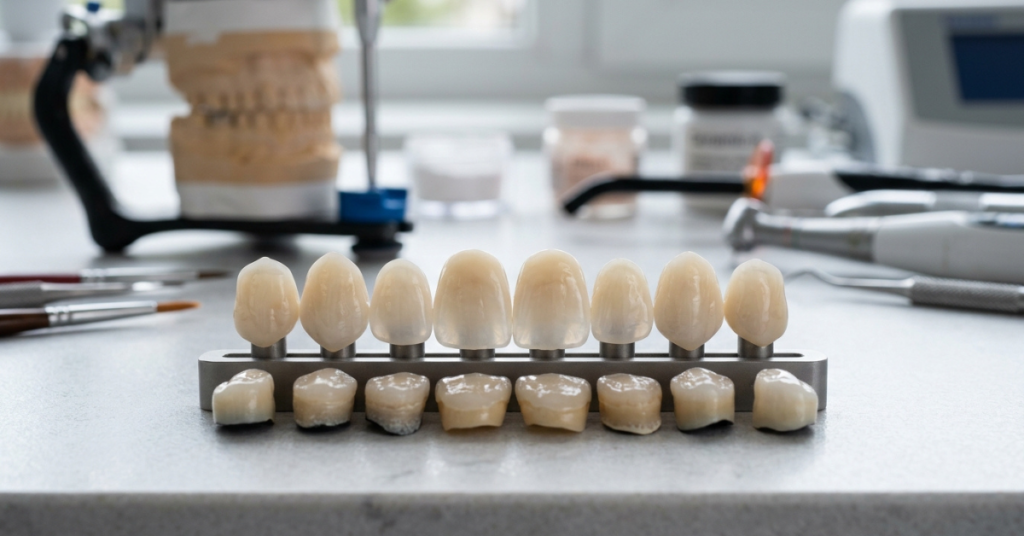
Different veneer types offer different levels of aesthetic change and are suited to different situations.
| Veneer Type | Effect on Appearance | Common Uses |
|---|---|---|
| Porcelain veneers | Greater control over tooth size, shape, length, and color; suitable for more extensive cosmetic changes | Multiple cosmetic concerns or smile makeovers |
| Composite veneers | Conservative cosmetic changes with less alteration to tooth structure | Minor chips, discoloration, and small shape corrections |
| Non-prep veneers | Subtle enhancement with little or no enamel preparation in suitable cases | Selected cases where minimal preparation is appropriate |
No single type is universally better. The right choice depends on the amount of correction needed, the condition of the existing teeth, and the patient’s aesthetic goals, and should be discussed with a dentist.
Are Veneers Right for You?
Veneers are a good option for many cosmetic concerns, such as worn, chipped, discolored, or slightly uneven front teeth. They are not the right solution for every facial or dental concern, and a qualified dental professional should assess suitability based on tooth structure, bite, gum health, and individual facial anatomy.
Depending on the underlying issue, a different treatment path may be more appropriate:
- Orthodontic treatment (braces or clear aligners) is typically recommended when teeth are misaligned, crowded, or the bite itself needs correcting, since veneers do not move teeth.
- Restorative dentistry, such as crowns or bonding, may be more suitable when a tooth has significant structural damage or decay rather than a purely cosmetic issue.
- Periodontal treatment should be addressed first if there is active gum disease, since veneers should not be placed over unhealthy gum tissue.
- Evaluation by an orthodontist or oral surgeon is appropriate when the concern involves the bite, jaw alignment, or skeletal structure rather than the teeth themselves.
This is general information rather than a diagnosis. The only way to know which option fits your situation is a clinical evaluation.
Veneers vs. Other Treatments
Veneers vs. dermal fillers: Veneers change tooth structure and support the lips from behind; fillers add volume directly into the lip or facial tissue. They work through different mechanisms and are not interchangeable.
Veneers vs. orthodontics: Braces and clear aligners move teeth into new positions to correct alignment, crowding, or bite issues. Veneers change the visible shape and surface of teeth but do not move them.
Veneers vs. jaw surgery: Jaw surgery changes the underlying bone structure and can address severe bite problems, jaw imbalance, or skeletal concerns. Veneers cannot replace a structural or surgical treatment.
Frequently Asked Questions
Do veneers change the shape of your face?
Veneers do not change your underlying facial bones or jaw structure. However, they can slightly change how your face appears by improving tooth shape, size, alignment, and support for the lips.
Can veneers change your facial structure?
No, veneers cannot reshape your facial bones or alter your jaw structure. They may create a subtle visual difference by changing the appearance and position of the teeth.
Do veneers make your lips look fuller?
They can. Veneers may provide slightly more support to the lips, particularly when they restore worn-down or undersized front teeth. The effect varies depending on tooth shape and veneer thickness.
Can veneers make your face look different?
Yes. Veneers can make your face look somewhat different by improving the proportions, symmetry, and appearance of your smile. The change is usually most noticeable around the mouth and lower face.
Do veneers change your jawline?
No. Veneers do not change the jawbone or physically reshape the jawline. Any perceived change is usually related to improvements in the teeth, smile, and lip support.
Final Verdict: Do Veneers Change Your Face?
Veneers do not physically reshape your face. They cannot change your jawbone, cheekbones, or chin. What they can do is change how the lower face and smile appear, by restoring or altering tooth proportions, improving smile symmetry, and in some cases improving lip support.
How much difference you see depends on your existing teeth, the veneer design chosen, your bite, and your individual facial anatomy. People with significant tooth wear or damage tend to see the most noticeable change, while those with already well-proportioned teeth will typically see a smaller effect. A well-planned result should look like a natural, refreshed version of your own smile rather than a different face.
Before moving forward, it’s worth discussing your facial proportions, whether veneers or another treatment fits your goals, and how to achieve a natural-looking outcome with a qualified dental professional who can evaluate your teeth, bite, and gum health in person.
This article is for informational purposes only and does not constitute professional dental or medical advice. Always consult a qualified dentist or healthcare provider for diagnosis and treatment.