Sea Animal Teeth: The Wildest Types in the Ocean
See how sea animal teeth range from a 10-foot narwhal tusk to five microscopic urchin teeth built to drill through rock.
If you have ever wondered what sea animal teeth actually look like up close, the honest answer is that they vary more than almost any other feature in the ocean. A great white shark carries around 300 teeth arranged in seven rows, a purple sea urchin gets by with just five, and a blue whale has none at all. Teeth in the sea are not a single design. They are dozens of different tools, each one shaped by what the animal eats and how it has to catch it.
I spent an afternoon at a public aquarium a few years ago watching a keeper explain a sea lion’s teeth during a feeding demonstration, and the detail that stuck with me was how much wear those teeth showed compared to the young dolphin’s set in the next tank over. That one comparison is basically the whole story of this article: sea animal teeth are built for a job, and they show it.
Do All Sea Animals Have Teeth?
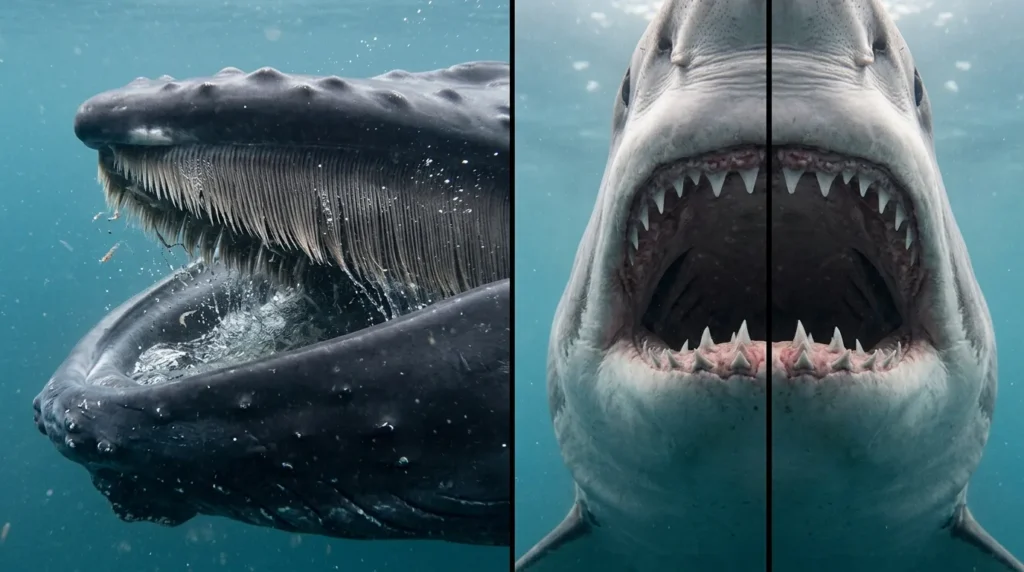
No. Plenty of ocean animals get through life with no teeth whatsoever, and a few groups never had them to begin with. Baleen whales, sea turtles, and most seabirds fall into this category, along with echinoderms like starfish that swallow prey whole. Meanwhile, some animals that people assume are toothless, like sea urchins, actually have some of the hardest teeth in the animal kingdom.
Biologists sort tooth patterns into three broad categories, and you will see all three represented in the ocean:
- Monophyodont animals grow one set of teeth for life and never replace them. Beluga whales fall into this group.
- Diphyodont animals grow a baby set and then one adult set, the same pattern humans follow. Most mammals, including some marine mammals, work this way.
- Polyphyodont animals replace teeth continuously throughout their lives, sometimes producing thousands of teeth over a lifetime. Sharks and most bony fish are polyphyodonts.
That single distinction explains a lot of what follows. An animal that only gets one set of teeth needs those teeth to last, so they tend to be simple and durable. An animal that sheds and regrows teeth constantly can afford serrated, fragile, razor-thin teeth, because a broken one just gets replaced.
The Main Types of Sea Animal Teeth (and What Each One Is Built For)
Ocean teeth generally fall into six functional groups. Knowing these makes the rest of this list click into place, because you start recognizing the pattern behind the species instead of just memorizing trivia.
Grasping Teeth
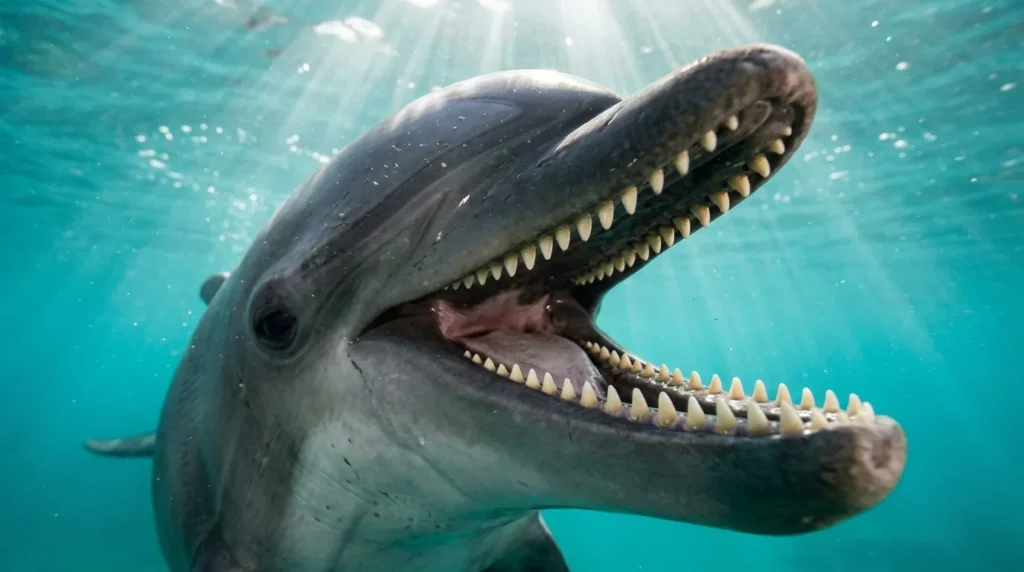
Cone-shaped, smooth-edged teeth built to hold onto slippery prey rather than chew it. Dolphins are the clearest example. A bottlenose dolphin carries somewhere between 80 and 100 conical teeth, and it uses them to grip a fish and swallow it whole rather than break it down. Grasping teeth do not need sharp edges because they are not cutting anything. They just need to be pointed enough that a wriggling fish cannot slide back out.
Cutting and Shearing Teeth
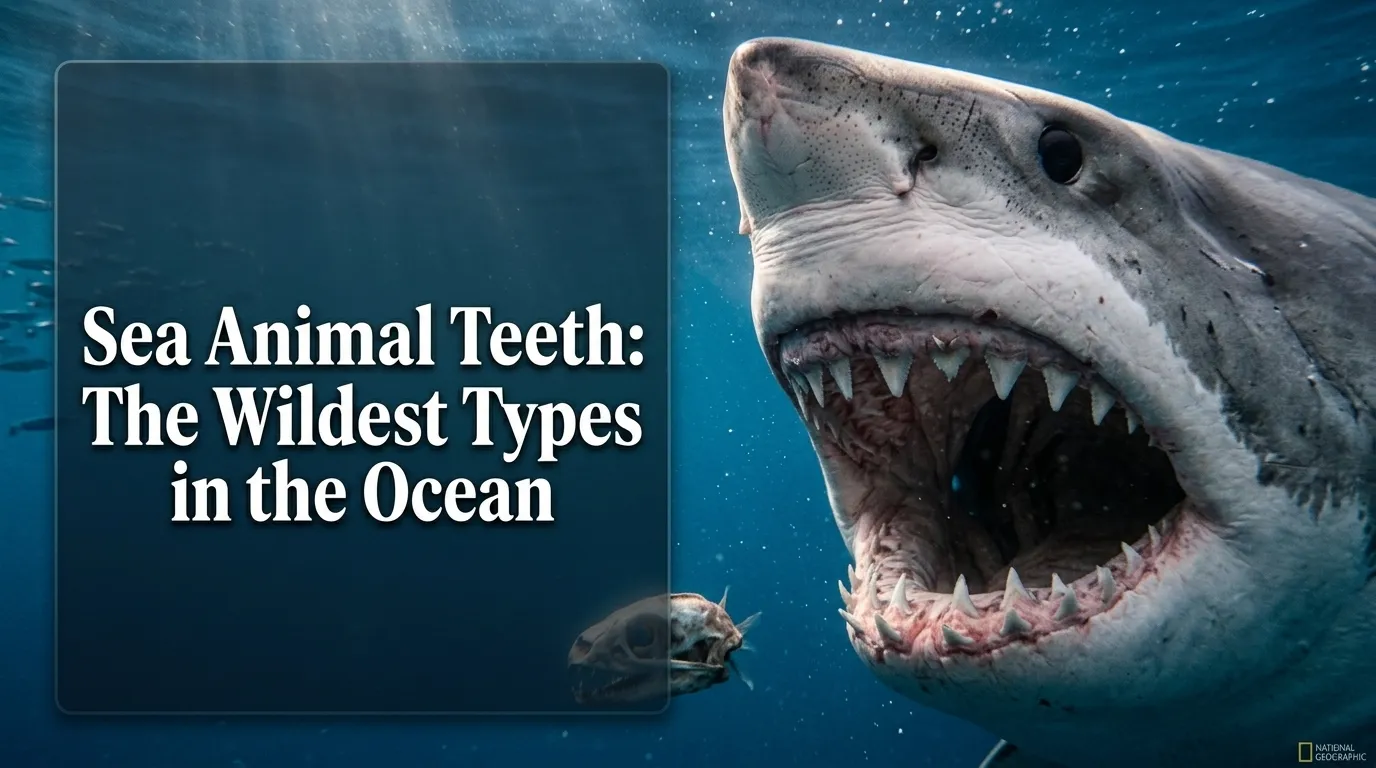
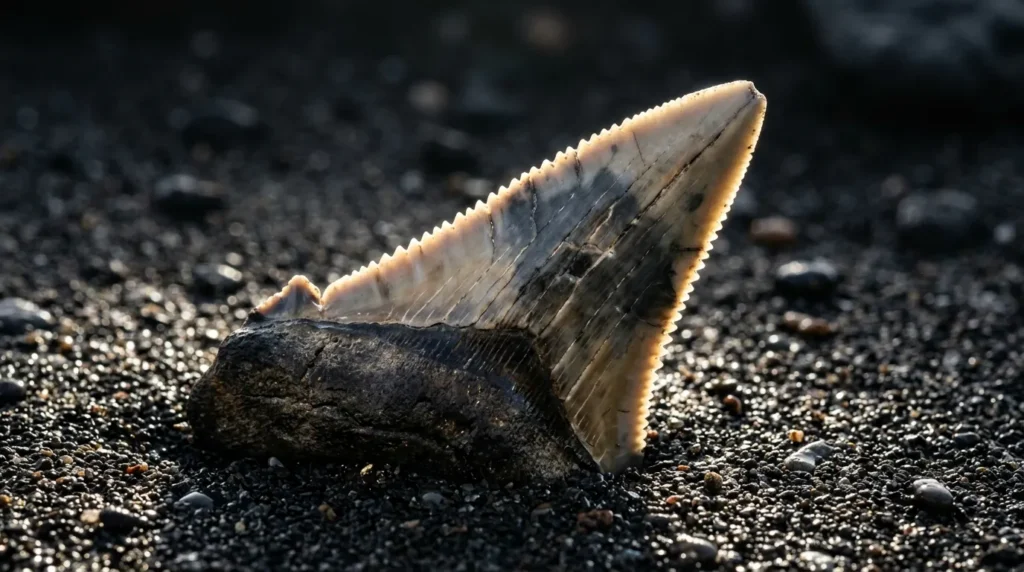
Flat, triangular, serrated teeth built to slice through flesh, cartilage, and sometimes bone. Great white sharks are the textbook case, with roughly 300 teeth arranged in multiple rows so a replacement is always ready to rotate forward the moment one breaks off. Because these teeth are essentially disposable, sharks lean toward thin, brittle, razor-sharp designs that would never survive a lifetime of use the way a dolphin’s grasping teeth do.
Crushing and Grinding Teeth
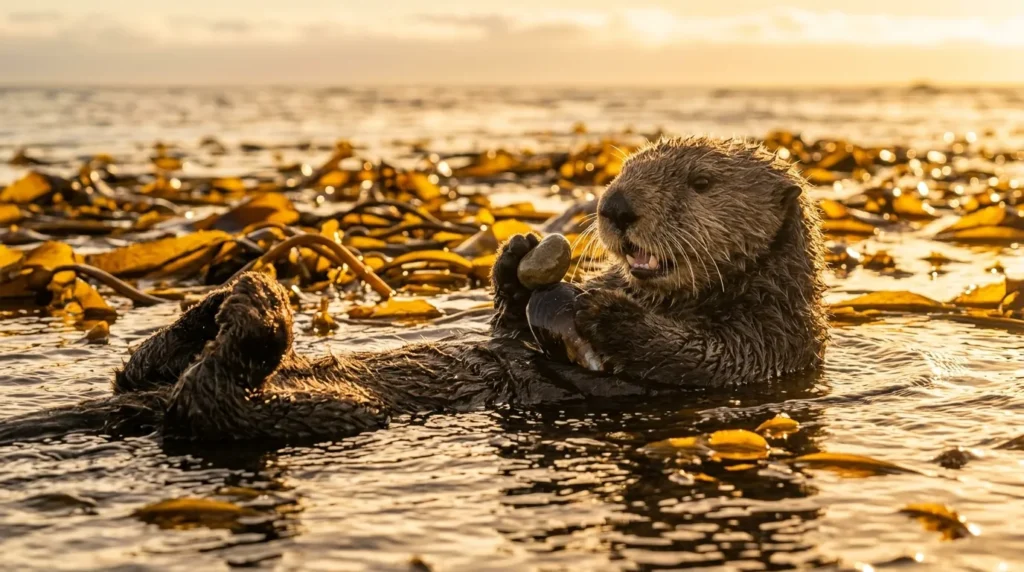
Flat, broad, low-crowned teeth suited to cracking shells rather than tearing meat. Spotted eagle rays and other bottom-feeding species like skates use molar-like plates to crack open clams, oysters, and whelks. Sea otters use a similar strategy with their own flattened molars, breaking apart hard-shelled prey like crabs and sea urchins before eating.
Drilling Teeth
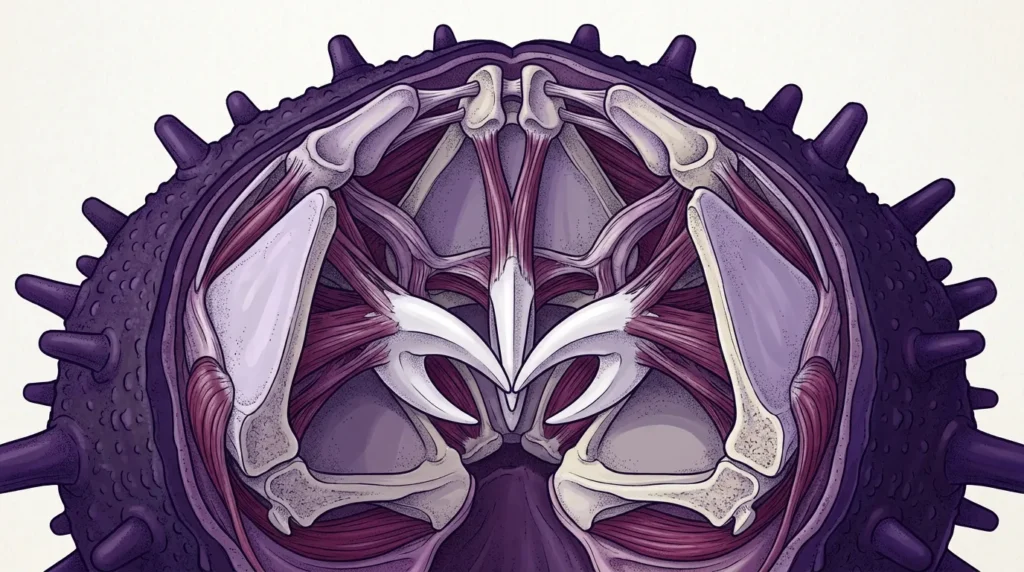
Purple sea urchins carry five teeth arranged in a structure called Aristotle’s lantern, and they use them to bore directly into solid rock. The teeth are made of calcium carbonate crystals structured as long, layered shafts, and they are self-sharpening: worn material chips off in small plates, exposing a fresh edge underneath, and the tooth simply keeps growing to replace what wears away. It is one of the more elegant tooth designs in the ocean, and it barely gets mentioned outside of specialist marine biology sources.
Tusks
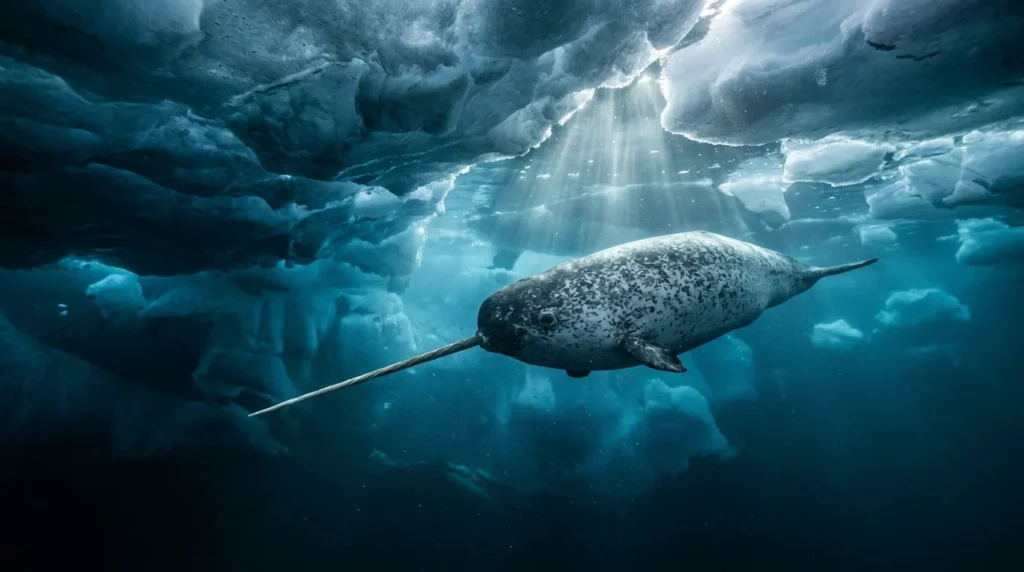
Tusks are technically enormous teeth, not a separate structure. A male narwhal’s spiral tusk is an overgrown left canine that can reach close to 10 feet long, and researchers are still not fully certain whether it functions as a mate-selection signal, a sensory organ, or both. Walruses carry a similar story: their two ivory tusks are elongated canines used for hauling out onto ice and, historically, believed to help dig for clams on the seafloor, though modern research suggests the tusks are used more for social display and leverage than active digging.
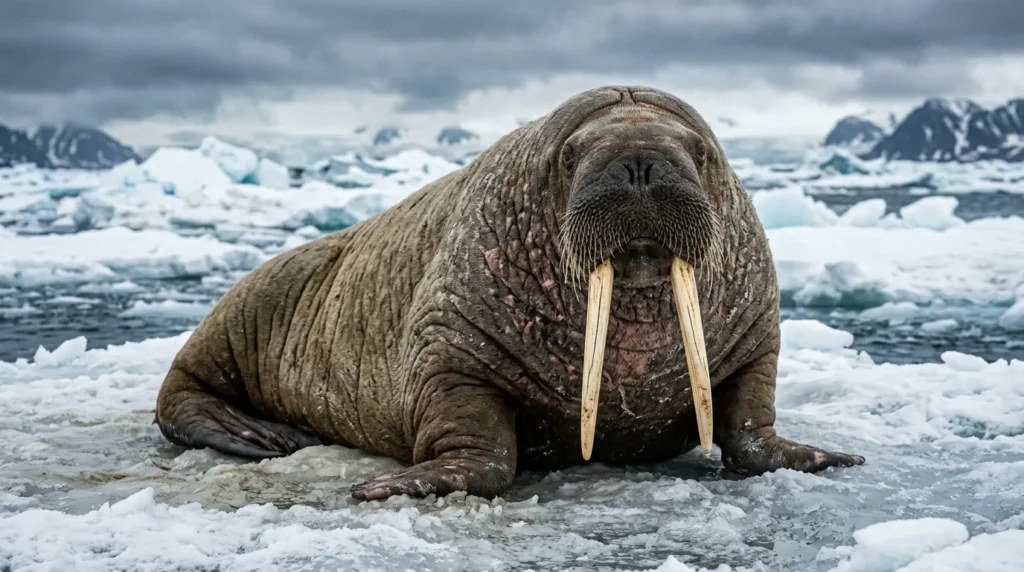
Warlus resting on a ice
Radula “Teeth”
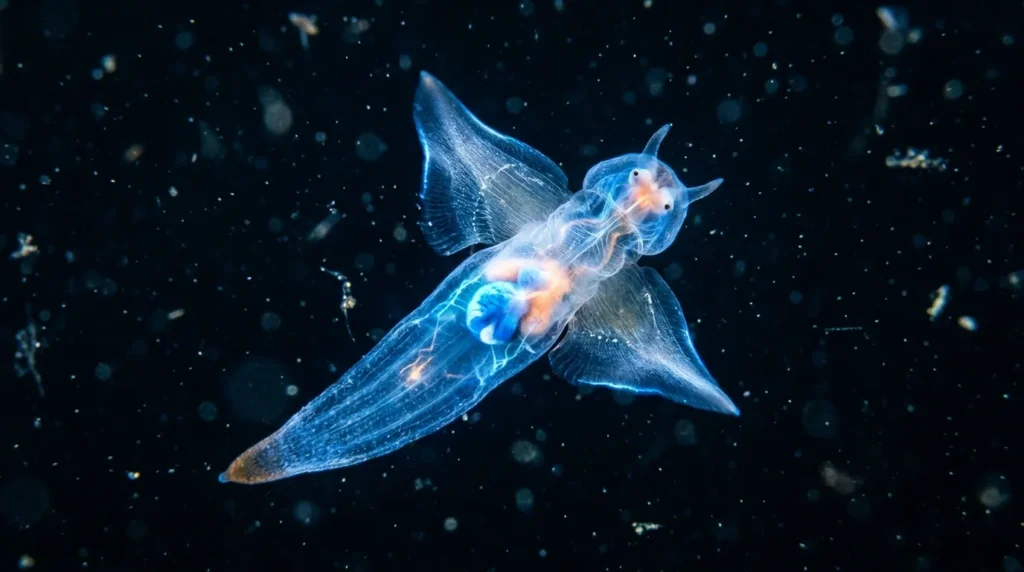
Snails, sea angels, and other mollusks do not have teeth in the vertebrate sense at all. They have a radula, a ribbon-like structure lined with rows of tiny, hooked, chitin-based teeth that function like a conveyor-belt grater. Sea angels use rows of hook-shaped radular teeth combined with grasping tentacle-like structures called buccal cones to capture and pull in sea butterflies, their primary prey. Calling these “teeth” is a simplification biologists use because the structures do the same job, even though they are built from completely different material and evolved independently.
12 Sea Animals With the Most Remarkable Teeth
| Animal | Approx. tooth count | Tooth type | Primary use |
|---|---|---|---|
| Great white shark | ~300 (7 rows) | Serrated, triangular | Cutting through flesh and cartilage |
| Bottlenose dolphin | 80-100 | Conical | Grasping fish, not chewing |
| Orca (killer whale) | 40-56 | Large, interlocking cone | Gripping and tearing prey |
| Sperm whale | 36-50 (lower jaw only) | Peg-shaped | Gripping squid |
| Narwhal | 1 functional tusk | Spiral overgrown canine | Signaling, sensing |
| Walrus | 2 tusks + molars | Elongated canines + flat molars | Hauling out, crushing shellfish |
| Northern elephant seal | 4 prominent canines | Canine, up to 6 inches | Fighting rival males |
| Fangtooth | Proportionally largest in the ocean | Long, curved fangs | Gripping prey whole |
| Purple sea urchin | 5 | Self-sharpening, calcite | Drilling into rock |
| Cookiecutter shark | Small but continuously replaced | Triangular, self-sharpening | Gouging circular bites from larger animals |
| Moray eel | Two jaw sets (oral + pharyngeal) | Sharp, recurved | Pulling prey deeper into the throat |
| Sea lamprey | Suction-disc teeth | Keratin, rasping | Attaching to and feeding on host fish |
A couple of these deserve more than a table row. The fangtooth has the largest teeth in the ocean relative to its own body size, even though the fish itself rarely exceeds 7 inches long. Its bottom fangs are so oversized that they slide into sockets on either side of the brain just so the mouth can close. And the moray eel is one of the only animals in the ocean with a second, fully mobile set of jaws: a pharyngeal jaw sits in the throat and launches forward to grab prey and drag it down, a feeding method that was one of the direct inspirations for the creature design in Alien.
Which Sea Animal Has the Biggest Teeth?
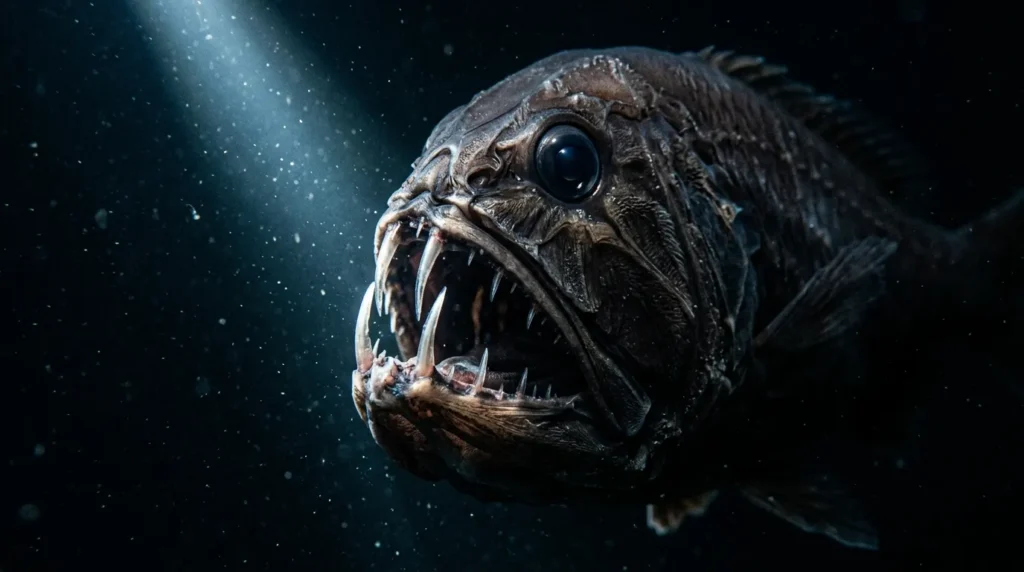
It depends on how you define “biggest.” If you mean absolute length, the narwhal wins, with a single tusk that can stretch close to 10 feet. If you mean the largest teeth relative to body size, the fangtooth takes it, since its jaw structure had to evolve special skull sockets just to accommodate fangs that oversized. Neither the great white shark nor the sperm whale, despite their reputations, holds either record. Their teeth are large in absolute terms, but not proportionally extreme, and not as long as a narwhal’s single tusk.
Sea Animals With No Teeth At All
Losing teeth entirely is just as much an evolutionary strategy as growing bigger ones, and several major ocean groups have gone that route.
Baleen whales, including blue whales and humpback whales, never develop teeth. Instead, they have baleen plates, flexible keratin structures that work like a sieve, filtering huge volumes of small fish and krill out of the water in a single mouthful. A blue whale, the largest animal that has ever lived, eats this way its entire life.
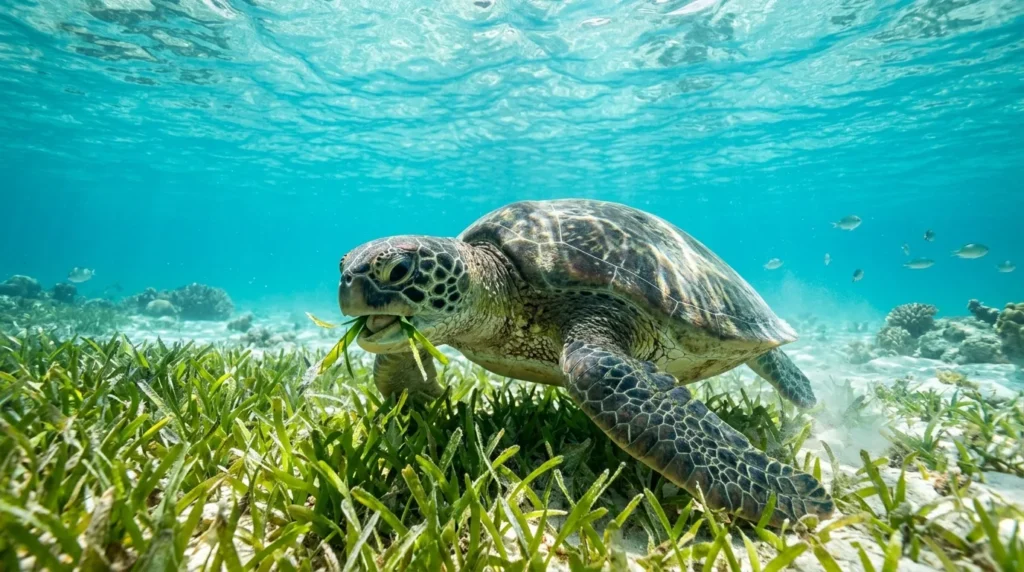
Sea turtles have no teeth either. Their jaws are covered by a hard, beak-like structure that they use to grasp and tear food, whether that is sea grass for a green sea turtle or jellyfish for a leatherback. The beak shape actually varies noticeably by species depending on diet, with sharper hooked beaks in carnivorous species like hawksbills.
Penguins, like nearly all birds, have no teeth as adults, though chicks develop a temporary “egg tooth,” a hard bump on the beak used only to crack out of the shell before falling away shortly after hatching.
Baleen aside, most starfish and sea cucumbers also lack anything resembling teeth, relying instead on external digestion or simply engulfing prey whole.
How Sea Animal Teeth Grow, Shed, and Replace Themselves
This is where the earlier monophyodont, diphyodont, and polyphyodont distinction actually matters for everyday understanding.
Sharks are the most extreme example of continuous replacement. A shark can go through tens of thousands of teeth across its lifetime, with new rows constantly moving forward from behind like a conveyor belt as older teeth fall out or break off. That is also why shark teeth are so common as beach finds and fossils: the animal was never trying to preserve them.
Dolphins sit at the opposite end. They get one set of teeth and keep it for life. If a dolphin loses a tooth to injury or wear, it does not grow back, which is part of why researchers can sometimes estimate a wild dolphin’s age from tooth wear patterns, similar to counting rings on a tree.
Sea urchins take a third approach entirely: instead of replacing whole teeth, each individual tooth grows continuously from its base, so the animal never runs out of drilling surface even though the same five teeth are in constant use.
Can Sea Animals Get Cavities or Dental Disease?
Yes, and this is one of the more overlooked corners of marine biology. A 2024 clinical study examining California sea lions under professional veterinary care found that the vast majority of wild adult sea lions show measurable tooth attrition and abrasion from feeding, while actual tooth fractures were comparatively less common. The same research noted that treating abscessed or diseased teeth in sea lions is far more complicated than in humans, and that extraction is often the only reliable option because procedures like root canals carry a higher failure risk in this species.
This matters for a simple reason: wild sea animals are not immune to the wear and tear that comes with using teeth as tools. A walrus using its tusks to haul out onto ice, or a sea lion crunching through shellfish for years, is putting the same kind of stress on its teeth that any hard-working tool experiences. Marine veterinary dentistry is a small but growing field precisely because captive and rehabilitated animals need dental care just like any other patient.
Teeth vs. Tusks vs. Radula: Clearing Up the Confusion
These three terms get used almost interchangeably in casual writing, but they are not the same structure.
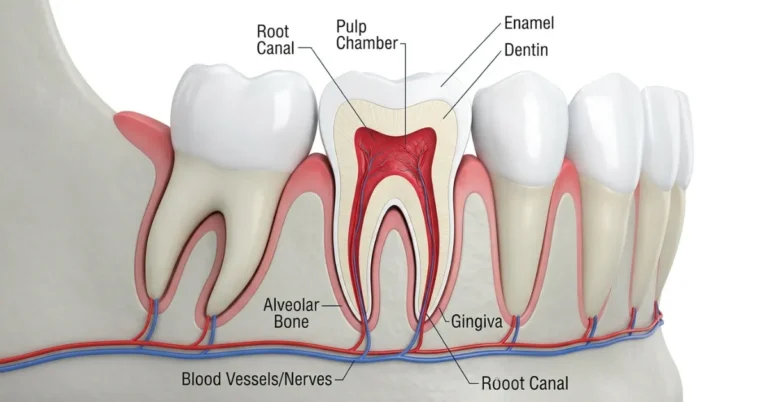
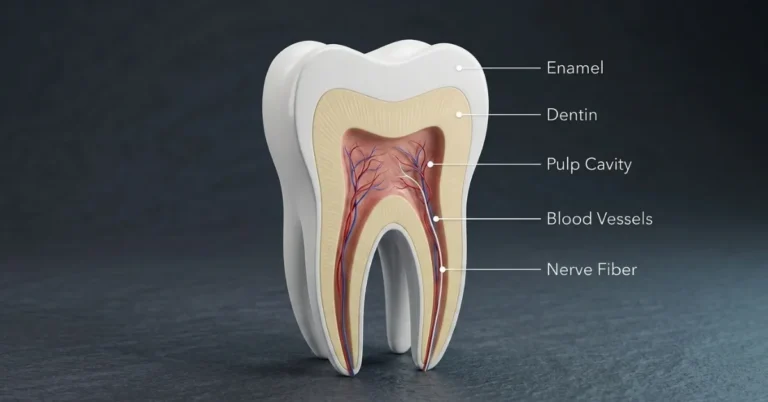
True teeth, like a shark’s or dolphin’s, are calcified structures rooted in the jawbone, generally made of dentin covered in enamel, following the same basic blueprint found in most vertebrates including humans.
Tusks are not a separate anatomical category. They are simply teeth, usually canines or incisors, that have grown to an exaggerated length and often protrude outside the mouth. A narwhal’s tusk and a walrus’s tusks are both, structurally, overgrown teeth.
Radula “teeth” belong to an entirely different lineage. Found in mollusks like snails, sea angels, and squid, the radula is a ribbon covered in rows of small, chitin-based hooks, not calcified bone-and-enamel teeth at all. It evolved independently and does a similar job through completely different biology, which is exactly why marine biologists put “teeth” in quotes when describing it.
FAQ
Do all sea animals have teeth?
No. Baleen whales, sea turtles, and most seabirds have no teeth. However, animals such as sea urchins have specialized teeth despite not having typical vertebrate teeth.
Why don’t whales have teeth like we do?
Some whales do. Toothed whales, including orcas, sperm whales, belugas, and narwhals, have teeth. Baleen whales, such as blue and humpback whales, use baleen plates to filter food instead.
Do sea turtles have teeth?
No. Sea turtles have hard, beak-like jaws instead of teeth, which they use to grasp and tear food depending on their species and diet.
Do sea urchins have teeth?
Yes. Sea urchins have five self-sharpening teeth made of calcium carbonate. These teeth are part of a structure called Aristotle’s lantern and help them scrape algae and other food from surfaces.
What deep-sea creature has the biggest teeth?
The fangtooth has exceptionally large teeth relative to its body size. By absolute length, the narwhal’s single spiral tusk can reach nearly 10 feet.
Do sea angels have teeth?
Yes, technically. Sea angels have rows of small, hook-shaped radular teeth made of chitin. They use these structures along with buccal cones to capture prey.
Can sea animals get cavities or dental disease?
Yes. Marine mammals can experience tooth wear, abrasion, fractures, and infections. In some cases, dental problems may require veterinary treatment or extraction.
Conclusion / Key Takeaways
Sea animal teeth are not one design repeated across the ocean. They are a set of different tools, each shaped by diet and hunting style, from a dolphin’s smooth grasping cones to a shark’s disposable serrated blades to a sea urchin’s self-sharpening drill bits. Some animals, like baleen whales and sea turtles, do the job without any teeth at all.
The big ideas worth remembering:
- Tooth shape follows function: grasping, cutting, crushing, drilling, and tusks all solve different feeding problems
- Replacement patterns vary enormously, from a shark’s endless supply to a dolphin’s single lifelong set
- Tusks are just oversized teeth, not a separate structure, and radula “teeth” in mollusks are a completely different biological system that evolved independently
- Wild marine animals experience real dental wear and disease, and veterinary dentistry for species like sea lions is an active, specialized field
Next time you see a photo of a shark’s open jaw or a narwhal skull in a museum case, you will know exactly what you are looking at and why it evolved that way.