
Can You Break Your Tongue? The Real Answer
Can you break your tongue? Not like a bone, since it has none. But you can strain, cut, or tear it, and knowing which one you have changes what you do next.
This article is for general informational purposes only and is not a substitute for professional medical advice, diagnosis, or treatment. Always seek the advice of a doctor, dentist, or other qualified health provider with any questions about a tongue injury or other medical condition, especially if bleeding is severe, doesn’t stop, or you suspect a serious injury.
You cannot break your tongue the way you’d break an arm or a rib, because your tongue doesn’t have a single bone or piece of cartilage inside it to fracture. It’s pure muscle, eight muscles woven together, which means the word “break” doesn’t really apply. What people usually mean when they ask this is something else entirely: a bite, a cut, a strain, or a torn piece of tissue underneath the tongue. Each of those is real, each hurts, and each has its own recovery path.
Why You Can’t Actually “Break” a Tongue
A break, or fracture, is a term reserved for bone. Your tongue is made of eight muscles (four intrinsic, four extrinsic) covered by mucous membrane, and it has no skeletal structure of its own. The intrinsic muscles run inside the tongue and control shape. The extrinsic muscles anchor it to the jaw, skull, and hyoid bone and control position. There’s nothing rigid in there to snap.
That’s also why the tongue is so hard to injure permanently. Bite it, stretch it, or slam it between your teeth, and the muscle fibers absorb the force and stretch back. Emergency doctors actually use this property as a diagnostic shortcut. In the “tongue blade test,” a patient bites down on a wooden tongue depressor and tries to snap it. If they can’t manage it without serious pain, doctors suspect a broken jaw, not a broken tongue, because a fractured mandible makes biting down painful long before the tongue itself is ever at risk of fracturing.
So if your tongue feels “broken,” what you’re actually dealing with is one of a few specific, much more common injuries.
What Can Go Wrong With Your Tongue Instead
Most tongue injuries fall into two buckets: something got cut, or something got jammed and bruised.
Bites and lacerations. This is the most common tongue injury by far. You bite down hard during a fall, a sports collision, a seizure, or just eating too fast, and the tip or side of your tongue tears. A friend of mine split hers open going up for a rebound in a pickup basketball game, an elbow to the jaw and her teeth did the rest. It bled heavily for about ten minutes, looked far worse than it was, and healed on its own within two weeks without stitches.
Small cuts and shallow bites usually stop bleeding within 15 minutes of firm pressure and heal without any medical intervention. Deep, long, or gaping lacerations are a different story. Those often need stitches, particularly if the edges won’t stay together on their own or if a piece of tissue has been fully bitten through.
Bruising and blunt trauma. A direct hit, like a fall onto your chin or a ball to the face, can bruise the tongue without breaking the skin. You’ll get swelling, tenderness, and sometimes a visible dark patch under the mucous membrane. This usually resolves in a few days with ice and rest.
Tongue Strains and Muscle Pulls
Here’s where things get a little more technical, and where a lot of confusion about “breaking” comes from. Because the tongue is muscle, it can be strained the same way a hamstring can. If you bite down and pull at the same time, say your tongue gets caught between your teeth while chewing, you can strain or partially tear individual muscle fibers, especially in muscles like the styloglossus, which helps lift the sides of the tongue.
The term “sprain” doesn’t technically apply, since a sprain involves ligaments and joints, and the tongue has neither. But strain and traumatic myositis (inflammation of the muscle from injury) are accurate descriptions, and they explain a symptom pattern people often describe as their tongue feeling “broken”: stiffness, sharp pain when moving the tongue to one side, and difficulty swallowing that lingers for several days. This typically improves on its own within a week, the same way a pulled muscle anywhere else does, with rest, warm salt water rinses, and over-the-counter pain relief.
Torn Frenulum: The Injury People Confuse With “Breaking”
If your pain is centered under your tongue rather than on the tongue itself, you may have torn your lingual frenulum, the thin band of tissue connecting the underside of your tongue to the floor of your mouth. This is a genuinely common injury and one of the closest things to what people picture when they imagine “breaking” something in their mouth, because it involves a visible tear and often heavy, alarming bleeding.
The frenulum is thin, non-elastic, and full of small blood vessels, so even a minor tear can bleed a surprising amount. It usually happens from a hard fall, a blow to the chin, or aggressively stretching the tongue. The good news: despite the dramatic bleeding, a torn frenulum almost always heals on its own within one to two weeks with basic care, and rarely needs stitches unless the tear is unusually large or won’t stop bleeding.
The One Nearby Bone That Can Actually Break
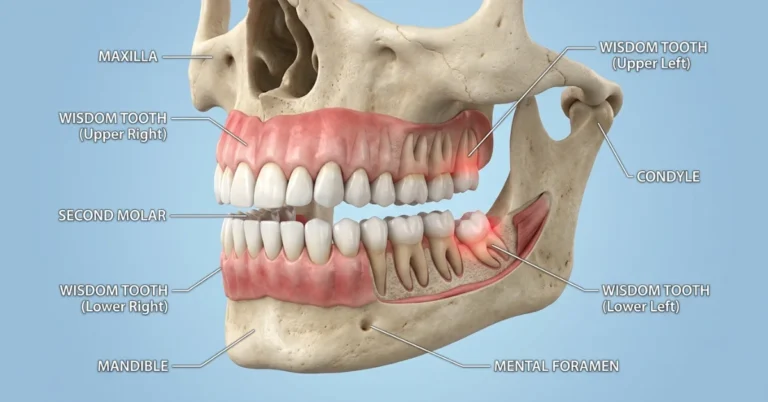
There is one structure connected to your tongue that genuinely can fracture: the hyoid bone. It sits in your neck, just above your larynx, and several of your tongue’s extrinsic muscles anchor to it. A hyoid fracture is rare and typically caused by significant force to the throat, strangulation, a severe car accident, or a hard direct blow to the neck, not from biting or ordinary tongue injuries.
Symptoms include sharp pain when swallowing or speaking, difficulty moving the tongue, and visible swelling or bruising in the neck. This is a genuine medical emergency and the closest real-world equivalent to “breaking” something tied to your tongue. If you’ve had significant neck trauma and are struggling to swallow, speak, or breathe, that’s an ER visit, not a wait-and-see situation.
First Aid for a Tongue Injury
Whatever type of tongue injury you’re dealing with, the initial steps are largely the same:
- Apply firm, steady pressure. Use clean gauze or a cloth directly on the cut or tear for 10 to 15 minutes without checking on it repeatedly.
- Lean forward, not back. Tilting your head forward keeps you from swallowing blood, which can cause nausea.
- Use cold. Sucking on ice or holding a cold compress against the area reduces swelling and numbs pain.
- Rinse with salt water. Mix about a quarter to a half teaspoon of salt into a cup of warm water and rinse gently a few times a day once active bleeding has stopped.
- Stick to soft, cool foods for the first couple of days. Skip anything acidic, spicy, or crunchy that could reopen the area.
When to Go to the ER Instead of Waiting It Out
Most tongue injuries are manageable at home. Head in for medical care if you notice any of the following:
- Bleeding that hasn’t slowed after 15 to 20 minutes of firm, continuous pressure
- A cut that’s long, deep, or gaping, or a piece of tongue that’s been fully bitten or torn off
- Trouble breathing, or swelling that’s making your airway feel tight
- Signs of infection days later: pus, fever, spreading redness, or worsening pain instead of improvement
- Significant neck trauma alongside tongue or swallowing pain (possible hyoid involvement)
- The injury happened during a seizure, since these can sometimes involve deeper trauma that’s easy to underestimate
How Long Tongue Injuries Take to Heal
Thanks to the tongue’s rich blood supply and constant exposure to saliva, which has natural antibacterial properties, it heals faster than almost any other part of your body. Small bites and shallow cuts typically close up within a week. Deeper lacerations that needed stitches take closer to two to three weeks for the wound itself to heal, though full sensation and comfortable eating can take a bit longer. Strains and bruises usually resolve within five to ten days, similar to a pulled muscle elsewhere.
Why You Keep Biting Your Tongue
If tongue injuries keep happening to you specifically, and not as one-off accidents, it’s worth paying attention to the pattern rather than just treating each bite. Repeated biting is often linked to an enlarged tongue relative to the mouth, a misaligned bite, ill-fitting dentures, or nighttime teeth grinding and clenching. Swelling from an earlier bite can also make the same spot more likely to get caught again, creating a cycle. If this is happening regularly, a dentist can check your bite alignment and rule out a straightforward mechanical cause before it becomes a recurring injury.
FAQ
Is it possible to sprain your tongue?
Not technically, since a sprain involves ligaments and the tongue has none. What actually happens is a muscle strain, which can cause similar symptoms such as stiffness, pain with movement, and soreness that usually improves within several days.
Can you tear the muscle in your tongue?
Yes, individual muscle fibers can be strained or partially torn from forceful biting or blunt trauma. This may cause pain and difficulty moving the tongue normally. Minor injuries generally improve with time and rest.
Does a bitten tongue need stitches?
Only if the cut is deep, long, gaping, or does not stop bleeding after sustained pressure. Most tongue bites are shallow and heal without stitches.
Why does my tongue hurt when I move it after I bit it?
Pain with movement is usually caused by inflammation and irritation from the injury. It should gradually improve as the swelling and soreness settle.
Can you tear the string under your tongue?
Yes. The string under the tongue is called the lingual frenulum, and it can be injured by trauma. Minor injuries usually heal on their own, although persistent bleeding or significant pain should be evaluated by a healthcare professional.
How long does a tongue injury take to heal?
Minor tongue bites and cuts often improve within about a week. Deeper injuries may take longer to heal, depending on their severity and whether medical treatment is needed.
Key Takeaways
- Your tongue has no bone or cartilage, so it cannot literally break. What people mean is usually a bite, cut, strain, or torn frenulum.
- Bites and lacerations are the most common tongue injury and usually heal without stitches unless the cut is deep or won’t stop bleeding.
- A torn frenulum bleeds heavily but is rarely serious and typically heals within two weeks.
- The hyoid bone in your neck is the one structure connected to tongue movement that can genuinely fracture, and that requires emergency care.
- Most tongue injuries heal within one to three weeks thanks to strong blood flow and saliva’s natural antibacterial properties.