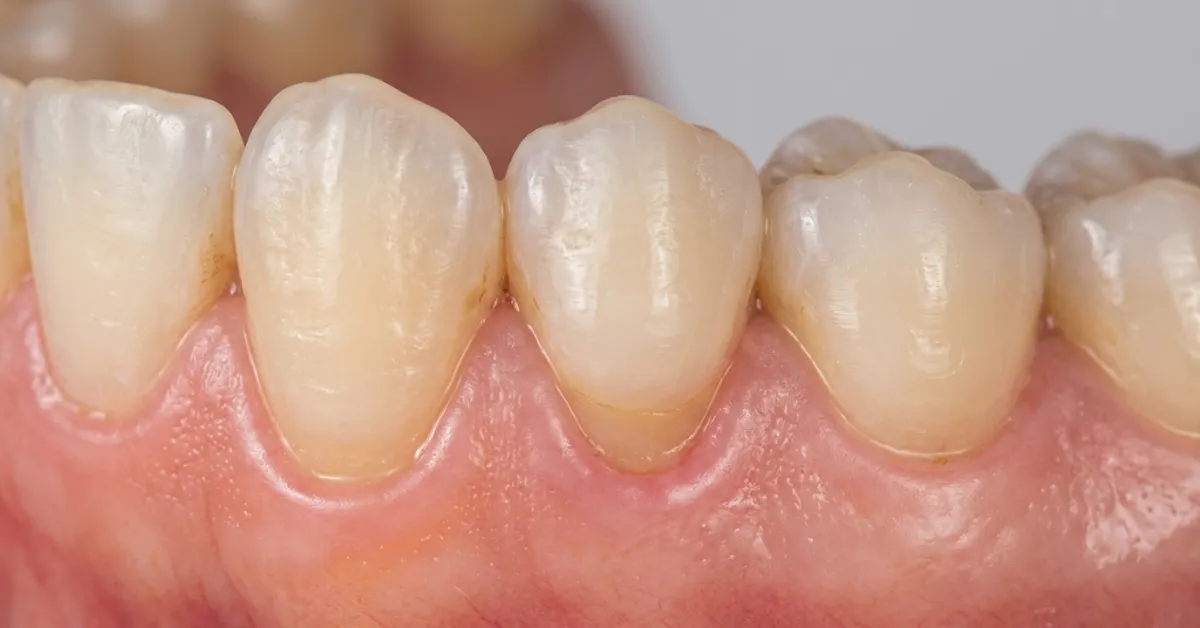
Why Is My Gum Receding on One Tooth? 8 Real Causes
Why is my gum receding on one tooth? Learn the 8 real causes, warning signs, and what actually stops it before you lose the tooth.
reviewed by Scientific and Dental Facts ✅
If your gum is pulling back on just one tooth, it almost always means something local is happening right at that spot, not a mouth-wide problem. Aggressive brushing, a misaligned tooth, an old filling that sits too high, or pressure from grinding at night are the most common triggers. The good news is that localized recession is usually easier to catch and manage than recession spread across your whole mouth.
I want to walk you through why this happens, how to tell if it’s serious, and what actually works to stop it, because “just watch it” is not always the right answer.
Why Does Gum Recession Show Up on Just One Tooth?
Your gums don’t recede evenly by default. When only one tooth is affected, there’s usually a specific mechanical or bacterial cause acting on that exact spot rather than a systemic issue touching every tooth.
Think of it like a callus. If you press a shovel handle into the same spot on your palm every day, that one spot wears down first, not your whole hand. Your gums work the same way. A tooth that sticks out slightly from the arch, one that takes more bite force than its neighbors, or one brushed with more pressure than the rest, will show wear before the others do.
This is actually useful information. A single-tooth pattern points you and your dentist toward a specific, fixable cause instead of a broad diagnosis like periodontal disease, which usually shows up across multiple teeth at once.
The 8 Most Common Causes
1. Brushing Too Hard, in the Same Spot Every Time
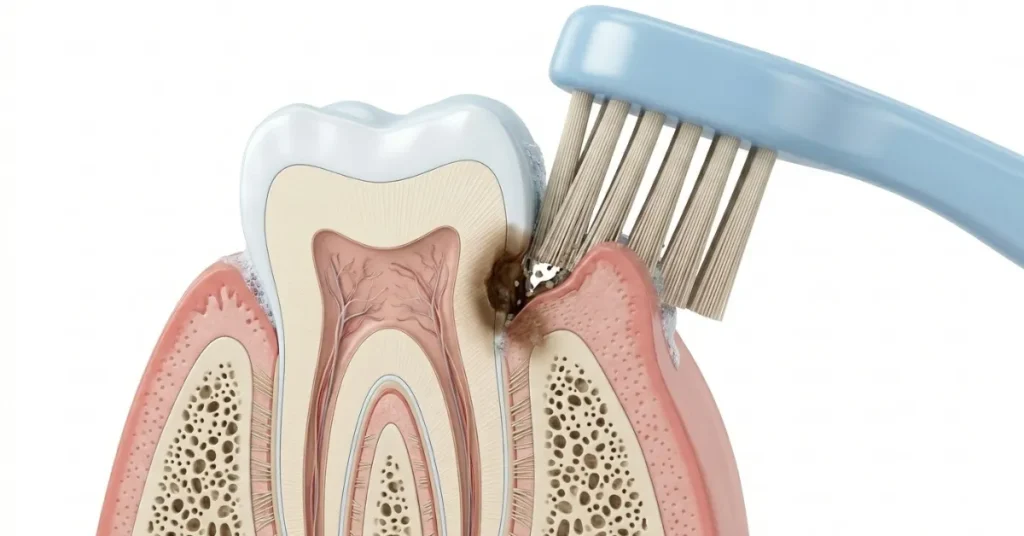
This is the single most common cause dentists report. A stiff-bristled brush combined with a scrubbing motion, especially at a 90-degree angle against the gumline, wears tissue away over months and years. If you’re right-handed, the upper left and lower left teeth (the side you naturally press harder on) often take the brunt of it. I’ve seen patients brush one canine for years with more force simply because it’s the tooth their hand naturally lands on hardest during the stroke.
2. A Tooth That Sits Slightly Out of Line
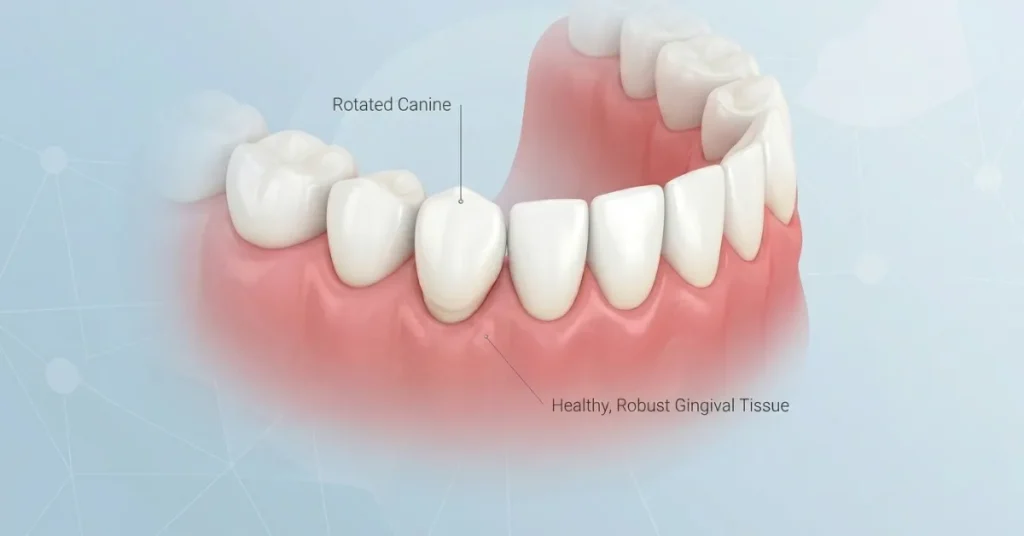
If one tooth is rotated, tilted, or pushed forward compared to its neighbors, the gum and bone covering it are often thinner to begin with. Thin tissue recedes faster under the same amount of stress that a normally positioned tooth would tolerate without issue.
3. An Uneven Bite (Traumatic Occlusion)
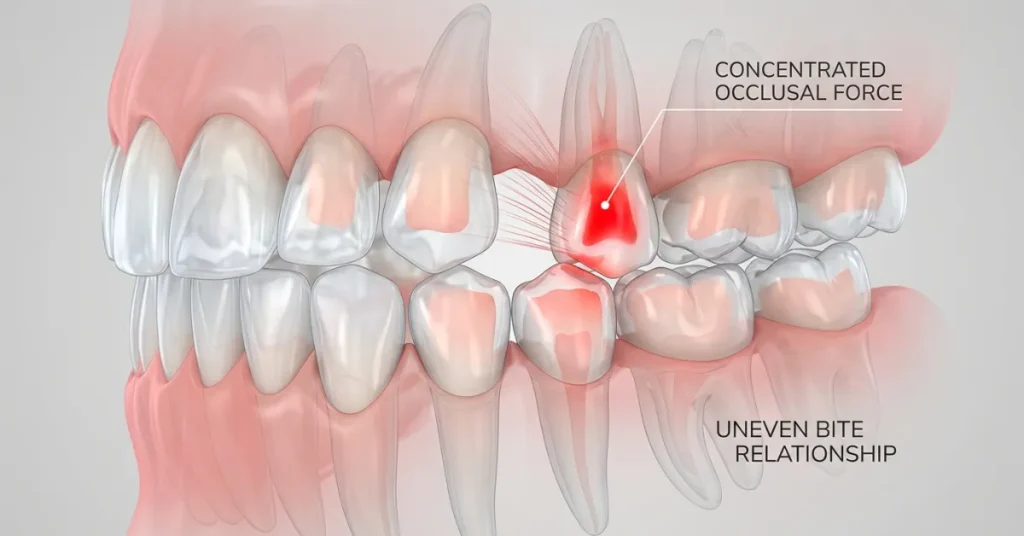
When your teeth don’t meet evenly, one tooth can absorb far more force every time you chew or clench than the others. Over months, that repeated pressure stresses the bone and gum supporting it, and the gum retreats. A patient grinding at night might not feel anything painful, but wake up years later with one noticeably longer-looking tooth.
4. A Crown, Filling, or Retainer That Sits Wrong
A crown or filling that’s slightly high, or a partial denture or retainer clasp pressing against one spot, creates constant low-grade irritation. The gum responds the way any tissue responds to repeated rubbing: it pulls away rather than heals in place.
5. Teeth Grinding and Clenching (Bruxism)
Bruxism often concentrates force on specific teeth rather than distributing it evenly, especially if you have a natural bite imbalance. Morning jaw soreness or a partner mentioning grinding sounds at night are common clues, even without visible tooth damage yet.
6. Localized Gum Disease or a Deep Pocket
Periodontal disease is usually widespread, but it can start as one deep, infected pocket around a single tooth long before it spreads anywhere else. Bacteria trapped in that one pocket cause inflammation and gradual attachment loss right there.
7. A Tight Frenum Pulling on the Gum
The frenum is the small strip of tissue connecting your lip or cheek to the gum. If it’s positioned too close to the gumline or pulls tightly when you move your lip, that constant tug can drag the gum tissue away from the tooth over time. This cause is easy to miss because it has nothing to do with brushing or bite at all.
8. Genetics and Naturally Thin Gum Tissue
Some people are simply born with thinner gum tissue (a “thin biotype”) over certain teeth, most often the lower front teeth or canines. That thinner tissue has less resistance to the everyday forces the rest of your gums handle without a problem.
Signs It’s Getting Serious
Not every case needs immediate treatment, but these signs mean you shouldn’t wait for your next routine cleaning:
- The tooth feels sharp or shocky with cold water, ice cream, or sweets
- You can see or feel a notch right where the tooth meets the gum
- The tooth looks noticeably longer than the ones beside it
- You see a color change, a darker yellowish band, where the white enamel ends and the root begins
- The area bleeds when you brush or floss, even lightly
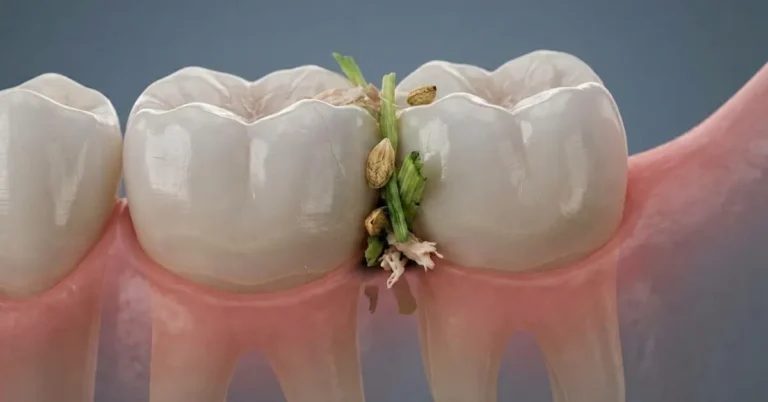
- Food keeps getting stuck in the same spot near that tooth
If two or more of these apply, book an appointment rather than waiting it out.
Is It Gum Disease, or Something Local?
This is the question most people actually want answered. Here’s a simple way to think about it:
Likely local (not gum disease): Only one tooth is affected, the rest of your gums look healthy and pink, and you can point to a probable cause, like a favorite tooth to brush hard or a bite that feels off on that side.
Possibly gum disease: You also notice puffy or dark red gums elsewhere, persistent bad breath, or bleeding in more than one spot. Gum disease-related recession is typically spread across several teeth, not confined to one, but a single deep pocket can be an early exception.
Either way, a dentist can measure your gum pocket depths in minutes with a small probe. Healthy pockets measure 1 to 3 millimeters. Anything deeper at that one tooth points toward infection rather than pure mechanical wear.
What Happens If You Leave It Alone
Gum tissue that has already receded will not grow back on its own, no product or rinse reverses that. What you’re deciding isn’t whether to fix the past damage yourself, it’s whether to stop it from progressing.
Left untreated, mild recession tends to worsen gradually over years rather than suddenly. But the exposed root surface has no enamel, so it’s more vulnerable to cavities and can wear down faster than the crown of the tooth. In more advanced cases, continued recession exposes enough root that the tooth can loosen because it’s losing the bone support underneath, not just the gum on top.
Catching it early, while it’s mild and confined to one tooth, is genuinely easier and cheaper to manage than waiting until it spreads or the root starts decaying.
What a Dentist or Periodontist Will Actually Do
At your visit, expect three things. First, a gum pocket measurement around the affected tooth and its neighbors to rule out active infection. Second, a bite check, often with a thin strip of articulating paper, to see if that tooth is taking more force than it should. Third, a look at your brushing technique and toothbrush, sometimes right there in the chair.
If the cause is mechanical (bite, brushing, a bad filling), fixing that root cause is often enough to stop further recession without surgery. If there’s an infected pocket, you’ll likely need scaling and root planing, a deep cleaning below the gumline, before anything else.
Treatment Options and Real Costs
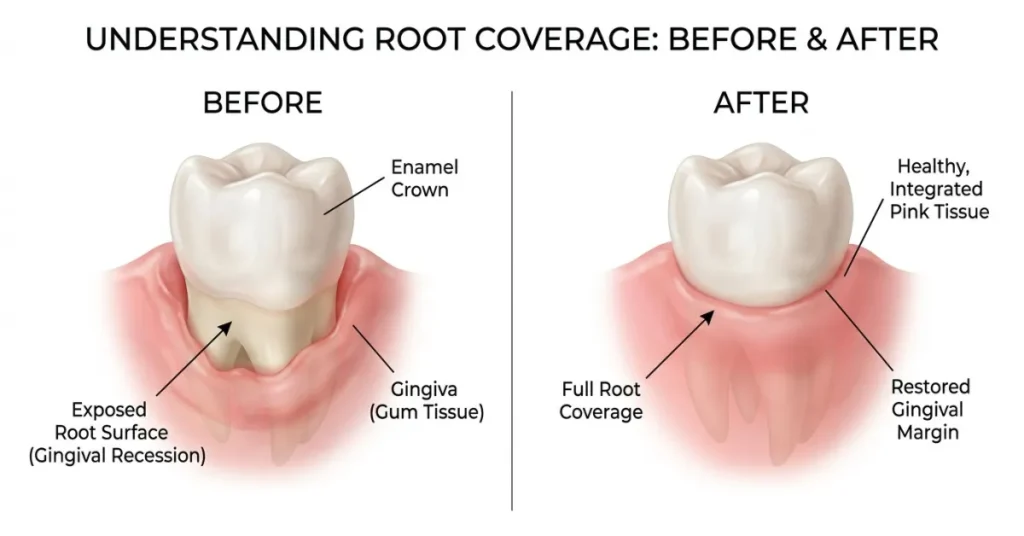
If the recession has already exposed enough root that you want it covered, or sensitivity is significant, these are the standard options:
- Scaling and root planing (deep cleaning): $170 to $350 per quadrant. This treats infection but doesn’t rebuild lost gum tissue.
- Connective tissue graft: $700 to $2,000 per tooth. Tissue taken from under a flap on the roof of your mouth, stitched over the recession. This is the most common and predictable graft for visible front teeth.
- Free gingival graft: $500 to $1,200 per tooth. Uses surface tissue from the palate, tougher but can look slightly less matched in color.
- AlloDerm (donor tissue) graft: $800 to $2,000 per tooth. Skips the second surgical site on your palate, using processed donor tissue instead.
- Pinhole Surgical Technique: $1,000 to $3,000 per tooth, or $2,000 to $5,000 per quadrant. A scalpel-free method where existing gum tissue is loosened through a small pinhole and slid down to cover the root, with faster recovery than traditional grafting.
Dental insurance often covers 50 to 80 percent of grafting when it’s coded as medically necessary rather than cosmetic, so it’s worth asking your provider how they’ll code the procedure before you commit.
How to Stop It From Getting Worse
- Switch to a soft-bristled brush and let the bristles do the work, not your arm. Aim for the pressure of drawing on paper, not scrubbing a pan.
- Hold the brush at a 45-degree angle to the gumline instead of straight on.
- Ask your dentist to check your bite if you notice one tooth taking more pressure than the rest.
- If you grind at night, a properly fitted nightguard removes the repeated overload on that tooth.
- Get any high filling or ill-fitting crown adjusted rather than living with it.
- Keep up with regular cleanings so plaque and tartar don’t turn a mechanical problem into an infected one too.
FAQ
Why is my gum receding on one tooth and not the others?
It usually means that specific tooth is under more mechanical stress (brushing pressure, bite force, a bad filling, or a tight frenum) or has thinner gum tissue than its neighbors, rather than a mouth-wide condition.
Can a receding gum on one tooth grow back on its own?
No. Gum tissue that has already receded does not regenerate naturally. Treatment can stop it from getting worse, but restoring lost coverage requires a graft or a procedure like the pinhole technique.
Is gum recession on one tooth a sign of gum disease?
Not necessarily. It’s often caused by brushing habits, bite issues, or tooth position rather than periodontal disease, though a single infected pocket can occasionally be an early, isolated sign of it.
How urgent is treatment for a receding gum on one tooth?
If you have sensitivity, a visible notch, bleeding, or the tooth looks longer than the others, see a dentist soon rather than waiting for a routine cleaning. Mild cases without those symptoms can often be monitored.
Will I lose the tooth if I don’t treat it?
Not immediately, and not in most mild cases. But untreated recession can progress to root decay or bone loss around the tooth over years, which does eventually threaten the tooth if ignored long enough.
How much does it cost to fix a receding gum on one tooth?
Treating the underlying cause and a deep cleaning can run $170 to $350. Covering the exposed root with a graft or the pinhole technique typically runs $500 to $3,000 per tooth, depending on the method, with insurance often covering part of it.
Key Takeaways
- Gum recession on a single tooth almost always has a local, identifiable cause rather than a mouth-wide condition.
- The most common triggers are hard brushing, an uneven bite, tooth position, a poorly fitted crown or filling, bruxism, and less often, gum disease, a tight frenum, or naturally thin tissue.
- Watch for sensitivity, a notch at the gumline, bleeding, or a tooth that looks longer than its neighbors.
- Receded gum tissue doesn’t grow back on its own, but catching the cause early stops it from spreading and keeps your options simpler and cheaper.
- A dentist can usually tell within one visit whether you’re dealing with a mechanical issue or an infection, so don’t guess on your own for more than a few weeks.
If anything on this list matches what you’re seeing, the smartest next step is a quick dental visit to pin down the exact cause before it progresses any further.
This article is for general informational purposes only and is not a substitute for professional dental advice, diagnosis, or treatment. Always consult a licensed dentist or periodontist about your specific symptoms before making treatment decisions.
One Comment