Seal Teeth: How Dental Sealants Effectively Prevent Cavities
Learn how to seal teeth with dental sealants, prevent cavities, who needs them, how the procedure works, how long they last, and more.
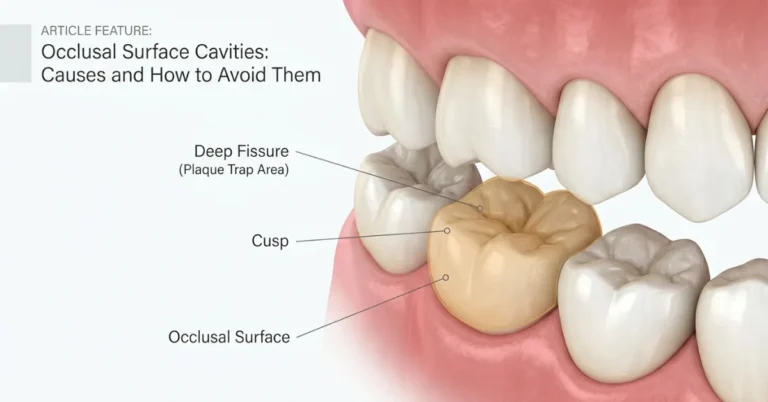
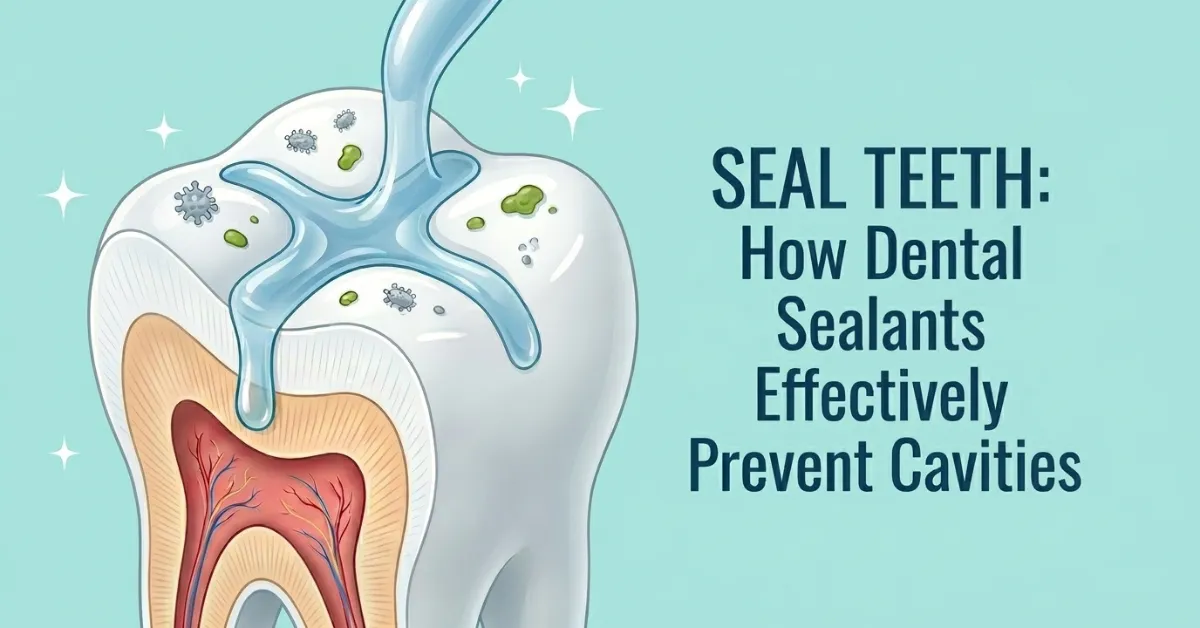
To seal teeth means applying a thin protective coating, called a dental sealant, to the chewing surfaces of back teeth. Dental sealants flow into the deep pits and fissures of molars and premolars, the grooves where food and plaque tend to collect, and sealing teeth is one of the most widely used tools in preventive dentistry.
Sealants and fluoride reduce cavity risk in different ways. Fluoride helps enamel resist acid attack and supports remineralization of areas that have started to lose minerals. Sealing teeth takes a more physical approach, covering the grooves so food particles and bacteria have less opportunity to settle into them. Used together, the two address cavity risk from different directions.
This guide covers what it means to seal teeth, how the dental sealant procedure works, who is typically a good candidate, how long sealants last, and where their limitations lie.
What Does It Mean to Seal Teeth?
To seal teeth is to place a thin resin or glass ionomer coating over the pits and fissures on the chewing surfaces of molars and premolars. The material flows into the tooth’s natural grooves and hardens, leaving a smoother surface that’s easier to keep clean and more resistant to plaque buildup in those specific areas. Dentists apply tooth sealants almost exclusively to permanent back teeth, since these teeth carry the deepest grooves and the highest rates of decay.
How Do Dental Sealants Prevent Cavities?
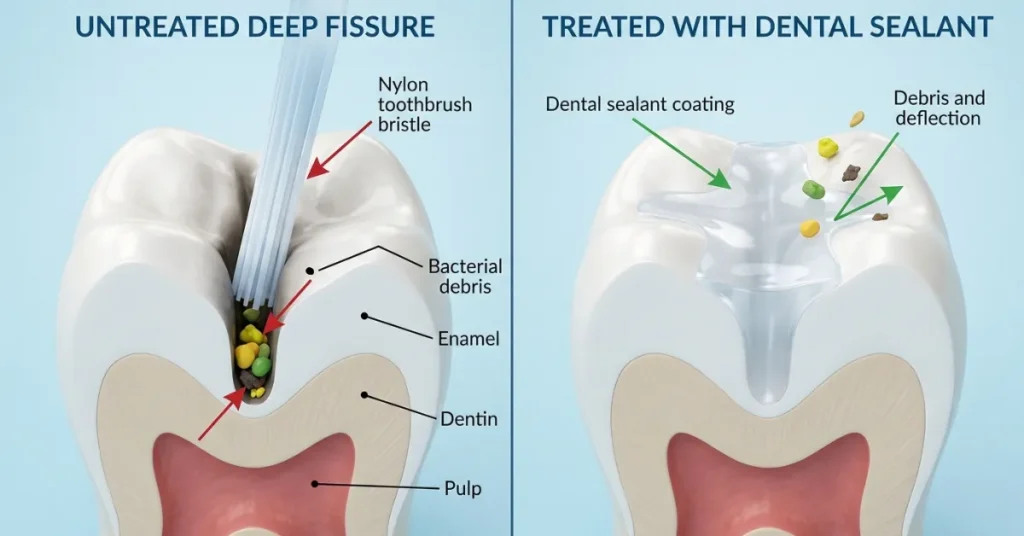
The chewing surfaces of molars and premolars are covered in narrow pits and fissures that a toothbrush bristle often can’t fully reach. Food debris and bacterial plaque settle into these grooves, and over time that buildup can contribute to the early stages of tooth decay.
Once a dentist or hygienist applies a sealant, the material fills those grooves and forms a smooth barrier over them. With the deepest part of the tooth surface effectively covered, food and bacteria have a harder time accumulating there, which lowers the odds of decay starting in that spot. This is the core mechanism behind pit and fissure sealants: physical coverage rather than chemical strengthening.
A frequently cited figure is that sealing teeth can reduce cavities in the pits and fissures of molars by roughly 80 percent, an effect seen most strongly in the first one to two years after placement and continuing at a reduced level after that. It’s worth being precise about what this number means: it describes decay reduction on sealed chewing surfaces specifically, not a blanket 80 percent drop in cavities everywhere in the mouth. Molar sealants don’t protect the sides of teeth, the contact points between teeth, or the gumline, so decay can still develop in those areas even on a fully sealed tooth.
Who Should Get Their Teeth Sealed?
Candidacy for sealants comes down to two things: the anatomy of the individual tooth and the person’s overall cavity risk, both of which a dentist evaluates at examination. Dentists generally look for sound tooth surfaces, though in some cases very early, noncavitated changes in the enamel may still be appropriate for sealing rather than more invasive treatment. The call is made tooth by tooth, not applied as a blanket rule based on age alone.
Children
The most common time to seal teeth is shortly after the first and second permanent molars erupt, typically between ages 6 and 14. Sealing early, before years of chewing give plaque a chance to settle into fresh grooves, is a standard part of pediatric preventive dental care.
Teenagers
Teens whose second molars have recently come in, or who have deep grooves and a history of cavities, often continue to benefit from sealants throughout adolescence.
Adults
Adults with sound back teeth and no fillings or decay in the grooves under consideration can be candidates too, particularly with a history of cavities or another factor that raises their risk. Sealants for adults are less common than for children, but they’re a legitimate option a dentist may suggest after an exam.
People at Higher Risk of Cavities
A dentist may lean toward recommending sealants for someone with a history of frequent cavities, unusually deep pits and fissures, difficulty maintaining consistent hygiene toward the back of the mouth, or a condition such as dry mouth that raises cavity risk. Braces can make cleaning around brackets harder and may factor into that assessment, but wearing braces alone doesn’t automatically make a tooth a sealant candidate. The health of the individual tooth surface still decides it.
How Is a Tooth Sealed? Step-by-Step
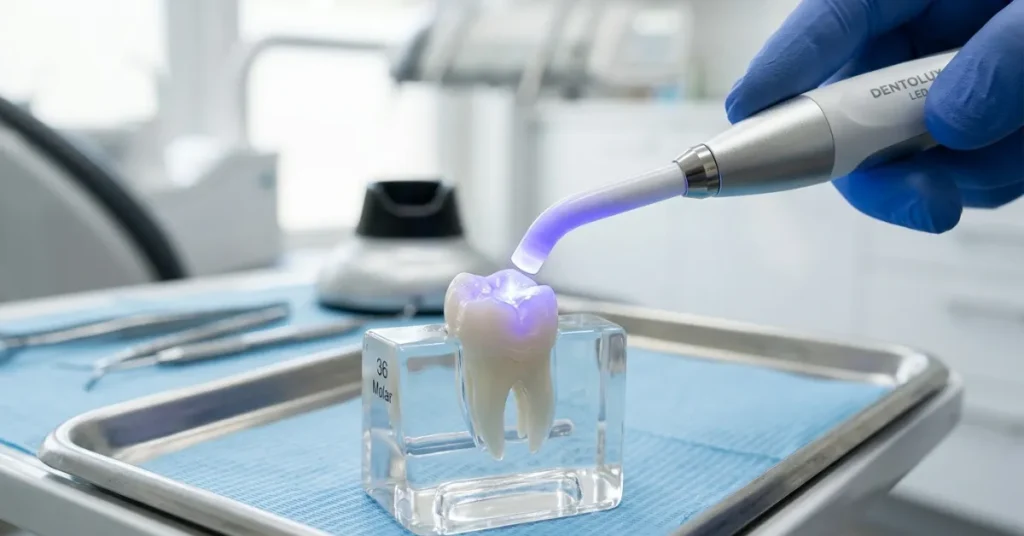
The dental sealant procedure is quick and noninvasive, usually taking only a few minutes per tooth and requiring no anesthesia.
- Examination. The dentist checks the tooth to confirm the surface is suitable for sealing.
- Cleaning. The chewing surface is cleaned of plaque and debris.
- Isolation. The tooth is kept dry and isolated from saliva, since moisture can interfere with how well the sealant bonds.
- Etching or conditioning. A mild acidic solution or conditioning agent slightly roughens the enamel so the sealant adheres securely.
- Sealant application. The liquid sealant is painted onto the tooth and flows into the pits and fissures.
- Curing. A curing light hardens light-cured materials within seconds; some sealant materials set on their own instead.
- Bite check. The dentist checks how the teeth meet and adjusts the sealant if it interferes with a normal bite.
What Are the Benefits of Dental Sealants?
| Benefit | Why It Matters |
|---|---|
| Cavity-risk reduction | Lowers decay risk specifically in the treated pits and fissures |
| Minimally invasive | No drilling, injections, or anesthesia involved |
| Quick application | Usually completed in a single visit |
| Smoother chewing surface | Easier for a toothbrush to clean effectively |
| Complementary protection | Works alongside fluoride, brushing, and flossing rather than replacing them |
Are Dental Sealants Safe?
Dental sealants have been used in preventive dentistry for decades and are widely recommended by dental professionals for appropriate candidates. Most people tolerate them well. As with any dental material, a small number of people experience sensitivity or, rarely, a reaction to a component of the sealant, so it’s worth mentioning any known allergies to your dentist beforehand. No dental treatment is entirely without risk, but sealing teeth is considered a low-risk, well-established option when placed and monitored appropriately.
What Are the Limitations of Sealants?
- They protect only the pits and fissures of the surfaces they’re placed on, not the sides of teeth, the spaces between teeth, or the gumline.
- Normal chewing can wear a sealant down, chip it, or cause it to partially lose retention over time.
- Periodic checking at routine dental visits is needed so any wear or loss gets caught early.
- They don’t replace brushing, fluoride toothpaste, flossing, a tooth-friendly diet, or regular dental checkups.
- Cavities can still develop on unsealed surfaces or elsewhere in the mouth, even with sealed back teeth.
How Long Do Dental Sealants Last?
Sealants can remain effective for several years, though the exact span depends on the individual, chewing habits, and oral care routine. Because they can gradually wear, chip, or lose retention, a dentist should check them at every routine visit. A sealant found to be worn or partially missing can usually be repaired or replaced in a single appointment.
Dental Sealants vs Fluoride Treatment
Sealants and fluoride lower cavity risk through different mechanisms, which is why dental professionals often recommend both as part of one preventive plan.
| Feature | Dental Sealants | Fluoride Treatment |
|---|---|---|
| How it works | Forms a physical barrier over pits and fissures | Supports acid resistance and remineralization of enamel |
| Where it helps most | Chewing surfaces of back teeth | All tooth surfaces |
| Best suited for | Susceptible grooves in molars and premolars | Overall enamel resistance to decay |
| Relationship to each other | Complementary, not a substitute | Complementary, not a substitute |
Dental Sealants vs Silver Diamine Fluoride
Sealants and silver diamine fluoride (SDF) serve different purposes and aren’t interchangeable.
| Feature | Dental Sealants | Silver Diamine Fluoride (SDF) |
|---|---|---|
| Primary purpose | Help prevent cavities on sound or early-stage susceptible surfaces | Used to arrest active, existing decay |
| Typical use case | Preventive care before or during early-stage risk | Managing existing decay, particularly when other treatment isn’t yet feasible |
| Appearance | Clear or tooth-colored, generally not visible | Can darken the treated area of decay |
| Application | Painted into grooves, then cured or set | Applied as a liquid directly onto active decay |
A dentist may recommend one, both, or neither, depending on the condition of each individual tooth. Neither treatment universally replaces the other.
How Much Does It Cost to Seal Teeth?
The cost of sealing teeth varies by country, dental clinic, number of teeth treated, whether dental insurance or a public dental plan applies, patient age, and the specific sealant material used. Many dental plans classify sealants as preventive care, which can affect coverage, but policies differ significantly by plan and location. Given that range, the most reliable estimate comes directly from your dentist or insurance provider.
How to Care for Teeth After Sealants
- Continue brushing twice daily with fluoride toothpaste.
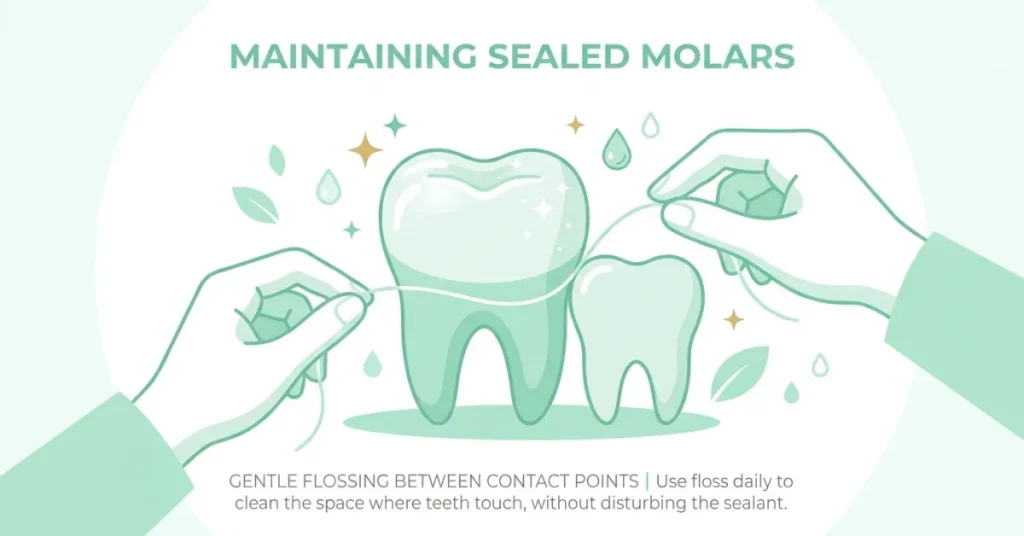
- Clean between teeth daily.
- Limit frequent exposure to sugary or acidic foods and drinks.
- Attend routine dental checkups so your dentist can monitor the sealant.
- Flag any chipped, rough, or missing sealant to your dentist for evaluation.
FAQ: Dental Sealants
Does sealing teeth prevent cavities?
Yes. Dental sealants help prevent cavities by covering the deep grooves and pits where food and plaque can collect.
Is it painful to seal teeth?
Usually, no. Applying dental sealants is generally painless and typically does not require drilling or anesthesia.
How long do dental sealants last?
Dental sealants can last for several years, but they may wear or chip over time. Dentists should check them during routine dental visits.
Can adults get their teeth sealed?
Yes. Adults can get dental sealants when their back teeth have deep grooves or an increased risk of cavities.
Can you get a cavity under a dental sealant?
Yes, it is possible, particularly if the sealant becomes damaged or loses its bond. Regular dental checkups help detect problems early.
Bottom Line
Sealing teeth is a well-established, minimally invasive way to reduce cavity risk on the chewing surfaces of back teeth, where deep pits and fissures make decay more likely to start. It isn’t a guarantee against cavities and doesn’t cover every tooth surface, but paired with regular brushing, flossing, fluoride use, a tooth-friendly diet, and routine dental visits, dental sealants can be a genuinely useful part of a broader preventive care plan. Talk with your dentist about whether sealing your teeth, or your child’s teeth, fits your specific oral health needs.
This article is for general educational purposes only and does not replace professional dental advice, diagnosis, or treatment. Always consult a qualified dentist for advice about your specific oral health needs.