Tooth 3: Location, Anatomy, and Common Problems
Tooth 3 is the upper right first molar, often the first permanent tooth to develop a cavity. See its anatomy, common problems, and numbering across systems.
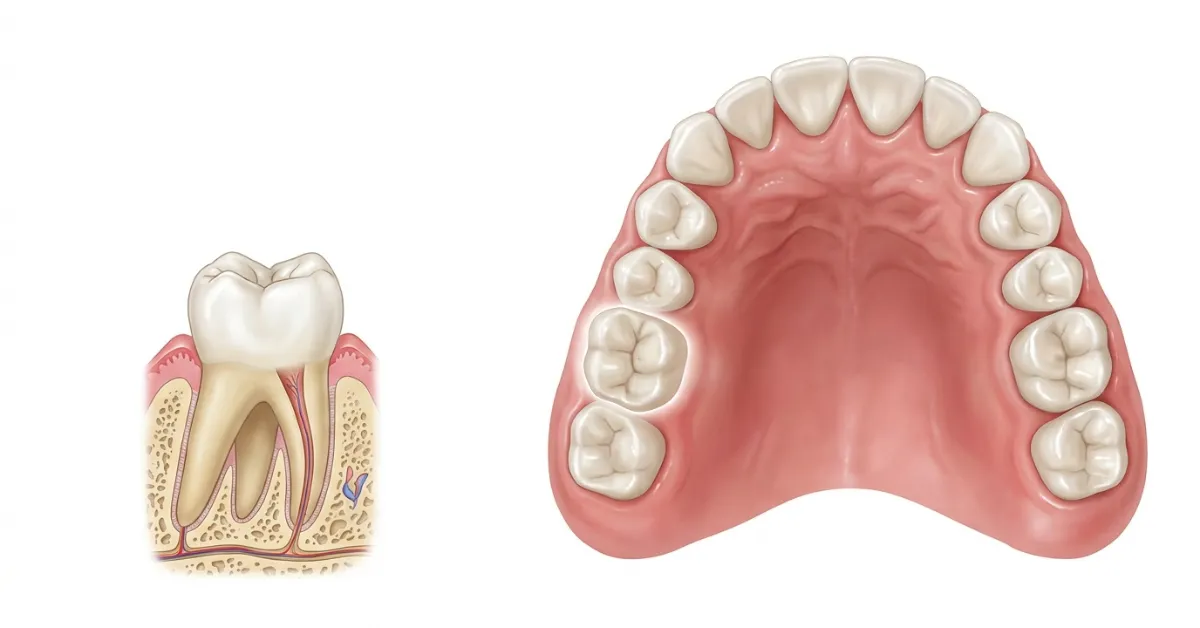
Tooth 3 is the upper right first molar, the tooth two positions back from the wisdom tooth on the upper right side of the mouth. If a dentist has mentioned “tooth #3” during an exam or on a treatment plan, this is the one they mean. It’s a permanent molar, not a baby tooth, and it plays a bigger role in chewing and long-term oral health than its quiet reputation suggests.
This tooth comes up often in dental conversations for a reason. It’s usually the first adult molar to erupt, it has one of the more complicated root systems in the mouth, and it’s frequently the first tooth lost to decay or gum disease if it isn’t looked after. Understanding what it is, where it sits, and why dentists talk about it the way they do makes those conversations a lot less confusing.
What Is Tooth 3?
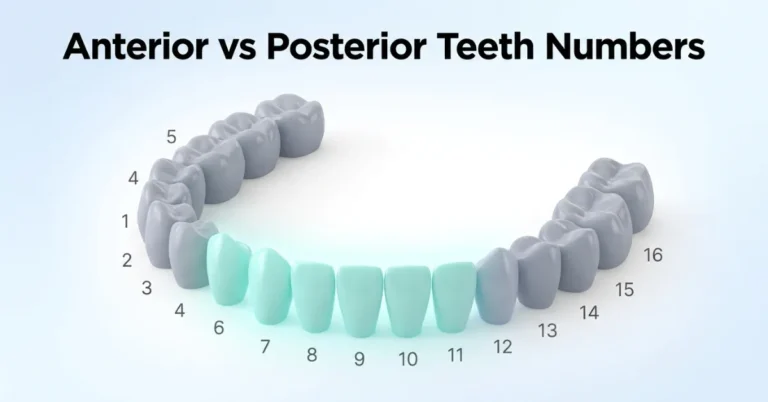
Tooth 3 refers to a specific position in the Universal Numbering System, the numbering method most dentists in the United States use to identify teeth without ambiguity. Under this system, adult teeth are numbered 1 through 32, starting at the upper right wisdom tooth and moving around the mouth in one continuous sequence.
Numbering starts at 1 (upper right third molar, or wisdom tooth), moves to 2 (upper right second molar), and reaches 3 at the upper right first molar. From there it continues across the top of the mouth to the upper left side, drops down to the lower left, and finishes at the lower right wisdom tooth, tooth 32.
Because the sequence always starts in the same place, tooth 3 means the same tooth no matter which dentist is speaking, which is the entire point of the system. It removes the guesswork that would come from describing teeth by location alone.
Where Tooth 3 Is Located
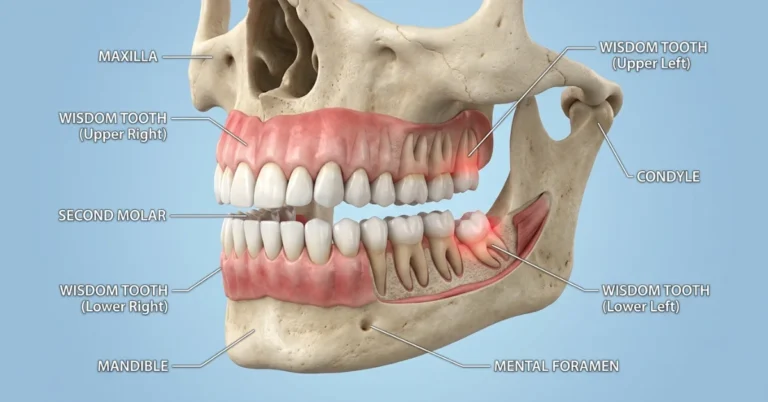
Picture the upper right side of the mouth, the back molars specifically. Moving from the very back forward: the wisdom tooth sits farthest back, the second molar sits just in front of it, and tooth 3 sits in front of that, one position closer to the front of the mouth. It’s the third tooth in from the back on the upper right side, and the largest chewing surface in that immediate area since it typically sits closer to the jaw joint than the second molar and does a large share of the grinding work on that side.
Patients sometimes confuse it with the second molar right behind it, since both are large back teeth with a similar shape. The distinguishing detail is position: tooth 3 sits one spot forward, adjacent to the second premolar (tooth 4).
Why Tooth 3 Is Called the Six-Year Molar
Tooth 3 is sometimes nicknamed the “six-year molar” because it’s typically the first permanent molar to erupt, usually appearing around age 6. Unlike incisors and canines, it doesn’t replace a baby tooth. It simply grows in behind the existing primary teeth, which means there’s no loose baby tooth to signal that something new is coming in.
That detail matters more than it sounds like it should. Because parents and kids don’t get the usual “wiggly tooth” warning, this molar is easy to miss during brushing, and its deep grooves make it a common spot for early cavities. Dentists frequently apply sealants to tooth 3 shortly after it erupts specifically because of this decay risk.
Tooth 3 Anatomy: Roots and Structure
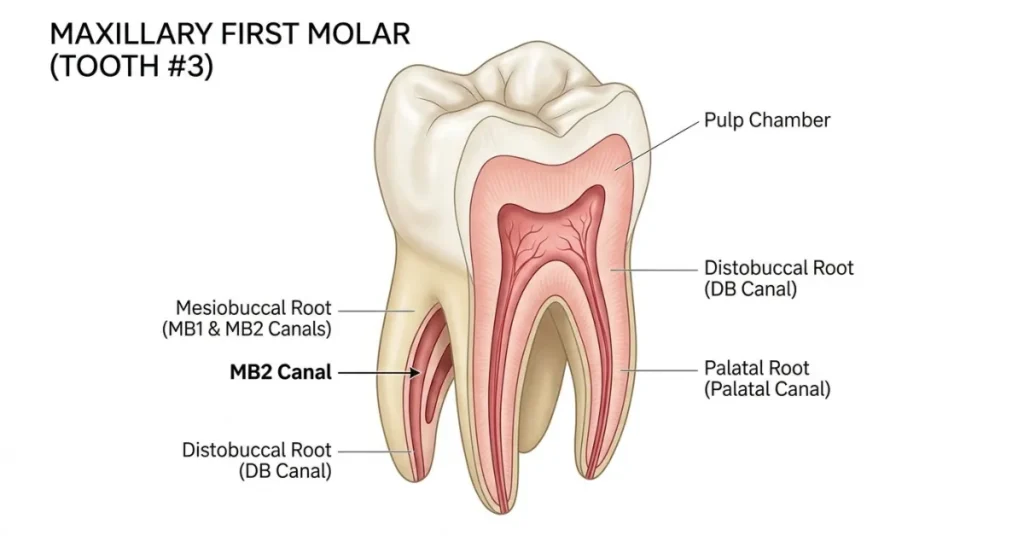
Tooth 3 typically has three roots: a mesiobuccal root, a distobuccal root, and a palatal root. This three-root structure is standard for upper first molars and is part of why root canal treatment on this tooth is more involved than on a single-rooted tooth like an incisor.
The occlusal, or chewing, surface usually has four to five cusps, giving it a broad, uneven surface built for grinding rather than cutting. One anatomical detail worth knowing: the mesiobuccal root often contains a second, smaller canal in addition to the main one, sometimes called MB2. Endodontists specifically look for this extra canal during root canal treatment, since missing it is a known cause of treatment failure.
| Structure | Detail |
|---|---|
| Number of roots | 3 (mesiobuccal, distobuccal, palatal) |
| Typical canals | 3 to 4, depending on whether MB2 is present |
| Cusps | 4 to 5 |
| Eruption age | Around 6 years old |
| Tooth type | Permanent molar |
Tooth 3 in Other Numbering Systems
The Universal Numbering System is standard in the U.S. and Canada, but it isn’t used everywhere. Two other systems come up often enough to be worth knowing, especially for anyone comparing dental records or treatment plans from outside North America.
In the FDI World Dental Federation system, used across much of Europe, Asia, and international dental research, the same tooth is written as 16. The first digit represents the quadrant, upper right, and the second represents the tooth’s position counting from the center, with the first molar in the sixth position.
In Palmer notation, another system still used in some orthodontic and pediatric contexts, the same tooth is written as 6 inside a bracket symbol that indicates the upper right quadrant.
| System | Notation for This Tooth | Common Region |
|---|---|---|
| Universal Numbering System | 3 | United States, Canada |
| FDI Notation | 16 | International, research literature |
| Palmer Notation | 6⌐ (upper right bracket) | Orthodontics, some pediatric practices |
If a treatment plan or old dental record uses a number that doesn’t match what a current dentist is saying, this is usually why. Same tooth, different counting convention.
Common Problems That Affect Tooth 3
Cavities and decay. Because tooth 3 erupts early and has deep occlusal grooves, it’s one of the more cavity-prone teeth in the mouth. Food and bacteria collect in those grooves, and since it comes in without a lost baby tooth to draw attention to it, early decay is often caught later than it would be on a more obviously “new” tooth.
Root canal complexity. If decay reaches the pulp, tooth 3’s three-rooted structure makes root canal treatment more time-consuming than on a front tooth. The dentist or endodontist needs to locate and treat each canal separately, including the possible MB2 canal in the mesiobuccal root.
Early tooth loss from gum disease. First molars are frequently among the earliest teeth lost to periodontal disease in adults who develop gum problems, partly because of their position and the difficulty of thoroughly cleaning around them.
Wear and cracking. As one of the primary chewing teeth, tooth 3 takes on significant bite force over decades of use, which can lead to cracked cusps or worn enamel in older adults, particularly those who grind their teeth.
Signs of a Problem With Tooth 3
A few symptoms are worth paying attention to if they involve the upper right back molars:
- Sharp pain when biting down or chewing on that side
- Lingering sensitivity to hot or cold that doesn’t fade quickly
- A dull ache that comes and goes, sometimes worse when lying down
- Swelling or a tender spot on the gum near the tooth
- A visible dark spot or pit on the chewing surface
- A small, pimple-like bump on the gum, which can indicate an abscess
Any of these, especially swelling or a bump on the gum, is worth having examined rather than waiting out. Untreated infections in a molar can spread beyond the tooth itself.
Root Canal or Extraction: What Dentists Consider
When tooth 3 is damaged enough to need treatment, the choice usually comes down to root canal treatment versus extraction, and dentists tend to weigh a few consistent factors:
- How much healthy tooth structure remains. A tooth with enough structure left to support a crown after treatment is a better root canal candidate.
- The condition of the surrounding bone and gum. Significant bone loss around the tooth can shorten how long a saved tooth is likely to last.
- Whether the tooth is already cracked below the gumline. A crack that extends into the root often means extraction is the more predictable option.
- Long-term cost and function. A successful root canal preserves the natural tooth and neighboring bite alignment, while extraction typically leads to a discussion about a dental implant, bridge, or partial denture to fill the gap and prevent nearby teeth from shifting.
This decision is specific to each case and depends on an exam and x-rays, but knowing the general trade-offs makes it easier to ask informed questions at the appointment.
Caring for Tooth 3
Because of its cavity-prone grooves and early eruption, a few habits matter more for this tooth than for some others:
- Brushing the chewing surfaces thoroughly, not just the visible front of the teeth
- Considering a dental sealant soon after the tooth erupts in children, which fills in deep grooves before decay can start
- Flossing between tooth 3 and its neighbors, where food commonly gets trapped
- Getting routine dental x-rays, since decay between back molars often isn’t visible during a visual exam alone
- Addressing any grinding habit with a nightguard, since first molars absorb a large share of that force
FAQ
Is tooth 3 a baby tooth or a permanent tooth?
Tooth 3 is a permanent tooth. It does not replace a baby tooth and usually erupts behind the primary teeth around age 6.
Why does tooth 3 need a root canal?
Tooth 3 does not necessarily need root canal treatment more often than every other tooth. However, its early eruption and deep chewing grooves can make decay more likely. If decay reaches the pulp, root canal treatment may be needed to save the tooth.
How many roots does tooth 3 have?
Tooth 3 typically has three roots: a mesiobuccal root, a distobuccal root, and a palatal root. The mesiobuccal root may also contain an additional canal called MB2.
What is tooth 3 called in the FDI numbering system?
Tooth 3 is numbered 16 in the FDI World Dental Federation system. Both numbers identify the upper right first permanent molar.
Can tooth 3 be extracted without replacing it?
Yes, but whether replacement is advisable depends on the individual situation. Losing a first molar can affect chewing and may allow nearby teeth to shift over time. A dentist can assess whether replacement with an implant, bridge, or another option is appropriate.
Key Takeaways
Tooth 3 is the upper right first molar under the Universal Numbering System, known as tooth 16 in the FDI system. It’s typically the first permanent molar to erupt, usually around age 6, which is why it’s nicknamed the six-year molar. Its three-rooted structure makes root canal treatment more involved than on front teeth, and its deep grooves make it one of the more cavity-prone teeth in the mouth. Watching for pain, sensitivity, or swelling in that area, and keeping up with cleaning and sealants where appropriate, goes a long way toward keeping this particular molar out of trouble.