Wiggly Tooth in Kids vs. Adults: What It Means & What to Do
A wiggly tooth is normal in children ages 5 to 12, but in adults it usually signals gum disease or injury. Here’s what to do about it.
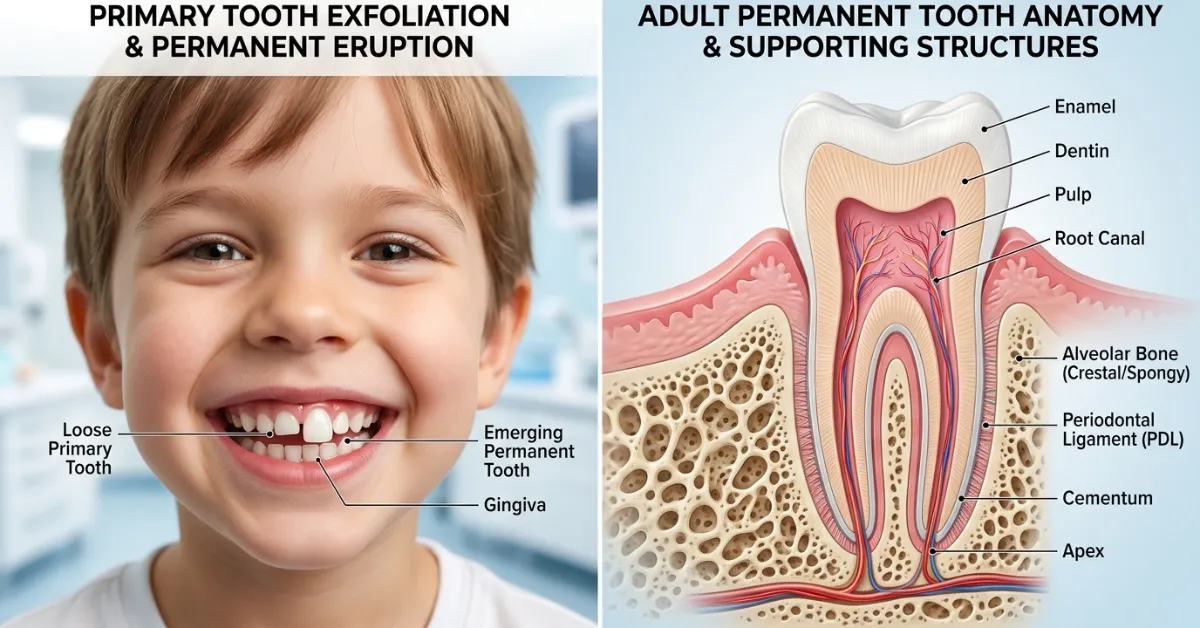
A wiggly tooth means a tooth has lost some of the support that normally holds it firmly in the jaw, so it can move slightly when you touch it, bite down, or push it with your tongue. In children, this almost always means a baby tooth is getting ready to fall out on schedule. In adults, it almost always means something is going wrong underneath the gum line, and it isn’t something to wait out.
That difference matters because the right response is completely different depending on who has the wiggly tooth. This guide covers both: the normal childhood process, step-by-step, and the adult version, including why it happens and what a dentist typically does about it.
What Does It Mean When a Tooth Is Wiggly?
Every tooth sits in a socket and is held there by a network of fibers called the periodontal ligament, along with the surrounding bone. A tooth becomes wiggly when that support system loosens, either because it’s supposed to (a baby tooth’s root dissolving on purpose) or because something is damaging it (gum disease, injury, or excess pressure).
For a child between roughly age 5 and 12, a wiggly tooth is one of the most ordinary things that can happen in their mouth. For an adult with permanent teeth, a wiggly tooth is not ordinary at all and is worth taking seriously, even if it doesn’t hurt.
Wiggly Baby Teeth in Children (The Normal Kind)
What Age Do Kids Get Their First Wiggly Tooth?
Most children get their first wiggly tooth around age 5 to 7, with 6 being the most common. According to the American Dental Association, the process typically continues in stages until around age 12, by which point all 20 baby teeth have usually been replaced by permanent ones. A tooth that loosens a little earlier or later than a sibling’s did is usually still within normal range; kids vary.
Why Do Baby Teeth Get Wiggly in the First Place?
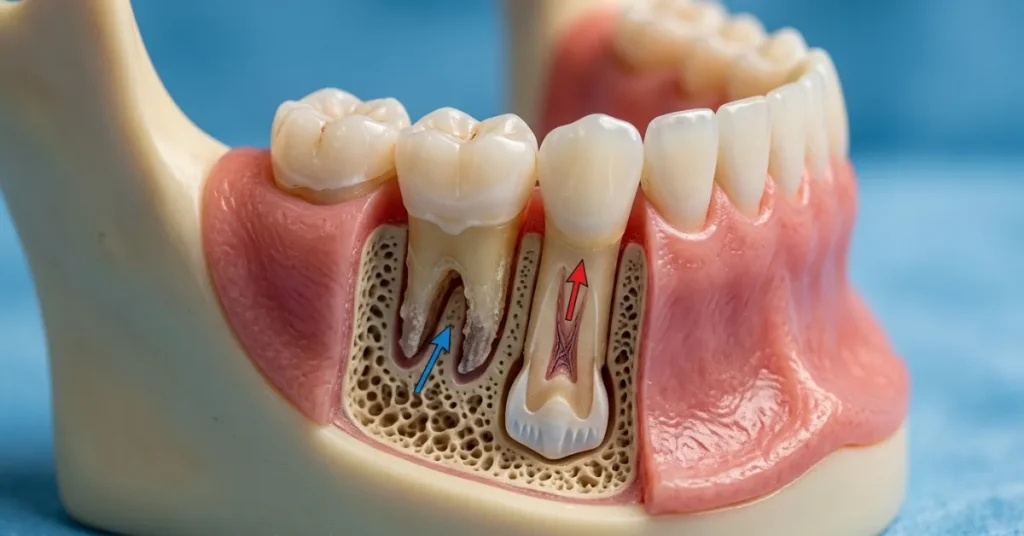
A baby tooth’s root doesn’t just sit there waiting. As the permanent tooth underneath develops and pushes upward, it triggers a process called root resorption, where the baby tooth’s own root gradually dissolves. Once enough of the root is gone, the tooth has nothing left to anchor it, and it starts to wiggle. This is why a loose baby tooth almost never has much of a root left by the time it falls out; the body has already broken most of it down.
The Order Teeth Usually Loosen and Fall Out
Baby teeth tend to loosen in roughly the same order they first came in. For most children that looks like this:
- Lower central incisors (bottom front two teeth) — usually first, around age 6-7
- Upper central incisors (top front two teeth) — shortly after
- Lateral incisors (the teeth next to the front ones) — around age 7-8
- First molars — around age 9-11
- Canines (the pointed teeth) — around age 9-12
- Second molars — around age 10-12
A tooth loosening noticeably out of this order, such as a molar wiggling before any front teeth have moved, is one of the few timing patterns worth mentioning to a dentist, mostly so they can confirm the permanent tooth underneath is developing normally.
Signs a Child’s Wiggly Tooth Is Normal vs. a Reason to Call the Dentist
Most wiggly baby teeth need nothing more than patience. A few signs, though, separate ordinary tooth loss from something that needs a dentist’s attention.
Usually normal:
- The tooth is between ages 5 and 12
- It loosens gradually over days or weeks, without an injury
- There’s mild tenderness or a small amount of pink-tinged saliva, but no real pain
- A permanent tooth can be seen or felt coming in underneath
Worth a dental visit:
- The tooth became loose right after a fall, blow to the mouth, or other injury
- There’s swelling, pus, a bad taste, or a fever alongside the loose tooth
- The tooth has been loose for several months with no progress
- A child under about age 4 or over age 12 has a loosening baby tooth with no clear reason
- The permanent tooth is visibly coming in behind the baby tooth rather than pushing it out (this is common and usually resolves on its own, but a dentist should confirm it isn’t crowding the new tooth)
How to Help a Wiggly Tooth Come Out Safely
The simplest, safest approach is to let the tooth fall out on its own. Most children’s loose teeth resolve within a few weeks of first becoming noticeable, though some take longer. If a child wants to speed things along, or the tooth is genuinely ready, here’s a safer way to do it than the old string-and-doorknob method.
- Wash hands first. Clean hands (or a clean tissue) reduce the risk of introducing bacteria to the open socket.
- Encourage gentle wiggling with clean fingers or the tongue, spread across a few minutes at a time rather than one aggressive push.
- Offer crunchy foods like apple slices or carrot sticks. Chewing naturally works a ready tooth loose without anyone forcing it.
- Check readiness before pulling. If the tooth moves easily in most directions and doesn’t cause pain when wiggled, it’s likely ready. If it resists or hurts, it isn’t ready yet, and pulling it anyway risks pain and bleeding for no benefit.
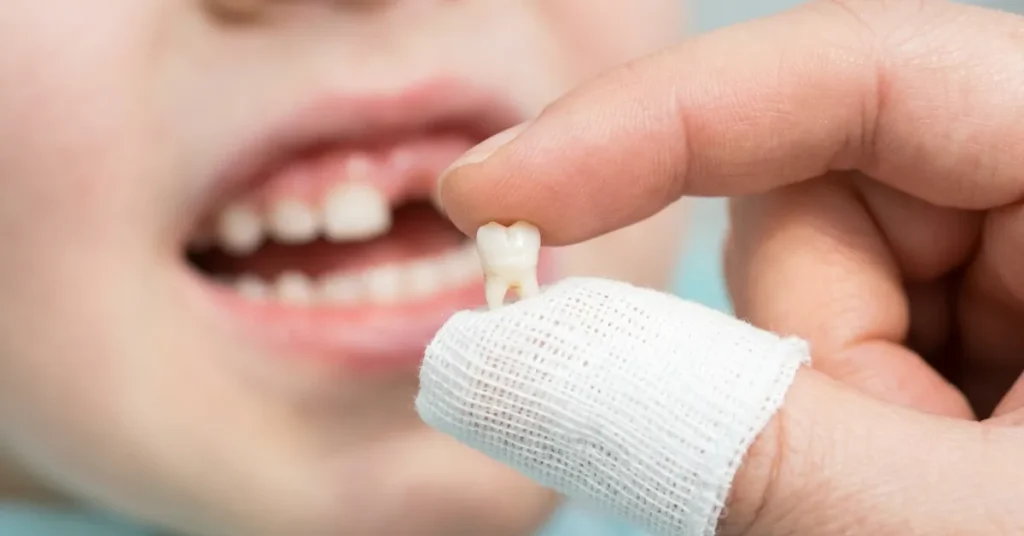
- If it’s truly ready, grip it with a clean tissue or gauze and twist gently rather than yank. A tooth that’s actually ready will come out with very little resistance.
What Not to Do
- Don’t force a tooth that resists or causes pain when moved; the root hasn’t finished dissolving yet.
- Don’t use string, floss, or a doorknob to yank a tooth. It’s an old trick that risks tearing gum tissue and causing more pain than waiting a few more days.
- Don’t ignore a loose tooth that’s clearly the result of an injury; that one needs a dental check, not just patience.
Caring for the Gap After the Tooth Comes Out
Once the tooth is out, a little bleeding is normal. Have the child bite gently on a clean piece of gauze or a damp washcloth for a few minutes to help it stop. Avoid very hot, hard, or crunchy foods for the rest of that day, and keep brushing the other teeth normally, just going a little easier around the empty socket for a day or two. Persistent bleeding beyond 10-15 minutes, or ongoing pain a few days later, is worth a call to the dentist.
Wiggly Tooth in Adults: Why It’s Different
A permanent tooth is not supposed to move. If an adult tooth feels even slightly wiggly, that’s the mouth signaling that something is damaging the structures holding it in place, and it’s worth a dental appointment rather than a wait-and-see approach.
Common Causes of a Loose Adult Tooth
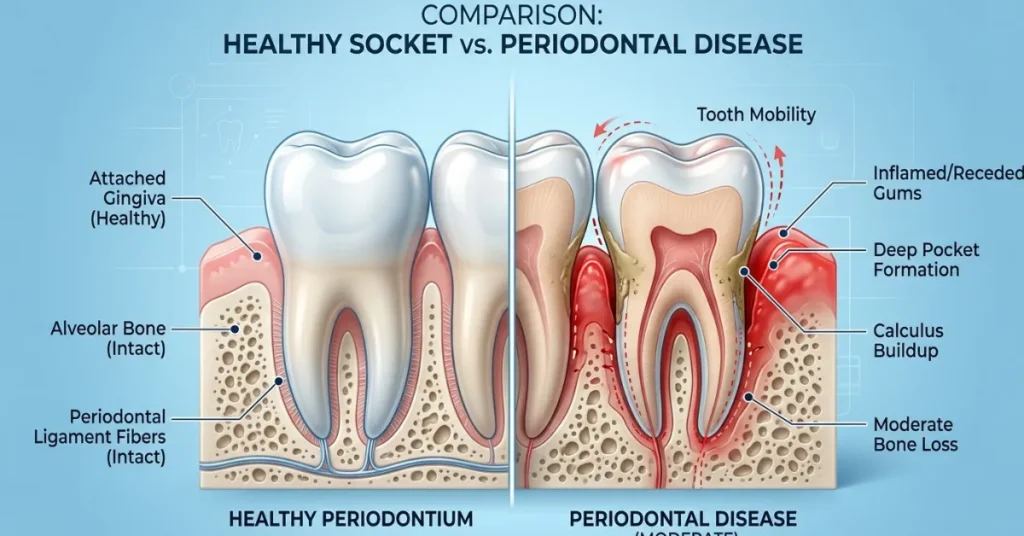
- Gum (periodontal) disease. This is the leading cause of loose teeth and tooth loss in adults. Plaque buildup along and below the gumline triggers inflammation that, over time, breaks down the ligament and bone anchoring the tooth. Early symptoms often include red or swollen gums, bleeding when brushing, and bad breath.
- Dental trauma. A blow to the mouth from a fall, sports injury, or accident can loosen a tooth even if it doesn’t visibly break.
- Teeth grinding (bruxism). Repeated, excessive pressure from clenching or grinding, especially at night, can gradually loosen a tooth’s support.
- Bite misalignment. When one tooth takes on more chewing force than it should because of how the bite lines up, that extra pressure can loosen it over time.
- Pregnancy-related gum changes. Hormonal shifts during pregnancy can temporarily increase gum inflammation and, in some cases, tooth mobility; this is usually monitored rather than treated aggressively unless gum disease is also present.
What a Dentist Might Do to Treat It
Treatment depends entirely on the cause, which is why a proper diagnosis matters more than guessing:
| Cause | Typical treatment approach |
|---|---|
| Gum disease | Deep cleaning (scaling and root planing), improved home hygiene, sometimes antibiotics or referral to a periodontist |
| Teeth grinding | A custom night guard to reduce pressure on the teeth |
| Bite misalignment | Minor bite adjustment (reshaping small amounts of enamel) or orthodontic evaluation |
| Trauma with a tooth that hasn’t fully detached | Splinting the tooth to neighboring teeth so it can stabilize while healing |
| Advanced looseness with significant bone loss | In some cases the tooth can’t be saved and extraction with a replacement option (implant, bridge, or partial denture) is discussed |
When to See a Dentist About a Wiggly Tooth
See a dentist promptly, rather than waiting, if any of these apply:
- Any adult (permanent) tooth feels loose, even slightly
- A child’s loose tooth followed a fall, sports collision, or other injury
- There’s swelling, pus, fever, or a foul taste near the loose tooth
- Bleeding gums, gum recession, or persistent bad breath accompany the looseness
- A baby tooth has been loose for several months with no progress, or a tooth is loosening well outside the typical 5-12 age range
Frequently Asked Questions
Is it normal for a 5-year-old to have a wiggly tooth?
Yes. Five is on the early end, but it can still be normal. Most children get their first loose baby tooth between ages 5 and 7.
Can a wiggly tooth tighten back up on its own?
A loose baby tooth generally will not tighten back up because it is loosening as its root naturally resorbs before it falls out. A permanent tooth may sometimes become firmer when the underlying cause, such as gum inflammation, is treated. Persistent looseness should be evaluated by a dentist.
How long does a tooth stay wiggly before it falls out?
It varies widely. A loose baby tooth may stay wiggly for a few days or several months before it falls out. There is no fixed timeline, especially when the tooth is loosening gradually without significant pain.
Does it hurt to wiggle a loose tooth?
A baby tooth that is ready to fall out usually should not cause significant pain when gently wiggled. Mild pressure or tenderness can be normal, but noticeable or persistent pain may mean the tooth is not ready or that another problem is present.
Should I let my child pull out their own loose tooth?
Usually, yes, if the baby tooth is already very loose and ready to come out. Letting a child gently wiggle it and allow it to fall out naturally can be less stressful than forcing it. Avoid pulling a tooth that is still firmly attached or causing significant pain.
Is a wiggly wisdom tooth normal?
No. Wisdom teeth are permanent teeth, so noticeable looseness is not considered normal. It can be associated with gum disease, infection, or other dental problems and should be evaluated by a dentist.
Key Takeaways
- A wiggly tooth means normal, healthy growth in a child roughly between ages 5 and 12, and a warning sign of an underlying problem in an adult.
- In kids, the root of the baby tooth dissolves on its own as the permanent tooth pushes up beneath it; the tooth doesn’t need help to come out, though gentle wiggling and crunchy foods can nudge a ready tooth along.
- Never force a resistant tooth, in a child or an adult, and never use the string-and-doorknob method.
- In adults, gum disease is by far the most common cause of a loose tooth, followed by trauma, grinding, and bite problems. Treatment depends on the cause and works best when caught early.
- A loose tooth tied to an injury, swelling, pus, fever, or unusual timing deserves a same-week dental visit rather than a wait-and-see approach, at any age.