How Long After a Dental Implant Can You Chew Food?
How long after a dental implant can you chew food? See our day-by-day recovery timeline, from 24 hours to full healing.
Most people can chew very gently on soft foods within a few days of getting a dental implant, light normal chewing typically returns within 1 to 2 weeks, and full, unrestricted chewing usually isn’t safe until the implant has fully fused with the jawbone and the final crown is in place, a process that commonly takes 3 to 6 months.
That gap between “comfortable enough to chew” and “actually healed enough to chew hard on” is where a lot of confusion comes from. A dental implant is a small titanium (or sometimes zirconia) post placed into the jawbone to replace a missing tooth root. It only becomes a stable, load-bearing tooth once the bone grows around it and locks it in place, a process called osseointegration, and that process takes far longer than the surface soreness does. This guide walks through exactly what changes week by week, what can slow that timeline down, and what to eat at each stage.
Quick Answer: Dental Implant Chewing Timeline
| Stage | What’s typically safe |
|---|---|
| First 24-72 hours | Liquids and very soft foods only; no chewing at or near the implant site |
| Days 3-7 | Soft foods that need minimal chewing, eaten on the opposite side of the mouth |
| Week 2 | Gentle chewing on soft-textured foods; still avoiding the implant site directly |
| Weeks 3-6 | Gradual reintroduction of firmer, more solid foods if healing is on track |
| 3-6 months | Osseointegration typically complete; final crown placed; normal chewing generally allowed |
This is a general pattern, not a guarantee. Implant location, number of implants, bone quality, and whether you needed a bone graft all shift these windows, sometimes by weeks and sometimes by months. Your dentist or oral surgeon’s specific instructions always take priority over a general timeline.
Why You Have to Wait Before Chewing Normally
What Osseointegration Actually Is
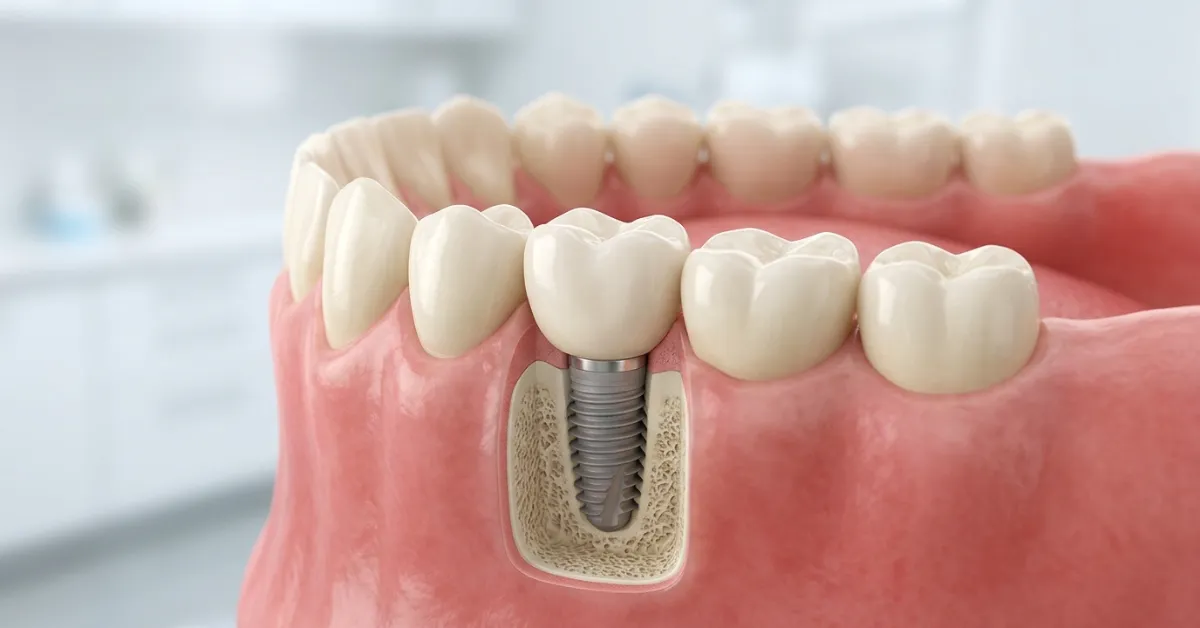
After the implant post is placed in the jawbone, it isn’t yet structurally attached to anything. It’s held in place mechanically, similar to a screw in a pre-drilled hole, while bone cells gradually grow onto and around the implant surface. That biological bonding process is called osseointegration, and it’s what eventually turns the post into something strong enough to handle the forces of chewing.
Research on implant healing generally describes this fusion taking a few months to become mechanically reliable, with the lower jaw (mandible) typically integrating somewhat faster than the upper jaw (maxilla) because it tends to have denser bone. Some modern implant surfaces are designed to accelerate this process, but the underlying biology still needs real time, not just comfort, to complete.
What Happens If You Chew Too Soon
Early on, before bone has fused around the implant, even small amounts of repeated pressure (called micromotion) can disturb that developing bond. In practical terms, biting down hard on a healing implant too early can:
- Delay or disrupt bone fusion at the implant surface
- Loosen a temporary crown, healing cap, or provisional restoration
- Irritate healing gum tissue around the implant, increasing soreness or swelling
- In more serious cases, contribute to implant failure, which usually means the implant has to be removed and the site allowed to heal before trying again
This is the main reason dentists stage the diet so carefully rather than simply waiting for soreness to fade. Feeling fine is not the same as being structurally ready for full bite force.
Day-by-Day Chewing and Eating Timeline
First 24 to 72 Hours
Stick to liquids and foods you don’t need to chew at all: broths, smoothies (drunk slowly, not through a straw), yogurt, mashed potatoes, applesauce, and cool soups. Avoid any pressure directly on the implant site. If you’re still numb from anesthesia, wait until sensation fully returns before eating anything at all, so you don’t accidentally bite your cheek, lip, or tongue. Straws are worth avoiding in this window too, since the suction can disturb the healing site.
Days 3 to 7
Soreness and swelling are usually at their peak in the first couple of days and start easing from around day 3. This is when most people move to soft foods that need a little chewing, such as scrambled eggs, oatmeal, well-cooked pasta, mashed vegetables, and flaky fish, chewed on the opposite side of the mouth from the implant.
Week 2
Many people can shift to a “soft-chew” diet, meaning foods soft enough to cut with a fork, like tender shredded chicken, soft tortillas, rice, or cooked vegetables. Chewing directly on the implant is still generally discouraged unless your dentist has specifically cleared it.
Weeks 3 to 6
If healing is progressing normally, firmer textures can usually be reintroduced gradually, such as soft bread, baked fish, or steamed vegetables with a bit more bite. This is also the stage where dentists commonly check whether it’s safe to progress further, rather than leaving it entirely to guesswork.
After the Final Crown Is Placed
The final restoration (the visible crown, bridge, or denture that attaches to the implant) is typically placed only after osseointegration is confirmed, which is commonly 3 to 6 months after surgery, though it can extend to 6 to 8 months for implants in the upper jaw or cases involving bone grafting. Once the final crown is in and your dentist has confirmed the implant is stable, most people can return to a normal diet. Even then, it’s sensible to avoid habitually biting down on ice, hard candy, or unpopped popcorn kernels, the same habits that shorten the life of natural teeth.
What Can Extend or Shorten Your Timeline
Several factors change how long this process realistically takes for you specifically:
- Implant location: Implants toward the back of the mouth handle more bite force and are sometimes advanced more cautiously than front-tooth implants.
- Number of implants: A single implant generally heals more predictably than multiple implants placed at once, simply because there’s more surgical site to manage.
- Bone grafting or a sinus lift: If your jawbone needed extra bone added before or during implant placement, expect a longer soft-food phase, often extending the overall timeline by weeks to months.
- Immediate-load implants (“teeth in a day”): Even though you leave with a temporary fixed tooth the same day, the implant underneath is still integrating, so a soft-chew diet is still required for weeks even though it looks like you already have a finished tooth.
- Bruxism (teeth grinding or clenching): Extra bite force from grinding, especially at night, can stress a healing implant; a night guard is often recommended.
- General health factors: Smoking, uncontrolled diabetes, and certain medications can all slow bone healing and extend every stage of this timeline.
What to Eat (and Avoid) at Each Stage
| Eat | Avoid |
|---|---|
| Smoothies, broths, yogurt, mashed potatoes | Crunchy foods: chips, raw carrots, crusty bread |
| Scrambled eggs, oatmeal, soft pasta, rice | Sticky or chewy foods: caramel, taffy, gum |
| Well-cooked vegetables, flaky fish, tofu | Nuts, seeds, popcorn (can lodge near the healing site) |
| Soft fruits without seeds, ripe bananas | Very hot foods and alcohol in the first few days |
| Protein-rich options (eggs, dairy, soft fish) to support healing | Chewing ice or hard candy, even after healing |
Keeping protein intake reasonable during healing is generally encouraged, since protein supports tissue repair, but there’s no need for a strict regimen, just consistent, nutrient-dense soft foods rather than empty-calorie liquids.
Signs Healing Is on Track vs. Signs to Call Your Dentist
Generally normal during early healing:
- Mild soreness and swelling for the first few days
- Slight oozing or minor bleeding on day one
- Some stiffness when opening your mouth wide
- Gradual, steady improvement day over day
Contact your dentist or oral surgeon promptly if you notice:
- Pain that gets worse after day 3 instead of improving
- Fever, a bad taste, or visible pus at the site
- Bleeding that doesn’t slow down
- A healing cap, temporary crown, or the implant itself that feels loose or “wobbly”
- Numbness in the lip, chin, or tongue that isn’t improving
None of this is a substitute for direct medical or dental advice about your own case. If something feels wrong, the safest move is always a call to the office that placed your implant.
Tips to Protect Your Implant While You Heal
- Chew on the opposite side of your mouth until you’re specifically told otherwise.
- Skip straws for at least the first few days; suction can disturb the healing site.
- Take smaller bites and chew slowly, even once you’re cleared for firmer foods.
- Keep up gentle oral hygiene around the site as instructed, since a clean healing area recovers more predictably.
- Don’t test the implant by intentionally biting down hard “to see how it feels.” Let your dentist confirm readiness instead of finding out the hard way.
- Wear a night guard if you’re a known teeth-grinder, since nighttime clenching bypasses your own conscious caution.
FAQ
How long after dental implants can I chew?
Gentle chewing on soft foods away from the implant site is usually fine within a few days. Light normal chewing generally returns within 1 to 2 weeks, but unrestricted chewing typically waits until osseointegration is complete and the final crown is placed, commonly 3 to 6 months after surgery.
When can I start eating normal food after a dental implant?
Most people can get close to a normal diet within 3 to 6 weeks as firmer foods are gradually reintroduced. Hard or crunchy foods are generally best saved until the final restoration is placed and your dentist confirms the implant is stable.
How can I speed up dental implant healing?
You cannot speed up bone fusion beyond its normal biology, but you can avoid delaying it. Do not smoke, follow your dentist’s diet instructions, keep the area clean as directed, and attend follow-up appointments.
What are the do’s and don’ts after a tooth implant?
Do follow the recommended soft-food stages, chew away from the implant, keep the area clean, and attend follow-up appointments. Avoid smoking, straws during the first few days, ice, hard candy, and foods that put excessive pressure on the implant.
Can I chew on the side with the implant?
Avoid chewing directly on the implant side during the early healing period. Your dentist will tell you when it is safe to apply normal chewing pressure based on how the implant and surrounding bone are healing.
What happens if I chew too soon after a dental implant?
Chewing too soon can place excessive pressure on the healing implant, potentially interfering with osseointegration, irritating the surrounding tissues, or damaging a temporary restoration. Follow your dentist’s specific instructions even if the area feels comfortable.
Key Takeaways
- Comfort and healing are not the same thing: soreness usually fades within a week or two, but the implant itself typically needs 3 to 6 months to fully fuse with the jawbone.
- The safe progression is liquids and very soft foods (days 1-3), soft-chew foods (week 1-2), gradually firmer foods (weeks 3-6), and normal eating only after the final crown is placed and osseointegration is confirmed.
- Bone grafts, multiple implants, upper-jaw placement, and health factors like smoking or uncontrolled diabetes can all extend this timeline.
- Watch for pain that worsens after day 3, fever, pus, persistent bleeding, or a loose-feeling implant, and contact your dentist promptly if any of those appear.
- When in doubt, follow your own dentist’s specific instructions over any general timeline, since they can see exactly how your healing is progressing.