Why Are My Teeth Becoming Transparent? Causes & Fixes
Wondering why are my teeth becoming transparent? It’s usually enamel thinning from acid, grinding, or genetics. See causes, reversibility, and fixes.
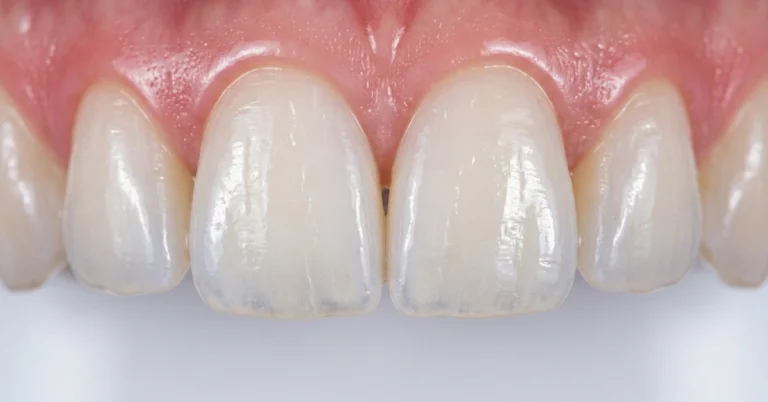
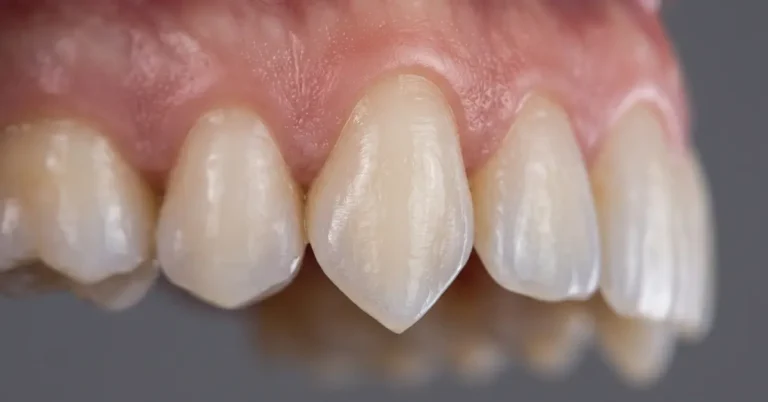
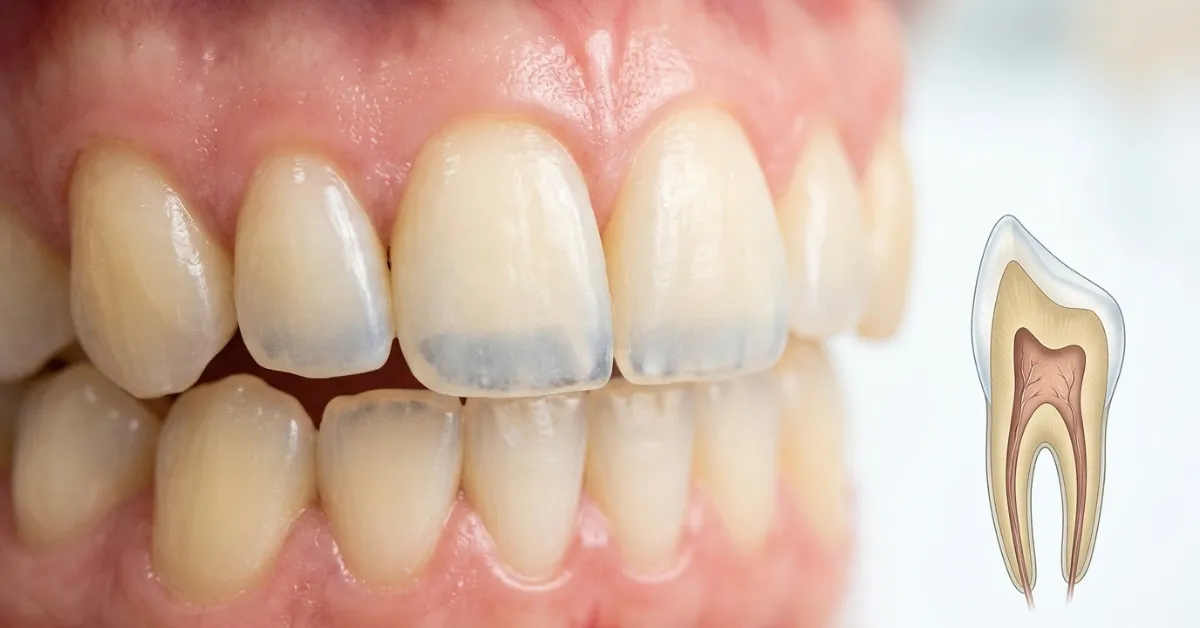
Teeth become transparent when the enamel covering them wears thin enough that light passes through the edges instead of reflecting off them. It’s most noticeable at the incisal edges, the biting tips of your front teeth, where enamel is naturally thinnest to begin with. This isn’t usually an emergency, but it is a sign that something has been wearing your enamel down, and it’s worth understanding why before it gets worse.
What Causes Teeth to Become Transparent
Enamel doesn’t become see-through on its own. Something is either dissolving it chemically or wearing it down physically. The usual suspects fall into three categories.
Acid exposure. Frequent contact with acidic foods and drinks (citrus, soda, wine, vinegar-based dressings) softens and gradually dissolves the mineral structure of enamel. Acid reflux (GERD) and bulimia work the same way from the inside, exposing teeth to stomach acid that’s far more corrosive than anything in a typical diet. People with GERD often notice erosion concentrated on the back of the upper front teeth, since that’s where reflux acid pools during sleep.
Mechanical wear. Grinding your teeth at night (bruxism) physically shaves down enamel over years, often without you noticing until a dentist points it out. Brushing too hard, especially with a stiff-bristled brush or right after eating something acidic (when enamel is temporarily softened), has the same abrasive effect over time.
Medical and genetic factors. Celiac disease can interfere with how the body absorbs the minerals enamel needs during tooth development, leading to thinner enamel from the start. Enamel hypoplasia is a genetic condition where teeth simply form with less enamel than usual. Dry mouth is a less obvious contributor: saliva neutralizes acid and carries the minerals enamel needs, so when saliva flow is reduced (from certain medications, dehydration, or breathing through your mouth at night) enamel loses some of its natural protection. In both cases, transparency can show up even in people with otherwise careful oral hygiene, which is why it’s worth mentioning any digestive or autoimmune diagnoses to your dentist if you’re seeing unexplained transparency.
Can Transparent Teeth Be Reversed?
No. Enamel has no living cells, so once it erodes, your body can’t regrow it. What you can do is stop it from getting worse and improve how your teeth look through remineralization and cosmetic treatment.
Remineralization (using fluoride or hydroxyapatite toothpaste, for example) redeposits calcium and phosphate into the surface of weakened enamel. This can strengthen enamel that hasn’t fully eroded yet and reduce sensitivity, but it can’t rebuild enamel that’s already gone. For enamel that’s visibly worn away, bonding or veneers restore the appearance and function without regenerating the original tissue. Think of remineralization as defense for enamel you still have, and cosmetic treatment as the fix for enamel you’ve already lost.
Signs Your Enamel Is Wearing Down
Transparency at the edges is usually one sign among several. Watch for:
- Increased sensitivity to hot, cold, or sweet foods
- Yellowing, especially compared to a few years ago (this is the dentin underneath showing through)
- Rounded or slightly “sandblasted” looking edges instead of sharp, even ones
- Small chips or roughness along the biting edge
- A grayish or bluish tint at the tips of the front teeth
One sign alone isn’t cause for alarm. Several together, especially if they’ve developed gradually, are a reasonable reason to bring it up at your next cleaning rather than waiting for your next scheduled checkup.
How to Stop Further Enamel Loss
Since you can’t undo enamel loss, slowing it down is the actual goal. What helps depends on the cause, but these apply broadly:
- Switch to a soft-bristled brush and avoid pressing hard. If your bristles fray within a couple of months, you’re brushing too aggressively.
- Wait 30 minutes after eating or drinking anything acidic before brushing. Enamel is temporarily softened right after acid exposure, and brushing immediately can abrade it.
- Rinse with water after acidic foods or drinks instead of brushing right away.
- Use a fluoride or hydroxyapatite toothpaste to support remineralization of enamel that isn’t fully eroded yet.
- Get a nightguard if you grind your teeth. This is the single most effective fix for grinding-related wear, and it’s often covered by dental insurance.
- Manage acid reflux or GERD with your doctor. Treating the underlying condition does more for your enamel than any toothpaste can.
- Limit sipping on acidic drinks over long periods. A glass of orange juice with breakfast does less damage than the same juice sipped over two hours, because constant exposure gives acid more time to work.
Treatment Options Compared
| Option | What it does | Best for | Limitations |
|---|---|---|---|
| Fluoride/hydroxyapatite toothpaste | Remineralizes weakened enamel, reduces sensitivity | Early-stage thinning, prevention | Can’t rebuild enamel that’s already lost |
| Fluoride varnish (in-office) | Concentrated remineralization applied by a dentist | Moderate erosion, higher-risk patients | Temporary effect, needs repeat visits |
| Dental bonding | Composite resin applied to reshape and cover worn edges | Mild to moderate transparency, single-visit fix | Less durable than veneers, can stain over time |
| Veneers | Thin porcelain or composite shells bonded over the front of the tooth | Moderate to significant transparency, cosmetic priority | More expensive, may involve minor enamel removal to fit |
| Nightguard | Prevents further mechanical wear from grinding | Bruxism-related erosion | Doesn’t fix existing transparency, prevention only |
When to See a Dentist
Book an appointment if you notice transparency getting more noticeable over a few months, new sensitivity to temperature, visible yellowing at the edges, or any chipping. A dentist can measure enamel thickness, identify whether reflux, grinding, or diet is the driver, and catch it while options like remineralization and bonding are still enough, before it progresses to something that needs a more involved fix.
FAQ
Why are my teeth transparent at the edges specifically?
The biting edges of front teeth naturally have thinner enamel, so they can appear slightly translucent. This transparency may become more noticeable if enamel has been worn down by erosion, abrasion, or other factors.
Is transparent enamel dangerous?
Not necessarily. Slightly transparent tooth edges can be normal, but new or worsening transparency, especially with sensitivity, may indicate enamel wear that should be checked by a dentist.
Can toothpaste fix transparent teeth?
Fluoride toothpaste can help strengthen and protect the enamel that remains, but it cannot regrow enamel that has already been permanently lost.
Does teeth whitening make teeth more transparent?
Whitening does not normally remove enamel when used correctly. However, excessive use of abrasive whitening products can contribute to enamel wear, and whitening may temporarily increase sensitivity.
Are transparent teeth reversible with diet changes alone?
Diet changes can help prevent further enamel erosion and support remineralization of early mineral loss, but they cannot restore enamel that has already been permanently lost.
Key Takeaways
Transparent teeth are almost always a sign of enamel erosion from acid, grinding, or genetics, not a standalone problem. Enamel can’t regrow once it’s gone, but you have real control over whether it gets worse: a soft-bristled brush, a nightguard if you grind, managing reflux, and a remineralizing toothpaste all meaningfully slow the process. If the transparency itself bothers you cosmetically, bonding or veneers are the actual fix, since neither toothpaste nor time will reverse enamel loss on their own. Track how it’s changed over the last few months, and let a dentist take a look if it’s progressing.