Impacted Cuspids Teeth Why They Happen Signs Treatments and Surgery Explained
Medically reviewed for accuracy and based on current evidence-based dental research. This content is for educational purposes and does not replace professional dental advice.
Cuspids teeth not erupting? Discover the causes, symptoms, and proven treatments for impacted canines. Read our expert guide and protect your smile today.
Quick answer: Cuspids teeth (also called canine teeth((k9) or eye teeth) are the pointed teeth between your incisors and premolars. When a cuspid tooth fails to erupt and stays trapped in the jaw or gum, it’s called an impacted canine tooth. Impacted cuspids are most common in the upper jaw, and they’re treated with monitoring, braces, surgical exposure, or, in severe cases, extraction.
Your cuspids teeth are essential to your smile, your bite, and your ability to chew. These pointed teeth tear food, guide healthy jaw movement, and hold the surrounding teeth in their correct position. When a cuspid tooth doesn’t erupt on schedule and remains trapped inside the jawbone or gum tissue, dentists call this an impacted canine tooth.Impacted cuspids are among the most common developmental eruption problems involving permanent teeth, especially in the upper jaw one of the most common eruption problems in dentistry, especially in the upper arch.
Left untreated, an impacted cuspid can shift nearby teeth, damage roots, and make future treatment more complicated. Caught early, most cases are manageable. Here’s what causes impacted cuspids teeth, how to spot the warning signs, and which treatments actually work.
What Are Cuspids Teeth?
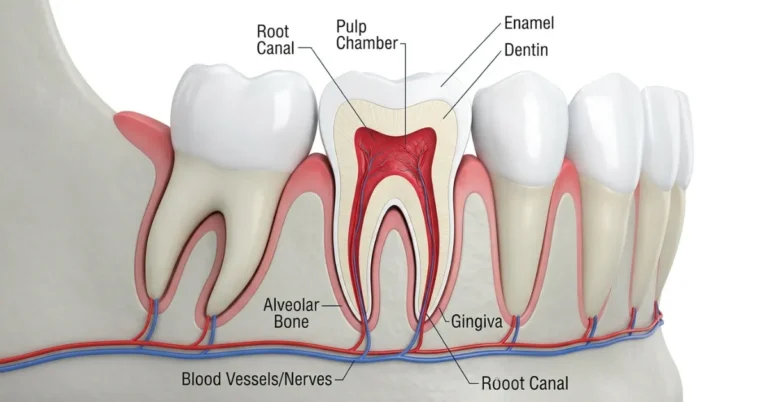
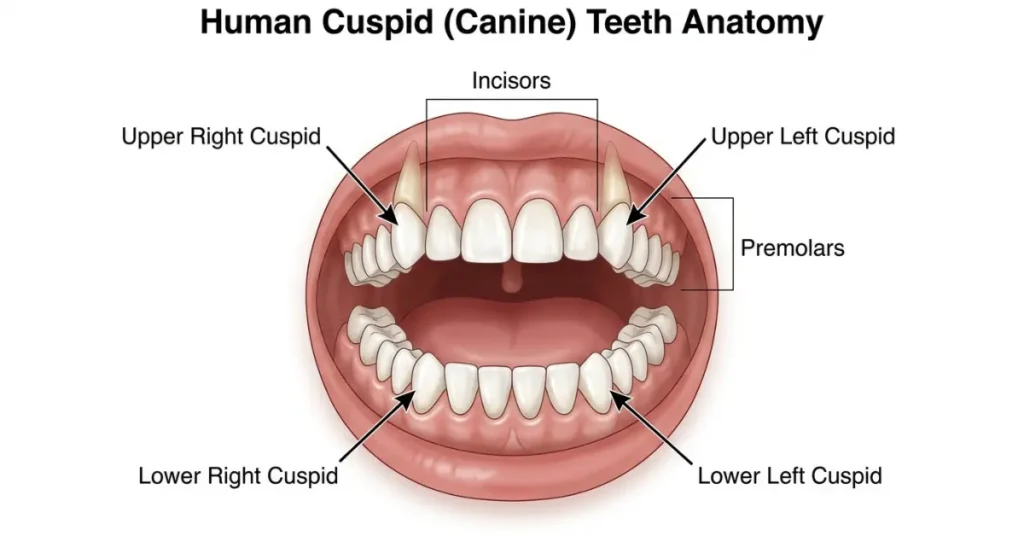
Cuspids teeth are the four pointed teeth in your mouth (two upper, two lower) positioned between the incisors and premolars. Dentists also call them canine teeth or eye teeth. They’re built to tear food, so they have a longer root and a sharper edge than the teeth around them.
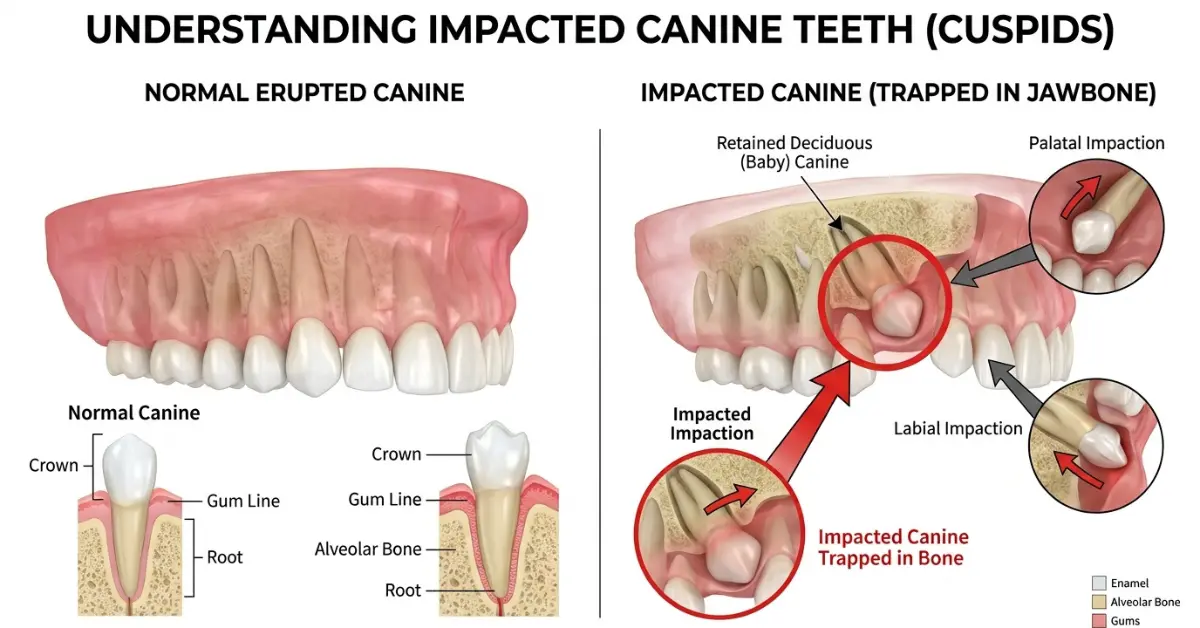
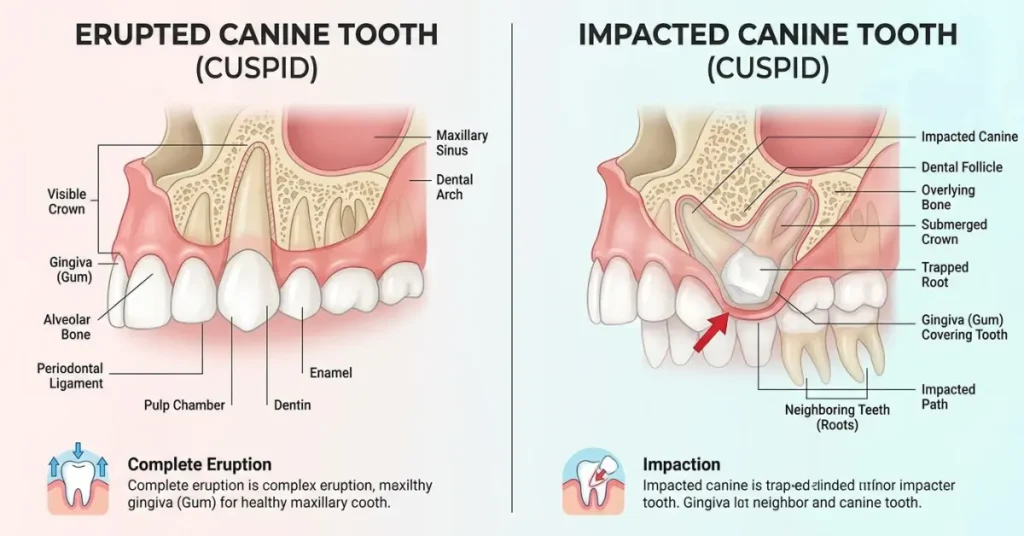
An impacted canine tooth is a cuspid that doesn’t erupt through the gums the way it should. Instead of taking its normal place in the dental arch, it stays hidden under the gum tissue or buried in the bone. Upper cuspids teeth are impacted more often than lower ones because they form deeper in the jaw and have farther to travel before reaching the surface.
Permanent cuspids teeth typically erupt between ages 11 and 13. If a canine hasn’t appeared by then, that’s the signal to get it checked.
Erupted vs. Impacted Cuspids Teeth
| Erupted Cuspids Teeth | Impacted Cuspids Teeth |
|---|---|
| Fully visible above the gumline | Trapped under gum or bone |
| Sit in normal dental arch position | May sit at an unusual angle |
| Support normal chewing and bite | Can crowd or damage nearby teeth |
| Need only routine dental care | May need orthodontics or surgery |
Why Cuspids Teeth Matter
- Tear and break down food during chewing
- Support correct bite alignment
- Guide healthy jaw movement
- Anchor the shape of your smile
- Help keep neighboring teeth in position
Because they do so much work, dentists will almost always try to save a natural cuspid tooth rather than remove it.
What Causes Impacted Cuspids Teeth?
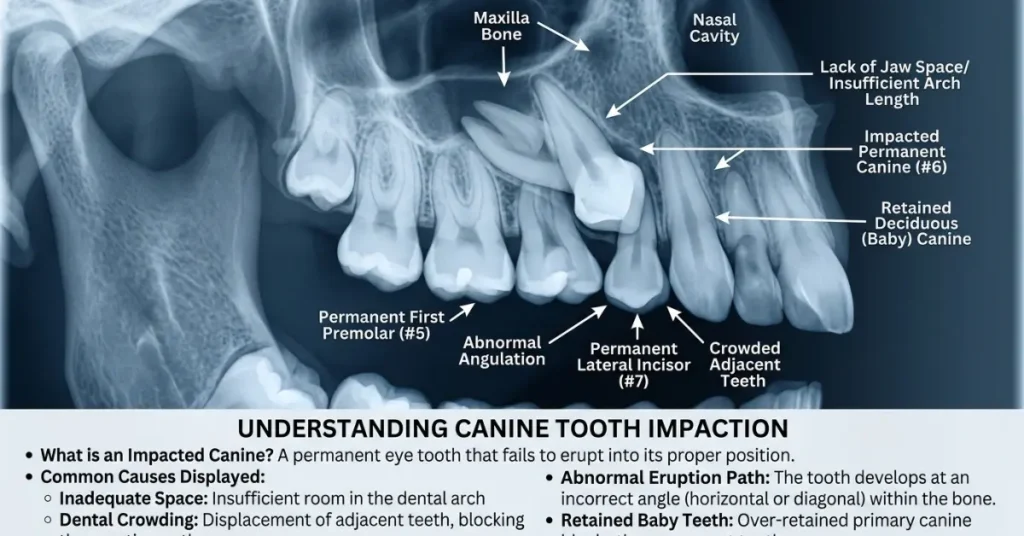
Impacted cuspids teeth usually result from a mix of genetics, tooth position, and available jaw space. Rarely is it just one factor alone.
Not enough space in the jaw. Crowding is the single most common cause. If there isn’t room in the arch, the cuspid tooth can’t move into place.
Delayed eruption. A tooth can develop normally but simply erupt late, which raises the odds it gets stuck along the way.
Family history. A family history of impacted teeth, crowding, or unusual eruption patterns raises your own risk.
Baby tooth problems. A baby canine that’s retained too long, lost too early, or positioned poorly can block the eruption path of the permanent cuspid behind it.
Abnormal tooth angle. A cuspid that grows sideways, tilts toward a neighboring tooth, or sits too high in the jaw is more likely to become impacted.
Jaw development differences. Variations in bone structure and jaw growth can leave too little room for cuspids teeth to erupt on schedule.
Signs and Symptoms of Impacted Cuspids Teeth
Some impacted cuspids cause zero symptoms and are only found on a routine dental X-ray. When symptoms do show up, watch for:
- A missing permanent canine tooth past age 13
- Delayed tooth eruption
- Crowding or shifting of nearby teeth
- Gum swelling or tenderness near the eruption site
- Pressure felt around surrounding teeth
- A noticeable change in bite alignment
- Discomfort while chewing
How Dentists Diagnose Impacted Cuspids Teeth
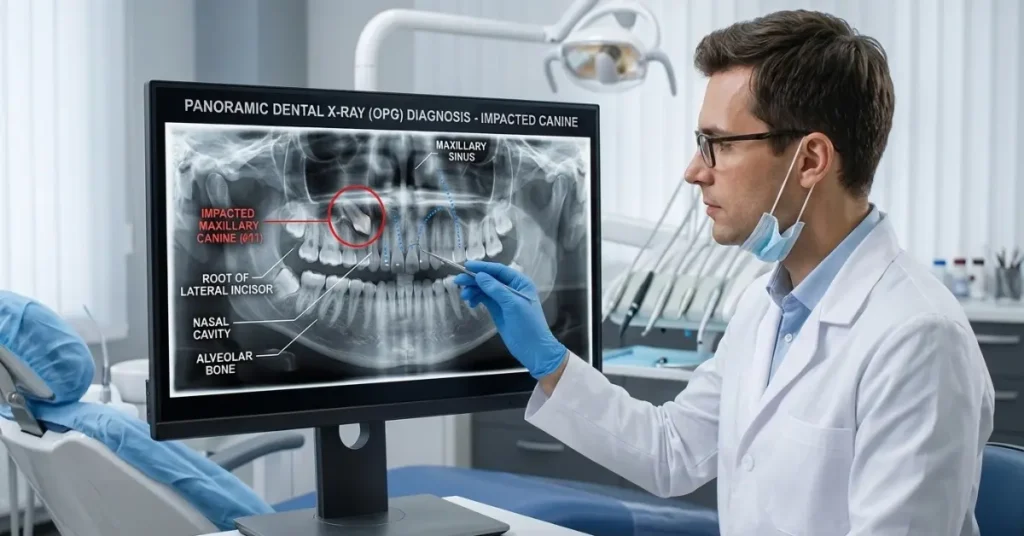
Diagnosis combines a clinical exam with imaging that pinpoints exactly where the tooth is sitting.
Dental examination. Your dentist checks eruption timing, available arch space, gum condition, bite alignment, and the position of nearby teeth.
Imaging. Panoramic X-rays, targeted dental scans, and 3D cone beam CT imaging reveal the tooth’s exact position, its eruption path, and whether it’s putting pressure on neighboring roots (a risk called root resorption).
Why early diagnosis matters. Catching an impacted cuspid early, ideally in the early teen years, gives dentists room to plan treatment before complications set in, and younger patients typically respond better because their jaw is still developing.
What Happens If an Impacted Cuspid Is Left Untreated?
- The tooth may stay permanently trapped
- Nearby tooth roots can be damaged
- A cyst can form around the impacted tooth
- Crowding and bite problems tend to worsen
- Treatment becomes more difficult and invasive later
Treatment Options for Impacted Cuspids Teeth
The right approach depends on age, the tooth’s exact position, available space, and overall oral health.
1. Monitoring
For mild cases where the tooth isn’t causing damage and the patient is still growing, dentists may simply track the tooth with periodic exams and X-rays, watching for natural eruption.
2. Orthodontic Treatment
If crowding is the problem, braces can open space in the arch, correct alignment, and give the impacted cuspid room to erupt on its own.
3. Surgical Exposure and Bracketing
The most common active treatment: an oral surgeon opens the gum tissue over the impacted cuspid, exposes it, and attaches a small orthodontic bracket. The orthodontist then gradually pulls the tooth into position through a process called orthodontic traction, which typically takes several months.
4. Extraction
In severe cases, where the tooth is badly positioned or the extraction risk to neighboring teeth is high, removing the impacted cuspid is sometimes the safer option.
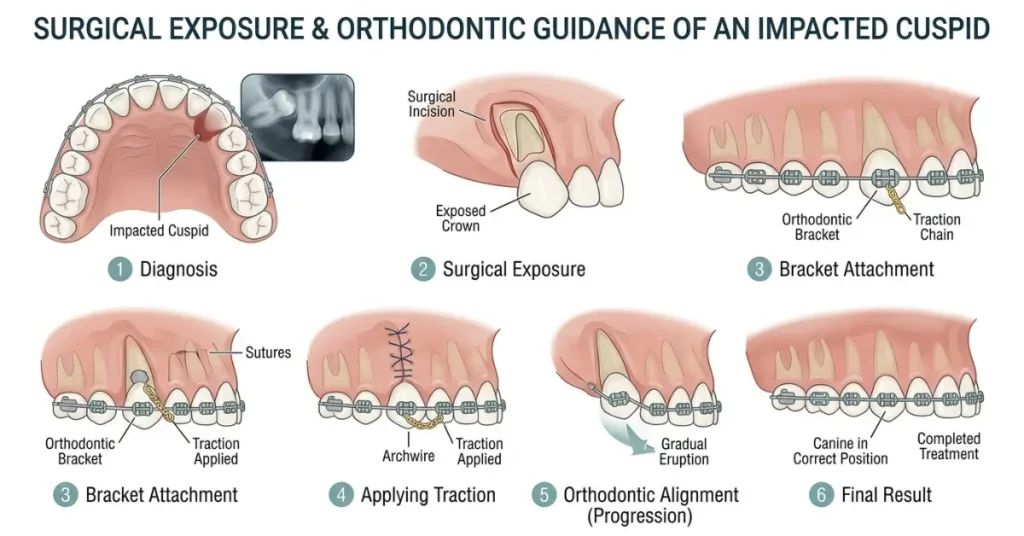
What Happens During Impacted Cuspid Surgery?
Surgery is typically performed by an oral surgeon under local anesthesia or sedation:
- The surgeon opens the gum tissue covering the tooth.
- The impacted cuspid is exposed.
- A small orthodontic bracket is attached.
- The orthodontist begins gradually guiding the tooth into place.
The goal is almost always to preserve the natural tooth rather than replace it.
Recovery After Cuspid Exposure Surgery
Expect mild swelling, soreness, or sensitivity for a few days. To recover well:
- Follow your dentist’s post-op instructions closely
- Keep up good oral hygiene around the surgical site
- Avoid disturbing the area while it heals
- Keep every orthodontic follow-up appointment
- Stick to any recommended soft-food guidelines
Because orthodontic movement is gradual, guiding an impacted cuspid fully into place can take several months from start to finish.
FAQs About Cuspids Teeth:
Can impacted cuspids teeth fix themselves?
In some mild cases, an impacted cuspid may erupt naturally, especially when detected early. However, many cases require orthodontic treatment or surgical exposure to guide the tooth into position.
What happens if an impacted canine tooth is not removed?
An impacted canine does not always need removal. If untreated, it may cause crowding, damage nearby tooth roots, cyst formation, or bite problems.
At what age should impacted cuspids teeth be treated?
Most impacted cuspids are evaluated around ages 11 to 13 when permanent canine teeth normally erupt. Early treatment often provides better results.
Can braces fix impacted cuspids teeth?
Braces alone may help mild cases by creating space, but many impacted cuspids require surgical exposure combined with orthodontic traction.
Is impacted cuspid surgery painful?
The procedure is performed with anesthesia, so discomfort during surgery is usually minimal. Mild soreness and swelling can occur during recovery.
Conclusion
Cuspids teeth, known just as often as canine teeth or eye teeth, play an outsized role in your bite and your smile. When one becomes impacted, early diagnosis through exams and imaging gives you the best odds of a straightforward fix. With monitoring, orthodontics, surgical exposure, and orthodontic traction, most impacted cuspids can be guided into their natural position rather than removed. If a permanent canine hasn’t erupted on schedule, or your bite feels off, a dental evaluation is the right next step.If you notice a missing canine tooth after the expected eruption age, don’t ignore it. Early evaluation by a dentist or orthodontist can help protect your bite, surrounding teeth, and long-term oral health.