Anterior vs Posterior Teeth Numbers: Complete Dental Guide
Learn anterior vs posterior teeth numbers with an easy ADA tooth chart, tooth names, and FDI comparison. Quickly identify every tooth from 1 to 32.
Every tooth in your mouth has a number, and once you understand the system, reading a dental chart is simple. This guide explains anterior vs posterior teeth numbers using the ADA Universal Numbering System, the standard used by dentists across the United States, and shows how it compares to the FDI and Palmer systems used elsewhere.
Anterior and Posterior Teeth: The Basic Split
Your mouth is divided into two functional groups.
Anterior teeth sit at the front of the mouth. They include the incisors and canines, and they handle biting and cutting food. These are the teeth most visible when you smile.
Posterior teeth sit toward the back. They include the premolars and molars, and they’re built for grinding and chewing. Most stay out of view unless a dentist is looking closely.
Dentists use this front-and-back distinction constantly. It turns a long description into a quick, precise reference during exams, treatment planning, and insurance documentation.
The ADA Universal Numbering System
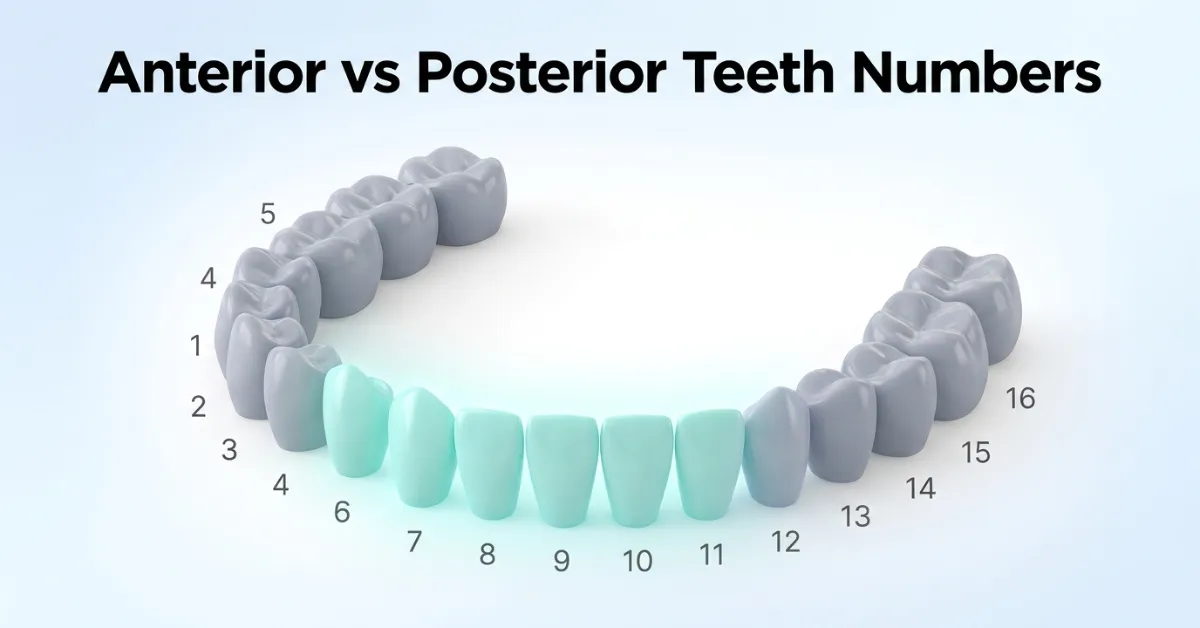
In the U.S., dentists use the ADA Universal Numbering System for permanent teeth. It assigns each of the 32 adult teeth a single number, from 1 to 32.
Numbering starts at the upper right third molar and moves across the top of the mouth to the upper left third molar. It then drops to the lower left third molar and continues across the bottom, ending at the lower right third molar. Primary (baby) teeth use letters A through T instead of numbers.
The tooth numbers in this guide follow the ADA Universal system. If you’re looking at records that use FDI or Palmer notation instead, the same tooth may carry a different number, so it helps to confirm which system your chart is using.
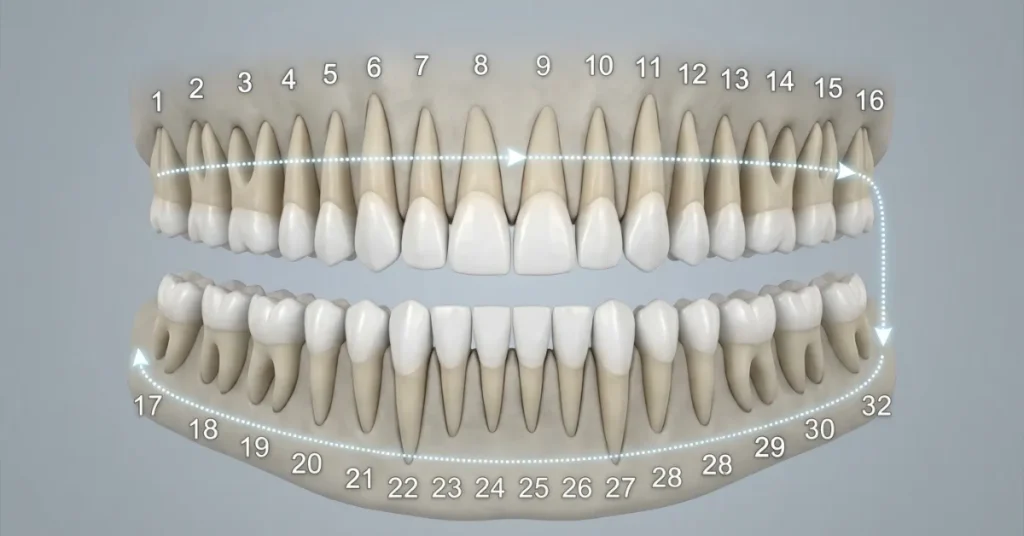
Anterior Teeth Numbers: Incisors and Canines
Adults have 12 anterior teeth: six upper and six lower.
| Tooth Number | Tooth Name |
|---|---|
| 6 | Upper right canine |
| 7 | Upper right lateral incisor |
| 8 | Upper right central incisor |
| 9 | Upper left central incisor |
| 10 | Upper left lateral incisor |
| 11 | Upper left canine |
| 22 | Lower left canine |
| 23 | Lower left lateral incisor |
| 24 | Lower left central incisor |
| 25 | Lower right central incisor |
| 26 | Lower right lateral incisor |
| 27 | Lower right canine |
Teeth 8 and 9, the upper central incisors, are the two teeth most people picture first when thinking about a smile.
Posterior Teeth Numbers: Premolars and Molars
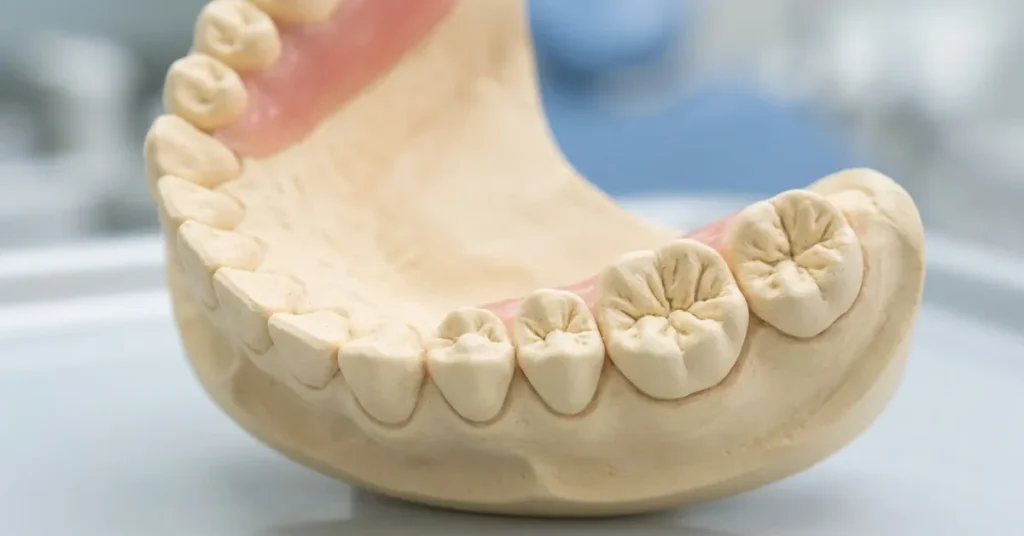
Adults have 20 posterior teeth: 8 premolars and 12 molars, including the four wisdom teeth.
| Tooth Number | Tooth Name |
|---|---|
| 1 | Upper right third molar |
| 2 | Upper right second molar |
| 3 | Upper right first molar |
| 4 | Upper right second premolar |
| 5 | Upper right first premolar |
| 12 | Upper left first premolar |
| 13 | Upper left second premolar |
| 14 | Upper left first molar |
| 15 | Upper left second molar |
| 16 | Upper left third molar |
| 17 | Lower left third molar |
| 18 | Lower left second molar |
| 19 | Lower left first molar |
| 20 | Lower left second premolar |
| 21 | Lower left first premolar |
| 28 | Lower right first premolar |
| 29 | Lower right second premolar |
| 30 | Lower right first molar |
| 31 | Lower right second molar |
| 32 | Lower right third molar |
Teeth 1, 16, 17, and 32 are the wisdom teeth, the third molar in each quadrant and the ones most often removed due to crowding or impaction.
Anterior vs Posterior Teeth: Side-by-Side Comparison
| Feature | Anterior Teeth | Posterior Teeth |
|---|---|---|
| Location | Front of mouth | Back of mouth |
| Main teeth | Incisors and canines | Premolars and molars |
| Main job | Cutting and tearing | Grinding and chewing |
| Count in adults | 12 teeth | 20 teeth |
| Number range | 6–11 and 22–27 | 1–5, 12–16, 17–21, 28–32 |
| Visibility | Highly visible when smiling | Mostly hidden |
Quick Reference Chart
| Category | Tooth Numbers |
|---|---|
| Upper anterior teeth | 6 to 11 |
| Lower anterior teeth | 22 to 27 |
| Upper right posterior teeth | 1 to 5 |
| Upper left posterior teeth | 12 to 16 |
| Lower left posterior teeth | 17 to 21 |
| Lower right posterior teeth | 28 to 32 |
Other Tooth Numbering Systems
The ADA Universal system is standard in the U.S., but it isn’t used everywhere.
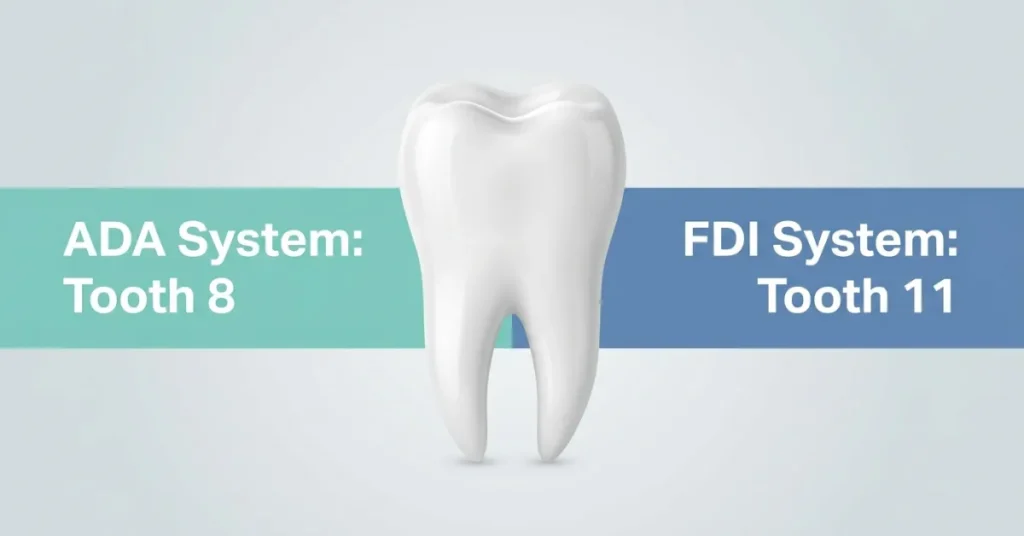
FDI World Dental Federation system is widely used internationally, including in many countries across Europe, Asia, and Latin America, though adoption varies by country and by dental setting. It uses a two-digit code: the first digit identifies the quadrant, and the second identifies the tooth’s position from the center outward. Under this system, the upper right central incisor is tooth 11, not tooth 8.
Palmer notation uses a bracket symbol paired with a number from 1 to 8 to show quadrant and position. It’s common in orthodontics, pediatric dentistry, and oral surgery.
If you have dental records from outside the U.S., checking which system is in use will help you avoid confusion, since the same tooth can carry different numbers depending on the chart.
Why Tooth Numbers Matter in Treatment
Tooth numbers appear throughout dental records: on fillings, root canals, crowns, extractions, and implant plans. Instead of describing a tooth by rough location, a dentist can note “tooth 14” or “tooth 30,” and any specialist reading the chart knows exactly which tooth is involved.
Frequently Asked Questions
What are anterior teeth numbers?
In the ADA Universal Numbering System, anterior teeth are numbered 6–11 in the upper jaw and 22–27 in the lower jaw. They include the incisors and canines.
What numbers are posterior teeth?
Posterior teeth are numbered 1–5, 12–16, 17–21, and 28–32 in the ADA Universal system. They include the premolars and molars.
Is tooth number 8 anterior or posterior?
Tooth 8 is an anterior tooth. It is the upper right central incisor in the ADA Universal Numbering System.
Are wisdom teeth anterior or posterior?
Wisdom teeth are posterior teeth. They are the third molars and are numbered 1, 16, 17, and 32 in the ADA Universal system.
What is the difference between anterior and posterior teeth?
Anterior teeth are at the front of the mouth and include incisors and canines. Posterior teeth are toward the back and include premolars and molars. Anterior teeth primarily help with biting, while posterior teeth are mainly used for chewing and grinding.
How many anterior teeth do adults have?
Adults normally have 12 anterior teeth: eight incisors and four canines, with six anterior teeth in each jaw.
Bringing It All Together
Once you know that anterior teeth run 6 through 11 and 22 through 27, and posterior teeth fill in the remaining numbers up to 32, a dental chart stops looking complicated. The ADA Universal system is simply a standardized way to identify each tooth, so every dentist and specialist reading your chart means the exact same tooth. Keep this guide handy, and the next time your dentist mentions tooth 19 or tooth 8, you’ll know exactly which tooth they mean.