How Many Roots Are in Each Tooth? A Full Breakdown
Find out exactly how many roots are in each tooth, from single-rooted incisors to three-rooted molars, and why the number changes how your dentist treats you.
reviewed by Scientific and Dental Facts ✅
Most people have between 1 and 3 roots per tooth. Front teeth (incisors and canines) usually have 1 root, premolars have 1 to 2, and molars, which do the heaviest chewing work, typically have 2 to 3 roots. The exact number depends on where the tooth sits in your jaw and how much force it needs to withstand every day.
If you’ve ever wondered how many roots are in each tooth after a dentist mentioned “multiple canals” or scheduled you for a longer root canal appointment, you’re not imagining things. Root count really does vary by tooth, and it changes what a procedure looks like.
How Many Roots Are in Each Tooth? (Quick Answer Table)
Here’s the short version before we get into the “why.” This table reflects the typical adult, permanent dentition.
| Tooth Type | Location | Typical Roots | Typical Root Canals |
|---|---|---|---|
| Incisor (upper/lower) | Front | 1 | 1 |
| Canine (upper/lower) | Front corners | 1 | 1 |
| Premolar, upper first | Side | 1 to 2 | 1 to 2 |
| Premolar, lower | Side | 1 | 1 |
| Molar, upper | Back | 3 | 3 to 4 |
| Molar, lower | Back | 2 | 2 to 3 |
| Wisdom tooth (third molar) | Very back | 1 to 4 (variable) | Variable |
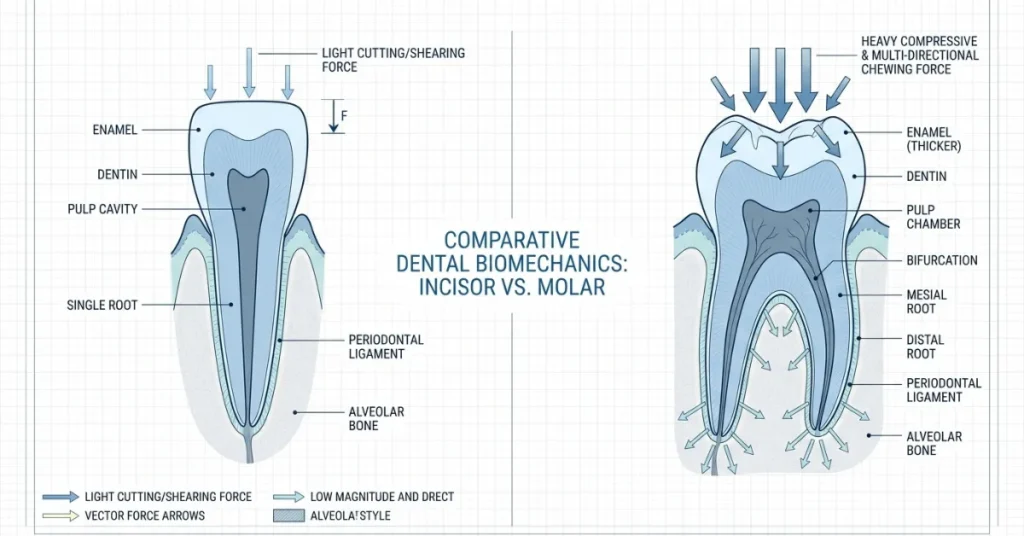
Think of it this way: an incisor has one anchor point because it only has to slice through food. A molar needs two or three roots gripping the jawbone because it’s crushing and grinding hundreds of pounds of force over a lifetime. One patient I’ve heard described by an endodontist put it simply: her upper first molar had four separate canals hiding inside three roots, which is exactly why that “simple” root canal took two visits instead of one.
Incisors and Canines: The Single-Root Teeth
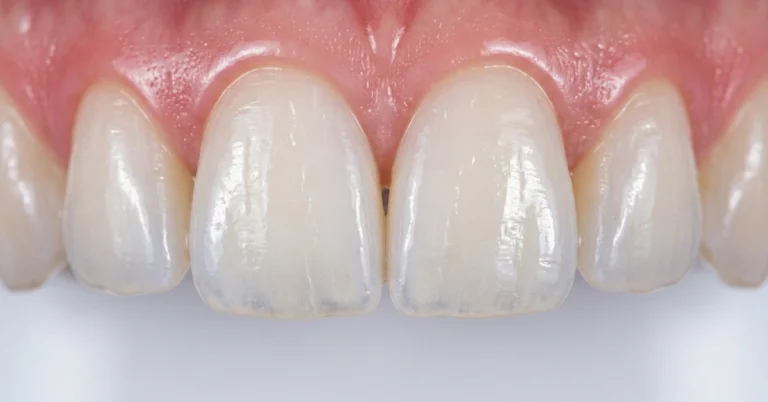
Your eight incisors (four upper, four lower) and four canines each carry a single, straight root. Canines, sometimes called cuspids or “eye teeth,” actually have the longest root of any tooth in your mouth, even though it’s still just one root. That length is what makes them so resistant to loosening, and it’s also why canine extractions can feel more intense than incisor extractions even though both are single-rooted.
This is the simplest category in dental anatomy, and it’s also the easiest for most people to remember: front teeth cut and tear, so they only need one solid anchor.
Premolars: One or Two Roots
Premolars sit between your canines and molars, and they’re the tooth type most likely to surprise you. Lower premolars almost always have a single root. Upper first premolars are the exception. Roughly 60 to 70% of them split into two roots, one on the cheek side and one on the tongue side, close to the point where the root meets the crown.
Why does this matter in practice? If you need a filling, it rarely does. If you need a root canal, it matters a lot. A dentist treating an upper first premolar has to check for a second canal before finishing the procedure, because missing it is one of the more common reasons a root canal fails and needs to be redone.
Molars: The Two- and Three-Root Powerhouses
Molars carry the heaviest chewing load in your mouth, and their root structure reflects that. Adults have twelve molars total, six per jaw, not counting wisdom teeth.
Upper Molars vs. Lower Molars
Upper (maxillary) molars almost always have three roots: two on the cheek side (buccal) and one on the roof-of-mouth side (palatal). Lower (mandibular) molars usually have two roots, one toward the front (mesial) and one toward the back (distal).
Here’s a real number to anchor this: studies using cone beam CT scans found that close to 100% of upper molars have three roots, while more than 92% of lower molars have exactly two. That consistency is why dental students memorize “upper molars: three, lower molars: two” as a near-universal rule, with the remaining small percentage being the exceptions we’ll cover next.
Wisdom Teeth: Why Root Count Gets Unpredictable
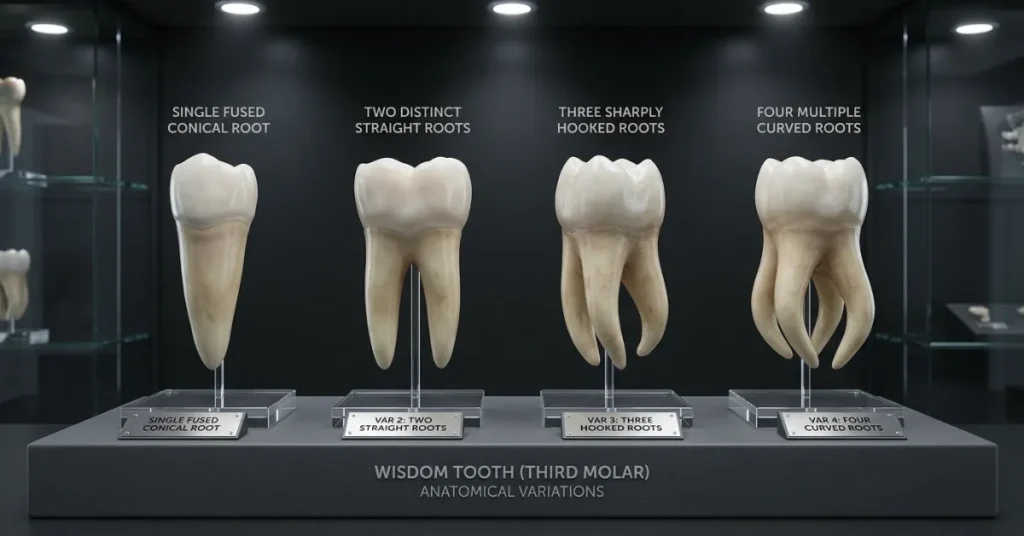
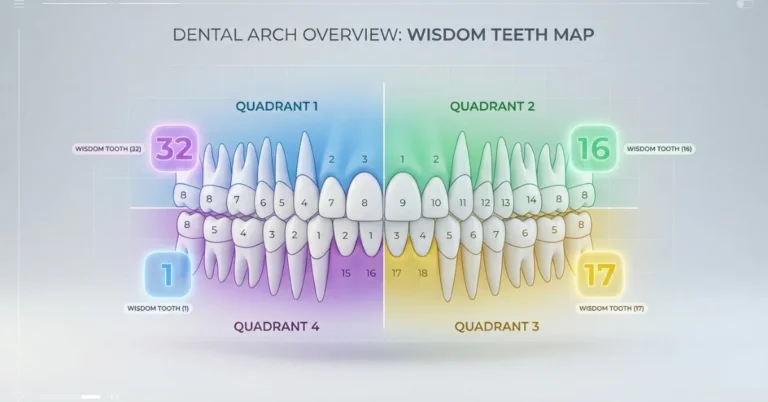
Wisdom teeth, or third molars, break the pattern. They can have anywhere from one fused root to four separate roots, and no two people’s wisdom teeth are guaranteed to match, even left side versus right side in the same mouth.
This unpredictability comes down to development. Wisdom teeth form later and in tighter space than any other tooth, so their roots often curve, fuse together, or split in ways that don’t follow the “normal” molar pattern. A tooth with four curved roots is significantly harder to extract than one with a single fused root, which is a big part of why some wisdom tooth removals take 15 minutes and others take an hour with a specialist. If you’re scheduled for extraction, your dentist will usually pull an X-ray specifically to count and map your wisdom tooth roots beforehand, not just confirm the tooth exists.
Roots vs. Root Canals: Why They’re Not Always the Same Number
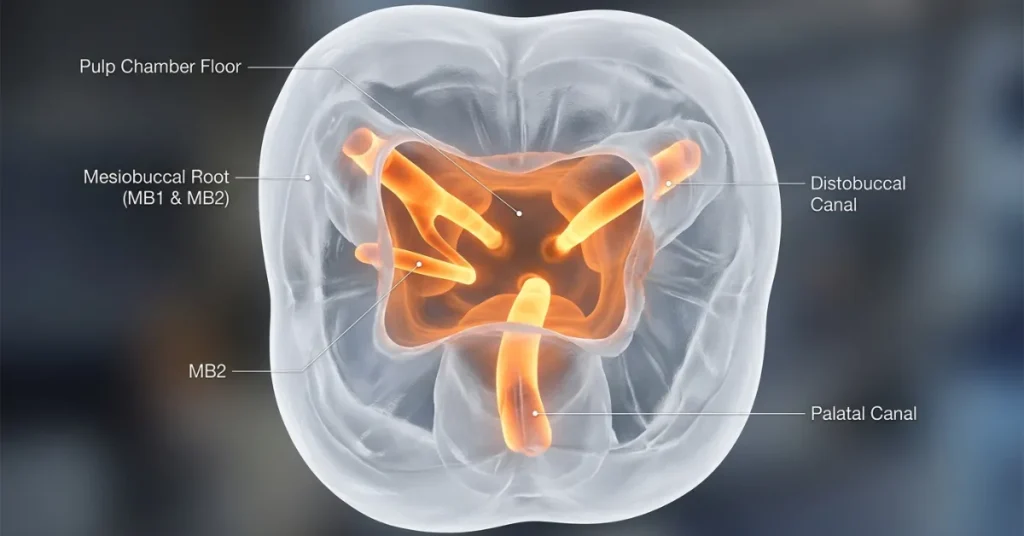
Here’s where a lot of confusion happens: a root and a root canal are not the same thing, and they don’t always come in matching numbers.
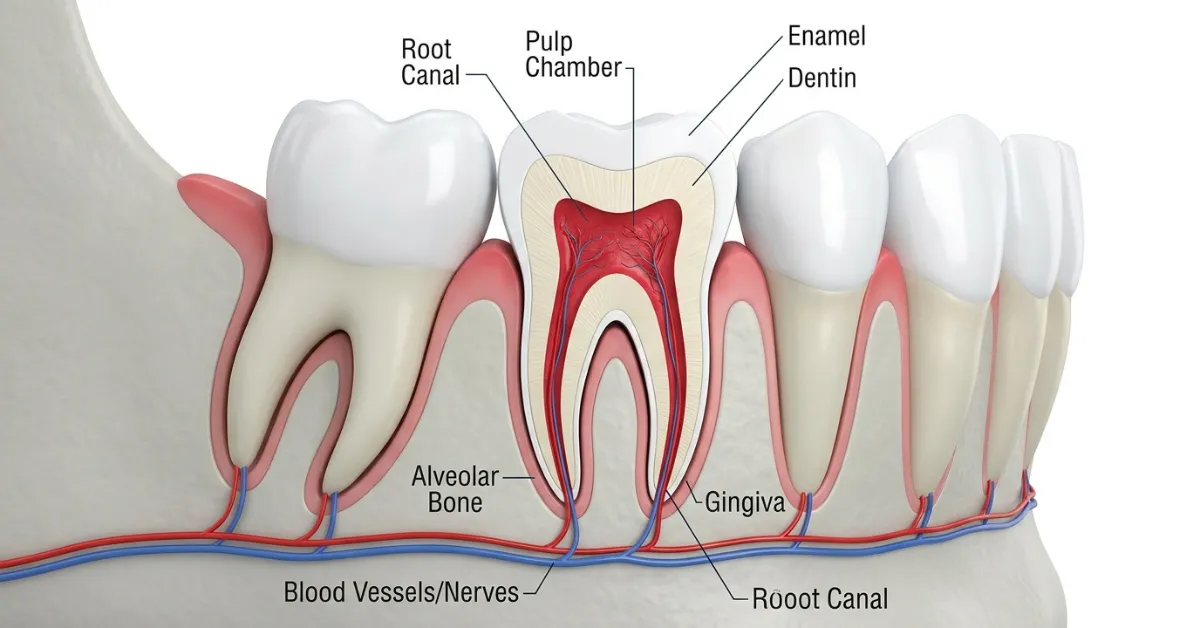
A root is the physical, visible structure holding the tooth in your jawbone. A root canal is the hollow space inside that root, containing the nerve and blood supply. One root can contain more than one canal. This is exactly why an upper molar with 3 roots can have 4 canals: one of those roots (usually the mesiobuccal root) frequently splits into two separate canals internally, even though it’s still counted as a single root from the outside.
So when a dentist says “we found an extra canal,” they’re not saying you grew an extra root. They’re saying one of your existing roots was hiding a second internal pathway that needed cleaning out too.
Baby Teeth vs. Adult Teeth: Do Root Counts Differ?
Baby (primary) teeth follow roughly the same root pattern as their adult replacements: front teeth get one root, back molars get multiple. The difference is length and durability, not count. Baby teeth roots are shorter and thinner, which is by design. As the permanent tooth develops underneath, it slowly dissolves the baby tooth’s root through a process called resorption, which is what allows a baby tooth to loosen and fall out on its own around ages 6 to 12.
Occasionally a baby tooth root doesn’t fully resorb before the adult tooth tries to erupt, which is one reason dentists monitor kids’ X-rays closely during that transition rather than just checking visually.
Why Root Count Actually Matters to You
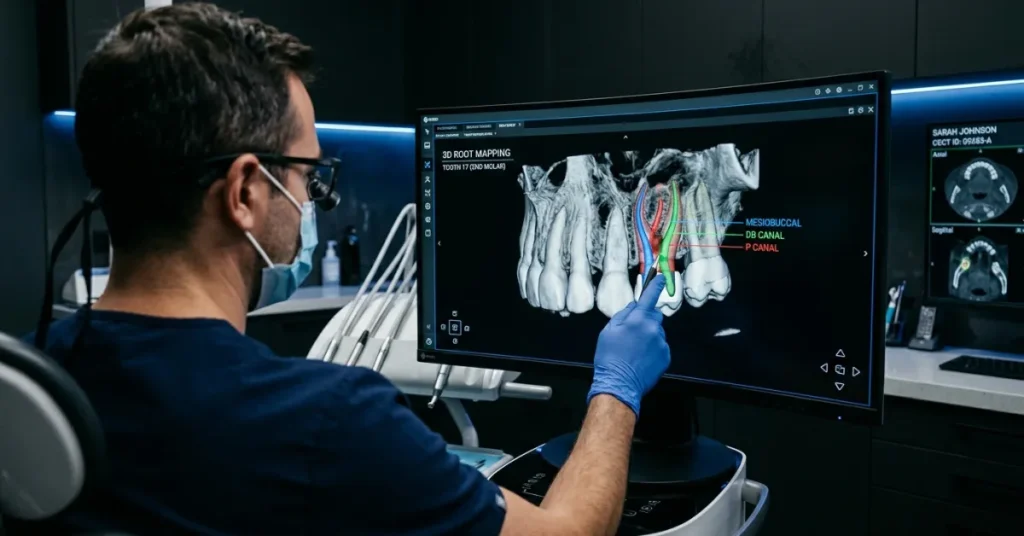
This isn’t just trivia. Root count affects three things you’ll actually experience as a patient:
Treatment time. A single-rooted incisor root canal might take 30 to 45 minutes. A three-rooted, four-canal upper molar can run over an hour and sometimes needs a second visit.
Extraction difficulty. More roots, especially curved or fused ones, generally mean a more involved extraction, more local anesthetic, and sometimes a referral to an oral surgeon instead of your regular dentist.
Treatment cost. Many dental offices price root canals partly by tooth type, because a molar with multiple canals genuinely requires more time, more materials, and more precision than a single-canal incisor.
Knowing your own root count, which your dentist can show you on an X-ray in under a minute, turns a confusing bill or a scary-sounding appointment into something you can actually understand.
Frequently Asked Questions
How many roots does a molar have?
Upper molars typically have 3 roots. Lower molars typically have 2 roots. Wisdom teeth (also molars) can have anywhere from 1 to 4.
How many roots does a wisdom tooth have?
It varies more than any other tooth, ranging from 1 fused root to 4 separate roots, depending on how the tooth developed.
Do all teeth have the same number of roots?
No. Front teeth (incisors, canines) almost always have 1 root. Premolars have 1 to 2. Molars have 2 to 3, and wisdom teeth vary the most.
Is the number of roots the same as the number of root canals?
Not necessarily. A single root can contain more than one canal inside it, so a tooth can have more canals than roots.
How many roots does a front tooth have?
Incisors and canines, your front teeth, have 1 root each.
Can a tooth have more roots than normal?
Yes. This is called a supernumerary root, and it shows up most often in lower canines, premolars, and third molars.
Key Takeaways & Conclusion
The number of roots in each tooth isn’t random. It’s a direct match between the tooth’s job and the force it needs to withstand.
- Incisors and canines: 1 root each
- Premolars: 1 root, sometimes 2 (especially upper first premolars)
- Molars: 2 roots (lower) or 3 roots (upper)
- Wisdom teeth: 1 to 4 roots, the most variable of all
- Roots and root canals are related but different counts
- Baby teeth mirror adult root patterns, just smaller and shorter
Next time you’re looking at a dental X-ray or waiting for a root canal appointment, you’ll know exactly why your dentist is treating your molar differently than your neighbor’s incisor. It’s not extra caution. It’s anatomy.
This article is for general informational purposes only and is not a substitute for professional dental advice, diagnosis, or treatment. Always consult a licensed dentist or periodontist about your specific symptoms before making treatment decisions.