Unnecessary Dental Procedures: 13 Critical Red Flags
Spot unnecessary dental procedures before you pay: 13 warning signs, key questions to ask, and when a second opinion saves you money.
An unnecessary dental procedure is any treatment recommended for reasons that have more to do with revenue than your actual oral health, and the warning signs are almost always visible before you ever agree to treatment. If you’ve ever left a dental office wondering whether you really needed everything on that treatment plan, you are not being paranoid. Treatment recommendations for the same patient can vary widely between providers, sometimes by 30 to 50 percent. That is not a rounding error. It means two honest dentists can look at the same mouth and land on very different answers, which is exactly why patients need a way to tell normal clinical disagreement apart from actual overtreatment.
This guide covers both. Below are the 13 clearest signs of dental overtreatment, the procedures most often over-recommended, the exact questions to ask before you agree to anything, and what a second opinion actually costs.
What Counts as an Unnecessary Dental Procedure?
An unnecessary dental procedure is any treatment that is not essential for your oral health, given the specific condition of your teeth and gums. Filling a cavity before it spreads is necessary treatment. Recommending a root canal and crown when a simple filling would do the job is not.
The line is not always obvious to a patient, and that is by design in some cases. A treatment can be technically defensible and still be excessive for your specific situation. Context matters more than the procedure name. A deep cleaning is completely appropriate for a patient with active gum disease and totally unnecessary for someone with healthy gums and no bleeding on probing.
Recommending treatment a patient does not actually need is widely considered unethical within the profession itself, even though many dentists privately acknowledge it happens regularly among their peers. So this is not a fringe consumer complaint. It is a documented tension inside dentistry.
Why Some Dentists Recommend Treatment You Don’t Need
Most dentists are not scheming to defraud you. Overtreatment usually comes from a mix of financial and structural pressure rather than outright dishonesty, though outright dishonesty does happen.
Common drivers include:
- High overhead costs. Running a practice is expensive, and production targets can quietly shape what gets recommended.
- Defensive dentistry. Treating “just in case” to avoid a future malpractice claim, even when watchful waiting would be reasonable.
- Corporate production quotas. Dental service organizations and chain clinics sometimes set revenue targets per chair, per day, which can pressure dentists to recommend treatment regardless of what a patient’s mouth actually needs.
- Genuine clinical disagreement. Dentists can look at the same X-ray and reasonably disagree, especially on borderline cases like early-stage decay or old fillings that are not currently causing problems.
- Outdated training. Some dentists were trained under more aggressive protocols and have not updated their approach as evidence-based guidelines shifted toward minimal intervention.
Understanding why this happens helps you evaluate your own situation without assuming the worst about every dentist you see. Most are not part of the problem. Some are, and a dentist who recommends or performs unnecessary dental services is engaged in unethical conduct, regardless of the practice arrangement they work under.
13 Signs of Dental Overtreatment You Shouldn’t Ignore
None of these signs alone proves fraud. Together, or even two or three at once, they are worth pausing over.
1. You Suddenly Need Multiple Crowns at Once
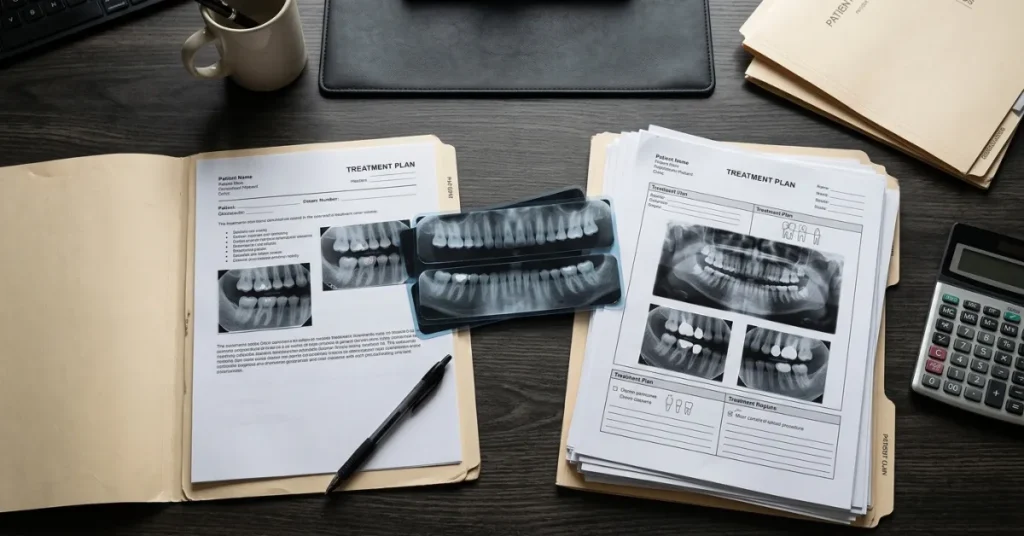
If you have had a clean bill of dental health for years and a new dentist tells you that you need three, four, or more crowns in a single visit, slow down. It happens, but it is unusual without a clear history of trauma or significant neglect. Ask for X-rays showing exactly why each individual tooth needs a crown, not just a verbal summary.
2. There’s No Clear X-Ray Evidence
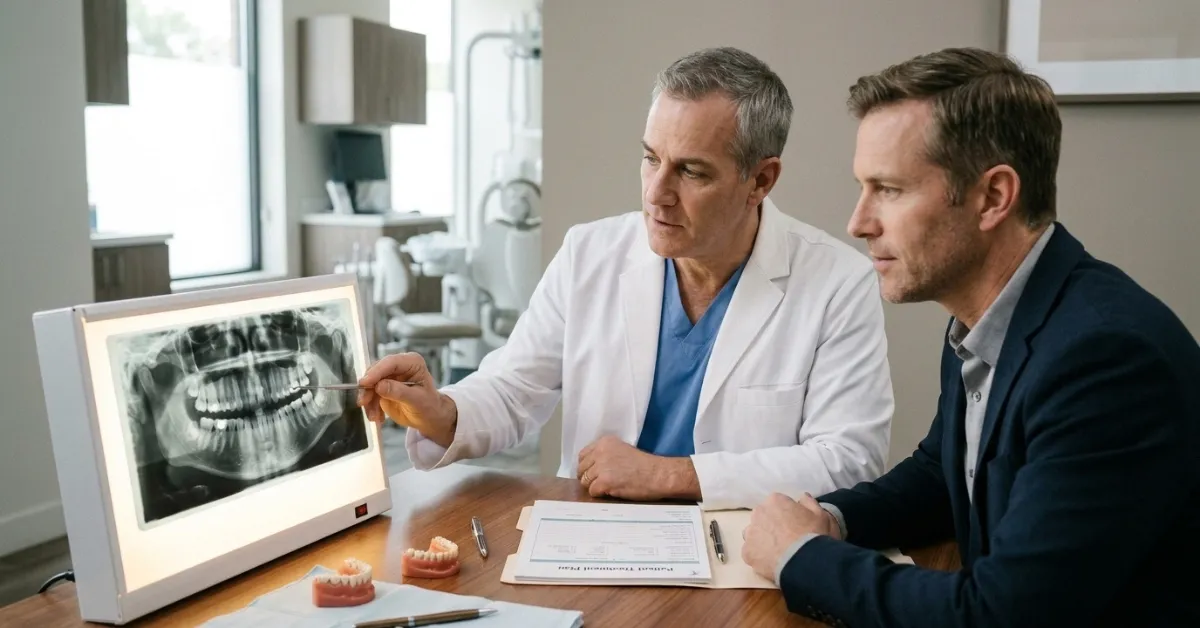
A legitimate diagnosis should be visible. If your dentist recommends treatment after a quick visual glance without pulling up the X-ray and pointing to the specific problem, that is a gap you should push on. You have a right to see your own images before agreeing to anything.
3. You’re Pressured to Decide Immediately
Real dental emergencies exist, but they are the exception. Most treatment can safely wait days or weeks while you think it over or get a second set of eyes. If a dentist pushes same-day sign-off on a several-thousand-dollar treatment plan, that urgency itself is a signal.
4. A Root Canal Is Recommended Without Symptoms
Root canals treat infected or dying nerve tissue. If you have no pain, no lingering sensitivity to cold, no swelling, and no history of trauma to that tooth, a root canal recommendation deserves real scrutiny. A simple cold sensitivity test can often confirm whether the nerve is actually compromised.
5. Deep Cleaning Is Recommended at Every Single Visit
Scaling and root planing, commonly called a deep cleaning, is a specific treatment for gum disease. It is not meant as routine maintenance. If your gums do not bleed when flossed, your pocket depths are under 3mm, and there is no bone loss on X-ray, repeated deep cleaning recommendations are worth questioning.
6. A “Watch” Tooth Suddenly Needs Immediate Treatment
If a previous dentist told you to monitor a tooth and a new dentist says it needs treatment right away with no new symptoms in between, ask directly what changed. Sometimes the answer is legitimate progression. Sometimes it is a difference in philosophy dressed up as urgency.
7. You’re Told Old Fillings Need Replacing
Amalgam (silver) fillings can last 15 to 20 years or longer, and there is generally no clinical reason to remove a functioning amalgam filling just because it is old or silver-colored. Valid reasons to replace a filling include visible cracks, decay creeping in around the edges, or a broken restoration. “It’s old” or “silver looks bad” are not medical reasons, they are cosmetic ones, and should be presented to you as optional.
8. The Price Feels Wildly High for the Area
If a quoted treatment plan seems far above what similar procedures typically cost in your area, that can point to unnecessary add-ons bundled quietly into the total. Ask for an itemized plan with the actual procedure codes and compare it against typical regional pricing before you sign.
9. Your Dentist Can’t or Won’t Explain the Diagnosis Simply
You have the right to understand what is wrong with your own mouth in plain language. If every answer is vague or dismissive, or you leave the conversation more confused than when you walked in, that is a legitimate reason to pause.
10. The Diagnosis Flips Between Visits With No New Symptoms
Going from “everything looks fine” at one checkup to “you need six fillings” at the next, with no new pain or visible change in between, is not normal progression. Some change between visits is expected. A dramatic jump with nothing to explain it is not.
11. You’re Sold Expensive Add-Ons
Specialty mouth rinses, premium materials for a routine filling, or supplementary treatments that are not evidence-based deserve a direct question: is this necessary for my health, or is it optional?
12. The Office Advertises Free Exams or Deep Discounts to New Patients
A steeply discounted first visit is not automatically a scam, but it is a known pattern. You come in for the free cleaning, then leave with a treatment plan worth thousands of dollars, presented before you have any relationship with the practice or reason to trust the diagnosis.
13. Two Dentists Give You Wildly Different Treatment Plans
If one dentist recommends eight procedures and another recommends two for the exact same mouth, that gap matters. Some disagreement between providers is normal. Extreme disagreement, though, usually means one plan sits well outside the standard of care. This is the single strongest signal that a second opinion is worth the time.
Procedures Most Often Overused, and When They’re Actually Needed
Not every recommendation for these procedures is unnecessary. Context is everything. Here is how to tell the difference.
| Procedure | Usually necessary when | Often unnecessary when |
|---|---|---|
| Replacement filling | The old filling is cracked, decayed underneath, or physically broken | It’s old, silver-colored, or “just doesn’t look great” but isn’t causing problems |
| Custom night guard | You have diagnosed bruxism with visible tooth wear or jaw pain | It’s offered as a blanket recommendation without evidence of grinding |
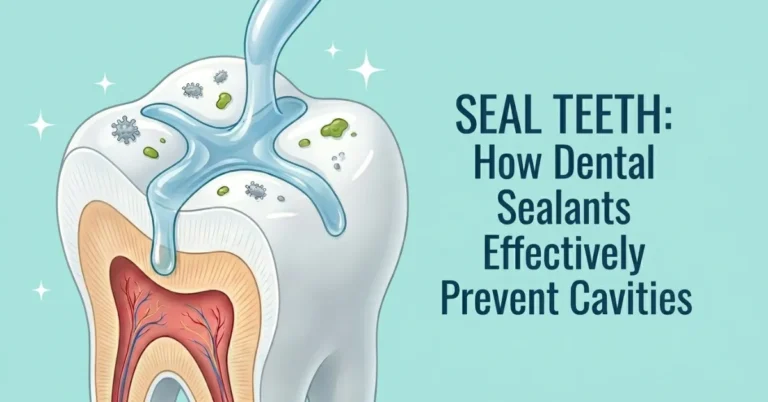
| Dental sealants | Applied to a child or teen’s molars as a preventive measure | Prescribed repeatedly to a low-risk adult patient |
| Veneers | You want an elective cosmetic change and understand it’s optional | Framed as medically necessary rather than a cosmetic choice |
| Dental crown | A tooth is significantly weakened by decay, fracture, or a prior root canal | A large filling or onlay would preserve more natural tooth structure just as effectively |
| Root canal | The nerve is confirmed infected, inflamed, or dead via testing and imaging | Recommended with no pain, no sensitivity, and no trauma history |
| Tooth extraction | The tooth is genuinely unsalvageable, confirmed on imaging | A healthy or restorable tooth is pulled to fast-track an implant sale |
| Deep cleaning (scaling and root planing) | You have diagnosed periodontal disease with bleeding, pocketing, or bone loss | Recommended as routine maintenance with healthy gums |
| Antibiotics around a procedure | You have a current, confirmed infection | Prescribed “just in case” with no signs of infection present |
That last row matters more than it might seem. A large share of dental antibiotic prescriptions go out as a precaution rather than in response to a confirmed infection, and unnecessary antibiotic use carries its own risks, from resistance to side effects that have nothing to do with your teeth.
What Unnecessary Dental Work Actually Costs You
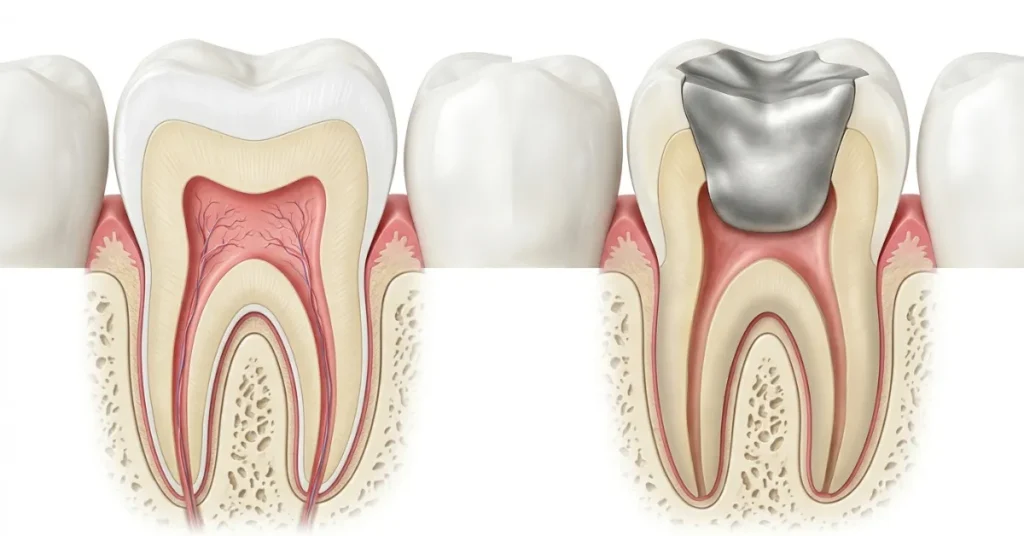
The cost is not only financial, though the financial hit is real. Removing healthy tooth structure for a crown or root canal you did not need leaves the remaining tooth permanently weaker. Crowns can trap debris at their edges over time, which can lead to new decay that would not otherwise have happened. Unnecessary extractions leave a gap that surrounding teeth start shifting into, which can trigger a cascade of alignment problems years later.
Overtreatment is a well-documented issue across healthcare generally, and dentistry is not immune to the same incentive structures that drive it in medicine as a whole. Dental care carries a specific twist, though: once a healthy tooth is gone or a nerve is removed, there is no undoing it.
The Exact Questions to Ask Before You Agree to Treatment
Bring these into the appointment, or say them out loud when a treatment plan is presented. A dentist with nothing to hide will welcome every one of them.
- “Can you show me exactly where this problem is on the X-ray?”
- “What happens if I wait a few weeks or months before deciding?”
- “Is there a less invasive option that would also work?”
- “Would you personally choose this treatment if it were your own tooth?”
- “Can I get a written, itemized version of this treatment plan to review at home?”
- “Is any part of this cosmetic rather than medically necessary?”
Notice that none of these are confrontational. They are the kind of questions a confident, honest provider answers easily and a rushed or profit-driven one tends to deflect.
How to Get a Second Opinion, and What It Costs
Getting a second opinion is never a bad idea, and it is fully within your rights to say “no,” “not right now,” or “I need to think about it” without further justification. A dentist who pushes back hard on that request is telling you something important about how they operate.
Start by requesting your records. You generally have a legal right to copies of your own X-rays and treatment notes, and a practice cannot legally withhold them from you. Take that file to a second, unaffiliated dentist, ideally one with no financial connection to the first practice. In-person second opinions typically run the cost of a standard exam if not covered by insurance, while several independent online second-opinion services now review uploaded X-rays and treatment plans remotely, often within a few days, for a flat fee that is usually far less than the disputed procedure itself.
If the two treatment plans line up closely, that is reassuring. If they diverge sharply, you have real grounds to go with the more conservative plan or seek a third opinion.
Don’t Delay These: When Treatment Genuinely Can’t Wait
Not every recommendation is overtreatment, and skepticism has limits. Seek care promptly, without waiting for a second opinion, if you have any of the following:
- Severe or constant pain
- Visible swelling or a facial abscess
- Fever accompanying dental pain
- A broken or knocked-out tooth
- Significant decay that is clearly visible on an X-ray reaching toward the nerve
These are not the situations to second-guess. Getting a second opinion is for the treatment plans that can safely wait a week, not the ones where waiting makes things worse.
FAQ
How common is unnecessary dental work?
There is no single number that measures unnecessary dental work accurately. Treatment recommendations can vary between dentists, especially for borderline conditions such as early decay, aging fillings, and mild gum disease. A difference in recommendations does not automatically mean one dentist is overtreating.
Can I report a dentist for unnecessary work?
Yes. Dental boards generally accept patient complaints about professional conduct. However, a disagreement over a diagnosis or treatment plan does not automatically mean a dentist has acted improperly. Getting a second opinion and reviewing your dental records first can help clarify the situation.
Should I switch dentists if I suspect overtreatment?
Not necessarily. A second opinion is usually a better first step. Another dentist can review your X-rays, examination findings, and proposed treatment without immediately requiring you to change providers. If concerns remain after the second opinion, you can then decide whether switching dentists makes sense.
Does dental insurance encourage unnecessary treatment?
Fee-for-service payment can create a financial incentive for providers to perform more procedures because payment is tied to individual services. However, that does not mean a particular treatment recommendation is unnecessary. The clinical evidence for your specific tooth or condition matters more than the payment model alone.
Is it normal for two dentists to disagree about my treatment?
Yes. Some disagreement is normal because dentistry involves clinical judgment, particularly with borderline decay, worn or aging restorations, and early gum disease. A major difference in treatment recommendations is a good reason to ask both dentists to explain the diagnosis, evidence, risks, and alternatives.
What is the fastest way to check if a dental procedure is unnecessary?
Ask the dentist to show you the X-ray or other clinical evidence supporting the diagnosis, explain why treatment is recommended now, and describe what could happen if you wait. If you are still unsure, getting a second opinion before starting non-urgent treatment can provide another professional assessment.
Key Takeaways
- An unnecessary dental procedure is treatment you did not actually need, and the warning signs are usually visible before you agree to anything.
- Watch for pressure to decide immediately, vague explanations, X-rays you’re never shown, and treatment plans that jump dramatically from your last visit with no new symptoms.
- Root canals, crowns, deep cleaning, and filling replacements are the procedures most often over-recommended, but context always determines whether a specific recommendation is legitimate.
- You generally have a right to your own X-rays and records, and getting a second opinion, in person or online, typically costs far less than the disputed treatment itself.
- Never delay care for severe pain, swelling, fever, or a broken tooth. Skepticism has limits, and those situations are not the ones to second-guess.
This article is for general informational purposes only and is not a substitute for professional dental advice, diagnosis, or treatment. Always consult a qualified dentist regarding your specific situation.