How to Care for Exposed Tooth: Root and Nerve
Whether it’s root or nerve exposure, here’s how to care for exposed tooth pain and when it means a same-day dentist visit.
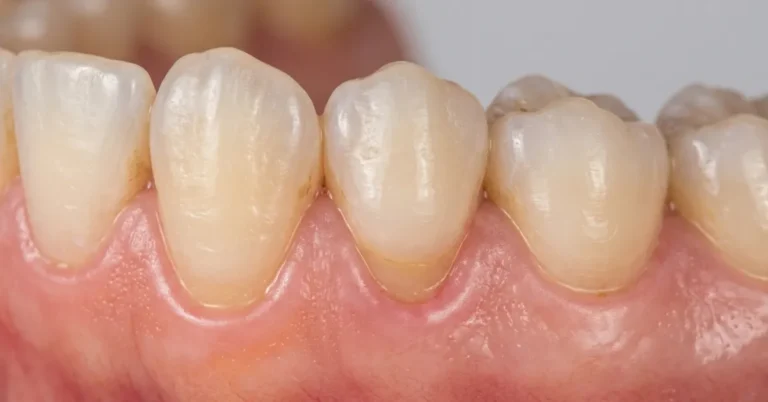
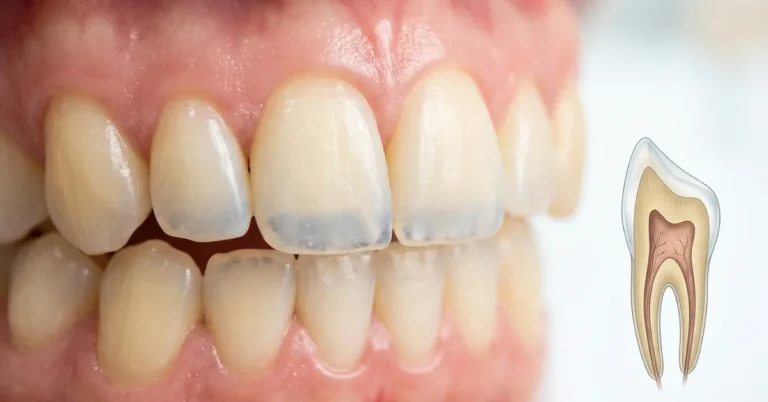
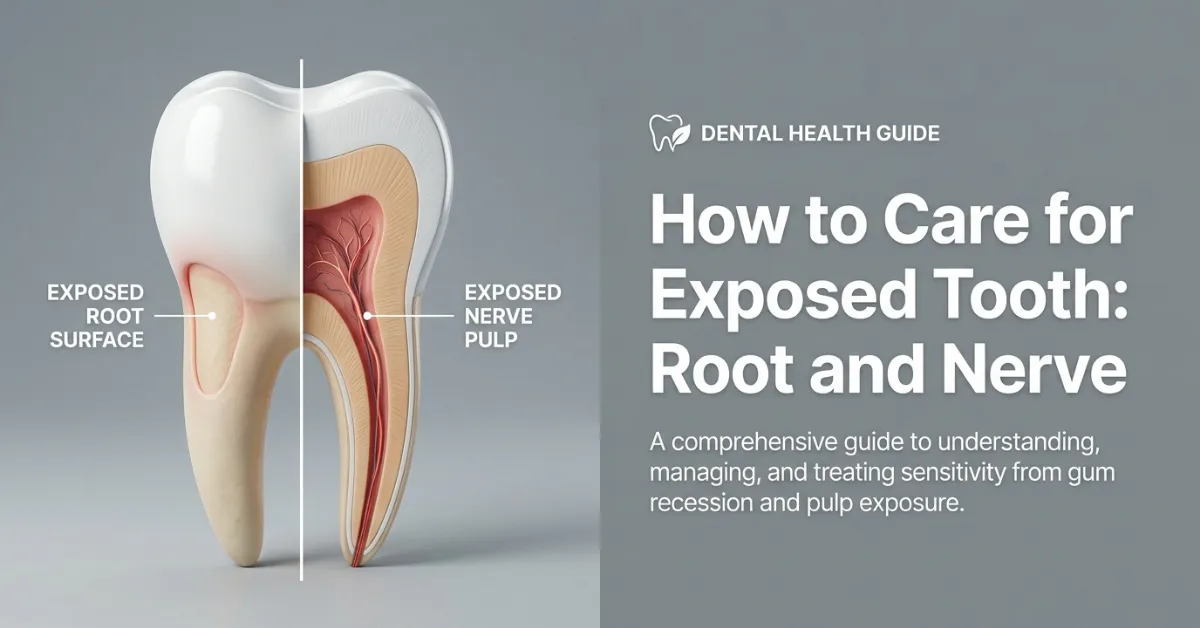
“Exposed tooth” usually means one of two different problems, and they call for different care. Your gums may have receded and uncovered the root of the tooth, which is a gradual, sensitivity-driven issue. Or the tooth itself may have chipped, cracked, or decayed enough to expose the dentin or nerve underneath, which is often urgent. Getting this distinction right in the next few minutes will save you from either under-reacting to something that needs a same-day dentist visit or over-reacting to something you can manage at home tonight.
Which Kind of Exposed Tooth Do You Have?
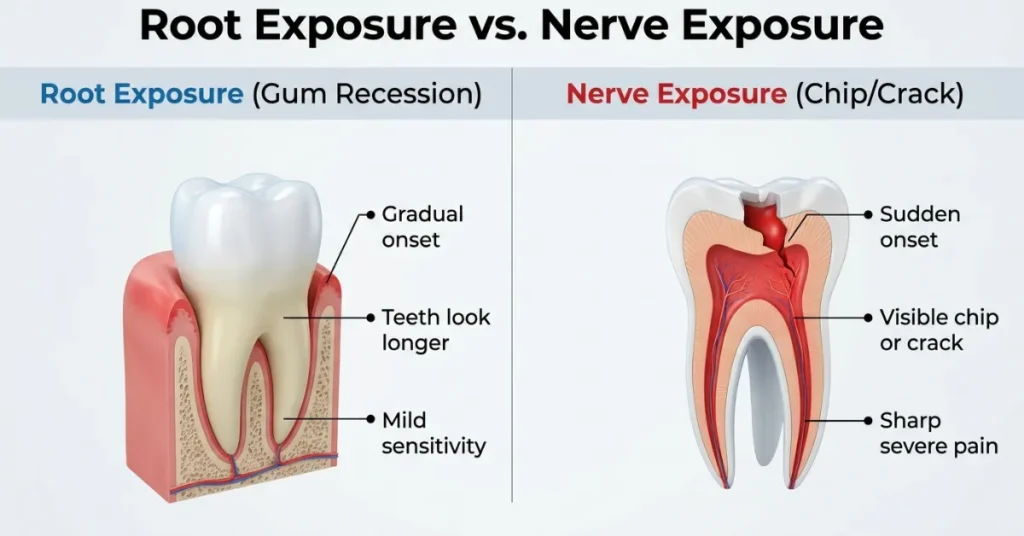
Compare your symptoms against both columns before deciding what to do.
| Signs | Likely root exposure (gum recession) | Likely nerve/dentin exposure (chip, crack, decay) |
|---|---|---|
| Onset | Gradual, over months or years | Sudden, tied to an injury, a lost filling, or a specific bite |
| What you see | Teeth look longer than before; a visible line where gum meets tooth | A visible chip, crack, hole, or missing piece of tooth structure |
| Pain pattern | Mild to moderate sensitivity to hot, cold, or sweet foods | Sharp, sometimes severe pain, especially with air, pressure, or temperature |
| Gum condition | Often red, swollen, or bleeding when you brush | Usually normal, unless infection has set in |
| Urgency | Manageable at home short-term, but needs a dental appointment | Often needs same-day or next-day dental attention |
If you’re not sure which applies, treat it as the more urgent scenario until a dentist tells you otherwise. A quick call to your dentist’s office can settle the question faster than guessing.
Caring for an Exposed Tooth Root at Home
Gum recession that has exposed the root is usually caused by periodontal disease, overly aggressive brushing, teeth grinding, or misaligned teeth putting uneven pressure on the gumline. You cannot regrow lost gum tissue at home, but you can manage discomfort and keep the situation from getting worse while you arrange a dental visit.
Adjust How You Brush and Floss
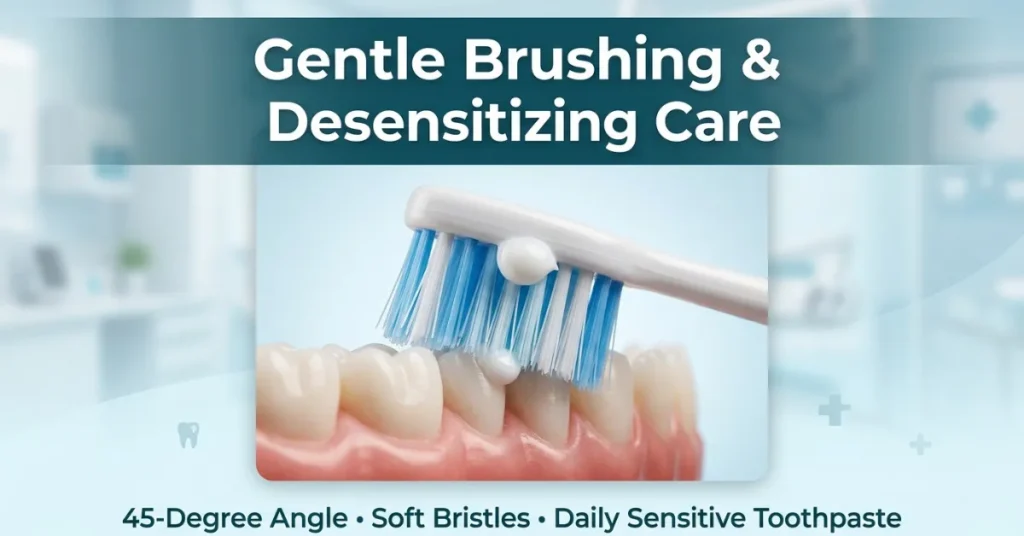
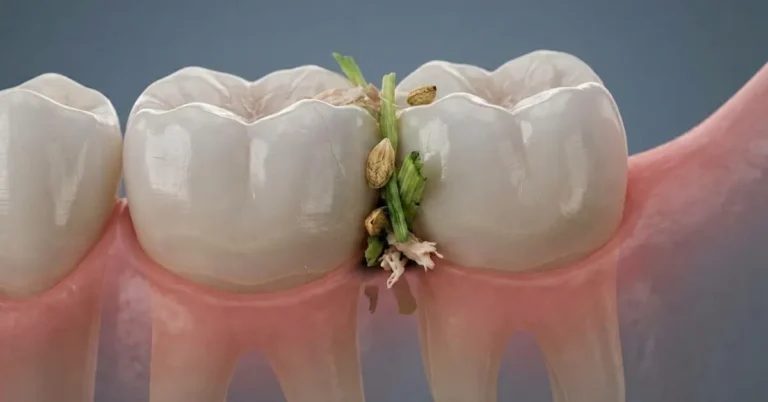
Switch to a soft-bristled or electric toothbrush and use gentle, small circular motions rather than back-and-forth scrubbing, particularly along the gumline where the exposed area sits. Angle the brush toward the gum at roughly 45 degrees instead of pressing straight into it. Clean between teeth daily with floss, a water flosser, or interdental brushes, since plaque buildup at the gumline is often what caused the recession in the first place.
Manage Sensitivity
Desensitizing toothpastes containing potassium nitrate or stannous fluoride work by blocking the dentinal tubules, the microscopic channels in dentin that transmit temperature and pressure signals to the nerve. Applying a small amount directly to the exposed area with a clean finger before bed, in addition to brushing with it, tends to work faster than brushing alone. A warm saltwater rinse (about half a teaspoon of salt in a glass of warm water) can also calm irritated gum tissue. Over-the-counter ibuprofen or acetaminophen can take the edge off sensitivity pain in the meantime; check with your doctor first if you take other medications.
Watch Your Diet
Very hot, very cold, sugary, and acidic foods and drinks tend to trigger the sharpest sensitivity. You don’t need to avoid them entirely, but expect discomfort if you do. Rinsing with plain water after acidic foods or drinks helps limit further wear on the exposed area.
What Not to Do When a Root Is Exposed
- Don’t scrub harder to “compensate” for sensitivity. It accelerates the recession.
- Don’t place aspirin directly on the gum or tooth. The ADA specifically warns this can burn the gum tissue; aspirin only works when swallowed, not applied topically.
- Don’t rely on alcohol-based mouthwash if the area is irritated. Alcohol can aggravate already-sensitive tissue.
- Don’t ignore bleeding or swollen gums as “normal.” That’s usually a sign of active gum disease driving the recession, not a separate issue.
Caring for a Chipped, Cracked, or Broken Tooth (Nerve Exposure)
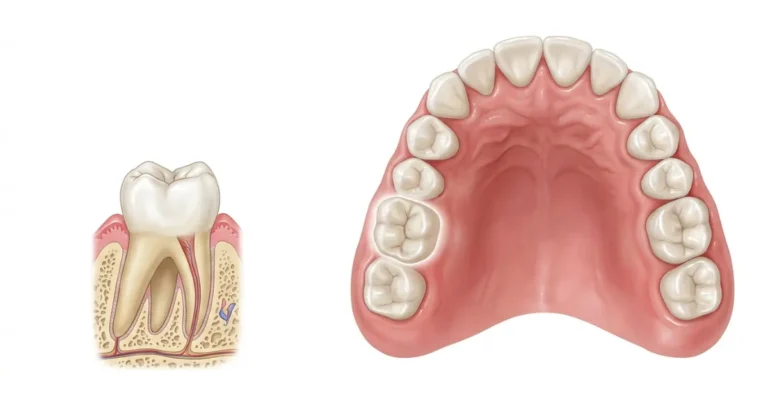
When enamel and dentin are breached down to the pulp, the tooth’s nerve and blood supply are directly exposed to air, temperature, and bacteria. This is different from root exposure and generally needs faster attention.
Immediate steps while you arrange a dental visit:
- Rinse your mouth gently with warm water to clear debris from the area.
- Apply a cold compress to the cheek near the affected tooth to control swelling and dull the pain, not directly on the tooth itself.
- Save any broken tooth fragments in a small container; your dentist may be able to use them.
- Take an over-the-counter pain reliever like ibuprofen, which also helps with any inflammation, rather than placing medication against the tooth or gum.
- If the edge is sharp enough to cut your tongue or cheek, temporary dental cement or filling material from a pharmacy can cover it as a short-term barrier. This is not a fix. It buys time until a dentist can treat the tooth properly.
- Chew on the opposite side of your mouth and avoid very hot, cold, or sweet foods until you’re seen.
Do not skip the dental visit because the pain has eased. Pulp tissue exposed to bacteria can become infected even after the initial sharp pain fades.
Is This a Dental Emergency? Warning Signs
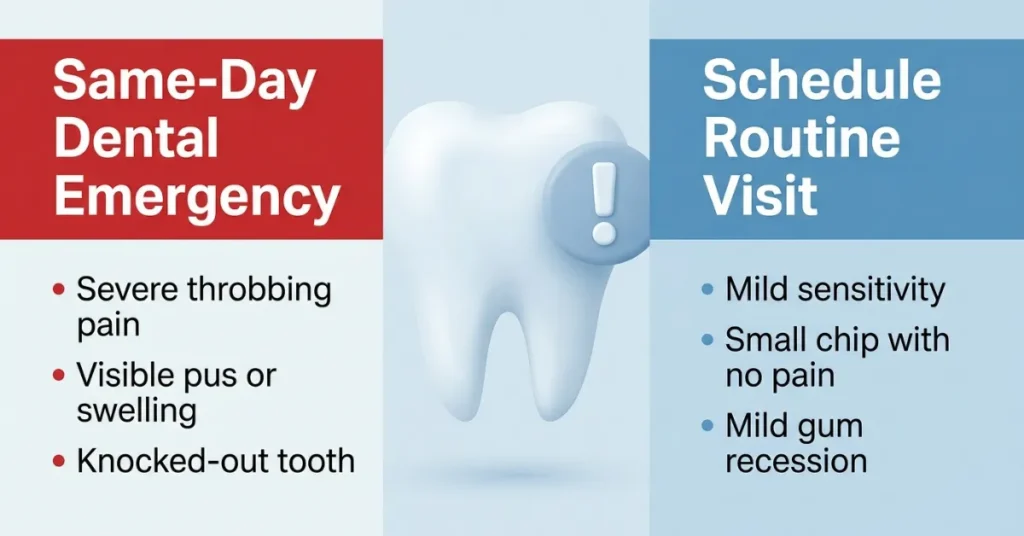
Not every chip or every case of sensitivity requires an emergency room or an after-hours dentist. The ADA classifies true dental emergencies as situations involving uncontrolled bleeding, serious infection, or severe pain that need immediate treatment; many dental problems are urgent without being life-threatening. Use this list to decide how quickly you need to be seen.
Seek same-day or emergency care if you notice:
- Severe, constant, throbbing pain that over-the-counter medication doesn’t touch
- Visible pus or a bump near the gumline that looks like a boil (a possible abscess)
- Fever accompanying tooth pain
- A tooth that feels loose or noticeably out of position
- Facial or jaw swelling, especially if it’s spreading or making it hard to swallow or breathe (this level warrants an ER, not just a dentist)
- A large piece of tooth missing with visible pink or reddish tissue inside (likely pulp exposure)
A routine appointment is usually enough for:
- Mild to moderate sensitivity that responds to desensitizing toothpaste
- A small chip with no pain and no sharp edge
- Cosmetic concerns about a “longer-looking” tooth from mild recession
If a Tooth Gets Knocked Out
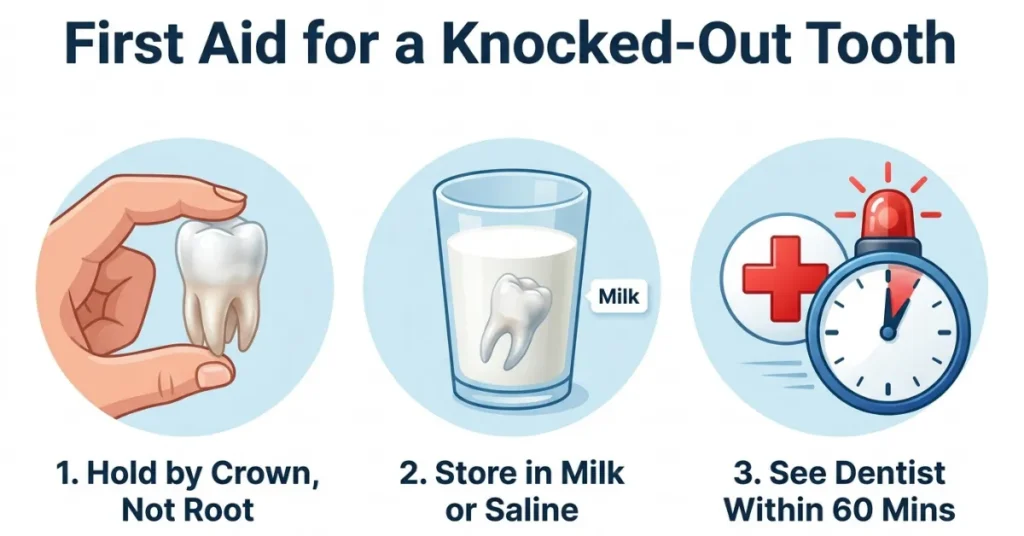
An avulsed (fully knocked-out) permanent tooth is its own category and time matters more here than almost anywhere else in dental first aid.
- Find the tooth and pick it up by the crown (the white, visible part), never the root.
- If it’s dirty, rinse it briefly with plain water. Don’t scrub it or remove any tissue still attached to the root.
- If possible, gently place the tooth back into its socket, facing the correct direction, without forcing it.
- If you can’t reinsert it, keep it moist: hold it between your cheek and gum, or store it in a small container of milk. Avoid storing it dry or in plain tap water for extended periods, since that damages the root surface cells.
- Get to a dentist immediately. Teeth reimplanted within about an hour of being knocked out have the best chance of survival.
Baby teeth are handled differently. Don’t try to reinsert a knocked-out baby tooth; instead, bring the child and the tooth to a dentist, who will determine whether reimplantation is appropriate.
Professional Treatment Options
What a dentist recommends depends entirely on which type of exposure you have and how advanced it is.
For an exposed root:
- Dental bonding: A tooth-colored composite resin is applied over the exposed root surface to reduce sensitivity and protect against decay
- Fluoride varnish or gel: Strengthens the remaining enamel and dentin, often used for milder cases
- Gum grafting: For significant recession, tissue from elsewhere in your mouth (or donor tissue) is used to cover the root and stop further recession
- Orthodontic treatment: If crowded or misaligned teeth are driving the recession, braces or aligners address the underlying pressure
For an exposed nerve or significant dentin loss:
- Filling or bonding: For smaller areas of exposed dentin without infection
- Crown: Covers and protects a tooth with more extensive structural loss
- Root canal therapy: Needed when the pulp itself is infected or irreversibly damaged; the infected tissue is removed and the tooth is sealed
What Happens If You Leave an Exposed Tooth Untreated
This is the part most guides skip, and it’s the part that actually explains why “just live with it” is a bad plan.
An exposed root without treatment doesn’t heal on its own. Gum tissue does not regrow naturally, so recession only gets worse over time, and the exposed cementum and dentin are softer than enamel, making that area of the tooth far more prone to root-surface cavities. Left long enough, that decay can work its way toward the pulp, turning a root problem into a nerve problem.
An exposed nerve or pulp follows a faster and more serious path. The pulp normally sits inside a sealed chamber. Once it’s open to bacteria in the mouth, infection can set in within days, not months. Untreated, that infection can progress to pulpal necrosis (the nerve tissue dies), then to a dental abscess, a pocket of infection at the root tip that can spread to the jawbone or surrounding tissue if it isn’t drained and treated. At that point, root canal therapy or extraction are often the only remaining options, instead of a simpler filling that could have addressed it earlier.
In both cases, the tooth that’s exposed today is the cheapest and least painful version of the problem you’ll ever face. It tends to get more expensive and more invasive to treat the longer it’s ignored.
Preventing Tooth and Root Exposure
- Use a soft-bristled or electric toothbrush and avoid aggressive scrubbing, especially along the gumline
- Floss or use interdental cleaners once a day
- See a dentist for checkups roughly every six months so recession and enamel wear are caught early
- Wear a nightguard if you grind your teeth, and a sports mouthguard during contact sports
- If you have GERD or frequent acid reflux, talk to your doctor about managing it, since stomach acid reaching the mouth erodes enamel over time
- Limit sugary and acidic foods and drinks, or rinse with water afterward
- Don’t smoke; it’s a significant risk factor for gum disease and recession
- Stay hydrated, since saliva helps protect enamel and wash away bacteria
FAQ
Is an exposed tooth root the same as an exposed nerve?
No. Root exposure means the root surface, covered by a thin layer called cementum, has lost its gum covering. Nerve exposure means the innermost pulp tissue, which contains the actual nerve, has been breached, usually through a crack, chip, or deep decay. Root exposure is typically more gradual and less urgent; nerve exposure is typically sudden and more urgent.
Can an exposed tooth root heal on its own?
No. Gum tissue that has receded does not grow back naturally. You can prevent it from getting worse with better hygiene and treating any underlying gum disease, but restoring the covered root requires a dental procedure like bonding or a gum graft.
How long can I wait before seeing a dentist for an exposed tooth?
It depends on which type you have. Mild root sensitivity can usually wait for a routine appointment within a few weeks. A chipped or cracked tooth with visible dentin or nerve exposure should be seen within a day or two. Severe pain, swelling, fever, or a knocked-out tooth needs same-day or emergency care.
Is it safe to put a numbing gel or aspirin on an exposed tooth?
Over-the-counter oral numbing gels, typically containing benzocaine, are generally fine for short-term use as directed. Aspirin should never be placed directly on the tooth or gum; it doesn’t work that way and can chemically burn the gum tissue. Take aspirin or other pain relievers by mouth as directed instead.
What toothpaste is best for an exposed tooth root?
Toothpastes formulated for sensitivity, typically containing potassium nitrate or stannous fluoride, are the most effective at reducing pain from an exposed root because they block the microscopic tubules in dentin that transmit sensation to the nerve. Give it one to two weeks of consistent use before judging whether it’s working.
Conclusion:
- “Exposed tooth” can mean either an exposed root from gum recession or an exposed nerve from a chip, crack, or decay, and they need different responses.
- For an exposed root, gentle brushing, desensitizing toothpaste, and a dental appointment are usually enough to manage things until you’re seen.
- For an exposed nerve, treat it as urgent: control pain and swelling, protect the area, and get to a dentist quickly rather than waiting out the pain.
- Watch for red flags, throbbing pain unrelieved by medication, pus, fever, or tooth mobility, which mean you need same-day care, not a routine appointment.
- A knocked-out tooth has the best chance of being saved if it’s handled correctly and reinserted or seen by a dentist within about an hour.
- Left untreated, either type of exposure tends to get worse, not better, and treatment only becomes more involved the longer you wait.
- None of this replaces a dental exam. Home care manages the situation temporarily; only a dentist can address the actual cause.