Cat Teeth: Essential Facts, Types and Dental Care
Cat teeth explained: adults have 30, kittens 26. See the types, teething timeline, common problems, brushing steps and when to call your vet.
Adult cats have 30 teeth, and kittens have 26 baby teeth. Cat teeth are built for gripping, slicing and tearing rather than grinding, and that design shapes both how cats eat and which dental problems they get. This page covers the count, the tooth types, the teething timeline, the problems that matter, warning signs, and the home and vet care that protect all 30.
How Many Teeth Do Cats Have?
Adult cats have 30 permanent teeth: 12 incisors, 4 canines, 10 premolars and 4 molars. Kittens are born with none, then grow 26 baby (deciduous) teeth: 12 incisors, 4 canines and 10 premolars.
The four-tooth difference comes from molars. Kittens have no baby molars, so the 4 adult molars erupt without replacing anything. Put simply, 26 baby teeth get replaced, and 4 molars are added on top, which makes 30.
| Tooth type | Kitten | Adult |
|---|---|---|
| Incisors | 12 | 12 |
| Canines | 4 | 4 |
| Premolars | 10 | 10 |
| Molars | 0 | 4 |
| Total | 26 | 30 |
By jaw, the upper jaw holds 16 teeth and the lower holds 14. The gap exists because cats have six upper premolars but only four lower ones. Adult teeth do not grow back, so every tooth a cat loses is gone for good.
Types of Cat Teeth and What Each One Does
| Type | Adult count | Location | Main job |
|---|---|---|---|
| Incisors | 12 (6 top, 6 bottom) | Front, between the canines | Grooming, nibbling, picking up small items |
| Canines | 4 (2 top, 2 bottom) | Beside the incisors | Puncturing and holding prey, self-defense |
| Premolars | 10 (6 top, 4 bottom) | Behind the canines | Slicing food into chunks |
| Molars | 4 (2 top, 2 bottom) | Far back | Crushing harder food |
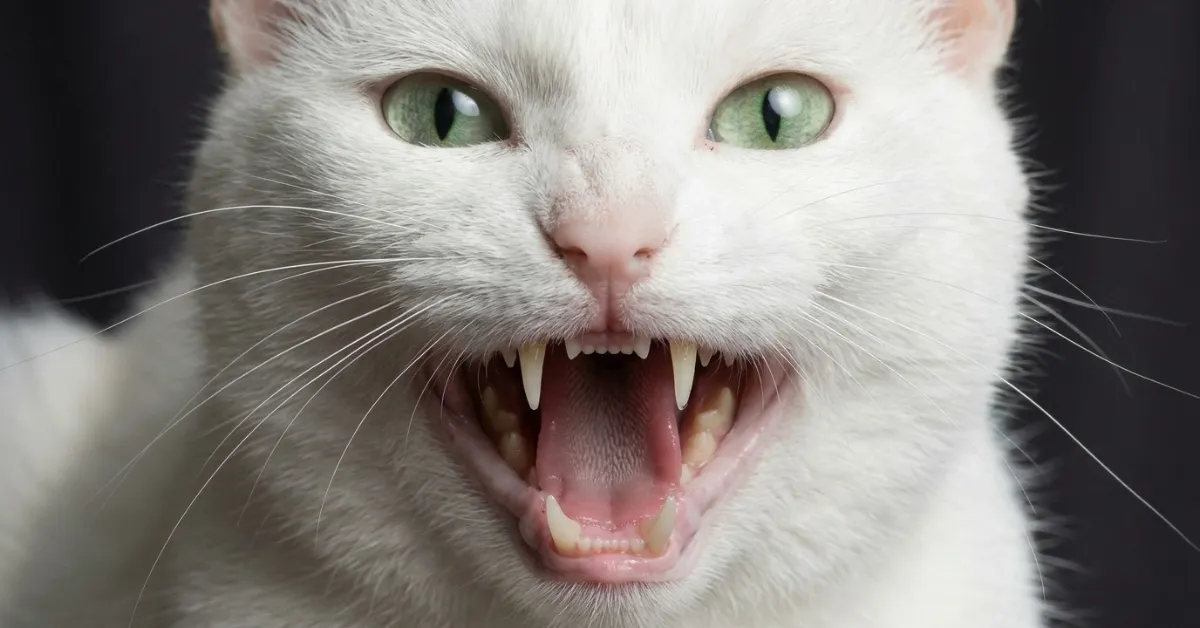
Cat premolars and molars have narrow, blade-like edges that work like scissors, not flat surfaces that grind. That is why cats swallow food in chunks instead of chewing it down. If you only see two fangs when your cat yawns, that is normal. The upper canines are simply the most visible of the 30.
Cat Teeth Timeline: From Teething to Adult Set
| Age | What happens |
|---|---|
| Birth | No teeth |
| 2 to 4 weeks | Baby incisors and canines start to appear, premolars follow |
| About 6 to 8 weeks | All 26 baby teeth are in |
| About 3 months | Baby teeth begin to fall out as adult teeth push in |
| About 6 months | The full set of 30 adult teeth is in place |
Kitten dental development is fast and mostly invisible. Many baby teeth are swallowed or lost during play, so you may never find one. Mild drooling, slightly red gums and slower eating can show up during the swap.
If a baby tooth is still in place after the adult tooth beside it has come in, ask your vet to look. A retained baby tooth can crowd the new one, and crowding makes it easier for plaque to build up.
Cat Teeth vs Human and Dog Teeth
| Species | Baby teeth | Adult teeth |
|---|---|---|
| Cats | 26 | 30 |
| Humans | 20 | 32 |
| Dogs | 28 | 42 |
Cats and people both grow two sets, but cats finish the swap in about six months while children take years. For the human side of the comparison, see this breakdown of human teeth names and numbers.
Do Cats Get Cavities?
Cats rarely get true cavities. Cavities form when bacteria feed on sugar in the pits of broad chewing surfaces, and cat molars lack those flat surfaces. A low-sugar, meat-based diet helps too.
That does not make cat teeth low-maintenance. Cats develop other painful problems, and one of them is often mistaken for a cavity: tooth resorption.
Common Cat Teeth Problems
Studies estimate that between 50 and 90 percent of cats older than four have some form of dental disease in cats. Most of it starts with plaque.
Gingivitis and Periodontitis
Plaque is a film of bacteria. Left alone, it hardens into yellow-brown tartar. Bacteria at and below the gumline trigger inflammation, which shows up as red, swollen gums. That stage is gingivitis, and it is usually reversible with cleaning and better home care.
If gingivitis is not controlled, it can progress to periodontitis. Here the tissues that hold the tooth in place are damaged, and that damage cannot be reversed. Teeth can loosen and eventually fall out. A 5-year-old cat with bad breath and a red line along the gums is at the gingivitis stage, which is the window where treatment still works best.
Tooth Resorption
Tooth resorption in cats is a process where the tooth breaks down, usually starting inside the tooth. It is not a cavity, because decay does not cause it, and its cause is unknown. Between 30 and 70 percent of cats show some sign of it, and it is the most common cause of tooth loss in cats.
It often looks like a small pink defect at the gumline, and by the time you can see it the tooth is already significantly damaged. Diagnosis needs an oral exam and dental X-rays. Painful teeth are usually removed. Because the cause is unknown, brushing cannot be counted on to prevent resorption, which is one reason yearly exams matter.
Stomatitis
Feline gingivostomatitis is severe, long-lasting inflammation of the gums and the lining of the mouth. It affects a smaller share of cats, and it is very painful. Brushing is discouraged in affected cats because it hurts, so this is a vet-led condition.
Signs of Cat Dental Pain
Cats hide dental pain, so many show nothing obvious until disease is advanced. Watch for:
- Bad breath
- Drooling
- Red, swollen or bleeding gums
- Yellow-brown tartar along the gumline
- Eating more slowly, dropping food or preferring soft food
- Turning the head sideways while chewing
- Irritability
- A loose, missing or visibly damaged tooth
- A pink spot at the gumline
A quick weekly check takes about 30 seconds. Lift the lip gently and look for clean, white, unchipped teeth, pink gums and breath without a foul odor. Anything outside that, book a dental exam.
Found a Cat Tooth? What It Means by Age
| Cat’s age | Likely meaning | What to do |
|---|---|---|
| Under about 6 months | Normal teething | Nothing, but check for retained baby teeth |
| Adult cat | Not normal. Possible dental disease, resorption or injury | Book a vet dental exam |
| Senior cat | Age alone does not cause tooth loss | Book a vet dental exam |
A cat that keeps eating normally can still have significant disease below the gumline. A found tooth in an adult is a reason for an exam even when your cat seems fine.
Cat Dental Care at Home
Daily brushing is the most effective home step, and it can prevent most forms of dental disease. Use only toothpaste made for cats. Human toothpaste is not safe for them. If your cat’s gums look inflamed or painful, ask your vet before you start. The four-week brushing training program below makes the habit easier.
Brushing Step by Step
- Week 1: Put a dab of cat toothpaste on your finger and let your cat smell and lick it. Give a reward.
- Week 2: Dab a little toothpaste on one canine each day, then reward.
- Week 3: Put toothpaste on the brush and let your cat lick it off, then reward.
- Week 4: Gently lift the lip and angle the bristles 45 degrees toward the gumline. Brush the outside surfaces only. The tongue cleans the inner surfaces.
If your cat bolts on day three, go back one step. Each week is a small ask, and that is why the method works.
Treats, Wipes and Diets
Look for products with the VOHC Seal of Acceptance, which means the product has been tested for plaque or tartar control. Dry food alone is not a reliable substitute for brushing. If brushing is not working for your cat, treats, wipes and dental diets are better than nothing, but they do not replace vet exams.
Professional Cleanings and Vet Exams
Ask for an oral exam at every yearly checkup. AAHA guidelines recommend that all cats have a first anesthetized dental evaluation with tooth-by-tooth probing and full-mouth X-rays by age one. After that, your vet sets the schedule based on your cat’s mouth, and many adult cats need a cleaning about once a year.
A proper cleaning under anesthesia includes probing, full-mouth X-rays, scaling above and below the gumline, polishing and extractions when needed. X-rays matter because much of the disease sits below the gumline, where you cannot see it.
Why Anesthesia-Free Cleaning Falls Short
Scraping tartar off visible surfaces can make teeth look clean, but it cannot reach below the gumline, allow X-rays or control pain. Major veterinary groups oppose anesthesia-free dental cleanings for that reason.
Life After Tooth Extraction
Many cats eat comfortably after extractions, including dry food. A painless mouth matters more than a full set of teeth, and the tooth your vet removes is often already causing pain.
FAQ
How many teeth do kittens have?
When do kittens lose their baby teeth?
Do kittens have molars?
Do cat teeth grow back?
Do cats get cavities?
How often should I brush my cat’s teeth?
Can I use human toothpaste on my cat?
Do indoor cats need dental care?
Can cats eat normally after tooth extractions?
Conclusion / Key Takeaways
- Adult cat teeth total 30 (12 incisors, 4 canines, 10 premolars, 4 molars). Kittens have 26 baby teeth.
- Baby teeth start falling out around 3 months, and the adult set is complete by about 6 months.
- Cats rarely get cavities, but gum disease and tooth resorption are common and painful.
- Cats hide dental pain, so bad breath, drooling, red gums and eating changes deserve an exam.
- An adult cat losing a tooth is not normal aging. Book a dental exam.
- Daily brushing with cat toothpaste is the best home care. Yearly oral exams and anesthetized cleanings with X-rays cover what you cannot see.