Maxillary Implants: What Nobody Tells You Before Surgery
This article is based on established dental principles around maxillary implants and their surgery etc.
Medically reviewed for accuracy by a dental professional. Last updated: August 2026.
Maxillary implants can restore your bite, smile, and confidence. Learn the real process, success rates, risks, and recovery before your surgery.
Losing a tooth in the upper jaw changes more than your smile. It changes how you chew, how your face holds its shape, and how the rest of your teeth sit in your mouth. Most people don’t think about any of this until a gap shows up, and by then, the bone underneath has usually already started to shrink.
Maxillary implants are the most durable way to fix that. Instead of sitting on top of the gum like a denture or bridge, an implant replaces the actual tooth root, fusing directly into the jawbone. That’s what makes it feel and function like a real tooth again. You bite down and it holds, instead of shifting or clicking.
But the upper jaw isn’t like the lower one. It’s softer, it heals differently, and in the back of the mouth, the sinus cavity often sits closer to the bone than people expect. That’s the part most articles skip over, and it’s exactly why maxillary implants deserve their own conversation, separate from implants everywhere else in the mouth.
This guide walks through what actually happens: why the upper jaw is trickier, what determines whether you need extra bone support first, what the surgery day looks like, and what recovery really feels like. No jargon, no sugarcoating.
What Are Maxillary Implants and Why They Matter
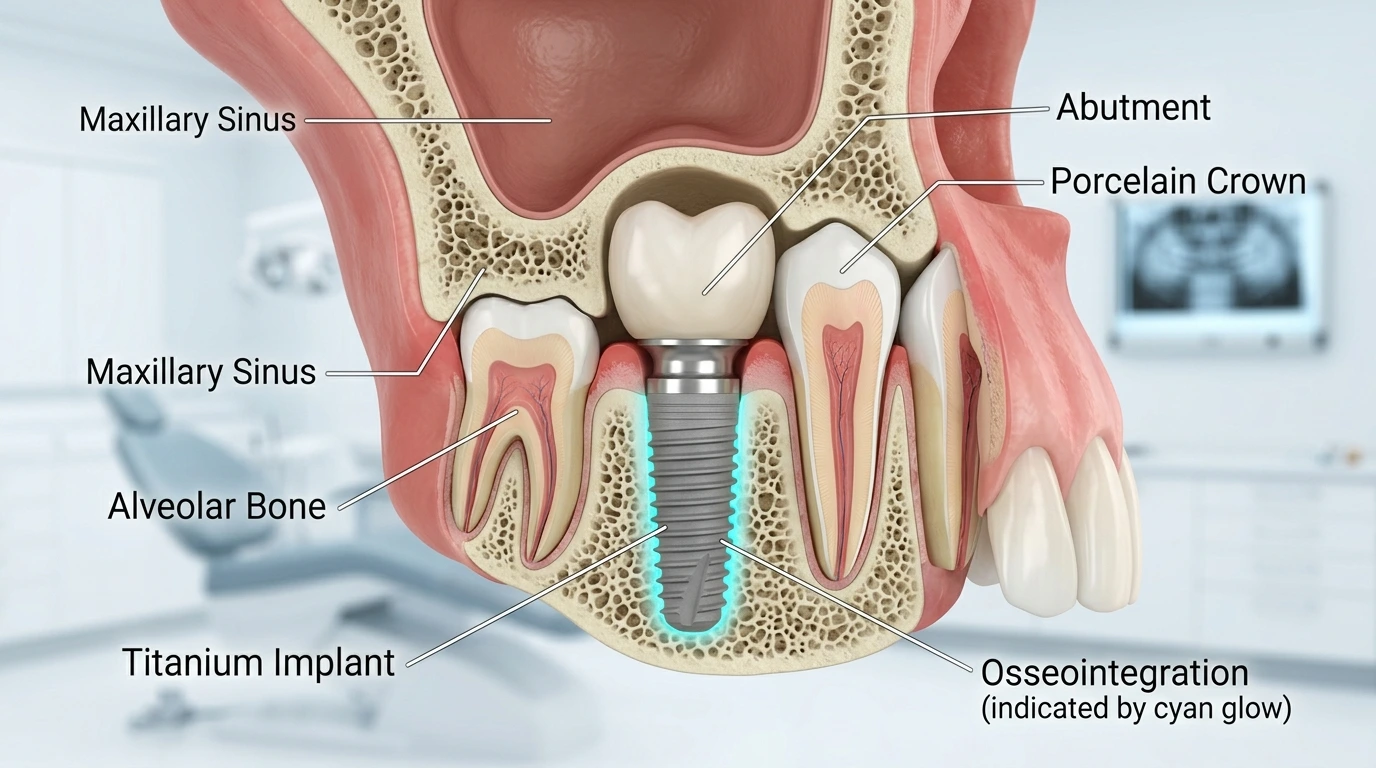
A maxillary implant is a titanium post surgically placed into the upper jawbone to replace a missing tooth root. The bone fuses around the post through a process called osseointegration, usually over three to six months. Once healed, a crown or bridge is attached on top, functioning like a natural tooth.
Missing upper teeth, especially the back molars and premolars, cause more problems than most people expect:
- Chewing becomes harder, especially on that side
- Nearby teeth start drifting into the empty space
- The jawbone in that spot begins to shrink from lack of use
- Your bite shifts, which can cause jaw strain over time
- The lower half of your face can start to look slightly sunken
A typical maxillary implant treatment looks like this:
- The titanium implant post is placed into the jawbone
- A healing period lets the bone fuse around it
- An abutment piece connects the implant to the visible tooth
- A custom crown or bridge is attached on top
If you’re missing several teeth in a row, a bridge supported by two or three implants can replace the whole span without needing a separate implant for every tooth.
Why the Upper Back Jaw Is a Different Challenge
Dentists treat the upper back jaw differently than any other part of the mouth, and for good reason.
Less bone to work with. Once a tooth is gone, the bone around it starts to shrink almost immediately. At the same time, the sinus cavity above it can expand downward and take up even more of that space, leaving less room for an implant to anchor into.
Softer bone. The bone in the back of the upper jaw tends to be less dense than bone up front, which can make it harder for an implant to grip tightly when it’s first placed.
Sinus position varies person to person. Everyone’s sinus sits a little differently, and its size and shape have to be mapped out before any implant goes in.
Put together, that means:
- Less bone height to anchor an implant into
- A sinus floor that can be thin in some people
- Weaker initial hold right after placement
- A higher chance that extra bone support is needed first
This is why a detailed 3D scan of the jaw is standard practice before any of this treatment begins.
Matching the Right Treatment to the Situation
Not every missing tooth needs the same fix. The right approach depends on how much bone is available, how many teeth are missing, and what you actually need out of the result.
| Situation | Best Fit |
|---|---|
| One missing molar | A single implant with a crown on top |
| Several teeth missing in a row | Multiple implants supporting one bridge |
| Significant bone loss | Bone rebuilding first, then implants |
| Entire back section missing | A full implant supported bridge |
Whatever the situation, the goals stay the same: get your bite working properly again, keep the rest of your teeth from shifting, stop the bone from shrinking further, and end up with something that holds up for years, not months.
Who’s a Good Candidate for Maxillary Implants
Not everyone with a missing upper tooth is ready for an implant right away. Good candidates generally have healthy gums, enough bone density to support the post (or are willing to get a bone graft first), and no uncontrolled conditions like diabetes or active gum disease that would slow healing.
Smoking is one of the biggest factors dentists weigh, since it significantly slows bone healing and raises the risk of implant failure. Age isn’t really the deciding factor here, what matters more is bone quality and overall health. Even people who were told years ago they “didn’t have enough bone” often qualify now because sinus lifts and bone grafting have gotten more predictable.
What Happens Before Any Drilling Starts
Good results start with good planning, and that planning happens well before surgery day.
A hands on exam. Your gums, remaining teeth, and bite are checked to see how everything currently fits together.
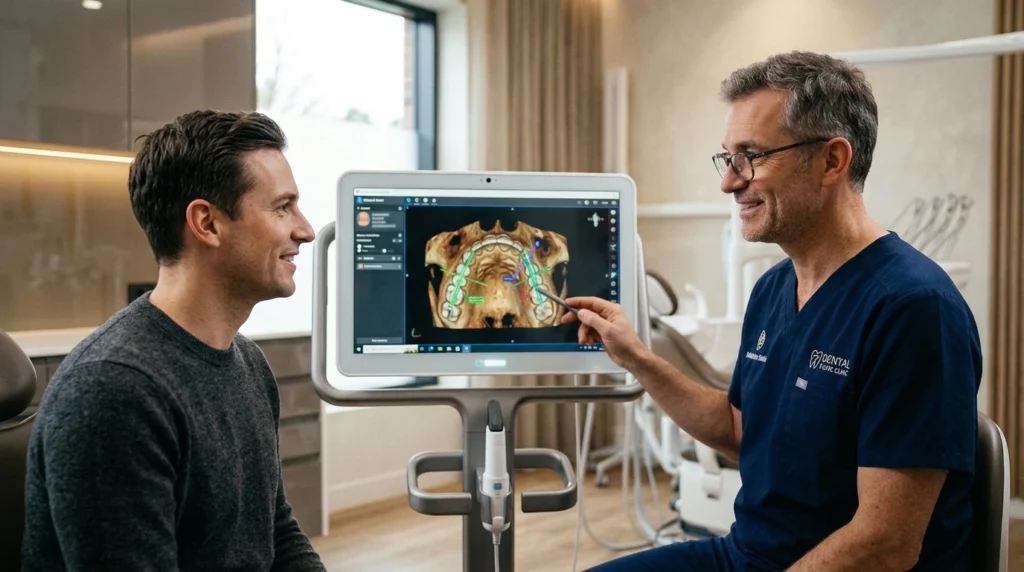
A detailed scan. A 3D image of your jaw shows exactly how much bone you have, where your sinus sits, and how much room there is to work with.
Bone quality check. It’s not just about how much bone there is, but how solid it is and how much distance sits between it and the sinus.
A look at your habits and health. Smoking, how well you keep up with brushing and flossing, and any past infections in the area can all affect how well everything heals.
Skipping this step is where most complications start. Doing it properly is what makes the rest of the process predictable.
When You Need Extra Bone Support First
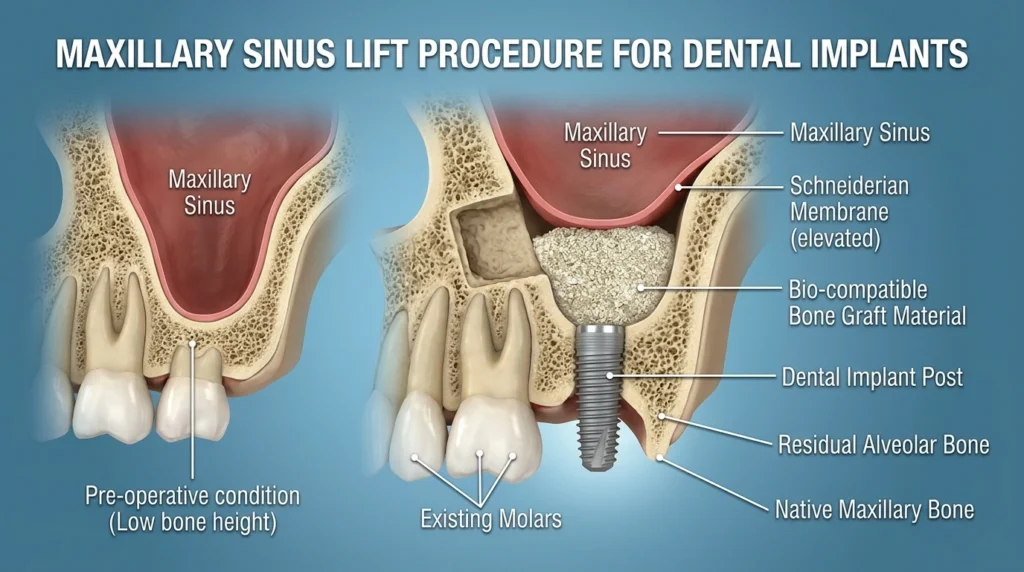
If there isn’t enough bone height to hold an implant securely, a procedure called a sinus lift creates more room to work with.
A sinus lift is a procedure that adds bone height in the upper back jaw by lifting the sinus membrane and packing bone grafting material underneath it. It’s done when there isn’t enough natural bone between the jaw ridge and the sinus floor to hold an implant securely. Over four to nine months, the graft matures into solid bone that can support the implant.
There are two main ways this gets done.
Through the implant site itself. This is used when you only need a small amount of extra height, and it can sometimes be done at the same time as the implant.
Through a small opening in the side of the jaw. This gives more direct access to the sinus area and is used when a bigger lift is needed.
The graft material itself can come from a few different sources, including your own bone taken from elsewhere in your mouth, processed donor bone, or synthetic graft material designed to encourage new bone growth.
How the Full Process Comes Together
Start to finish, getting a maxillary implant usually follows this sequence:
Step one, planning. Your exam, scans, and treatment plan get mapped out.
Step two, the bone building procedure, if needed. The gum is opened, the sinus membrane is lifted, graft material goes in, and everything is closed up to heal.
Step three, placing the implant. Depending on how much bone you had to begin with, this happens either right away or after the graft has had time to heal.
Step four, healing. This is the part that takes patience. The implant needs time to fuse solidly with the bone around it, and rushing this step is what leads to problems down the line.
Step five, the final piece. Once everything has healed and locked in, your custom crown or bridge gets attached, and you’re done.
Doing It All in One Visit vs Splitting It Into Two
Some patients can have the bone graft and the implant placed on the same day. Others need to wait for the graft to heal first before the implant goes in. Here’s how those two paths compare.
| One Visit | Two Separate Stages | |
|---|---|---|
| When the implant goes in | Same day as the graft | After the graft has healed |
| How much bone you need going in | More | Less |
| Total time to finish | Shorter | Longer |
| Number of procedures | One | Two |
Doing it in one visit only works if there’s enough existing bone to hold the implant steady from the start. If there isn’t, splitting it into two stages gives the graft time to properly mature before it has to support any weight.
What You End Up With Once It’s Healed
Once your implant has fully integrated, there are a couple of directions the final restoration can take.
A bridge supported by implants. This replaces several missing teeth using just two or three implants instead of one for every single tooth, and it tends to feel more stable than a removable denture while also helping protect the bone underneath it.
Individual crowns. For a single missing tooth here and there, a standalone crown on its own implant might make more sense.
Which one is right for you comes down to how many teeth you’re missing, how much room there is, and honestly, personal preference.
Implant vs Bridge vs Denture
| Implant-Supported Bridge | Traditional Bridge | Denture | |
|---|---|---|---|
| Preserves jawbone | Yes | No | No |
| Feels like natural teeth | Yes | Somewhat | No |
| Requires healthy neighboring teeth | No | Yes, gets ground down | No |
| Typical lifespan | Decades with care | 10-15 years | 5-8 years |
| Daily removal needed | No | No | Yes |
Success Rates, What Can Go Wrong, and Healing Well
When it’s planned properly and placed correctly, this type of implant holds up in the 95 to 98 percent range over ten years. What tends to make the biggest difference is having enough bone to work with, keeping up with oral hygiene afterward, and showing up to follow up visits.
Like any surgery, there are risks worth knowing about, including irritation to the sinus membrane during the procedure, infection, the graft not taking as well as hoped, or the implant itself failing to integrate. Swelling and discomfort for the first few days is normal and expected.
To help things heal the way they’re supposed to:
- Follow whatever aftercare instructions you’re given
- Stay away from smoking during healing
- Keep brushing and flossing, just gently around the area
- Don’t skip your follow up appointments
- Avoid putting pressure on the surgical site while it heals
When to Call Your Dentist After Surgery
Mild swelling, soreness, and slight bruising in the first few days is normal. Contact your dentist if you notice:
- Pain that gets worse instead of better after day three or four
- Swelling that keeps increasing past 48-72 hours
- Persistent bleeding that doesn’t stop with gentle pressure
- Nasal congestion combined with pressure or drainage on the implant side (a possible sign of sinus involvement)
- A fever
- The implant feels loose or the graft area feels like it’s shifting
Catching these early is usually the difference between a quick fix and a failed implant.
What Affects the Cost
Maxillary implant cost varies more than lower jaw implants because of the extra steps often involved. A few things that move the price:
- Whether a sinus lift or bone graft is needed first
- Single implant and crown versus a full implant-supported bridge
- The materials used for the crown or bridge
- Whether it’s done in one visit or split into two stages
- Geographic location and the dentist’s or specialist’s experience level
Because of the added planning and potential grafting, upper back jaw implants often cost more than a straightforward lower jaw implant. Getting a written treatment plan after your scan is the only reliable way to know your actual cost, since it depends entirely on what your bone looks like.
Common Questions About Maxillary Implants
How long do maxillary implants last?
With proper oral hygiene and regular dental checkups, maxillary implants can last 20 years or longer. The implant itself often lasts a lifetime, while the crown may need replacement after 10–15 years due to normal wear.
Are maxillary implants more difficult than lower jaw implants?
Yes. Maxillary implants are often more challenging because the upper jaw has softer bone and sits close to the sinus cavity. Some patients may need a sinus lift or bone graft before implant placement.
Do all maxillary implants require a bone graft?
No. A bone graft is only needed if there isn’t enough healthy bone to support the implant. Your dentist will use a 3D scan to determine whether additional bone is necessary.
How painful is maxillary implant surgery?
Most patients experience little to no pain during surgery because the area is numbed with local anesthesia. Mild swelling and discomfort are common for a few days afterward and are usually manageable with prescribed or over-the-counter pain medication.
What is the success rate of maxillary implants?
Maxillary implants have a success rate of about 95% to 98% when placed by an experienced dentist or oral surgeon and maintained with good oral hygiene. Factors such as bone quality, smoking, and overall health can affect long-term success.
Conclusion
Replacing a missing tooth in the back of the upper jaw takes more planning than it does anywhere else in the mouth, but that extra planning is exactly what makes the results last. Whether you need a bone building procedure first or you’re a candidate for implant placement right away, understanding what the process actually involves puts you in a much better position to make a confident decision. Done right, a maxillary implant can bring back your bite, your comfort, and a smile that functions the way it’s supposed to.
If you’re not sure which path fits your situation, a consultation and 3D scan is the only way to know for certain what your bone can support.