What Are Fake Teeth Called? Complete Types & Names
What are fake teeth called? Learn the names of dentures, bridges, implants, crowns, and other tooth replacement options, plus costs and key differences.
Updated August 2026 Medically reviewed for accuracy by scientific and dental facts
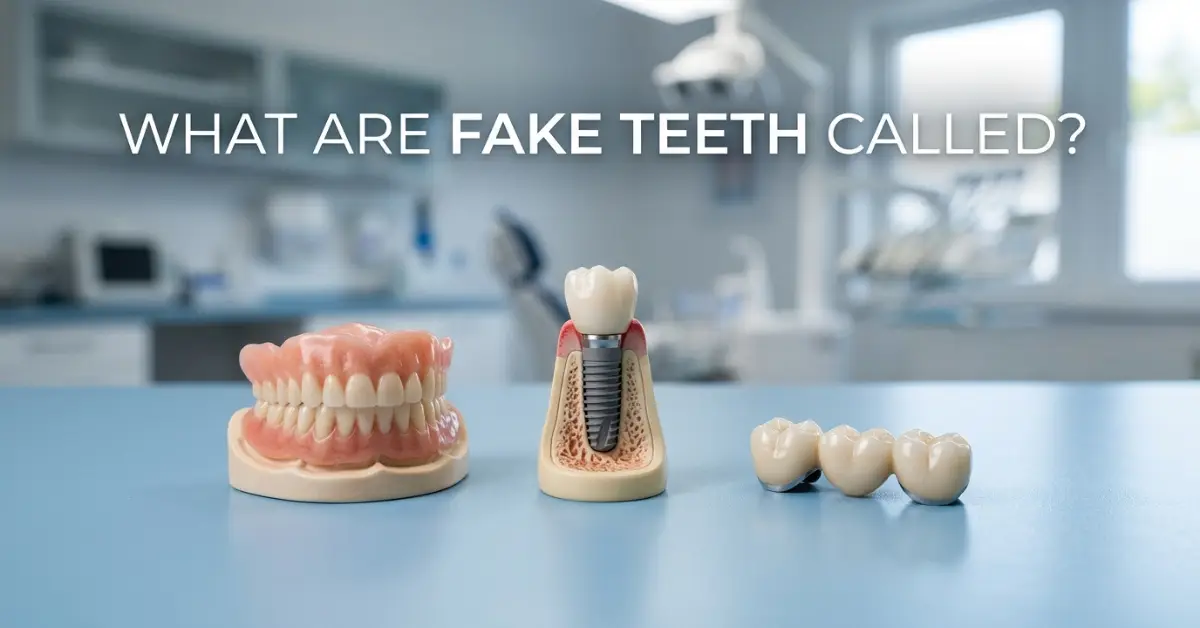
What are fake teeth called? In most cases there are specific fake teeth names, the answer is dentures, though the exact term depends on how many teeth are missing and how the replacement fits in your mouth.
Dentists also use more specific terms like partials, bridges, and implants depending on your situation, while outside the clinic you’ll commonly hear false teeth, artificial teeth, or replacement teeth used interchangeably.
This guide breaks down the exact names, the tooth replacement options available today, and what your dentist probably meant the last time you nodded along without fully understanding.
What Are False Teeth Called in Dentistry?
In a dental office, false teeth are almost always called dentures. The exact name after that depends on how many teeth are missing and how the piece attaches.
You won’t hear “fake teeth” used much once you’re in the dental chair. Dentists rely on precise terms because the type of device changes the entire treatment plan. Someone missing one tooth needs a different fix than someone missing a full arch.
“False teeth” works fine in everyday conversation, but in the clinic, replacement teeth for missing teeth are sorted into specific categories: dentures, bridges, implants, and flippers. Each option has its own name, price range, and role to play.
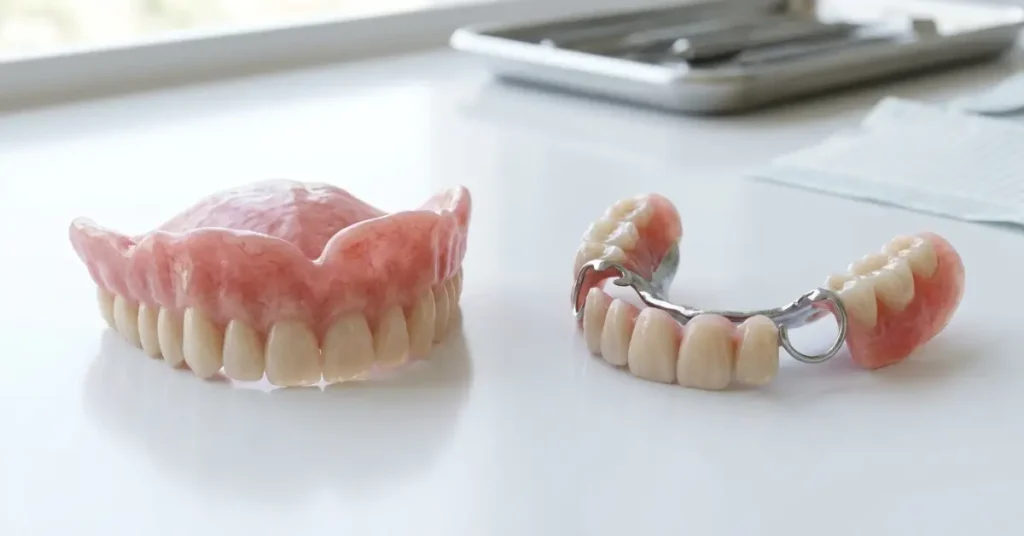
Types of Fake Teeth
There’s no single tooth replacement solution that fits everyone. What you need depends on how many teeth are gone, how healthy your jawbone is, and what you can afford.
Full Dentures
Full dentures replace an entire row of teeth, top or bottom, and sit directly on the gums.
This is the classic image people have in mind when they hear “false teeth.” Full dentures are removable for cleaning, molded to fit the mouth, and typically need a few adjustments in the first months as the gums settle into their new shape.
Adjusting to full dentures usually takes practice. Most new wearers need several weeks to relearn how to chew and speak comfortably, and minor slipping is common until the fit is fine-tuned.
Partial Dentures
Partial dentures fill gaps for people who still have some natural teeth left.
They attach to your remaining teeth with small clasps, usually metal or plastic. Partials tend to cost less than implants and skip surgery entirely, which is why a lot of older adults choose them when they want a quicker, less invasive option.
Removable Dentures vs. Snap-In Dentures
Removable dentures come out every night for cleaning, while snap-in dentures click onto implant posts for added stability throughout the day. Here’s a side-by-side comparison:
| Feature | Removable Dentures | Snap-In Dentures |
|---|---|---|
| Stability | Can shift while eating or talking | Locks onto implants for a more secure fit |
| Surgery needed | No | Yes, implant posts required |
| Average cost | Lower | Higher |
| Daily care | Remove and soak overnight | Typically still removed nightly for cleaning; fixed implant bridges are the exception |
| Best for | Tighter budgets | Added stability for active lifestyles |
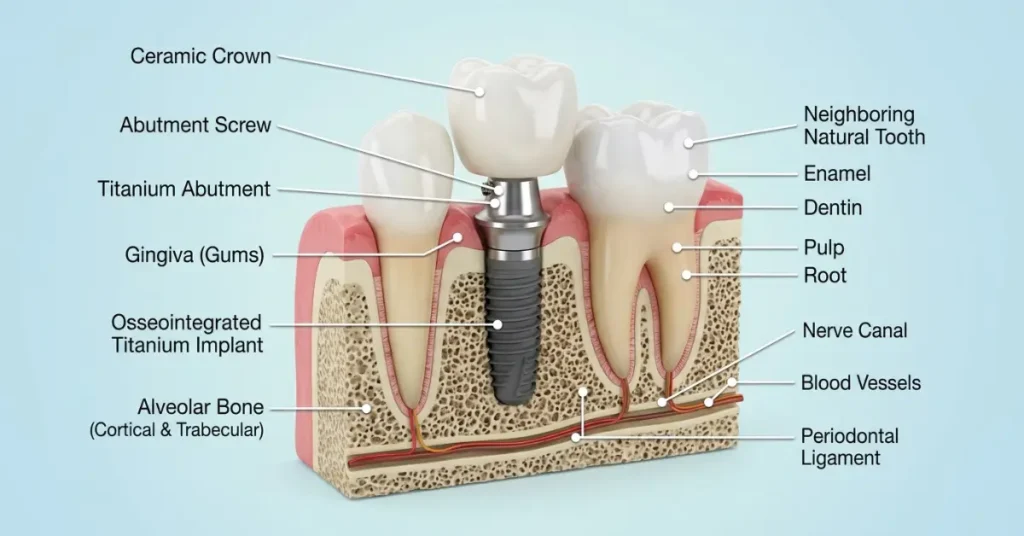
Dental Implants vs. Implant-Supported Dentures
A dental implant replaces one tooth root with a titanium post. Implant-supported dentures use several of these posts to hold a full or partial set of replacement teeth in place.
Pricing varies widely by provider, location, and how many implants are needed. A single implant typically costs a few thousand dollars, while a full mouth of implant-supported dentures can run into five figures. Always confirm exact pricing with a local provider.
The tradeoff for the higher cost is stability: implants are anchored into the jawbone, so they don’t shift or slip the way removable dentures can. With proper oral hygiene and regular checkups, dental implants have reported success rates above 90% at the 10-year mark in clinical studies, though outcomes depend on bone health, habits like smoking, and how well the implant site is maintained. No dental restoration is guaranteed to last a lifetime, and implants still require the same daily care as natural teeth.
How Long Do Dental Implants Last?
Implant posts themselves can last decades, and many patients keep the same implant for life. The crown or denture attached to the post is a separate part, though, and typically needs replacement or relining every 10 to 15 years due to normal wear. Long-term success also depends on gum health, so ongoing checkups matter just as much as the initial procedure.
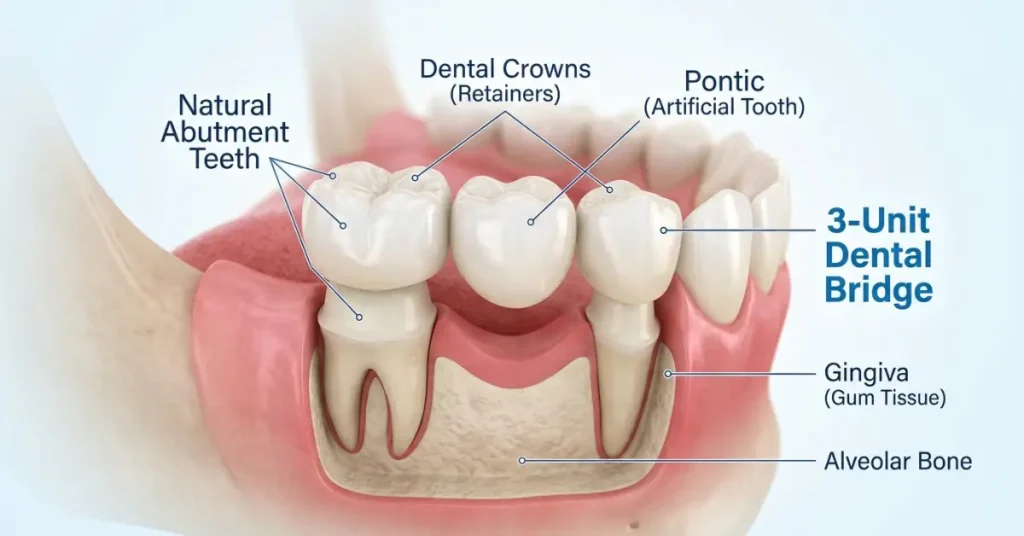
Dental Bridges as an Alternative
A dental bridge fills a gap by anchoring an artificial tooth to the healthy teeth on either side of it.
Bridges sit somewhere in the middle between full dentures and implants. They’re fixed, not removable, and work well when only one or two teeth in a row are missing.
Dentists often present bridges as an option alongside implants, since they typically involve a shorter treatment timeline and lower upfront cost. The right choice still depends on the health of the neighboring teeth and the patient’s long-term goals.
Can Fake Teeth Look Natural?
Modern dentures, bridges, and implants can be designed to closely match the color, shape, and translucency of natural teeth. Advances in materials and digital design have made it easier for dental labs to create restorations that blend in with a patient’s existing smile.
That said, how natural the result looks depends on several factors: the material used, the precision of the color match, the fit of the design, and the skill of the dental professional involved. Results vary from patient to patient, so it’s worth discussing expectations with your dentist before choosing a specific option.
What Are Fake Teeth Made Of?
The name changes depending on the material too, and this affects more than looks.
- Acrylic dentures are lightweight and affordable, usually the starting point for first-time denture wearers.
- Porcelain teeth are often the top pick for fake teeth that look real, since the material mimics natural enamel and resists staining better than acrylic.
- Flexible dentures use a bendable nylon material and suit people with sensitive gums or unusual mouth shapes.
Ask your dentist which material fits how you actually live day to day, not just what fits your budget.
FAQs: What Are Fake Teeth Called?
What are fake teeth called?
The general name for fake teeth is dentures, but they may also be called dental implants, bridges, crowns, or partial dentures, depending on the type of tooth replacement.
What is a single fake tooth called?
A single fake tooth is usually replaced with a dental implant, dental bridge, or dental crown, depending on whether the natural tooth or root is still present.
What are temporary fake teeth called?
Temporary fake teeth are commonly called flipper teeth or temporary dentures. They are worn while waiting for a permanent restoration.
What are permanent fake teeth called?
Permanent fake teeth usually refer to dental implants, implant-supported bridges, or fixed dental bridges, which are designed to stay securely in place.
Can fake teeth look like real teeth?
Yes. Modern dentures, bridges, and dental implants are custom-made to match the color, shape, and size of your natural teeth for a realistic appearance.
Key Takeaways
- Dentures is the general term, but the exact name depends on type and material.
- Full and partial dentures come out; implants and bridges usually stay fixed.
- Snap-in and implant-supported options cost more but offer added stability.
- Material choice affects comfort and price, whether acrylic, porcelain, or flexible.
- A flipper tooth is meant to be temporary, not a long-term fix.
If you’re missing a tooth or several teeth, a dental examination can help determine which replacement option fits your oral health, goals, and budget. Getting the name right matters far less than getting the fit right.
This article is for general informational purposes and does not replace personalized advice from a licensed dentist. Individual outcomes vary based on oral health, anatomy, and treatment provider.