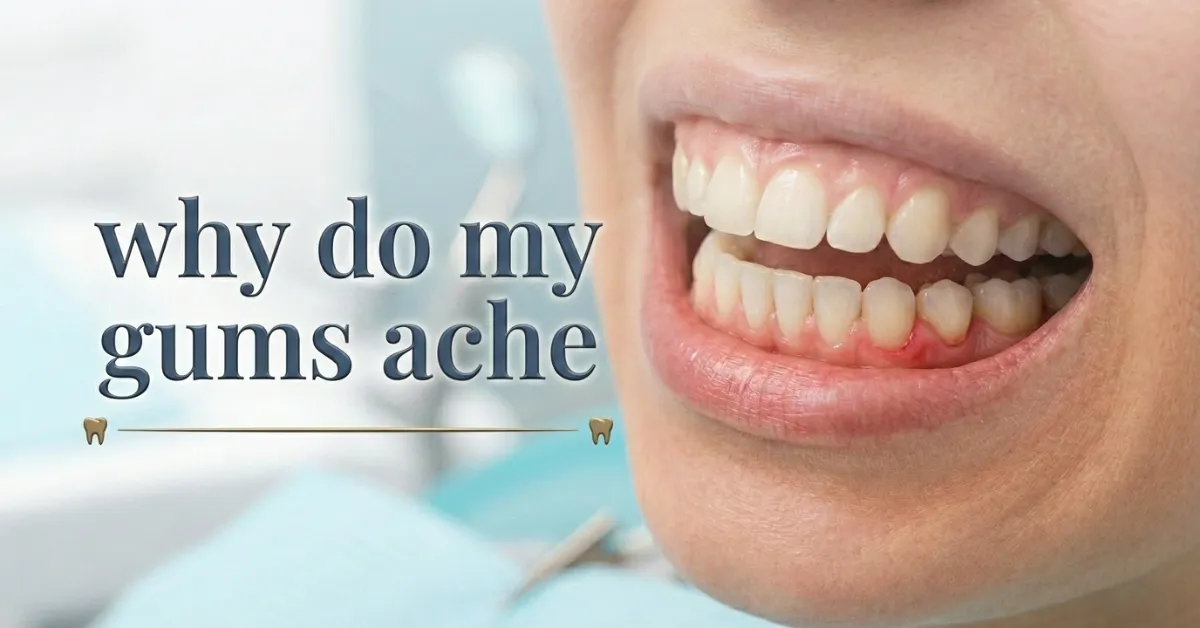
Why Do My Gums Ache? Causes, Relief & When to See a Dentist
Why do your gums ache? Learn the causes, symptoms, relief, and when gum pain needs a dentist or urgent care.
Quick answer: Aching gums can be caused by plaque buildup, gingivitis, periodontitis, trapped food, brushing too hard, mouth ulcers, tooth decay, wisdom tooth problems, local irritation, or a dental infection. Mild soreness caused by minor irritation may improve within a few days, but persistent, recurrent, or worsening gum pain should be evaluated by a dentist. Gum pain with significant swelling, pus, fever, facial swelling, or difficulty swallowing or breathing can indicate a more serious infection and requires urgent attention.
Medical review: This article is based on established scientific and dental facts and is for general educational purposes only. It does not replace professional dental advice, diagnosis, or treatment.
Healthy gums are generally comfortable. They should not regularly ache, swell, or bleed. When your gums become sore, the cause may be something minor, such as food trapped between your teeth or irritation from brushing. However, gum discomfort can also be associated with gingivitis, periodontitis, tooth decay, a dental abscess, or a wisdom tooth problem.
Importantly, pain that feels like it is coming from your gums may actually originate from a nearby tooth. Tooth decay, a cracked tooth, or an infection can cause pain or tenderness in the surrounding gum tissue.
This guide explains the common causes of aching gums, what different symptoms may mean, how to relieve mild discomfort, how dentists diagnose the problem, and when gum pain requires urgent attention.
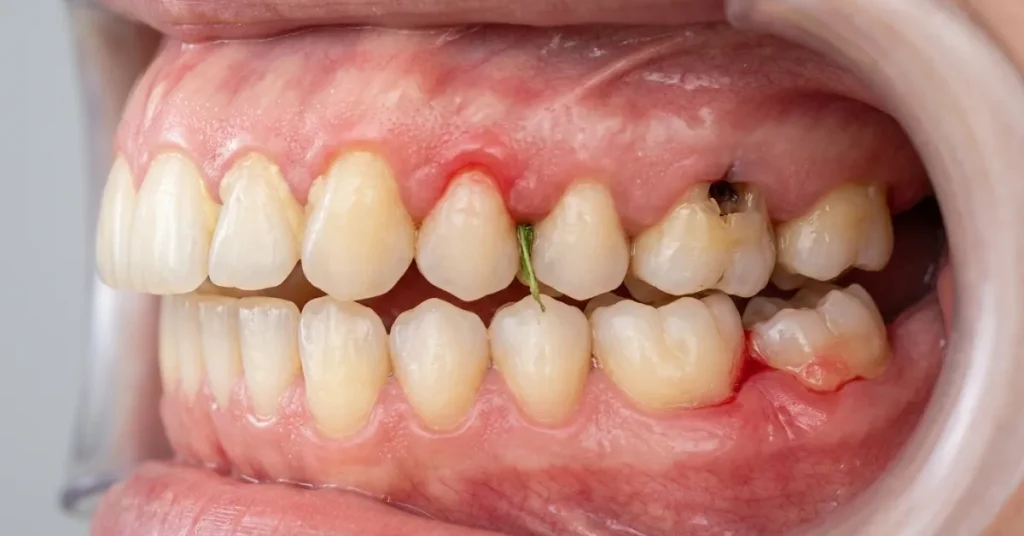
Quick Guide: What Could Be Causing Your Aching Gums?
| What you noticePossible cause | |
|---|---|
| Red, swollen, or bleeding gums | Plaque buildup or gingivitis |
| Pain between two teeth | Trapped food or localized inflammation |
| Pain around one tooth | Decay, tooth damage, inflammation, or infection |
| Soreness after brushing | Excessive pressure or gum irritation |
| Pain behind the last molar | Wisdom tooth problems |
| Gum pain with pus or a bad taste | Possible dental infection |
| Gum recession with persistent tenderness | Gum disease or brushing-related irritation |
| Pain when biting | Tooth decay, a cracked tooth, or infection |
| Fever with mouth or facial swelling | Possible spreading dental infection |
These patterns can provide clues, but they cannot establish a diagnosis on their own. A dentist may need to examine your teeth and gums and, when appropriate, take dental X-rays.
Is It Normal for Your Gums to Ache?
Occasional mild gum soreness can happen after irritation, trapped food, brushing or flossing too forcefully, or a minor mouth ulcer.
However, regular or persistent gum pain is not something to ignore.
Arrange a dental examination if your discomfort:
- Persists instead of improving
- Keeps returning
- Becomes more severe
- Occurs with swelling or pus
- Is accompanied by fever
- Occurs with tooth pain or pain when chewing
- Is associated with a loose or shifting tooth
Identifying the cause early can help prevent a dental problem from becoming more serious.
What Causes Aching Gums?
Common causes of aching or tender gums include:
- Plaque and tartar buildup
- Gingivitis
- Periodontitis
- Brushing or flossing too aggressively
- Food trapped between teeth
- Mouth ulcers
- Tooth decay
- Dental abscesses or tooth infections
- Wisdom tooth problems
- Hormonal changes
- Injury or local irritation
The location, duration, and accompanying symptoms can help a dentist determine the most likely cause.
1. Plaque and Tartar Buildup
Plaque is a sticky film containing bacteria that forms continuously on your teeth. When plaque is not removed effectively, it can accumulate around the gumline and irritate the surrounding tissue.
This can cause:
- Tender or aching gums
- Redness
- Swelling
- Bleeding when brushing or flossing
- Bad breath
- Gum sensitivity
Over time, plaque can harden into tartar, also called dental calculus. Unlike soft plaque, tartar cannot be completely removed with ordinary brushing and usually requires professional cleaning.
Brushing twice a day with fluoride toothpaste and cleaning between your teeth daily can help control plaque and reduce the risk of gum inflammation.
2. Gingivitis
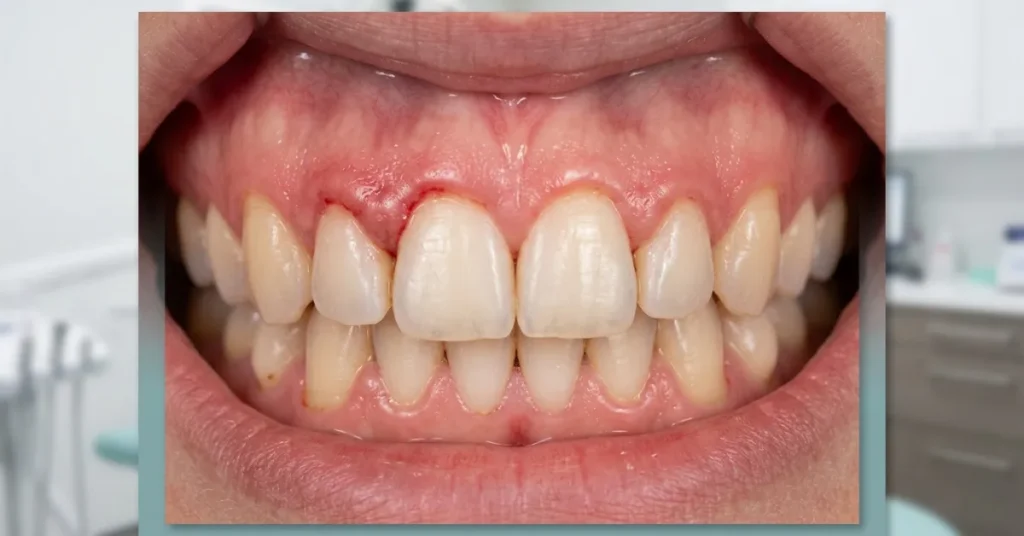
Gingivitis is inflammation of the gums and is commonly associated with plaque buildup along the gumline.
Common signs include:
- Red or swollen gums
- Tenderness
- Bleeding during brushing or flossing
- Bad breath
- Gum sensitivity
Gingivitis is generally reversible when the underlying plaque buildup is effectively controlled and appropriate dental care is provided.
However, untreated gum inflammation can progress to periodontitis, which can damage the tissues and bone that support the teeth.
3. Periodontitis
Periodontitis is a more advanced form of gum disease that affects the tissues and bone supporting the teeth.
Possible signs include:
- Persistent gum tenderness
- Gum recession
- Persistent bad breath
- Pus around the gums
- Loose or shifting teeth
- Discomfort when chewing
- Changes in how your teeth fit together
Periodontitis requires professional dental management. Daily brushing and interdental cleaning remain important, but established periodontal disease may require treatment beyond home care.
4. Brushing or Flossing Too Hard
More pressure does not mean better cleaning.
A hard-bristled toothbrush or aggressive brushing can irritate the gums and make them sore. Repeated excessive pressure may also contribute to gum recession.
Flossing too forcefully can irritate the tissue between the teeth.
To reduce irritation:
- Use a soft-bristled toothbrush.
- Apply gentle pressure.
- Use controlled movements instead of vigorous scrubbing.
- Guide floss carefully around the teeth rather than snapping it against the gums.
If soreness continues after you improve your technique, another cause may be responsible.
5. Food Trapped Between Your Teeth
Food can become lodged between teeth and press against nearby gum tissue. This may cause sudden, localized discomfort.
You might notice:
- Pain in one specific area
- Tenderness between two teeth
- Mild swelling
- A sensation that something is stuck
- Discomfort while chewing
Carefully cleaning between your teeth may remove the irritant.
Never use pins, needles, knives, or other sharp objects to remove food from your gums. These can injure the tissue and increase irritation or the risk of infection.
6. Mouth Ulcers
Minor mouth ulcers, including canker sores, can develop near the gumline or elsewhere inside the mouth.
They may cause:
- Localized pain
- Burning
- Stinging
- Sensitivity while eating
Spicy, salty, acidic, or otherwise irritating foods may make an ulcer more uncomfortable.
Most minor canker sores heal on their own within about one to two weeks.
An ulcer that lasts longer than two weeks, repeatedly returns, becomes unusually large or painful, or occurs with other concerning symptoms should be evaluated by a dentist or doctor.
7. Tooth Decay
A cavity does not always feel like obvious tooth pain.
Decay can sometimes cause discomfort that seems to involve the surrounding gum. Other symptoms may include:
- Sensitivity to hot or cold foods and drinks
- Sensitivity to sweets
- Pain when chewing
- Increasing tooth discomfort
- A particular tooth that feels painful or tender
When decay reaches deeper parts of a tooth, symptoms may become more persistent or severe.
Because untreated tooth decay can worsen, ongoing tooth or gum pain should be evaluated by a dentist.
8. Dental Abscess or Tooth Infection
A dental abscess is a collection of pus caused by an infection around a tooth or in nearby tissues.
Possible symptoms include:
- Severe or throbbing pain
- Swollen gums
- Facial or jaw swelling
- Pain when biting or chewing
- A bad taste in the mouth
- Pus or drainage
- Fever
- Feeling generally unwell
A dental abscess requires prompt professional evaluation.
Depending on the source and severity of the infection, treatment may involve drainage, root canal treatment, extraction, or another dental procedure.
Antibiotics may sometimes be appropriate, particularly when an infection is spreading or causing systemic symptoms. However, antibiotics alone do not eliminate the underlying dental source of an infection.
9. Wisdom Teeth
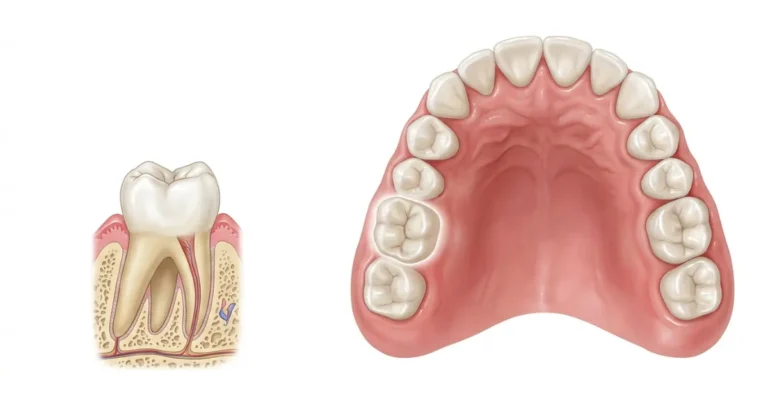
Wisdom teeth can cause gum pain or tenderness at the back of the mouth, particularly when they are partially erupted, impacted, or difficult to clean.
Possible symptoms include:
- Pain behind the last molar
- Swollen gum tissue
- Jaw discomfort
- Bad breath
- A bad taste
- Food becoming trapped around the tooth
- Difficulty opening the mouth
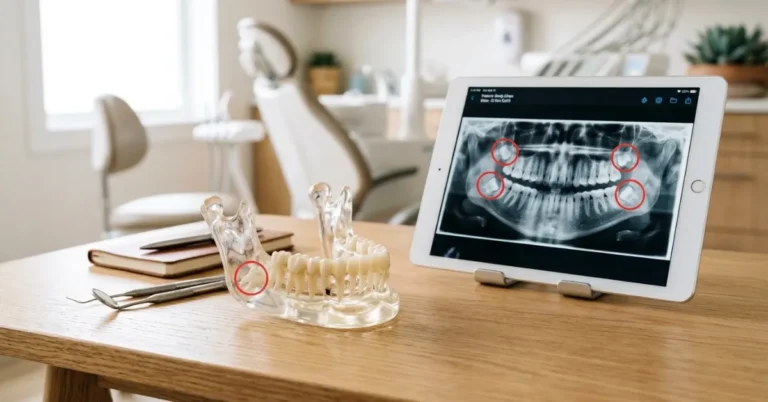
A dentist can examine the area and may use dental X-rays to assess the position of the wisdom tooth and determine whether treatment is needed.
10. Hormonal Changes
Hormonal changes can make some people’s gums more sensitive to plaque and inflammation.
Gums may become more swollen, tender, or prone to bleeding during periods such as:
- Puberty
- Pregnancy
- Menopause
Good oral hygiene and appropriate dental care can help manage gum inflammation during these periods.
Hormonal changes do not mean persistent gum pain should be ignored. Ongoing symptoms still deserve professional evaluation.
11. Injury or Local Irritation
Gum tissue can become sore after minor trauma or irritation.
Possible triggers include:
- Accidentally biting the gum
- A sharp edge of a tooth
- A dental appliance rubbing the tissue
- Very hot food or drinks
- Picking or scratching the gums
Minor irritation may improve after the source is removed. Persistent pain, swelling, or an area that does not heal should be examined by a dental professional.
Why Do My Gums Ache Around One Tooth?
Pain around a single tooth can have several causes, including:
- Food trapped between the teeth
- Localized gum inflammation
- Tooth decay
- A cracked or damaged tooth
- A dental abscess
- An erupting wisdom tooth
- Irritation from brushing or flossing
The fact that only one area hurts does not necessarily mean the problem is in the gum itself.
A cavity, cracked tooth, or infection can cause discomfort in the surrounding gum tissue.
If pain around one tooth persists or worsens, a dentist should examine both the tooth and the surrounding gums.
Can Your Gums Ache Without Bleeding?
Yes. Gum pain does not always cause bleeding.
Aching without visible bleeding can occur with:
- Local irritation
- Trapped food
- Aggressive brushing
- A mouth ulcer
- Tooth decay
- A dental abscess
- Wisdom tooth problems
- Gum inflammation
Bleeding is a common sign of gingivitis, but the absence of bleeding does not rule out a dental problem.
Persistent unexplained gum pain should therefore be evaluated based on the overall symptoms rather than bleeding alone.
Why Do My Gums Ache but Look Normal?
Gums can feel painful even when there is no obvious redness or swelling.
Possible causes include:
- Trapped food
- Minor irritation
- Brushing too hard
- A mouth ulcer
- Tooth decay
- A cracked tooth
- An early dental infection
- Wisdom tooth problems
In particular, the source may be a nearby tooth rather than the visible gum tissue.
If your gums look normal but the discomfort continues, a dentist can check for problems that may not be visible at home.
Why Do My Gums Ache After Brushing?
Gum soreness immediately after brushing may be caused by:
- Excessive brushing pressure
- A hard-bristled toothbrush
- Vigorous scrubbing
- Existing gum inflammation
- Another underlying dental problem
Try using a soft-bristled toothbrush and gentle pressure.
If the pain continues despite changing your brushing technique, the cause may be gum disease, tooth decay, an infection, or another condition requiring examination.
Why Do My Gums Ache in the Morning?
Gum discomfort that repeatedly feels worse in the morning can have several possible causes, including:
- Dry mouth
- Mouth breathing
- Plaque buildup
- Gum inflammation
- Nighttime teeth grinding or clenching
If morning discomfort happens regularly, particularly with jaw soreness, tooth sensitivity, headaches, or persistent gum tenderness, discuss the symptoms with a dentist.
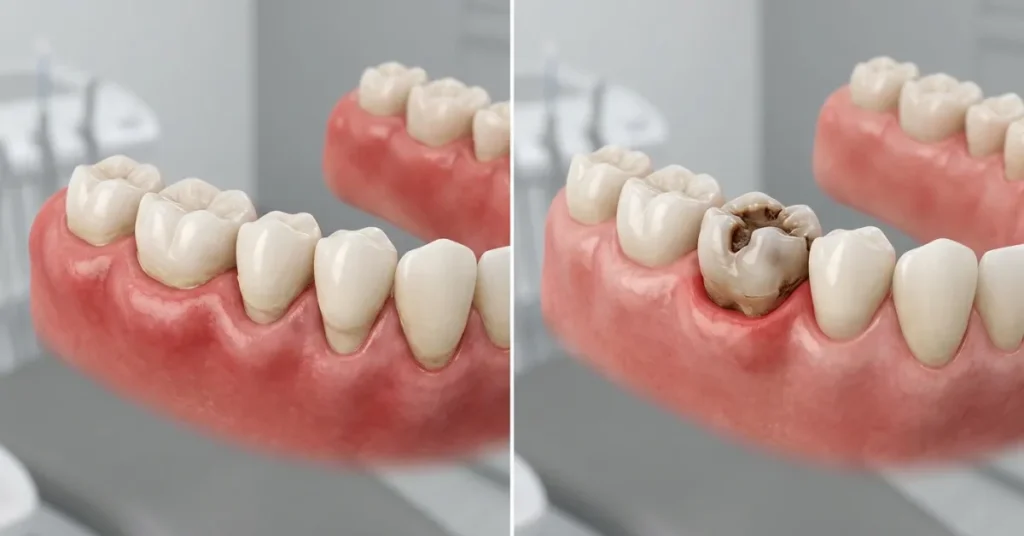
Gum Pain vs. Tooth Pain: How Can You Tell?
Gum and tooth pain can feel similar because the teeth and surrounding tissues are closely connected.
Gum-related discomfort may include:
- Tenderness along the gumline
- Gum swelling
- Redness
- Bleeding
- Pain between teeth
- Sensitivity of the gum tissue
Tooth-related pain may include:
- Sensitivity to hot or cold
- Pain when biting
- Pain involving a particular tooth
- A cracked or damaged tooth
- Deeper or throbbing discomfort
These patterns can overlap.
For example, an infected tooth may cause both tooth pain and swelling or tenderness in the surrounding gums.
If you cannot tell whether the pain is coming from your tooth or gums, a dental examination can help identify the source.
Gum Inflammation vs. Dental Infection
Gum inflammation and dental infections can share symptoms, but they are different problems.
| Gum inflammationPossible dental infection | |
|---|---|
| Red or swollen gums | Severe or throbbing pain |
| Bleeding during brushing | Gum or facial swelling |
| Gum tenderness | Pus or drainage |
| Often associated with plaque | Bad taste or unpleasant drainage |
| May improve with effective plaque control | May cause fever or feeling unwell |
| Persistent cases need dental assessment | Requires prompt professional evaluation |
This comparison is only a general guide. A dentist needs to examine the affected area to determine the actual cause.
How Long Does Gum Pain Last?
There is no single timeframe because the duration depends on the underlying cause.
| Possible causeWhat may happen | |
|---|---|
| Minor irritation | May improve within a few days after the irritant is removed |
| Minor mouth ulcer | Often heals within about one to two weeks |
| Gingivitis | May improve with effective plaque control and appropriate dental care |
| Tooth decay | Usually requires dental treatment |
| Dental infection | Requires prompt professional evaluation |
| Periodontitis | Requires ongoing professional management |
If the pain persists beyond what would be expected for minor irritation, repeatedly returns, or becomes more severe, arrange a dental examination.
Gum Pain by Location
The location of discomfort can sometimes provide useful clues.
| Where it hurtsPossible causes | |
|---|---|
| Around one tooth | Trapped food, localized inflammation, decay, or infection |
| Behind the last molar | Wisdom tooth problems or local irritation |
| Between two teeth | Trapped food, plaque, or gum inflammation |
| Along the gumline | Gingivitis, plaque buildup, or brushing irritation |
| Around several teeth | General gum inflammation or periodontal problems |
Location alone cannot establish a diagnosis.
How Do Dentists Diagnose Aching Gums?
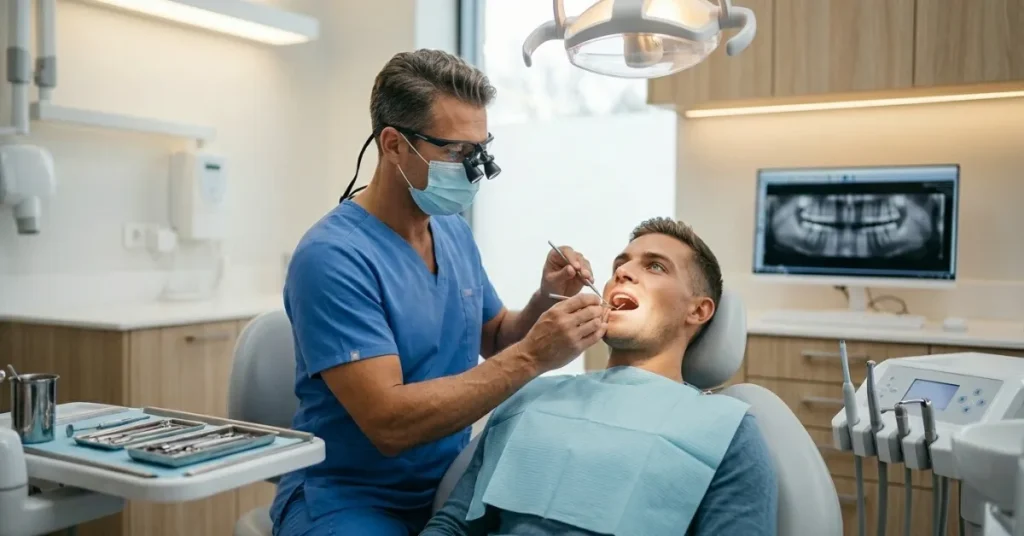
A dentist will usually begin by asking about your symptoms and examining your teeth and gums.
Depending on what they find, the examination may include:
- Looking for redness, swelling, or bleeding
- Checking for plaque and tartar
- Measuring gum pocket depth when appropriate
- Checking for tooth decay
- Looking for cracks or damaged teeth
- Checking whether teeth are loose or tender
- Evaluating your bite
- Taking dental X-rays when necessary
X-rays can reveal problems that may not be visible during a routine examination, including decay between teeth, bone loss, or infection around a tooth.
An accurate diagnosis matters because gingivitis, periodontitis, tooth decay, dental abscesses, and wisdom tooth problems can require different treatments.
How Is Gum Pain Treated?
Treatment depends on the underlying cause.
A dentist may recommend:
- Professional cleaning for plaque and tartar
- Improved oral hygiene for gingivitis
- Periodontal treatment for gum disease
- Treatment for tooth decay
- Root canal treatment for certain infected teeth
- Drainage or other treatment for a dental abscess
- Monitoring or treatment of wisdom teeth
- Treatment for a damaged or irritated tooth
Not every case of gum pain requires extensive treatment. The priority is identifying the cause and treating it appropriately.
How to Relieve Mild Gum Pain at Home
If the discomfort is mild and there are no signs of a serious infection, simple measures may provide temporary relief.
You can:
- Brush gently with a soft-bristled toothbrush.
- Clean carefully between your teeth every day.
- Rinse with warm salt water.
- Drink enough water.
- Choose softer foods temporarily if chewing is uncomfortable.
- Avoid foods that irritate the painful area.
- Avoid tobacco products.
- Leave irritated gum tissue alone rather than picking or scraping it.
These measures may help with minor irritation, but they cannot cure a dental abscess, advanced gum disease, or tooth decay.
Pain Relief for Aching Gums
Over-the-counter pain medicines may temporarily reduce discomfort for some people when used according to the product label and when appropriate for them.
If you are unsure whether a particular pain reliever is suitable for you, ask a pharmacist, dentist, or doctor.
Remember that pain relief treats the symptom, not necessarily the underlying cause.
If the pain continues, repeatedly returns, becomes worse, or occurs with swelling, pus, or fever, arrange a dental examination rather than relying on pain medicine alone.
What You Should Not Do for Aching Gums
Some home remedies can worsen irritation or delay appropriate treatment.
Avoid:
- Scraping, cutting, or picking at the gums
- Using sharp objects to remove trapped food
- Brushing aggressively over painful areas
- Applying very hot substances to the gums
- Ignoring persistent swelling
- Taking leftover antibiotics without professional advice
- Assuming temporary pain relief means the problem is cured
A reduction in pain does not necessarily mean the underlying dental problem has disappeared.
How to Prevent Gum Pain
Good daily oral hygiene can reduce the risk of many common causes of gum discomfort.
- Brush twice a day with fluoride toothpaste.
- Use a soft-bristled toothbrush.
- Use gentle pressure rather than aggressive scrubbing.
- Clean between your teeth every day with floss or an interdental cleaner.
- Attend dental checkups and professional cleanings according to your dental needs.
- Limit frequent sugary foods and drinks.
- Replace your toothbrush when its bristles become worn, generally every three to four months.
- Avoid using sharp objects to remove food.
- Avoid tobacco products.
Consistent, gentle oral hygiene is more helpful than aggressive brushing.
When Should You See a Dentist for Gum Pain?
Make a dental appointment if you have:
- Gum pain that persists
- Pain that repeatedly returns
- Persistent gum swelling
- Frequent or unexplained gum bleeding
- Gum recession
- Persistent bad breath or a bad taste
- Pain when chewing
- A loose or shifting tooth
- Pus around a tooth or gum
- Tooth pain occurring with gum discomfort
These symptoms do not automatically mean you have severe gum disease. They indicate that the underlying cause should be identified.
When Is Gum Pain an Emergency?
Some symptoms require urgent dental or medical attention.
Seek urgent care if gum or tooth pain occurs with:
- Significant or rapidly increasing swelling
- Facial or jaw swelling
- Fever
- Pus or drainage
- Severe or rapidly worsening pain
- Difficulty opening your mouth
- Difficulty swallowing
- Difficulty breathing
Difficulty Breathing or Swallowing Is Especially Important
If swelling in the mouth, face, jaw, or neck is interfering with breathing or swallowing, seek immediate medical attention.
A serious dental infection can spread beyond the original tooth or gum area and become dangerous if untreated.
Frequently Asked Questions About Aching Gums
Why Do My Gums Ache but Look Normal?
Gums can ache without obvious redness or swelling. Possible causes include trapped food, minor irritation, tooth decay, a cracked tooth, or an early dental problem. Persistent pain should be evaluated by a dentist.
Why Do My Gums Hurt in One Spot?
Pain in one area can be caused by trapped food, localized gum inflammation, a mouth ulcer, tooth decay, or an infection. If the pain does not improve within a few days, a dental examination can help identify the cause.
Why Do My Gums Hurt When I Brush?
Gum pain when brushing may result from brushing too hard, a hard-bristled toothbrush, gum inflammation, or another dental problem. Use a soft-bristled toothbrush and gentle pressure. Persistent soreness should be checked by a dentist.
Can Gingivitis Cause Aching Gums?
Yes. Gingivitis can make the gums red, swollen, tender, and more likely to bleed when brushing or flossing. It is commonly associated with plaque buildup along the gumline.
How Can I Relieve Aching Gums at Home?
For mild irritation, gentle brushing, careful cleaning between the teeth, warm salt-water rinses, drinking water, and avoiding irritating foods may provide temporary relief. Persistent or worsening pain should be evaluated by a dentist.
Why Do My Gums Ache at Night?
Gum pain at night can be linked to gum inflammation, tooth decay, an infection, trapped food, or nighttime teeth grinding or clenching. If the pain keeps returning or becomes severe, see a dentist.
Why Do My Gums Ache After Brushing?
Gums may ache after brushing if you use too much pressure, a hard-bristled toothbrush, or vigorous scrubbing. Existing gum inflammation can also make brushing uncomfortable. Use a soft-bristled toothbrush and gentle pressure, and see a dentist if the soreness persists.
The Bottom Line
Why do your gums ache? The cause can range from minor irritation or trapped food to gingivitis, periodontitis, tooth decay, wisdom tooth problems, or a dental infection.
Mild soreness may improve when a minor irritant is removed and gentle oral hygiene is restored. However, persistent, recurrent, or worsening gum pain should not be ignored, particularly when it occurs with swelling, pus, fever, a bad taste, loose teeth, or pain when chewing.
Remember that the source of pain is not always the gums. A cavity, cracked tooth, or dental infection can sometimes feel like gum pain, which is why persistent unexplained discomfort may require a dental examination.
For prevention, brush twice a day with fluoride toothpaste, clean between your teeth daily, use gentle brushing pressure, and maintain regular dental care.
If gum or tooth pain is accompanied by significant mouth or facial swelling, difficulty swallowing, or difficulty breathing, seek urgent medical attention.
Medical Disclaimer
This article is provided for general educational purposes and does not replace an examination, diagnosis, or treatment from a qualified dentist, doctor, or other healthcare professional.
If you have persistent, severe, recurrent, or worsening gum pain, arrange an appropriate professional evaluation. If you develop significant swelling, difficulty swallowing, or difficulty breathing, seek urgent medical attention. rate



nice article. Thanks for the info