
Ear Pain 3 Days After Tooth Extraction: Normal or Not?
Ear pain 3 days after tooth extraction? Learn what’s normal, signs of dry socket, how to relieve pain, and when to call your dentist.
Ear pain three days after a tooth extraction is usually just referred pain from healing tissue and is not a cause for alarm on its own, but if it’s getting worse instead of better, that timing lines up with the window when dry socket most often shows up.
Day three has a reputation among dentists for a reason. It’s the point where normal post-surgical swelling is supposed to be turning a corner, so any pain that goes the other direction stands out. If you extracted a lower molar or wisdom tooth, the ache you’re feeling in your ear right now might have nothing to do with your ear at all. It’s your jaw talking to you through a shared set of nerves.
Is It Normal for Ear Pain to Peak on Day 3?
Yes, for most people. Dentists commonly describe a pain curve that rises for the first two to three days after extraction, driven by inflammation, then starts easing off. If your ear discomfort fits that pattern, meaning it’s noticeable but not sharper than what you felt on day one or two, and you can still function, eat soft food, and sleep, you’re likely inside the range of expected healing.
What separates normal day-3 pain from a problem is direction, not intensity alone. Pain that’s holding steady or improving, even slowly, tends to be routine. Pain that spikes on day three after feeling better on day two is the pattern that gets flagged more often, because it doesn’t match how a simple wound is supposed to heal.
Why Ear Pain Happens After an Extraction in the First Place
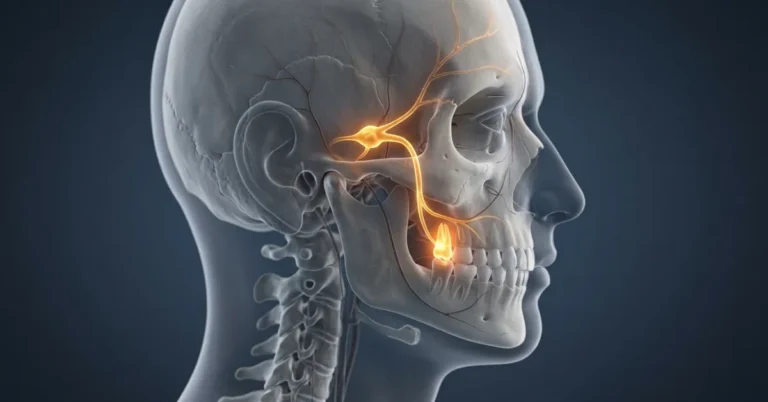
Your teeth, jaw joint, and ear canal sit closer together than most people realize, and they share nerve wiring. That overlap explains why a wound in your mouth can be felt in a completely different part of your head.
Referred pain through the trigeminal nerve. The trigeminal nerve carries sensation from your teeth, jaw, and parts of your ear. When the extraction site is inflamed or irritated, signals traveling along that nerve can register in your brain as ear pain, even though the ear tissue itself is fine.
TMJ strain from the procedure. Keeping your mouth open wide for the length of an extraction puts real stress on the temporomandibular joint, which sits right in front of your ear canal. A sore, overworked TMJ often feels like it’s coming from inside the ear.
Sinus proximity for upper teeth. If the extracted tooth was an upper molar, its roots sit close to your maxillary sinus. Swelling or minor irritation there can create pressure that radiates toward the ear, similar to the fullness you’d feel with a sinus cold.
General post-surgical swelling. Inflammation around the socket doesn’t always stay contained to one small area. As tissue swells, it can press on nearby structures and create a dull, spreading discomfort that reaches the ear.
Dry Socket: The Complication Most Linked to Day-3 Ear Pain
Dry socket, known clinically as alveolar osteitis, happens when the blood clot protecting the extraction site is dislodged or dissolves before the wound underneath has healed. That leaves bone and nerve endings exposed, and it’s genuinely painful. It typically develops three to five days after extraction, which is exactly why day-3 ear pain gets extra scrutiny.
The pain pattern is fairly distinct once you know what to look for. Instead of the slow, steady improvement you’d expect from normal healing, dry socket pain shows up as a sudden jump, and it frequently radiates toward the ear, jaw, or temple on the same side as the extraction. Some people also notice an unpleasant taste or smell, or can see that the socket looks empty rather than filled with the dark clot that should be there.
Dry socket is uncommon relative to how many extractions happen every day, and it’s very treatable once a dentist packs the socket properly. It is not something to manage by waiting it out at home.
How Long Should Ear Pain Last After a Tooth Extraction?
For straightforward referred pain, most people feel real improvement within three to five days, with full resolution somewhere in the one-to-two-week range as the socket closes over and swelling fully resolves. Simple extractions of front teeth tend to resolve faster than surgical removals of impacted wisdom teeth, which involve more tissue manipulation and naturally take longer to settle down.
The general rule dentists use: pain should trend downward, even if slowly, from around day two or three onward. A flat or worsening trend past that point, regardless of how many total days it’s been, is the signal worth acting on rather than the calendar date itself.
Warning Signs: When to Call Your Dentist
Contact your dentist rather than waiting if you notice any of the following:
- Pain that worsens on or after day 3 instead of gradually improving
- Sharp, throbbing pain that spreads to your jaw, temple, or ear and doesn’t respond to ibuprofen or acetaminophen
- A bad taste or odor coming from the extraction site
- The socket looking empty, or visible bone where the clot should be
- Fever, chills, or increasing facial swelling
- Pus, discharge, or unusual redness around the site
- Any change in hearing, ringing, or discharge from the ear itself
That last point matters. Referred pain affects how your ear feels, not how it works. If you’re noticing actual hearing changes or drainage from the ear canal, that’s outside the referred-pain pattern and worth a separate look, potentially from your physician or an ENT, alongside your dentist confirming the extraction site itself is healing normally.
How to Relieve Ear Pain After a Tooth Extraction
If your pain fits the normal pattern, these steps, drawn from standard post-extraction aftercare guidance, tend to help most:
- Cold compress. Hold it against the outside of your jaw near the extraction side for 15 to 20 minutes at a time during the first 24 to 48 hours to limit swelling.
- OTC pain relievers. Ibuprofen or acetaminophen, taken as directed on the label or per your dentist’s instructions, addresses both pain and the inflammation driving it.
- Saltwater rinses. Starting 24 hours after the procedure, gentle warm saltwater rinses keep the site clean without disturbing the healing clot.
- Soft foods only. Give your jaw a break from chewing so you’re not adding mechanical strain on top of surgical healing.
- Limit jaw movement. Skip wide yawns, gum chewing, and long conversations where you can, since TMJ strain is one of the drivers of ear-radiating pain.
- Sleep with your head elevated. An extra pillow reduces blood flow and pressure buildup near the surgical site overnight.
- Avoid straws and smoking. Suction increases the risk of dislodging the clot that’s protecting your socket, which is the exact mechanism behind dry socket.
If you’ve tried these and the pain isn’t budging, or it’s getting worse rather than better, that’s your cue to call rather than wait for another day to see what happens.
Frequently Asked Questions
Is it normal to have ear pain 3 days after a tooth extraction?
Yes, mild to moderate ear pain that is holding steady or improving is common on day 3, especially after lower molar or wisdom tooth removal, and usually reflects referred nerve pain rather than an ear problem.
Can dry socket cause ear pain?
Yes. Dry socket typically develops three to five days after extraction and is known for pain that radiates to the ear, jaw, or temple, often arriving as a sudden increase rather than a gradual one.
Why does my ear hurt more on one side after a tooth extraction?
Because the pain is referred through the trigeminal nerve and TMJ on the same side as the extraction, discomfort is usually one-sided, matching the side the tooth was removed from.
When should I worry about ear pain after a tooth extraction?
Worry, and call your dentist, if the pain worsens after day 3, comes with fever or swelling, includes a bad taste or odor, or if you notice actual hearing changes rather than just an ache.
Can a wisdom tooth extraction cause ear pain?
Yes, more often than other extractions, since wisdom teeth sit closer to the jaw joint and ear canal, making TMJ-related and referred pain more common after their removal.
Does upper tooth extraction cause more ear pain than lower?
Upper molar extractions are more likely to involve sinus-related pressure near the ear, while lower extractions are more associated with TMJ and trigeminal nerve referred pain. Both can produce ear discomfort through different mechanisms.
The Bottom Line
Ear pain three days after a tooth extraction is, for most people, a normal part of healing rather than a red flag on its own. What matters more than the pain itself is its direction. Steady or fading discomfort points to routine recovery, while pain that suddenly worsens around this window is the pattern most closely tied to dry socket and deserves a call to your dentist rather than a wait-and-see approach. Keep icing, keep up with your rinses and soft foods, and trust the warning signs above to tell you when it’s time to get checked rather than trying to tough it out.
This article is for general informational purposes and isn’t a substitute for advice from your own doctor or dentist, especially if bleeding is heavy, recurring, or unexplained.