Hypergamy: What the Research Actually Shows
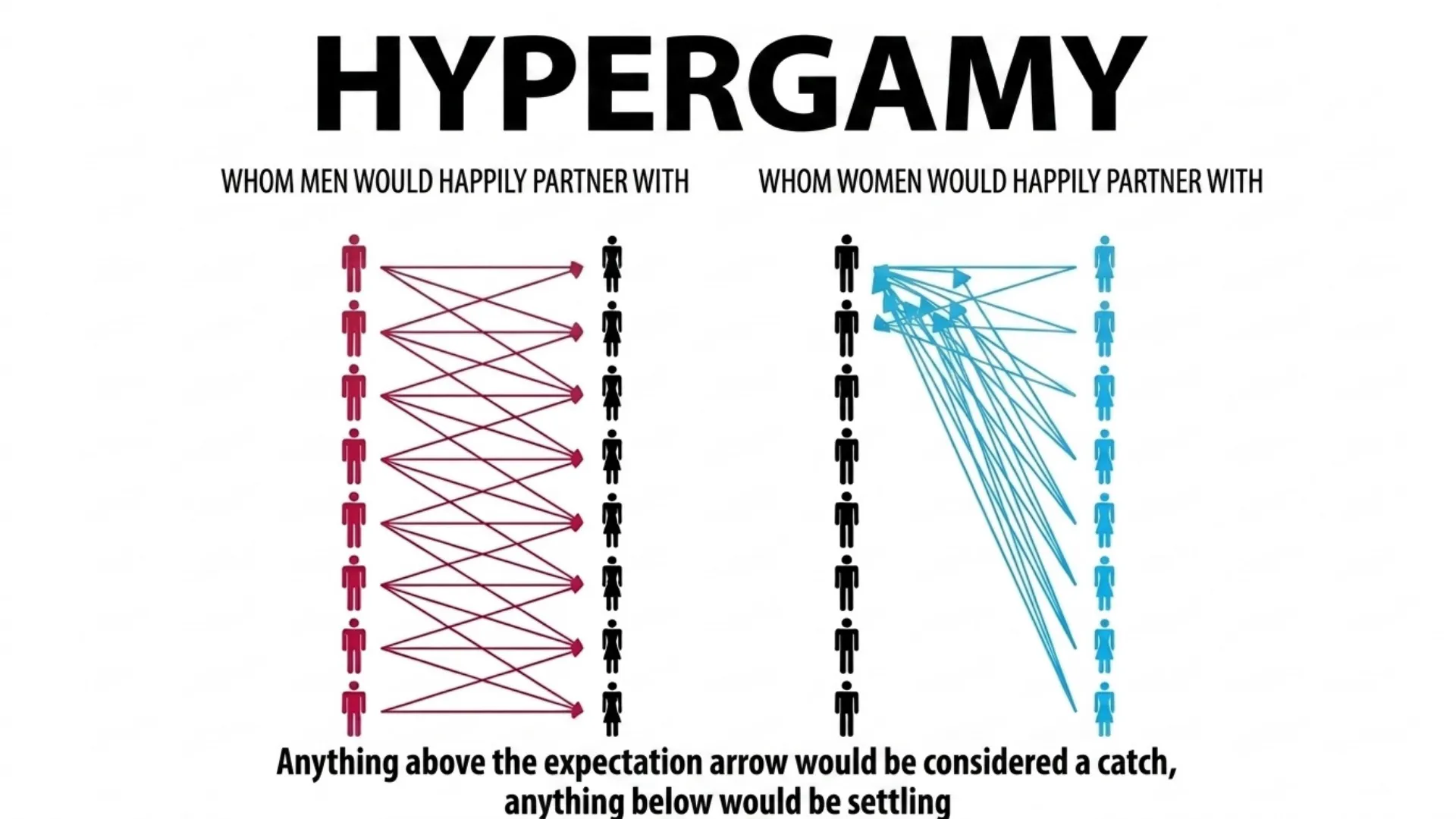
Hypergamy is a documented mate preference: women weight partner status more than men do, on average, across cultures. Here is what the research shows.
The short answer
Hypergamy refers to a documented tendency, found across dozens of cultures, for women to weight a partner’s status, resources, or ambition somewhat more heavily than men do on average, while men weight youth and physical attractiveness somewhat more heavily. This comes from real, peer-reviewed research, not internet speculation. It’s a statistical pattern in survey data, not a claim that every woman is materialistic or that love isn’t genuine.It is surely a harsh truth of this generation.
The core evidence
The landmark study. In 1989, psychologist David Buss surveyed mate preferences across 37 cultures and found a consistent cross-cultural pattern: women rated a partner’s financial prospects and status more highly than men did, while men rated youth and physical attractiveness more highly than women did. This is one of the most cited studies in evolutionary psychology, and later cross-cultural work has largely replicated the direction of the pattern.
Why researchers think this happens. The dominant explanation is parental investment theory: because pregnancy, childbirth, and early child-rearing historically required far more physical investment from women than from men, the theory holds that women evolved to be more selective about a partner’s ability to provide and protect that investment. This is an evolutionary hypothesis with strong supporting data, not an unproven guess, though like any evolutionary account of behavior it explains an average tendency, not every individual choice.
It’s a majority pattern, not a universal one. “On average, across large samples” means most women in these studies showed the pattern to some degree, but it does not mean every woman prioritizes status, and it says nothing about what any specific woman values. Averages describe groups; they don’t predict individuals.
Is it changing?
This is genuinely unsettled in the research, and it’s worth being honest about that instead of picking whichever answer fits a narrative. Some studies find that as societies become more gender-equal and women gain more financial independence, the status-preference gap narrows. Other studies find no such narrowing, and some find it holding steady or even widening in certain contexts. Researchers have not reached consensus, so any confident claim that hypergamy is disappearing, or that it’s getting worse, is going beyond what the data currently supports.
Dating apps intensify the visible effect. Digital dating creates visibility hierarchies where high-status or highly attractive profiles receive disproportionate attention, which sharpens both competition among men and selectivity among women. This is a real, measurable effect of how app algorithms distribute attention, not new evidence that people’s underlying preferences have changed.
Common misconceptions
- “Hypergamy means women only care about money.” No. Status and resource potential are one weighted factor among several in the research, not the only one, and ambition or social standing were the specific traits studied, not wealth alone.
- “This is a modern generational problem.” No. The pattern shows up across cultures and historical periods in the cross-cultural data. It is not unique to any single generation; what’s new is the scale and visibility that dating apps add to an old pattern.
- “Preferring status means love isn’t real.” These aren’t opposites. Valuing stability and capability in a partner is compatible with genuine emotional attachment; the research doesn’t measure or speak to the authenticity of anyone’s feelings.
Frequently asked questions
Why can hypergamy feel so painful?
Hypergamy can feel painful when someone believes they were replaced because another person seemed more successful, attractive, wealthy, or socially valued. But rejection does not mean you were “less worthy.” Attraction and relationships involve many factors, and another person’s choice does not define your value.
Does hypergamy mean people leave when someone better comes along?
Not necessarily. But Prolly.Some people may prioritize status or resources when choosing partners, but many relationships are built around emotional connection, trust, compatibility, shared values, and genuine affection. The idea that everyone leaves for someone “better” can make relationships seem more hopeless than they really are.
Why does modern dating make hypergamy feel more visible?
Dating apps and social media can make comparisons feel constant. Seeing carefully selected images of other people’s lifestyles or relationships may create the impression that everyone is competing for someone higher-status. That perception can be emotionally exhausting, even though online behavior does not represent every real-life relationship.
Is it sad to think someone might choose you only until someone “better” appears?
It can be a painful thought, especially when you genuinely care about someone. But healthy relationships are not supposed to be permanent competitions for the highest-status partner. Someone choosing to stay with you is ultimately about the whole relationship, not simply a ranking of who is objectively “better.”
How are feminism and hypergamy connected?
The relationship between feminism and hypergamy is often debated. Some argue that greater female economic independence has changed traditional relationship expectations, while others argue that feminism has little to do with individual mate preferences. It can feel painful to wonder whether modern relationships have become more focused on status, money, or “trading up,” but there is no solid basis for saying feminism itself causes hypergamy. Human partner preferences are influenced by many social, cultural, and personal factors.
What is hypergamy?
Hypergamy generally refers to the tendency to seek a partner perceived as having higher social, economic, educational, or status-related characteristics. The term is used in sociology and discussions of human mate preferences, but it does not describe everyone or every relationship.
How is hypergamy connected to looksmaxing, palate development, and jawline aesthetics?
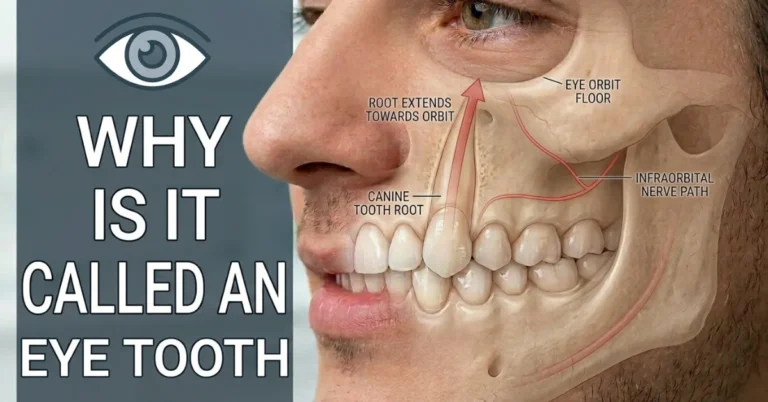
Online looksmaxing communities sometimes connect facial features such as jawline definition, dental alignment, palate shape, and overall facial harmony with perceived attractiveness and, in turn, with dating success or “hypergamy.” Physical attractiveness can influence first impressions and romantic attraction, but there is no scientific basis for claiming that a particular palate shape or jawline guarantees a higher-status partner. Facial development is influenced by genetics, growth, dental factors, and environmental influences, while dating preferences are much more complex than appearance alone.But surely is that Men do looksmaxing because they crave love.
Key takeaways
- Hypergamy is a real, peer-reviewed finding: across dozens of cultures, women on average weight partner status and resources somewhat more than men do, while men weight youth and looks somewhat more.
- It’s a statistical tendency across large groups, not a description of any individual woman or a comment on whether love is genuine.
- Whether the pattern is changing as societies become more equal is unresolved in the research; treat confident claims either way with skepticism.
- Dating apps amplify the visibility of status-based sorting through their design, which is a separate effect from any underlying shift in preferences.
Sources
- Buss, D. M. (1989), Sex differences in human mate preferences: Evolutionary hypotheses tested in 37 cultures
- Wikipedia, Hypergamy (overview with citations to primary cross-cultural studies)