Stuck Food in Teeth: Causes, Fixes, and Prevention
Stuck food in teeth is common, but chronic cases can signal cavities or gum problems. Learn safe removal steps, causes, and when to see a dentist.
Food gets stuck in teeth because of small gaps, worn dental work, or gum changes that create pockets where a toothbrush cannot reach on its own. In most cases, a piece of stuck food is a minor and completely normal annoyance. If it happens constantly, in the same spot, especially somewhere it never used to happen, it usually points to a specific, fixable cause and is worth paying attention to.
This guide covers why stuck food happens, which foods cause the most trouble, how to remove it without hurting your gums, what it means if it’s happening in a new spot, and when it’s time to see a dentist.
Why Food Gets Stuck in Your Teeth
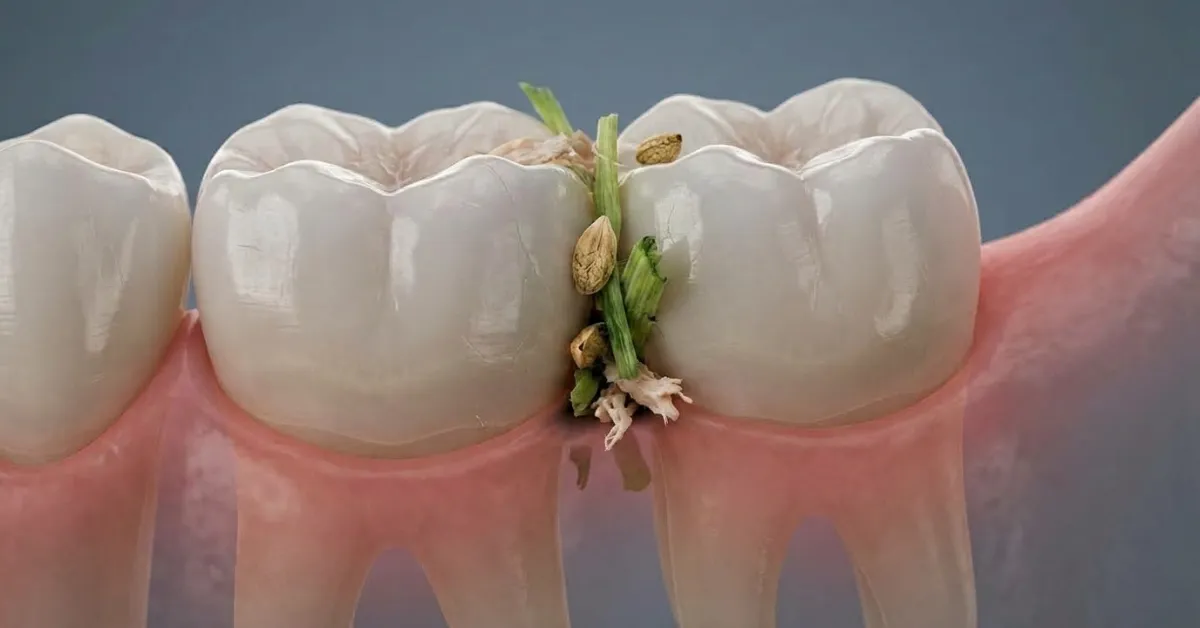
Your teeth are not perfectly smooth boxes stacked next to each other. Where two teeth meet is called a contact point, and a healthy contact point, backed by a triangle of gum tissue called the papilla, is tight enough to deflect food away while you chew. When that seal weakens or opens up, food gets pushed into the gap instead of past it.
Gum Recession and Bone Loss (Black Triangles)
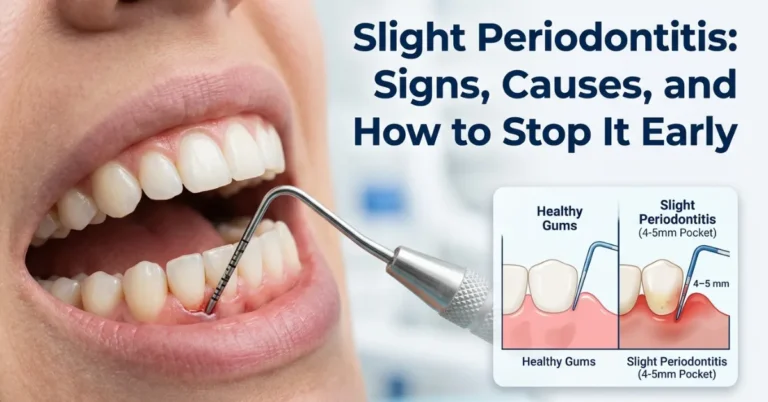
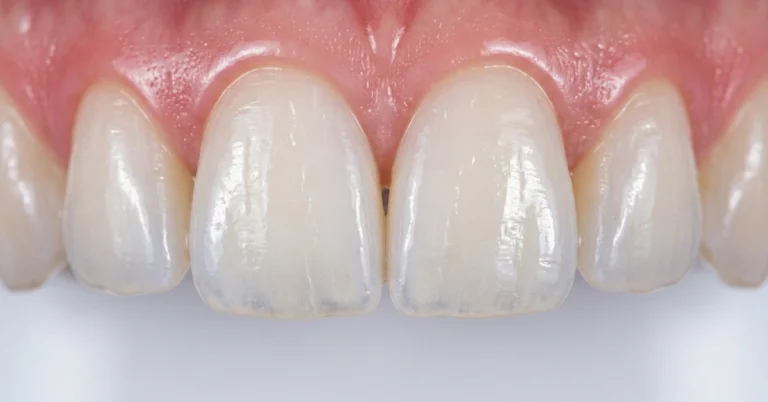
As gums recede, the papilla that once filled the space between two teeth shrinks or disappears, leaving what dentists call a black triangle or open gingival embrasure. Gum recession can come from aging, aggressive brushing, orthodontic movement, or gum disease. If the surrounding bone is also being lost to periodontal disease, the gap tends to keep widening rather than staying the same size, which is why food trapping that appears suddenly, in a spot that was never a problem before, is worth a closer look rather than dismissing as bad luck.
Cavities and Interproximal Decay
A cavity is a hole, and holes catch things. Decay that forms specifically between two teeth, called interproximal decay, breaks down the contact point from the inside, so food gets pushed directly into it every time you chew and will not clear with a quick rinse the way surface debris does.
Ill-Fitting or Worn Fillings, Crowns, and Bridges
Dental work that no longer sits flush against the adjacent tooth creates a ledge or gap at the contact point. Fillings and crowns wear down over years of chewing, and once the contact loosens, flossing alone will not fix it. The restoration itself needs to be adjusted or replaced.
Plunger Cusps
Less commonly discussed, but genuinely useful to know: a cusp on the opposing tooth (the one you bite down against) can sit at an angle that drives directly into the contact point below it every time you chew, essentially wedging food into the gap on purpose. This is one a dentist can usually spot and correct with minor reshaping of the offending cusp.
Missing Teeth and Drifting
When a tooth is lost and not replaced, neighboring teeth have nowhere to lean on and can gradually tilt or drift into the empty space. As they move, their contact points with other teeth shift too, opening new gaps that weren’t there before.
Grinding and Clenching (Bruxism)
Chronic grinding puts uneven pressure on teeth over time and can very gradually push them outward, opening small gaps at the contact points that didn’t previously exist.
Wisdom Teeth and Molar Grooves
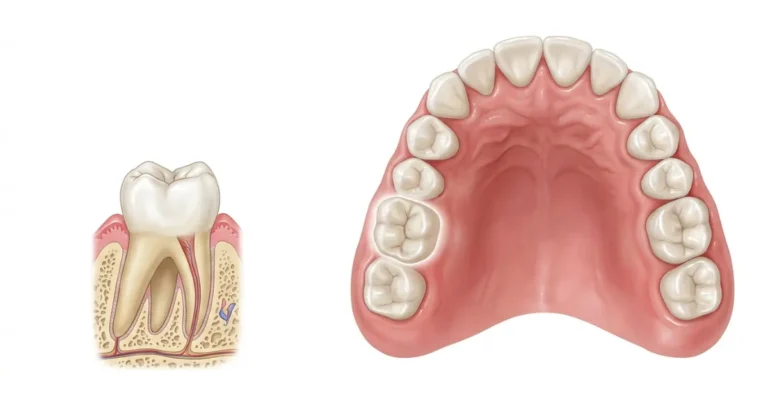
Wisdom teeth that are partially erupted or growing at an angle often leave a flap of gum tissue or an awkward gap next to the neighboring molar. Separately, the natural grooves on the chewing surface of molars, called pits and fissures, can trap small particles like seeds even when the teeth themselves are perfectly healthy.
Can Food Trapping Mean Your Teeth Are Shifting?
It can, and this is the part most explanations of this topic skip entirely. Teeth are not fixed rigidly in the jaw; each one is held in place by a thin ligament and surrounding bone, and both can be affected by long-term gum inflammation. When bone support is lost to periodontal disease, teeth can gradually tilt or migrate, most visibly as front teeth fanning slightly forward or outward. As that happens, new gaps open at the contact points, and food starts getting trapped somewhere it never used to.
This doesn’t mean every instance of stuck food means your teeth are moving. It means the specific pattern of “a new gap, in a new spot, that wasn’t there a few months ago” is different from “I occasionally get popcorn stuck.” If you notice a tooth looking slightly different, feeling loose, or a new food trap that keeps appearing in the same new place, that combination is worth a periodontal check rather than continued flossing around it.
Foods Most Likely to Get Stuck
Some foods are simply built to wedge into small spaces. The most common offenders include:
- Popcorn hulls. The thin, sharp husk on a popcorn kernel is shaped to slide under the gum line and lodge there.
- Seeds. Poppy, sesame, chia, and berry seeds are small enough to fit into the tightest contact points and gum pockets.
- Stringy meat and poultry. Muscle fibers from steak or chicken can catch on rough edges of a filling or crown.
- Leafy greens. Spinach and kale tend to fold and wrap around teeth rather than clear away.
- Sticky candy. Caramel and taffy grip the tooth surface itself and can even loosen an existing filling.
- Fibrous vegetables. Celery and green beans leave stringy strands behind in the same way meat does.
If you’re prone to trapping, this is a case where prevention beats reaction: rinsing with water right after eating any of these foods clears loose particles before they settle into a gap.
Food Trap vs. True Food Impaction
Dentists use two different terms for this problem, and the distinction matters because it changes what you should do next. A food trap is loose debris sitting in a gap; a true food impaction is food packed tightly into that gap under chewing pressure, often painful, and unlikely to clear with a simple rinse.
| Ordinary Food Trap | True Food Impaction | |
|---|---|---|
| Feeling | Mild irritation, awareness of something present | Pressure, throbbing, or sharp pain |
| Location | Can vary meal to meal | Usually the same spot every time |
| Response to floss or water | Clears easily | Resists gentle removal |
| Underlying cause | Loose particle, minor gap | Open contact point, cavity, worn dental work, or bone loss |
| Best next step | Floss or rinse, then move on | See a dentist to fix the underlying gap |
How to Safely Remove Stuck Food
- Rinse first. Swish water or an alcohol-free mouth rinse around the area for 15 to 20 seconds. This clears loose debris without any risk to your gums.
- Floss gently. Slide the floss between the teeth using a light back-and-forth motion, then curve it into a C-shape around each tooth. Avoid snapping the floss straight down onto the gum, which can cause a cut. The American Dental Association recommends flossing once a day to remove food particles and plaque that a toothbrush alone cannot reach.
- Try an interdental brush or floss pick if regular floss keeps shredding in the same spot, since that’s often a sign of a rough edge on a filling or crown.
- Use a water flosser for a gentler, pressurized-water alternative, especially useful around gum recession or dental work.
- Eat something crisp, like a raw carrot or apple slice, if you have no floss on hand. The chewing motion can dislodge a loose particle, though this is a backup option rather than a routine method.
What Not to Do When Food Is Stuck
It’s tempting to reach for whatever is nearby, but several common shortcuts carry real risk:
- Toothpicks and pins can puncture gum tissue or, if they slip, chip a tooth. Purpose-made dental picks and interdental brushes are a safer alternative if regular floss isn’t working.
- Fingernails carry bacteria into an already irritated area and can scratch the gum line.
- Forks, knives, or other utensils are far too rigid for this job and can crack a tooth if you apply pressure at the wrong angle.
- Aggressive or repeated flossing in one spot can push the particle deeper or damage the gum tissue if the floss is snapped rather than guided.
If the particle will not come out with gentle floss and rinsing after a reasonable attempt, stop trying and call your dentist rather than escalating to sharper tools.
What Happens If You Leave It Stuck
Food left wedged between teeth does not simply dissolve. Saliva and tongue movement can loosen small particles over time, but larger ones typically stay put until they’re physically removed. While they sit there, bacteria feed on the trapped particles and produce acid as a byproduct, which is the same process that causes cavities. Left long enough in one spot, this can lead to:
- Tooth decay at the contact point, since enamel is under constant acid exposure
- Gum inflammation, which can progress to gingivitis if the area isn’t cleaned, and to more serious periodontal disease if it continues unchecked
- Bad breath, from decomposing food particles and bacterial buildup
- Pain or pressure, particularly with a true impaction rather than a loose trap
How Long Is Too Long?
A few hours is not a concern; floss it out at your next opportunity. If food has been lodged in the same spot for more than a day, or if you notice swelling, throbbing pain, or bleeding when you try to remove it, that’s a signal to stop attempting removal at home and see a dentist. Pain that increases when you bite down is a particularly useful clue that this is a true impaction rather than loose debris.
How to Prevent Food From Getting Stuck
- Floss once a day, even in spots that don’t feel like a problem, since prevention is easier than removal
- Rinse with water after meals, especially after eating stringy, seedy, or sticky foods
- Address gum recession early with your dentist rather than waiting for it to worsen, since receding gums create permanent gaps once the papilla is lost
- Get worn or ill-fitting dental work checked if trapping keeps happening in the exact same spot
- Consider dental sealants on deep molar grooves if seeds or small particles are a recurring problem in that specific area
- Ask about a night guard if you grind or clench, since bruxism can gradually open new gaps over time
- Keep floss picks or travel floss with you so you’re not stuck waiting until you get home
When to See a Dentist
See a dentist if food keeps getting stuck in the same spot at nearly every meal, if it’s a new pattern in a spot that never used to trap food, if removal is painful or unsuccessful with gentle flossing, or if you notice swelling, bleeding, tooth mobility, or a persistent bad taste near the area. A dental exam for recurring food trapping typically includes checking the fit of nearby fillings or crowns, looking for decay between teeth, and measuring gum pocket depth to rule out bone loss. These checks matter because none of the underlying causes, cavities, worn dental work, gum recession, or shifting teeth, resolve on their own with flossing alone.
Frequently Asked Questions
Will food stuck in teeth eventually come out on its own?
Small, loose particles can sometimes work free on their own with saliva and normal mouth movement, but larger or tightly wedged pieces usually will not. If it hasn’t cleared within a day, gentle flossing or a dental visit is a better plan than waiting it out.
How do I get rid of food stuck in my teeth?
Rinse with water first, then floss gently using a back-and-forth motion followed by a C-shape curve around each tooth. If regular floss isn’t working, an interdental brush, floss pick, or water flosser is a safer next step than a toothpick or fingernail.
What happens if food stays in your teeth?
Bacteria feed on trapped food particles and produce acid, which can contribute to cavities. The area may also become inflamed, causing gum irritation and bad breath, while repeated trapping over time can increase the risk of decay.
Will stuck food eventually go down or dissolve?
Not typically. Saliva can loosen small, soft particles over time, but most solid food does not dissolve in the mouth. It usually stays lodged until it is physically removed by flossing, rinsing, or another safe method.
Is it normal for food to get stuck in your teeth?
Yes, occasional food trapping happens to almost everyone. It is worth investigating when it repeatedly happens in the same spot, is painful to remove, or starts occurring somewhere it never used to.
Conclusion / Key Takeaways
An occasional piece of stuck food is a normal, harmless part of eating, and gentle flossing or rinsing clears it in most cases. What matters is the pattern: a one-off event is nothing to worry about, but recurring trapping in the same spot, especially somewhere it never used to happen, can be an early sign of gum disease, bone loss, worn dental work, or even teeth beginning to shift. Skip the toothpicks and sharp objects, keep floss or a floss pick within reach, and treat a persistent or newly appearing food trap as useful information about your teeth rather than just an annoyance to ignore.