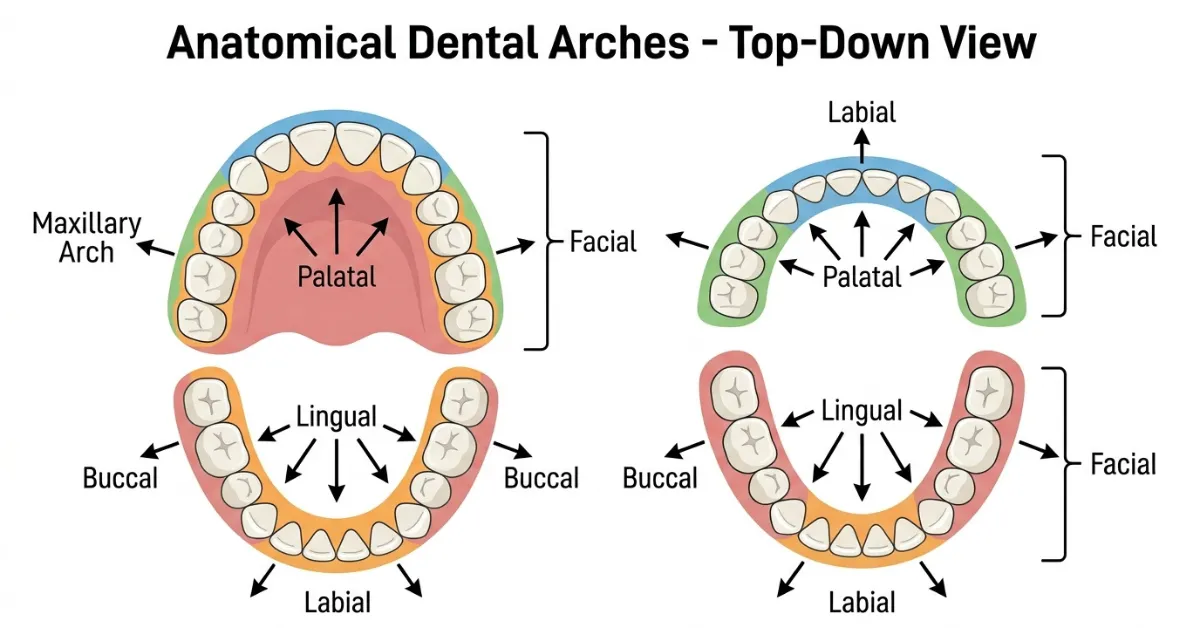
Lingual Surface vs Labial Surface: What’s the Real Difference?
Lingual surface vs labial surface: one faces your tongue, one faces your lips, and mixing them up is the #1 mistake on anatomy exams.
The labial surface of a tooth is the outer surface facing the lips, found only on your front teeth. The lingual surface is the inner surface facing the tongue, found on every tooth in your mouth. That’s the core distinction. But the terms get more interesting once you look at where they apply, where they don’t, and why dentists, hygienists, and orthodontists actually care about the difference.
I’ve sat through enough dental hygiene appointments where the hygienist calls out “distal lingual, upper left six” while charting, and it always struck me how much precision is packed into two words. That precision exists for a reason: every tooth surface has a job, and knowing which one is which changes how you understand your own oral health, not just how dental professionals talk to each other.
What Is the Labial Surface?
The labial surface is the outward-facing side of a tooth, the part you’d see pressed against your lips if you pulled them back. It only exists on your anterior teeth: the central incisors, lateral incisors, and canines, both upper and lower. You won’t hear a dentist say “labial surface” about a molar, because molars don’t have one.
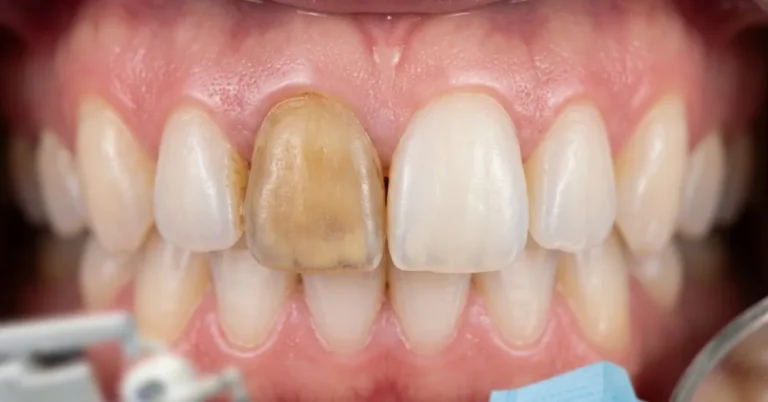
This surface takes the most cosmetic attention. It’s what shows when you smile, so any whitening, veneer, or bonding work is almost always applied to the labial surface. It also takes the brunt of direct impact, which is why a chipped front tooth almost always involves labial surface damage.
What Is the Lingual Surface?
The lingual surface is the tongue-facing side of a tooth, and unlike labial, it applies to every single tooth in your mouth, front and back, top and bottom. The name comes from the Latin word for tongue, “lingua,” which is the same root behind words like “linguist” and “bilingual.”
On your lower teeth, dentists just call this the lingual surface. On your upper teeth, you’ll often hear it called the palatal surface instead, because the tongue side of your upper teeth actually faces the roof of your mouth (the palate), not the tongue directly. Same concept, different name, depending on the arch.
Lingual Surface vs Labial Surface: The Key Differences
The two terms aren’t really opposites in a symmetrical sense. Labial is a narrow, front-teeth-only label. Lingual is a universal, whole-mouth label. Here’s the side-by-side breakdown.
Quick Comparison Table
| Feature | Labial Surface | Lingual Surface |
|---|---|---|
| Faces | Lips | Tongue (or palate, on upper teeth) |
| Applies to | Front teeth only (incisors, canines) | Every tooth (front and back) |
| Alternate name | Facial surface | Palatal surface (upper teeth only) |
| Main clinical relevance | Cosmetic appearance, chip risk | Plaque buildup, speech, chewing |
| Visible when smiling | Yes | No |
The practical way to remember it: if you can see the surface when someone smiles normally, you’re looking at labial (or buccal, on back teeth). If you’d need a mirror angled into the mouth to see it, you’re looking at lingual.
Why “Labial” Doesn’t Apply to Every Tooth
This is the part most explanations skip past. Labial only describes anterior teeth because your back teeth (premolars and molars) aren’t next to your lips, they’re next to your cheeks. So the outward surface of a molar isn’t called labial, it’s called buccal, from the Latin “bucca,” meaning cheek.
Dentists sometimes use “facial” as a catch-all term that covers both labial and buccal, since both describe a surface facing outward toward the face rather than inward toward the tongue. If you ever see “facial surface” on a chart, that’s why: it’s shorthand that works regardless of whether the tooth in question is a front tooth or a back one.
What About the Back Teeth? Buccal vs. Lingual
For molars and premolars, the comparison isn’t labial vs. lingual, it’s buccal vs. lingual. Buccal faces the cheek, lingual still faces the tongue. The lingual surface naming doesn’t change as you move from front to back teeth, which is actually the one constant across your entire dental arch. Every tooth you have, whether it’s a canine or a wisdom tooth, has exactly one lingual surface.
Why This Distinction Actually Matters
Dental Charting and Communication
Every restoration, cavity, or note in your dental record gets tied to a specific surface, because a filling on the labial surface of tooth #8 is a completely different procedure and cost than a filling on the lingual surface. Dentists and hygienists rely on this vocabulary to communicate precisely, especially during procedures where verbal shorthand (“MOD,” “DL,” “facial”) replaces long descriptions in real time.
Orthodontics: Labial vs. Lingual Braces
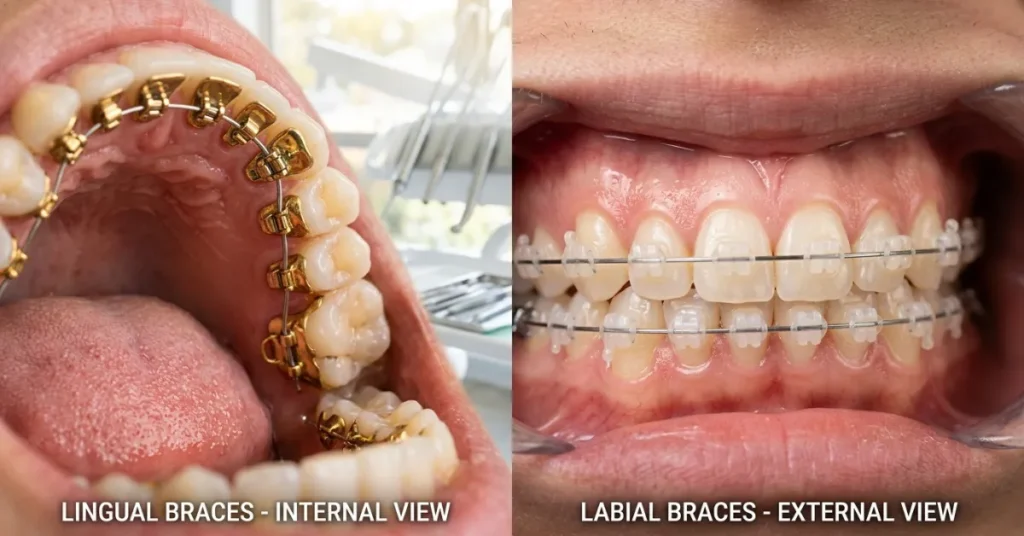
This distinction shows up directly in treatment choices. Traditional braces are labial braces, meaning the brackets sit on the outward-facing surface of your front teeth (and buccal surface further back), which is why they’re visible when you smile. Lingual braces flip that placement entirely, with brackets bonded to the tongue-side surface instead, making them invisible from the front but noticeably different in how they feel against the tongue during the first few weeks.
Hygiene: Why the Lingual Surface Gets Missed
If you’ve ever had a hygienist point out extra tartar buildup on the inside of your lower front teeth, that’s the lingual surface, and it’s one of the most commonly under-brushed areas in the mouth. It sits close to the salivary gland ducts under the tongue, which deposit minerals that accelerate tartar formation, and it’s simply harder to angle a toothbrush against than the labial surface you can see directly in a mirror. Angling your brush at roughly 45 degrees toward the gumline on the lingual surfaces of your lower front teeth, specifically, is one of the more overlooked habits that actually reduces buildup there.
FAQ:
Is lingual the same as palatal?
Not exactly. Lingual means the surface of a tooth facing toward the tongue. On upper teeth, that inner surface is often called palatal because it faces the palate. On lower teeth, it is generally called lingual.
Does every tooth have a labial surface?
No. Labial describes the outer surface of the front teeth, including incisors and canines, because they face the lips. The corresponding outer surface of premolars and molars is usually called buccal because it faces the cheeks.
What is the facial surface of a tooth?
The facial surface is the outward-facing surface of a tooth. For front teeth it is usually called labial, while for premolars and molars it is usually called buccal. Facial is a general term that can include either.
What is the difference between lingual and labial surfaces?
The lingual surface faces inward toward the tongue, while the labial surface faces outward toward the lips. Labial is generally used for the front teeth, whereas lingual can describe the tongue-facing surface of both front and back teeth.
What is the difference between buccal and lingual surfaces?
The buccal surface faces the cheek, while the lingual surface faces toward the tongue. Buccal is generally used for the outer surface of premolars and molars, while lingual describes the inner surface of teeth.
Key Takeaways
- Labial surface: the lip-facing side of front teeth only (incisors and canines).
- Lingual surface: the tongue-facing side of every tooth, front and back.
- On upper teeth, lingual is often called palatal instead.
- Back teeth swap “labial” for “buccal,” since they face the cheek, not the lips.
- The lingual surface is easy to under-brush and often builds up more tartar than the labial surface.
- The labial-vs-lingual distinction directly shapes real decisions, like whether you choose visible labial braces or hidden lingual braces.