Do Your Molars Fall Out as a Kid? Ages and What to Expect
Do your molars fall out as a kid? Baby molars fall out between ages 9 and 12, but permanent molars never do. See the full age-by-age timeline.
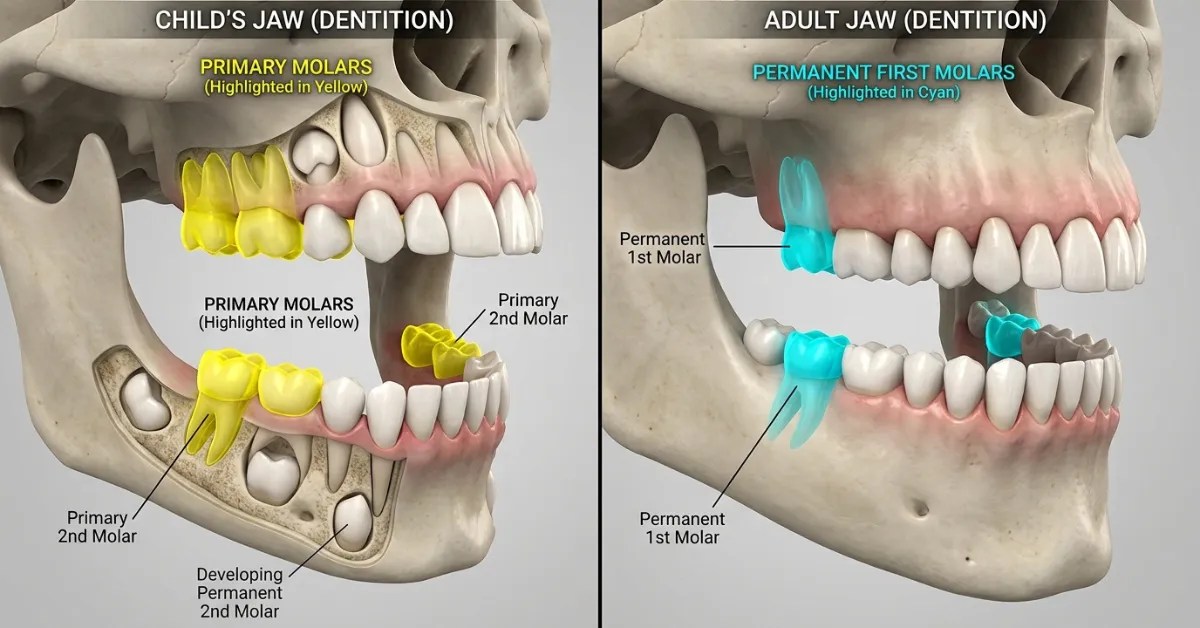
Yes, kids do lose their molars, but not all of them. Your baby molars, the flat back teeth that came in as a toddler, loosen and fall out just like your other baby teeth, usually between ages 9 and 12. Your permanent molars, including the ones that erupt around age 6, are not baby teeth at all. They arrive once and stay for life unless something like decay or an injury removes them.
That distinction is the whole answer to this question, and it’s also the reason so many kids (and parents) get confused. Two different sets of teeth both get called “molars,” they show up at different ages, and only one set is designed to fall out. Below is the full timeline, an explanation of what replaces each tooth, and what to do if something doesn’t seem to be following the usual schedule.
Do Your Molars Fall Out as a Kid? The Short Answer
Your first set of molars, the baby (primary) molars, fall out on schedule as part of normal childhood tooth loss. Your second and third sets, the permanent molars, are not replacements for anything and are meant to last your entire life. If a permanent molar looks loose, is painful, or falls out, that’s not a normal developmental stage; it’s a sign to see a dentist.
Baby Molars vs. Permanent Molars: Why the Confusion Happens
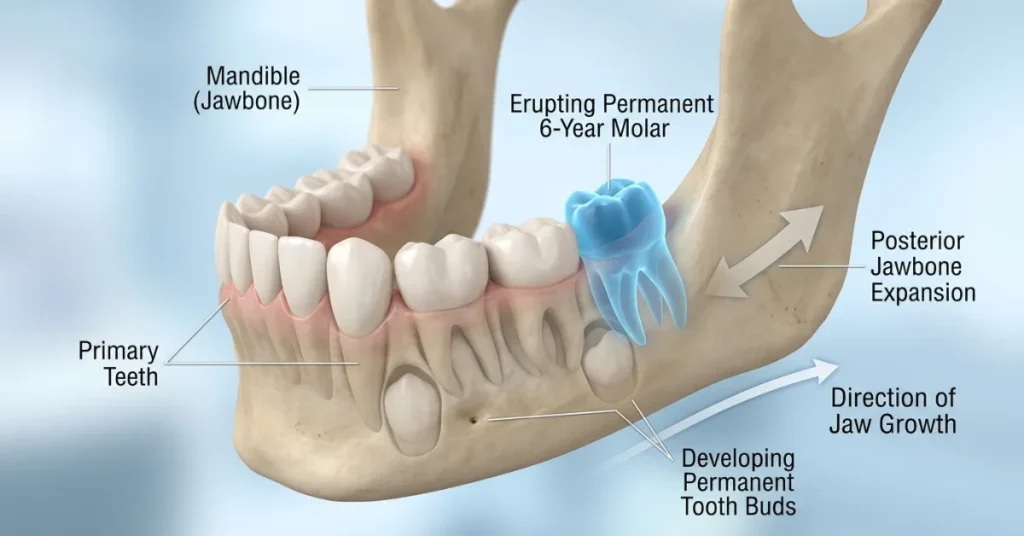
A child’s full set of 20 baby teeth includes eight molars: two upper and two lower molars on each side of the mouth (a first molar and a second molar per side). All eight of those baby molars are designed to loosen and fall out, the same as baby incisors and canines.
Permanent molars are a separate, additional set of teeth. Instead of coming in to replace a baby molar, the first permanent molars erupt farther back in the jaw, in space that opens up as the jaw grows. Nothing has to fall out first. That’s the detail that trips most people up: a 6-year-old can grow a brand-new permanent molar in the back of the mouth while the front baby teeth are still intact and years away from falling out.
So when someone asks “do your molars fall out,” the honest answer depends entirely on which molars they mean:
- Baby molars (in place roughly from toddlerhood): fall out, usually between ages 9 and 12.
- Permanent molars (first appearing around age 6): do not fall out under normal circumstances.
When Do Baby Molars Fall Out? Age-by-Age Timeline
Timing varies by child, sometimes by a year or more in either direction, and that’s considered normal. The ranges below reflect data published by the American Dental Association.
| Baby tooth | Typically erupts | Typically falls out |
|---|---|---|
| Central incisors (front teeth) | 6-12 months | 6-7 years |
| Lateral incisors | 9-16 months | 7-8 years |
| Canines (cuspids) | 16-23 months | 9-12 years |
| First molars | 13-19 months | 9-11 years |
| Second molars | 23-33 months | 10-12 years |
Baby molars are usually among the last baby teeth to go, not the first. A child typically loses the front bottom teeth around age 6 or 7 and doesn’t lose the last baby molar until somewhere around age 12. By that point, most kids are in the tail end of what dentists call the “mixed dentition” stage, the roughly six-year stretch (about ages 6 to 12) when baby teeth and permanent teeth are both present in the mouth at the same time.
What Replaces Baby Molars?
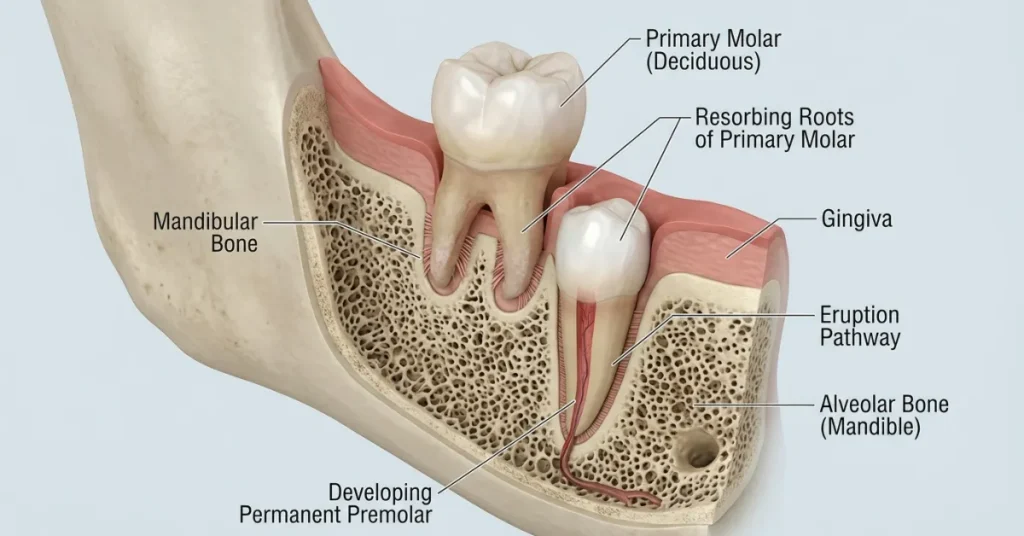
This is the part most explanations skip. Baby molars are not replaced by permanent molars. When a baby molar falls out, a permanent premolar (also called a bicuspid) erupts in its place. Premolars are smaller than molars and sit between the canines and the molars in the adult set. So the sequence for a lower baby molar, for example, looks like this: baby molar loosens and falls out around age 9 to 12, then a permanent premolar grows in to fill that spot over the following weeks to months.
Permanent molars, meanwhile, don’t take the place of any baby tooth. They simply add to the total count as the jaw gets bigger.
Do Permanent Molars Ever Fall Out?
Not as part of normal development. Once a permanent molar erupts, it’s meant to stay for the rest of your life, unlike baby teeth. There’s no natural process that loosens or removes a healthy permanent molar the way there is for baby teeth.
That said, a permanent molar can still be lost outside the normal process, usually for one of these reasons:
- Untreated tooth decay that destroys enough of the tooth structure that it can’t be saved.
- Trauma, such as a fall, sports injury, or accident that knocks the tooth out or fractures it beyond repair.
- Severe gum disease, which is rare in children but can loosen tooth roots.
- Planned extraction, for example if a dentist or orthodontist removes a molar to relieve crowding.
Unlike baby teeth, a lost permanent molar does not regrow. Depending on the child’s age and the specific tooth, a dentist may recommend a space maintainer, a filling or crown if part of the tooth is salvageable, or, later in life, a bridge or implant to fill the gap. This is a key reason dentists take molar cavities and molar injuries in kids seriously: unlike a lost baby tooth, there’s no built-in replacement waiting behind it.
The Full Set of Permanent Molars: 6-Year, 12-Year, and Wisdom Teeth
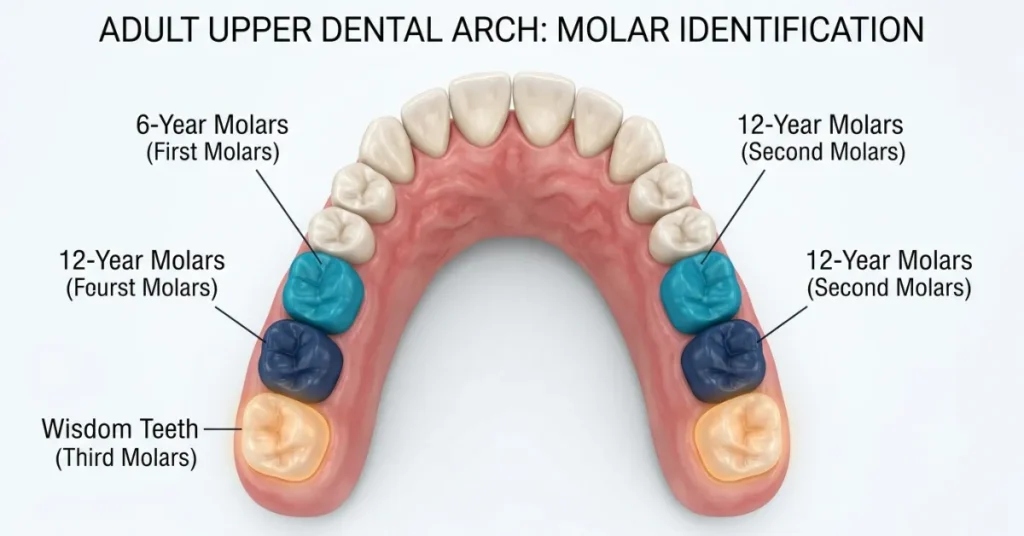
Permanent molars actually arrive in three separate waves over more than a decade, and each has a common nickname based on when it typically shows up.
| Permanent molar | Common name | Typical eruption age |
|---|---|---|
| First molars | “6-year molars” | 6-7 years |
| Second molars | “12-year molars” | 11-13 years |
| Third molars | Wisdom teeth | 17-21 years |
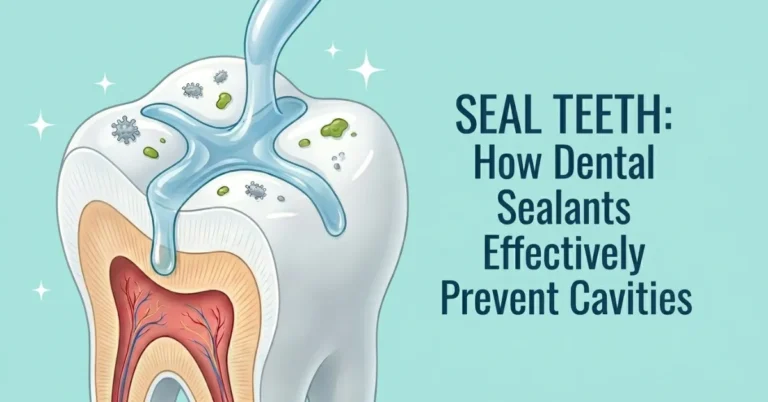
The 6-year molars are often mistaken for baby teeth because they show up while a child still has plenty of primary teeth in place, and because they erupt quietly, without any tooth coming out first. They also have deep grooves that trap food, which is why dentists frequently recommend sealants on these specific teeth soon after they come in.
Wisdom teeth are the outlier of the group. Not everyone grows all four, and a dentist may recommend removing them if there isn’t enough room in the jaw, which is a planned extraction rather than a sign that something went wrong with the tooth itself.
Signs Your Child Is About to Lose a Baby Molar
A baby molar getting ready to fall out usually gives some warning before it actually happens:
- The tooth feels loose or wiggly when touched with the tongue or a finger.
- Mild tenderness or sensitivity while chewing on that side.
- A small gap or slight shift in the surrounding teeth as the root resorbs.
- Occasionally, a bit of light bleeding when the tooth finally comes out, which is normal and typically stops within a few minutes.
Unlike the discomfort that can come with teething as a baby, most kids describe losing a molar as far less painful than getting one.
When to Call a Pediatric Dentist
Most molar loss and eruption happens without any need for a dental visit beyond regular checkups. Call a dentist if you notice:
- A permanent molar that looks loose, chipped, or has visibly changed color.
- A baby molar that hasn’t fallen out well past age 12, especially if a permanent tooth is visible coming in behind or beside it (sometimes called “shark teeth“).
- Ongoing pain in a molar that doesn’t resolve after the tooth falls out or after a new tooth erupts.
- Swelling, pus, or a fever alongside tooth pain, which can indicate infection.
- Significant asymmetry, for example molars falling out on one side of the mouth but not the other after several months.
FAQ
Do all four baby molars fall out at the same time?
No. Baby molars usually fall out gradually rather than all at once. They are typically lost between ages 9 and 12, although the timing and order can vary from child to child.
Is it normal for a permanent molar to hurt when it first comes in?
Some mild soreness or gum tenderness can occur while a permanent molar erupts. It should generally be manageable and temporary. Persistent, severe, or worsening pain should be checked by a dentist.
Do 6-year molars replace baby teeth?
No. The first permanent molars, often called 6-year molars, erupt behind the baby teeth in new space at the back of the mouth. They do not replace any baby tooth.
Can a lost permanent molar grow back?
No. Permanent teeth, including permanent molars, do not grow back after being lost. Depending on the child’s age and circumstances, a dentist may discuss options for managing the missing tooth and surrounding space.
What if my child hasn’t lost any baby molars by age 12?
Some variation in tooth loss is normal, but baby molars that remain firmly in place well beyond the usual age range should be evaluated by a dentist. An examination and, when appropriate, an X-ray can help determine whether the permanent teeth are developing and erupting normally.
Key Takeaways
Baby molars fall out, permanent molars don’t, and the age that matters most is 9 to 12, which is when the primary molars are typically shed and replaced by permanent premolars, not by more molars. The permanent molars, arriving as 6-year molars, 12-year molars, and eventually wisdom teeth, are meant to last a lifetime, so a loose or damaged permanent molar is a reason to see a dentist rather than something to wait out. If you’re tracking a specific child’s timeline, use the tables above as a general guide, and treat anything well outside those ranges, or any pain, swelling, or damage to a permanent tooth, as a reason for a dental checkup.