50+ Nicknames for Teeth (Funny, Cute, and Real Slang)
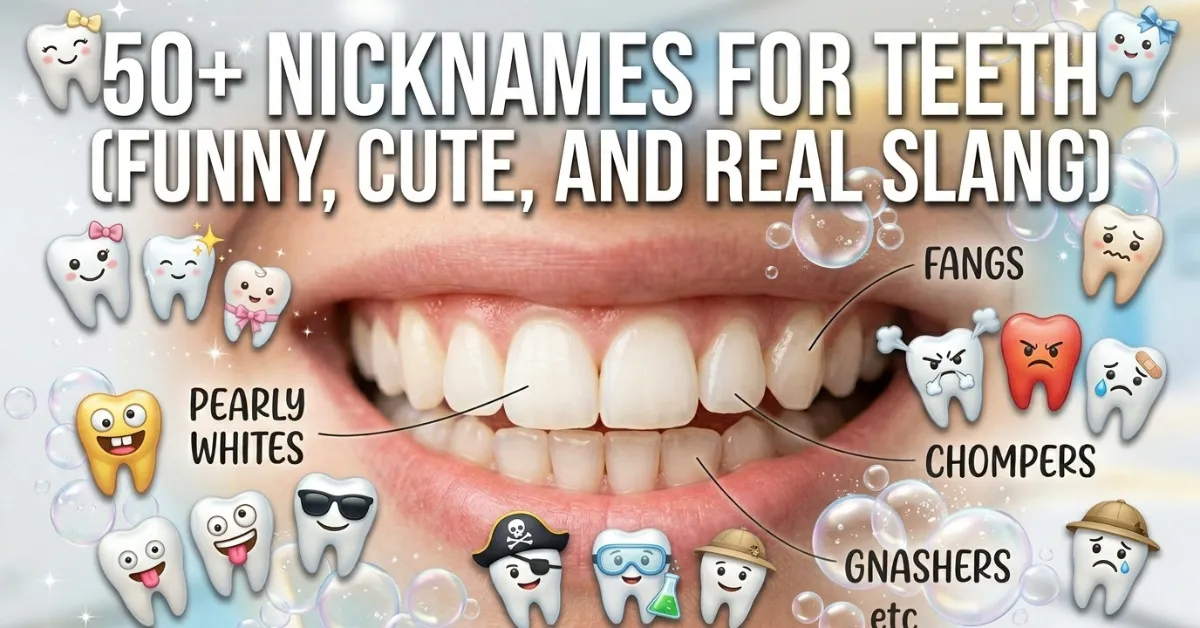
50+ nicknames for teeth: real British slang, funny names for a chipped tooth, and cute picks for a kid’s first tooth.
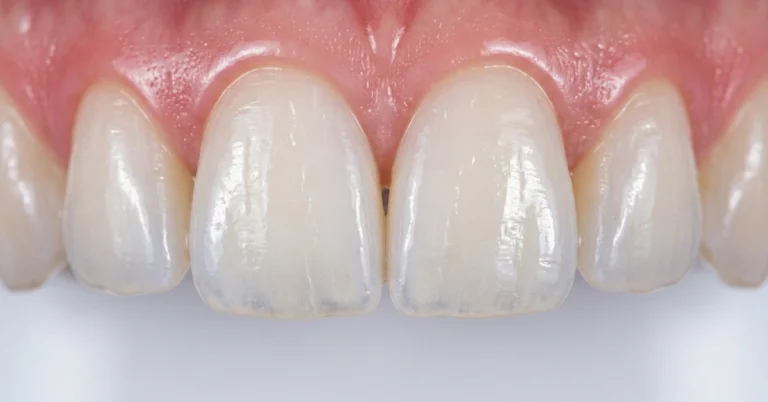
If you have ever caught yourself calling your teeth your “pearly whites” or joking about your kid’s “chompers,” you already know what a tooth nickname is. It is any informal name, funny, cute, or slang, that stands in for the word “tooth” or “teeth.” People use them to describe a whole smile, poke fun at a single crooked canine, or make a scary dentist visit feel a little less intimidating.
This guide pulls together the real slang English speakers actually use, the funny names people give a single problem tooth, and the gentler nicknames parents use with kids, all in one place. You will also find nicknames organized by which tooth you are talking about, since a name for a wisdom tooth and a name for a front tooth usually work very differently.
What Counts as a Nickname for Teeth?
A nickname for teeth falls into one of three buckets. The first is slang for the whole mouthful, words like “chompers” or “ivories” that anyone in the US or UK would recognize instantly. The second is a nickname for one specific tooth, something you might name after a chip, a gap, or an extraction, the way you would name a scar. The third is a nickname for a person, based on how their teeth look, which is where things like “Snaggletooth” or “Bugs” come from.
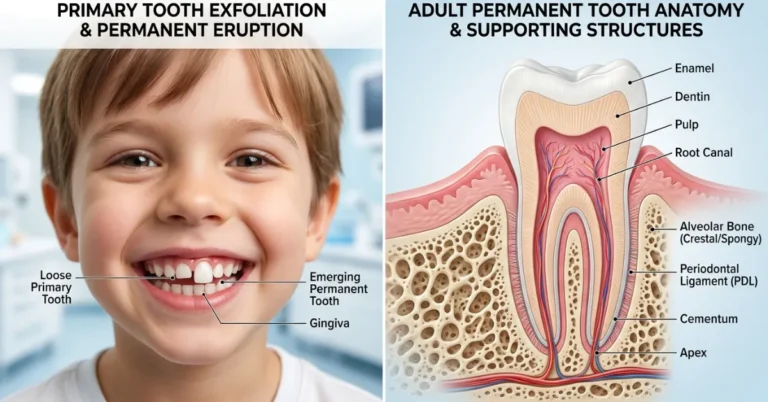
Dentists themselves have simple, clinical names for teeth: incisors, canines, premolars, and molars. Nicknames exist precisely because that clinical language is not much fun to say out loud, especially to a nervous six year old in a dentist’s chair.
Real Slang for Teeth (The Ones People Actually Say)
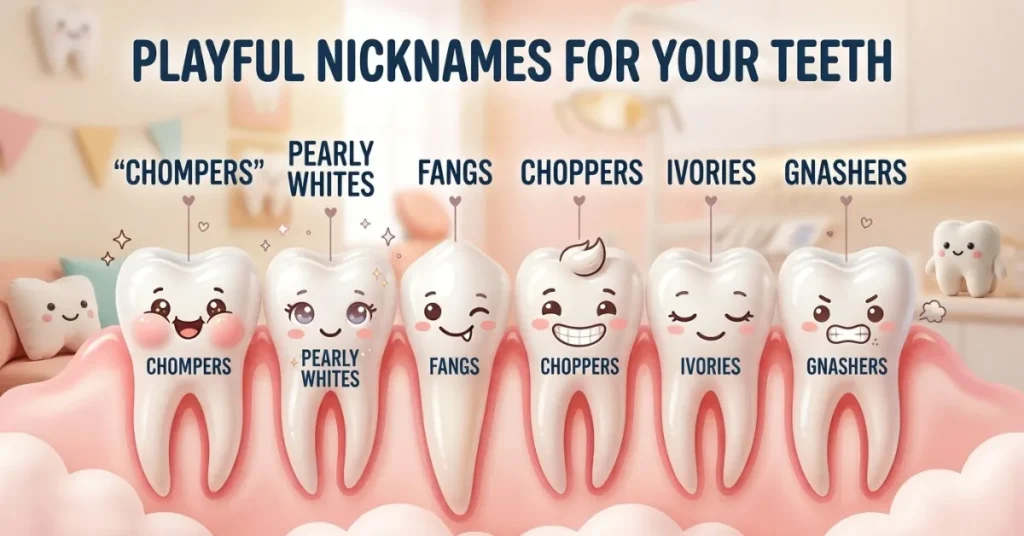
These are established English slang terms, not made up for a listicle. You will hear most of these in everyday conversation in the US, and a few are more common in the UK.
- Pearly whites – clean, healthy-looking teeth, often used as a compliment
- Chompers – a common, casual word for teeth in general
- Gnashers – mostly British, teeth used for chewing or grinding
- Ivories – an older term, referencing the color of healthy enamel
- Grill – decorative caps worn over teeth, popularized by hip hop culture
- Fangs – sharp or pointed teeth, usually the canines
- Choppers – large teeth, especially molars, used for biting into food
- Chiclets – small, square, very white teeth, named after the gum brand
- Peggies – small or peg-shaped teeth
- Snaggletooth – a single tooth that grows crooked or out of line
- Buckteeth – front teeth that protrude noticeably
- Tusks – large teeth that stick out, borrowed from animal anatomy
- Grinders – molars, or a nickname for someone who clenches their teeth
Most of these work fine at the dinner table. A few, like buckteeth or snaggletooth, can come across as teasing depending on tone, so read the room before you use them about someone else’s smile.
Funny Nicknames for Teeth
Funny tooth names usually target one specific tooth rather than the whole set, and they lean on wordplay. If you have ever named a wisdom tooth before getting it pulled, this is the category you were in.
- Snaggle the Canine
- Captain Cavity
- Plaque Jack
- Chip (perfect for anything chipped)
- Sweet Tooth (the one that always wants candy)
- Chompy McChompface
- Grinder 5000
- The Rebel (for a tooth that grew in crooked)
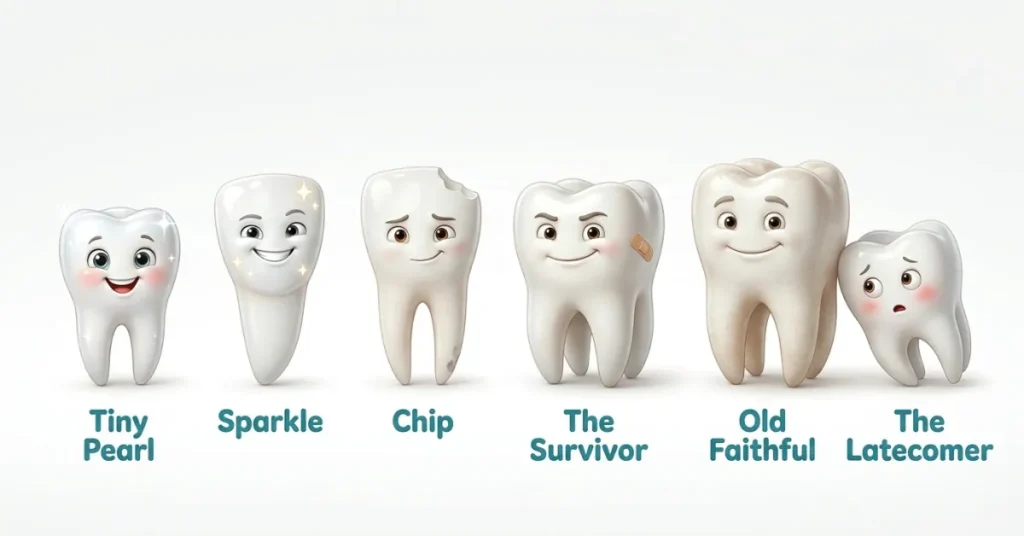
- Old Faithful (a tooth that has survived every cavity check)
- Wisdom (yes, literally, for a wisdom tooth)
The best funny names describe something true about the tooth, its color, its location, its history, or its personality, the same way you would name a pet. A chipped front tooth named “Chip” gets a laugh precisely because it is accurate.
Cute Nicknames for Teeth
Cute nicknames skew softer and work well for kids, baby books, or any context where you want teeth to sound charming instead of gross.
- Tiny Pearl (a classic for a baby’s first tooth)
- Sparkle
- Snowdrop
- Button
- Twinkle
- Sugar Tooth
- Bunny Tooth (for a slightly larger front tooth)
- Little Star
Parents often lean on this category specifically to make brushing and dentist visits feel less like a chore. Calling a baby tooth a “tiny pearl” reframes a slightly nerve-wracking milestone, a first lost tooth, into something worth celebrating.
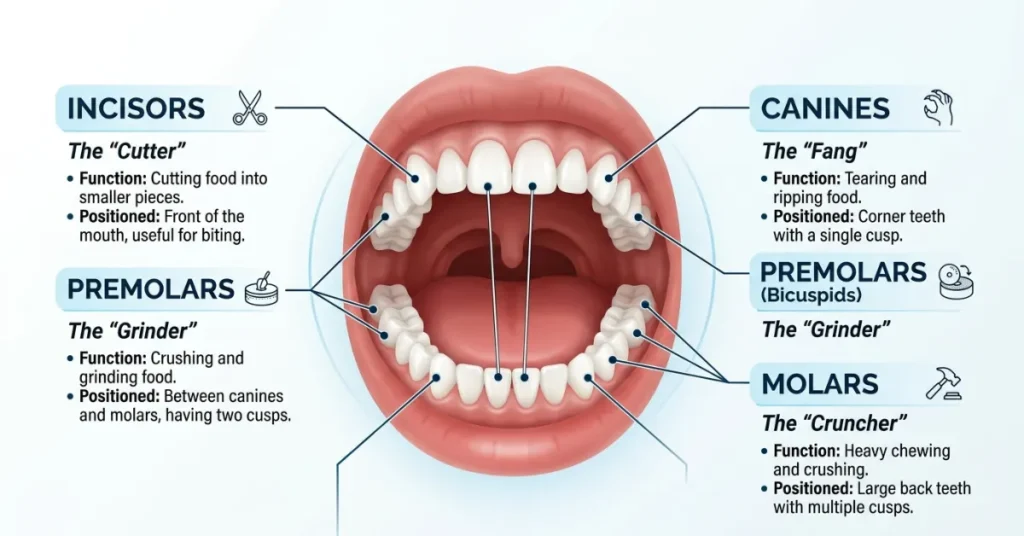
Nicknames by Type of Tooth
Not every nickname works for every tooth. Matching the name to the tooth’s actual job makes it land better.
Incisors (the flat front teeth used for biting): Cutter, Chopper, Front Row
Canines (the pointed teeth next to your incisors): Fang, Spike, Snaggle
Premolars and molars (the flat back teeth used for grinding): Grinder, Cruncher, Old Reliable
Wisdom teeth (the last molars, if they come in at all): Wisdom, The Latecomer, Troublemaker (a nod to how often they need to be removed)
This is a small but useful trick almost nobody explains clearly: base the nickname on the tooth’s function first, then add personality. A canine named “Fang” makes intuitive sense. A canine named “Grinder” does not, since that is not the job canines actually do.
Nicknames for a Single Tooth (Chipped, Missing, or Extracted)
This is the one area competing lists tend to skip entirely, even though it is one of the most common real-life reasons someone searches for a tooth nickname. People do not just want a generic funny name, they want a name for the specific tooth they are dealing with right now.
- A chipped tooth: Chip, Notch, The Survivor
- A gap from a lost tooth: The Gap, Vacancy, Ghost Tooth
- A tooth about to be pulled: The Farewell Tour, Last Stand
- A baby’s very first tooth: First Pearl, The Pioneer
- A retainer or braces-era front tooth: Metal Mouth’s MVP, The Straightener
Naming a specific tooth this way turns a somewhat clinical or even mildly stressful event, a chip, an extraction, a first lost tooth, into a small story instead of just a dental procedure. It is the same reason people name a car or a scar. Giving something a name makes it feel less random and more yours.
Nicknames for People, Based on Their Teeth
Some tooth nicknames describe the teeth themselves. Others describe the person. This distinction matters, since a name aimed at a person can read as an insult even when the person using it means it affectionately.
- Snaggletooth – someone with one visibly crooked or misaligned tooth
- Bucky – someone with prominent buckteeth, drawn from the same root as “buckteeth”
- Goofy or Goofies – a nod to the Disney character, used for prominent front teeth
- Tusk – occasionally used for someone with a notably large canine
- Cheese Grater – a more irreverent nickname for very crooked teeth, generally used only among close friends
Interestingly, this idea runs deeper than slang. <cite index=”5-1,5-2″>The English surname Dent actually has two possible origins: one is a place name from villages in Yorkshire and Cumbria, and the other traces back to the Old French word for “tooth,” used centuries ago as a nickname for someone notable for their teeth.</cite> Naming people after their teeth is not a modern habit. It has been happening in English for close to a thousand years.
Why People Give Their Teeth Nicknames
There are three real reasons this habit exists, beyond simple humor.
It lowers dental anxiety. A five year old who is scared of the dentist is often far calmer once a specific tooth has a name. “Let’s check on Sparkle” feels friendlier than “let’s check tooth number eight.”
It personalizes something impersonal. Teeth are one of the few body parts most people cannot see clearly without a mirror. Naming one, especially one that has changed, chipped, been pulled, or grown in crooked, is a small way of paying attention to it.
It builds connection through humor. Slang like “chompers” or “pearly whites” works the same way any shared informal language works. It signals familiarity and takes the seriousness out of a topic, dental health, that otherwise carries a lot of quiet anxiety for a lot of people.
How to Pick the Right Nickname
A good tooth nickname usually comes from one of four sources. Pick whichever fits the tooth in front of you.
- Appearance – color, shape, size (Pearl, Snaggle, Tiny)
- Location – where it sits in the mouth (Front Row, Back Corner, Wisdom)
- Condition or history – what has happened to it (Chip, The Survivor, Farewell Tour)
- Personality – how it behaves or how you feel about it (Troublemaker, Old Faithful, Sweet Tooth)
If you are naming a whole set of teeth rather than one tooth, general slang, pearly whites, chompers, ivories, is usually the better fit. Save the more specific, story-driven names for a single standout tooth.
FAQ
What is a good nickname for teeth in general?
“Pearly whites” and “chompers” are two widely recognized nicknames for teeth. Both work well in casual conversation and are easy to understand.
What do the British call teeth?
“Gnashers” is a common British slang term for teeth. “Pearly whites” is also widely understood in both British and American English.
What is a funny name for a wisdom tooth?
“The Latecomer” and “Troublemaker” are fun nicknames for a wisdom tooth because wisdom teeth typically appear last and can sometimes cause dental problems.
What is a nickname for a chipped tooth?
“Chip” is a simple, descriptive nickname for a chipped tooth. “The Survivor” can also work as a playful name for a tooth that was damaged but remained intact enough to stay.
Is it okay to give someone else’s teeth a nickname?
It depends on the tone and your relationship with the person. Neutral names like “pearly whites” are generally safe, while names that point out a person’s dental appearance can come across as insulting. When in doubt, choose a playful and non-appearance-focused nickname.
Key Takeaways
- Real English slang for teeth includes pearly whites, chompers, gnashers, ivories, and grill, and all of these are safe to use in everyday conversation.
- Funny and cute nicknames work best when they describe something true about a specific tooth, its color, location, condition, or personality.
- Naming a single tooth, especially a chipped, missing, or soon-to-be-extracted one, is a small, common habit that makes a dental event feel more personal and less stressful.
- Nicknames aimed at a person’s teeth, rather than at the teeth themselves, carry more social risk and are best kept to close friends or self-deprecating use.
- The habit of naming teeth is old enough to show up in English surnames, not just modern slang.